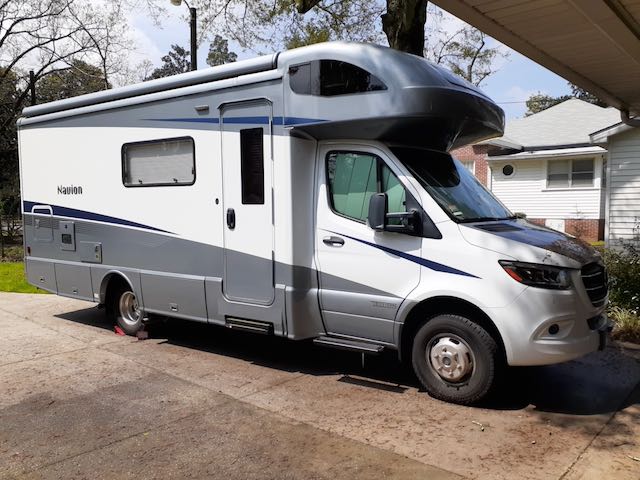
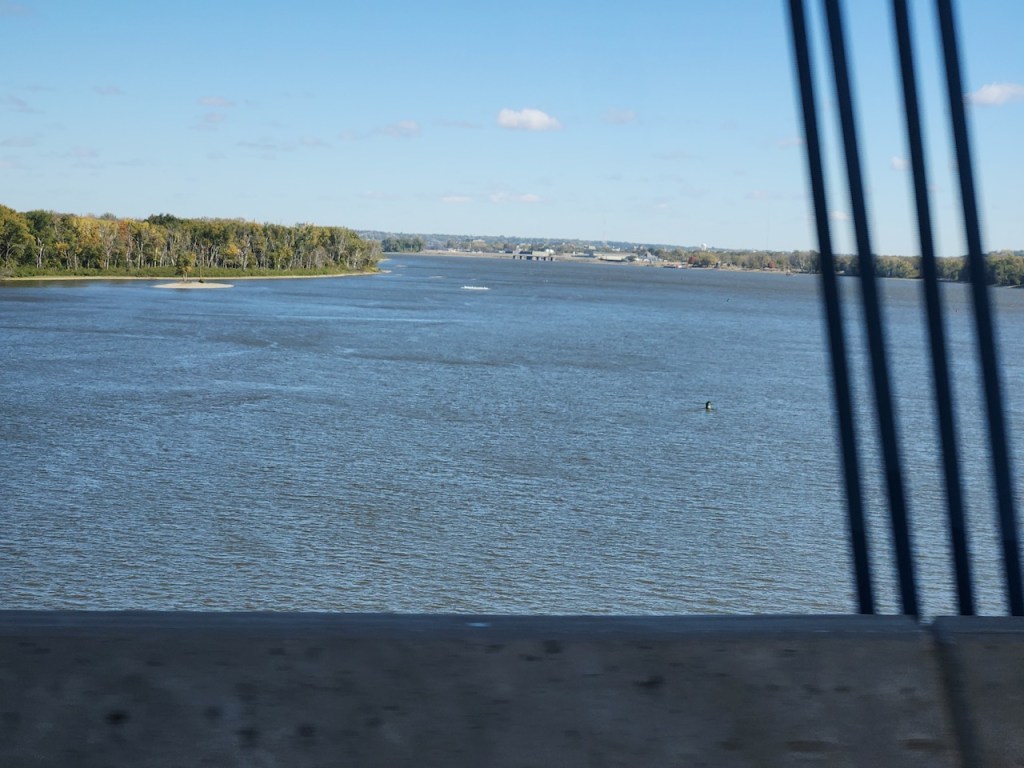
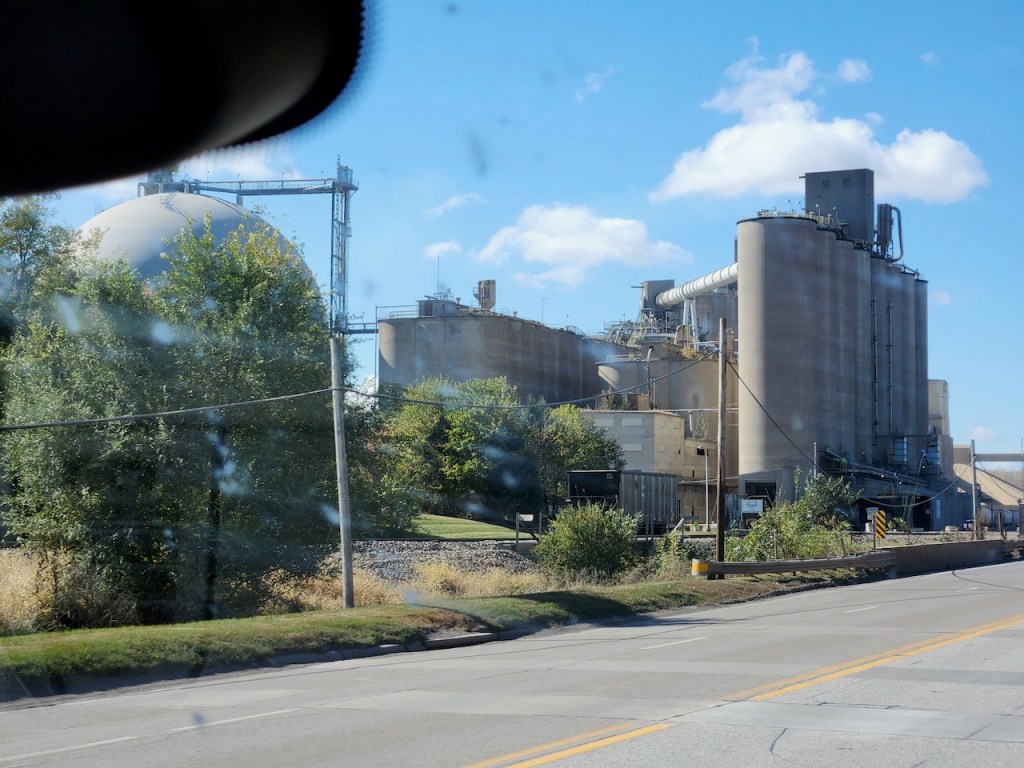
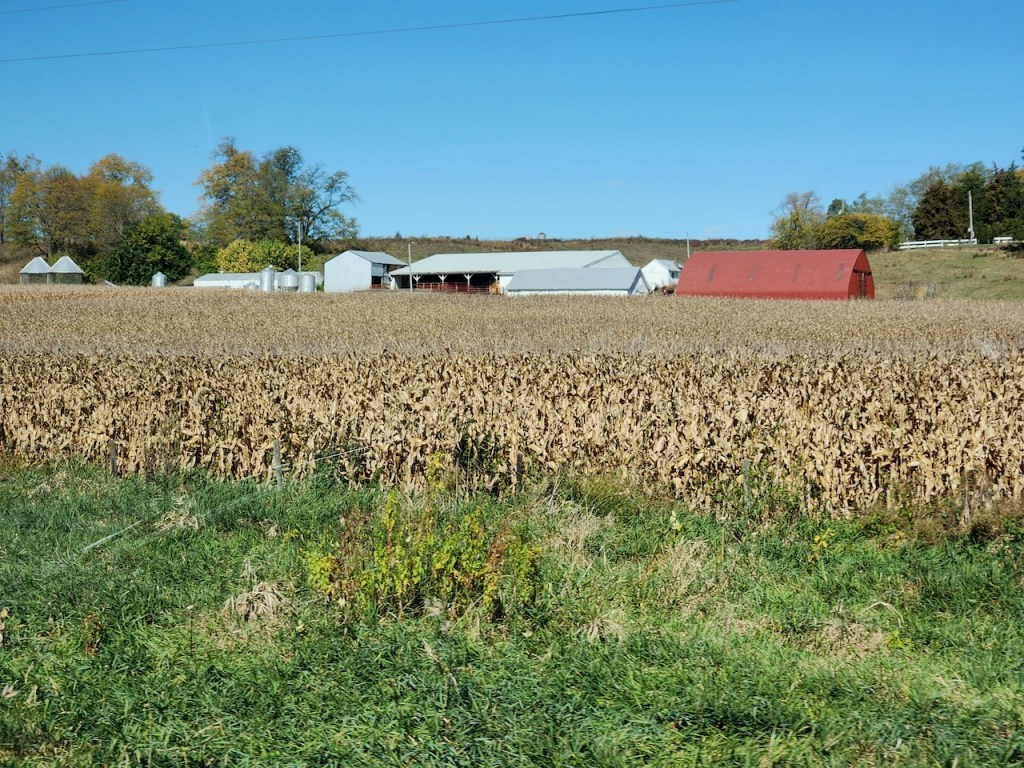
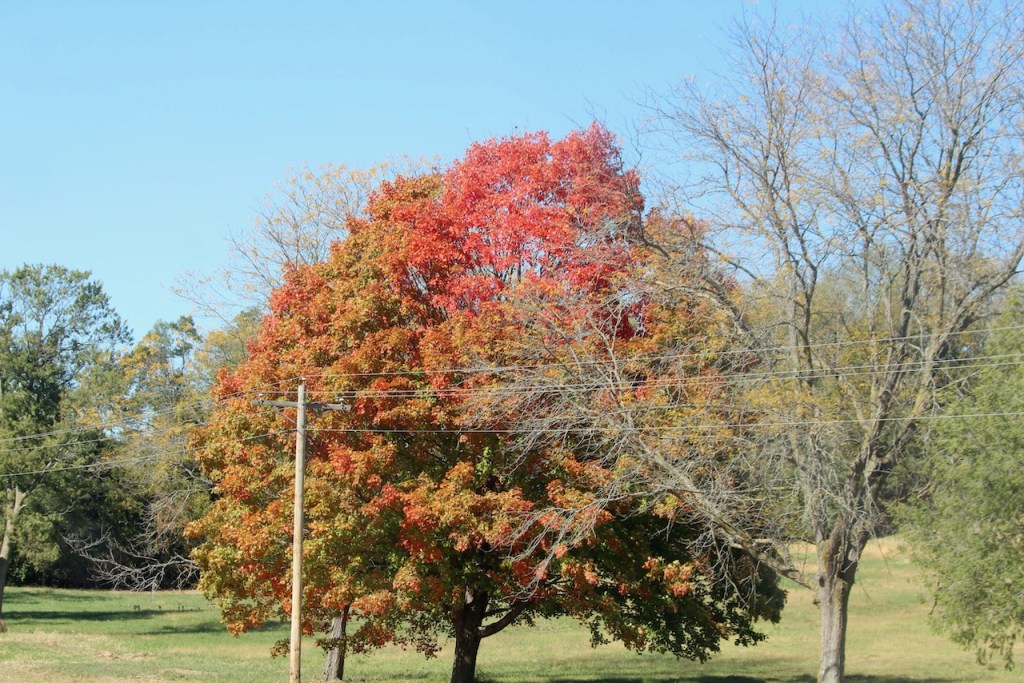
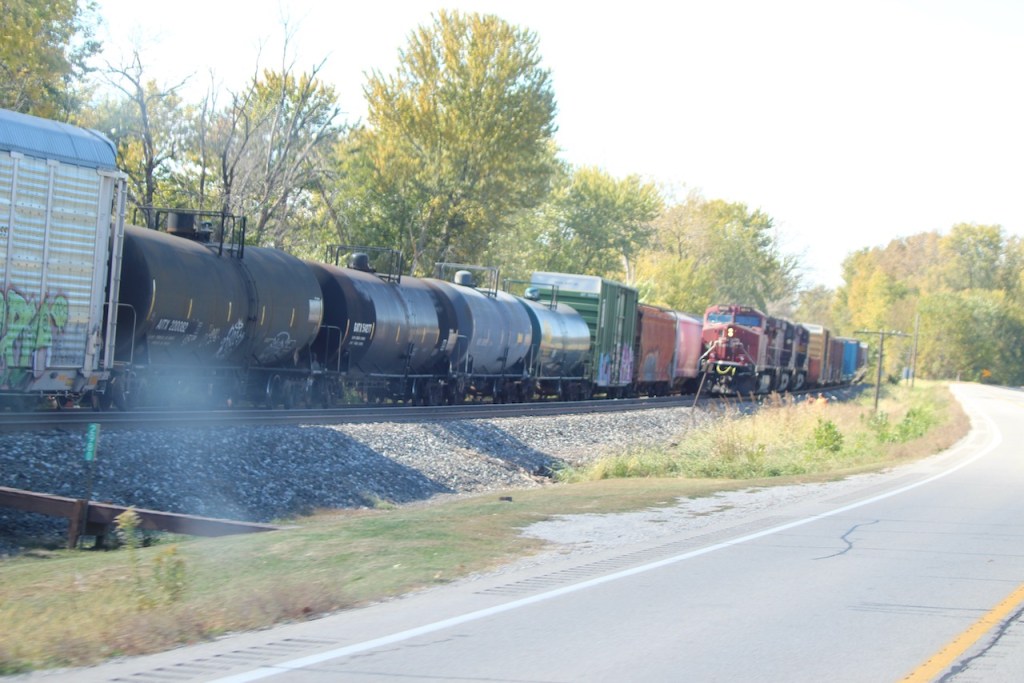
Not really – having been to St Louis on some earlier trips, we didn’t stop there, but it is on the Mississippi River and is a good point to end this post. On Tuesday, Oct 15 we left the Quad Cities, driving back over the Mississippi from Illinois to Iowa. The first part of the trip was through some pretty industrialized areas. But shortly we were back to cornfields and trees, and the river and trains.

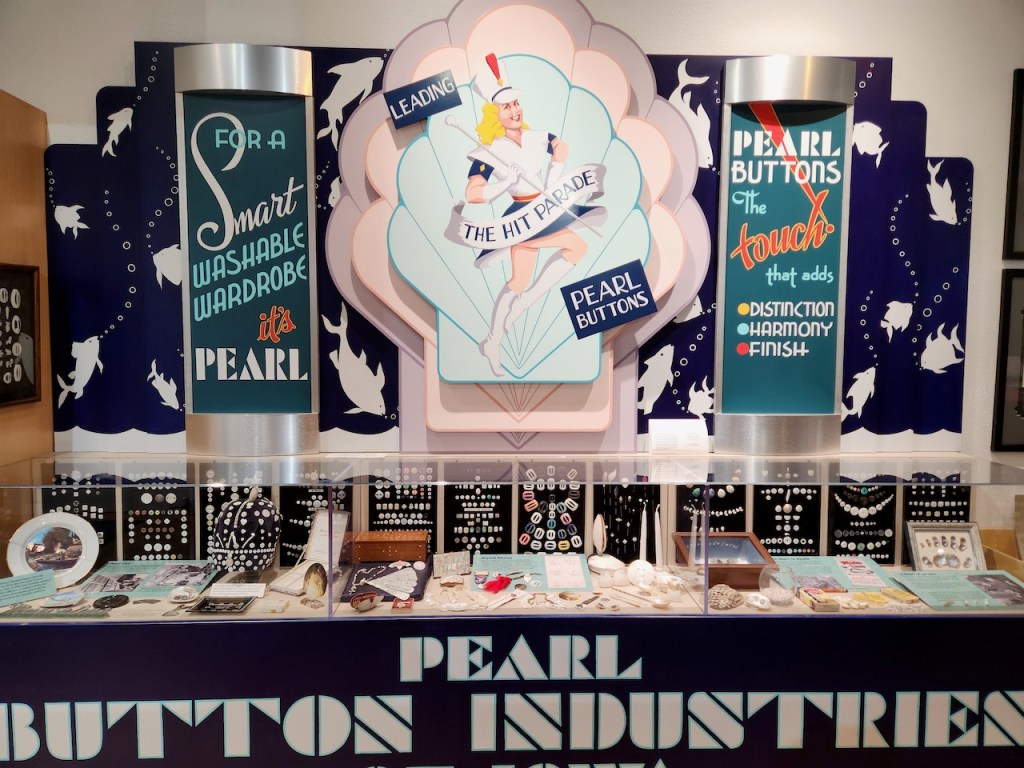
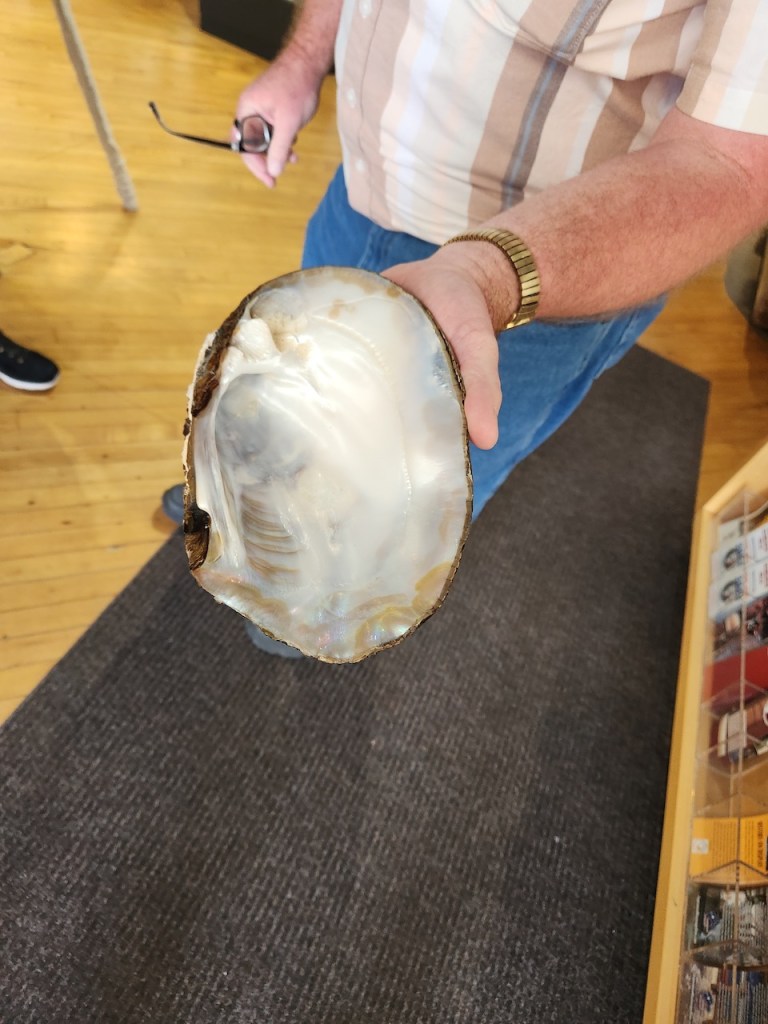
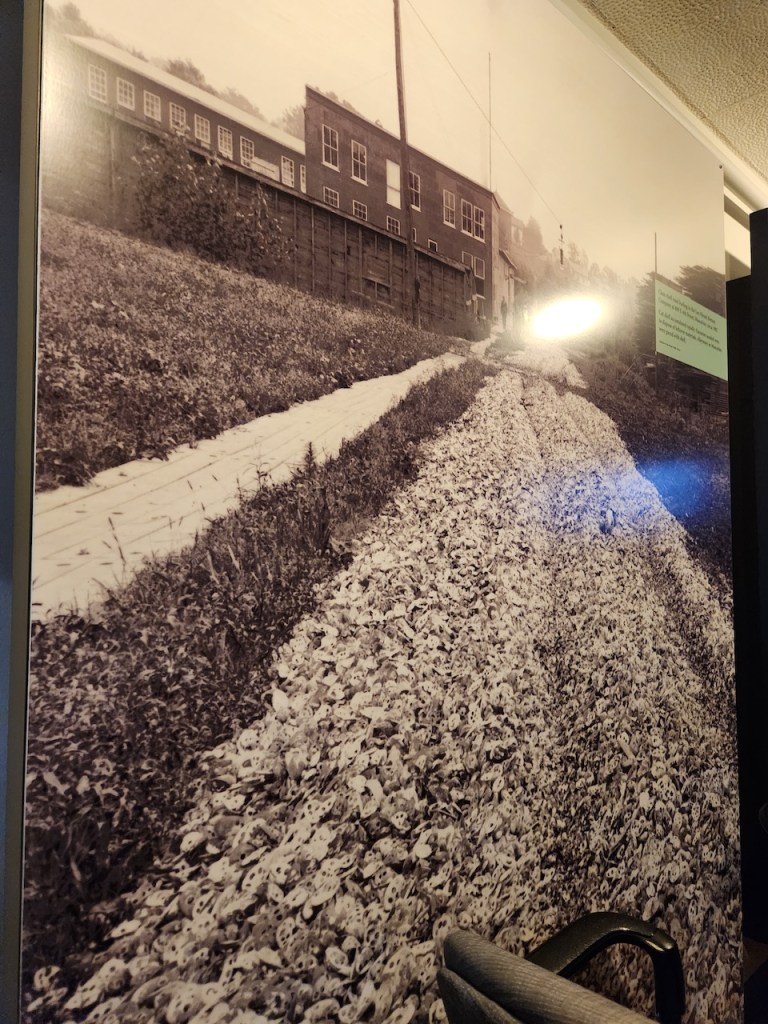
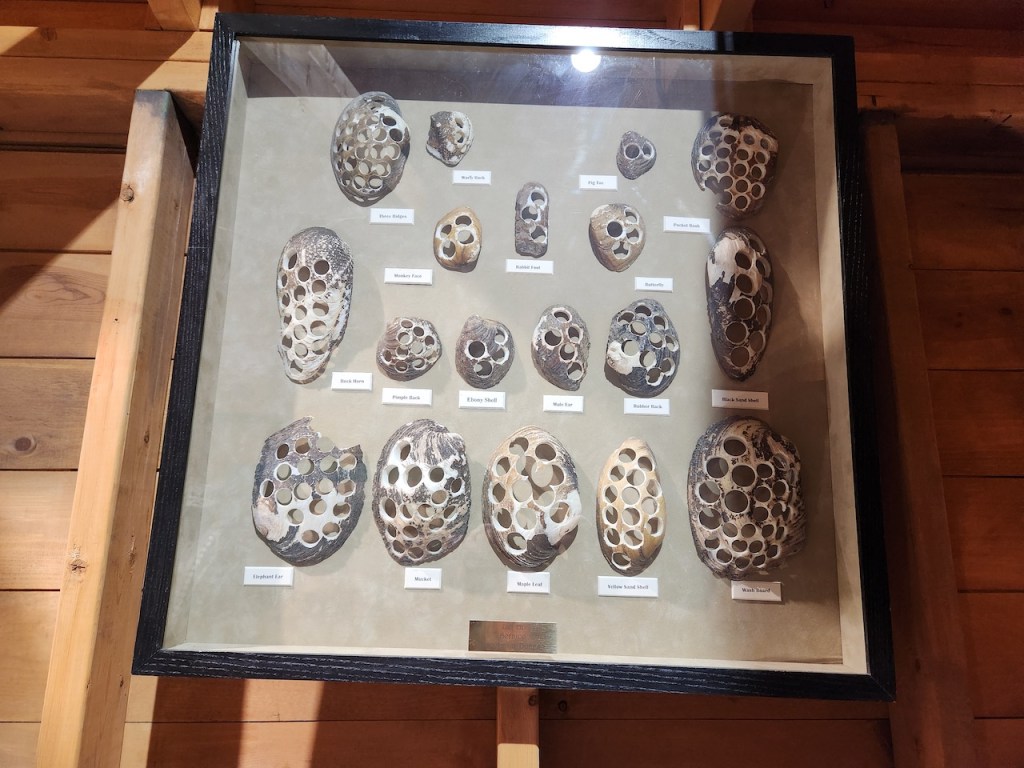
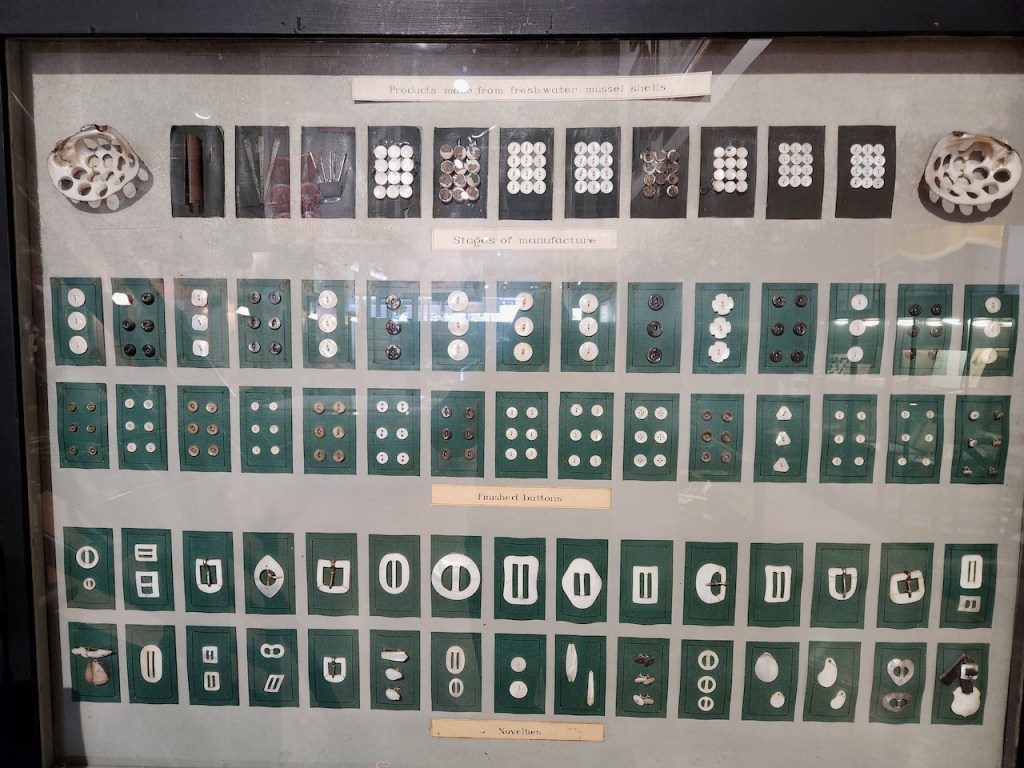
Our first stop of the day was at the National Pearl Button Museum in Muscatine, IA – who knew there was such a place. Evidently back in the day – late 1800’s – the Mississippi was full of fresh water mussels,. A German immigrant named John Boepple, who made buttons from animal horns, realized that the mussels in this area would make good buttons. He brought his machines, upgraded them from foot power to steam power and grew an industry that at one time made over 1.5 billion buttons a year. Besides those who worked in the factory, there we also over 300 “clammers” who made a living harvesting the mussels.
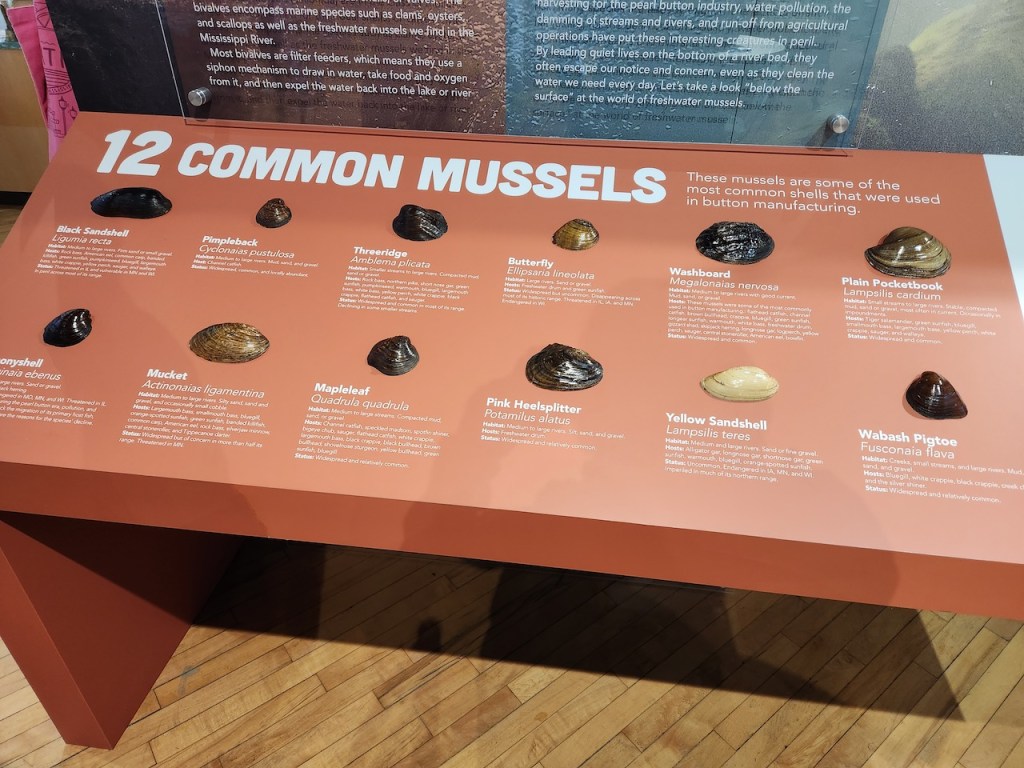
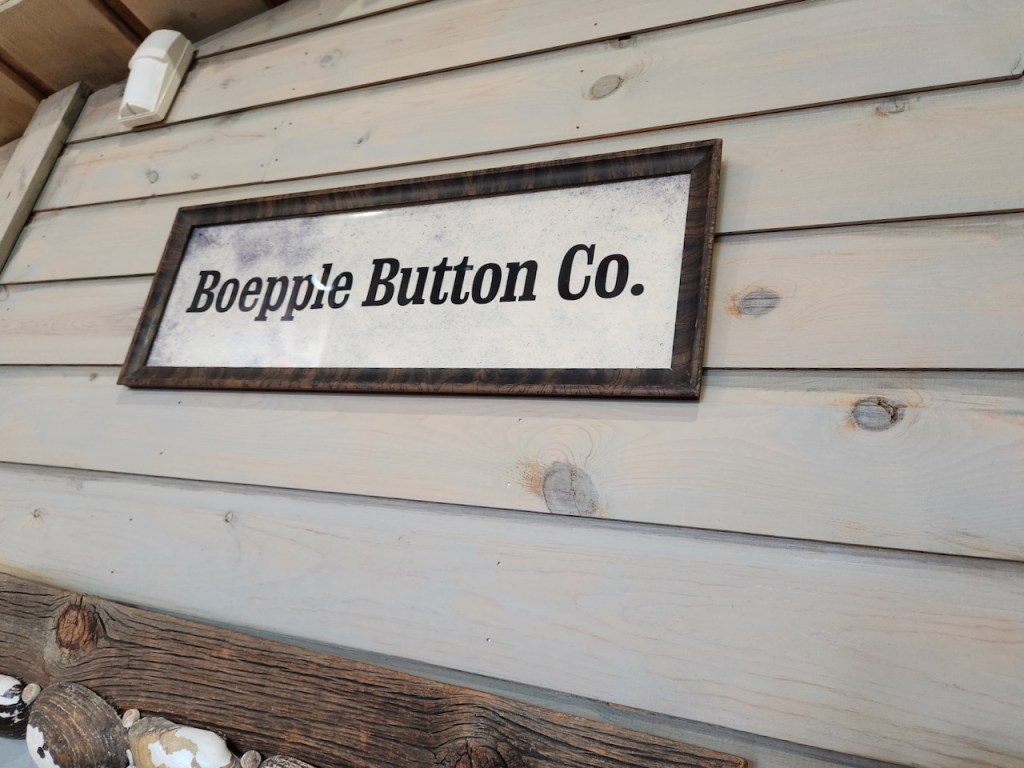
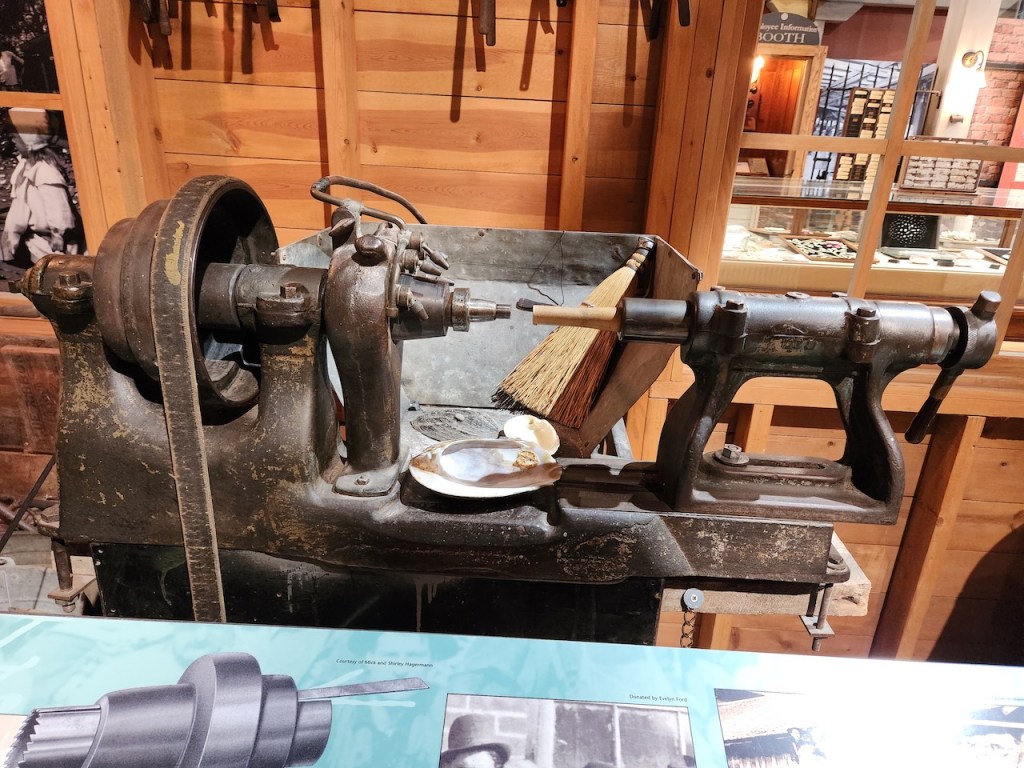

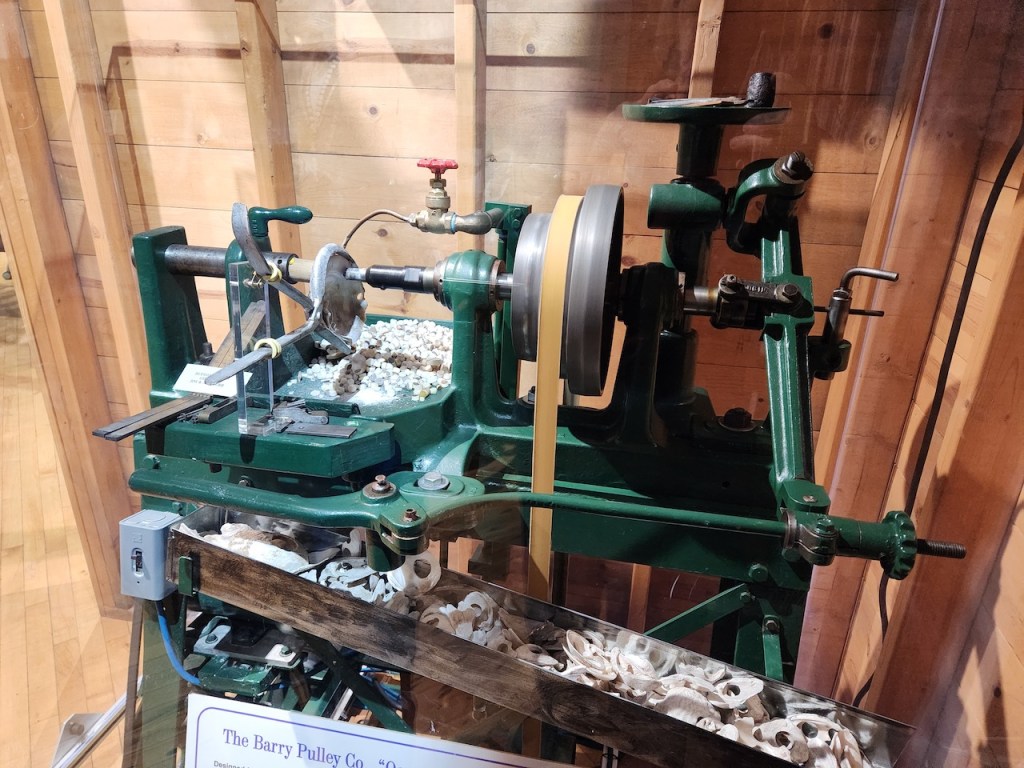
Here is one of shells that would be used, and if you closely at that other picture you will see that the road is covered with shells with holes cut out of them, like you see in the framed shells. And it just wasn’t buttons they were making.
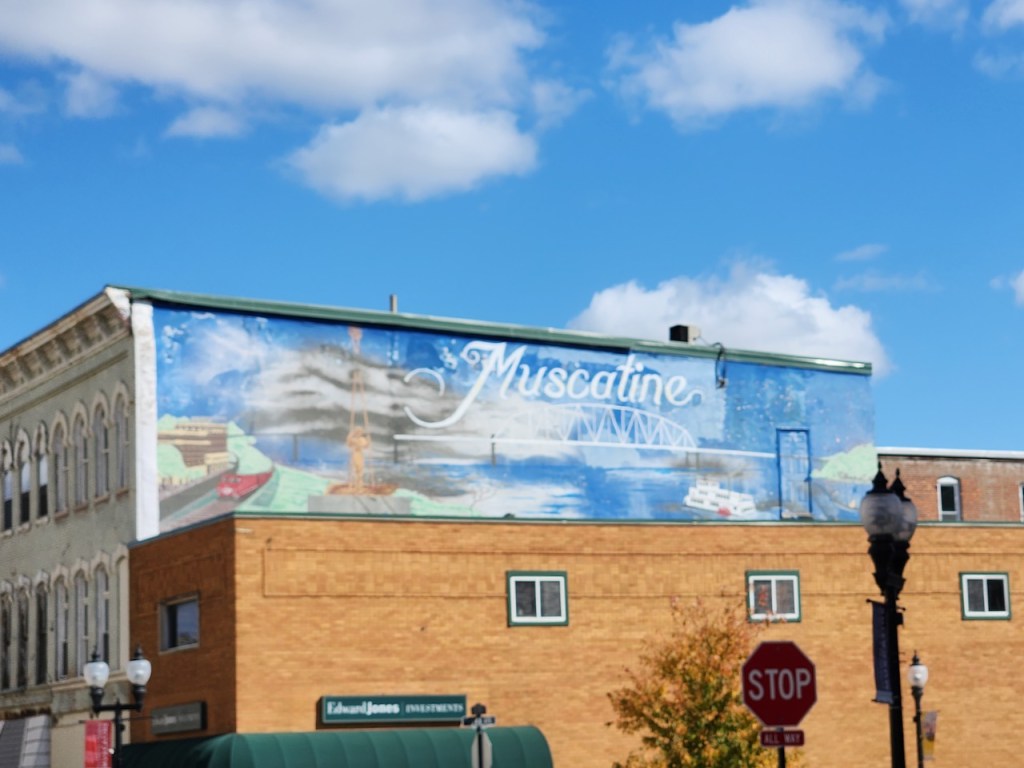
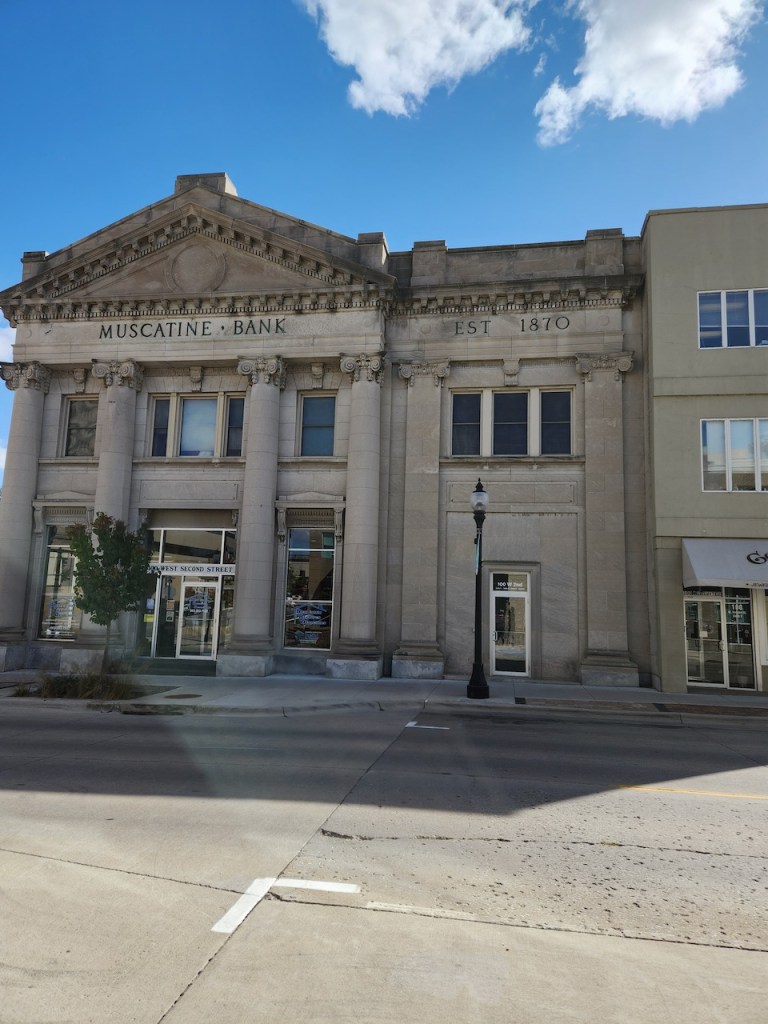
Scenes from the streets in Muscatine.
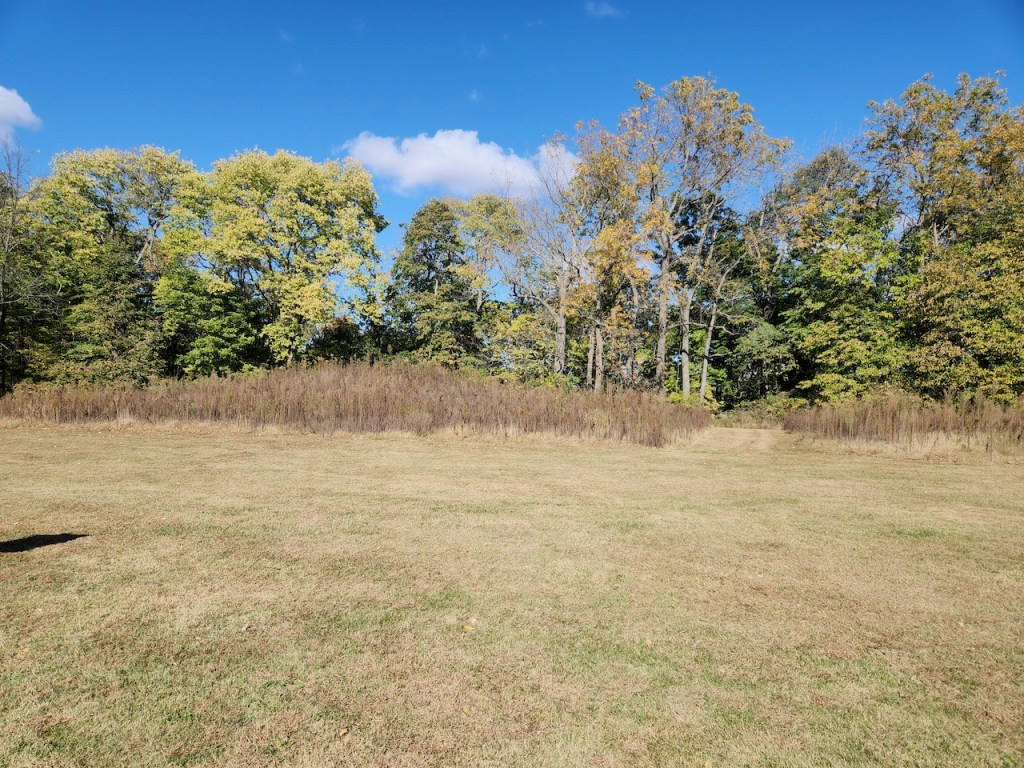
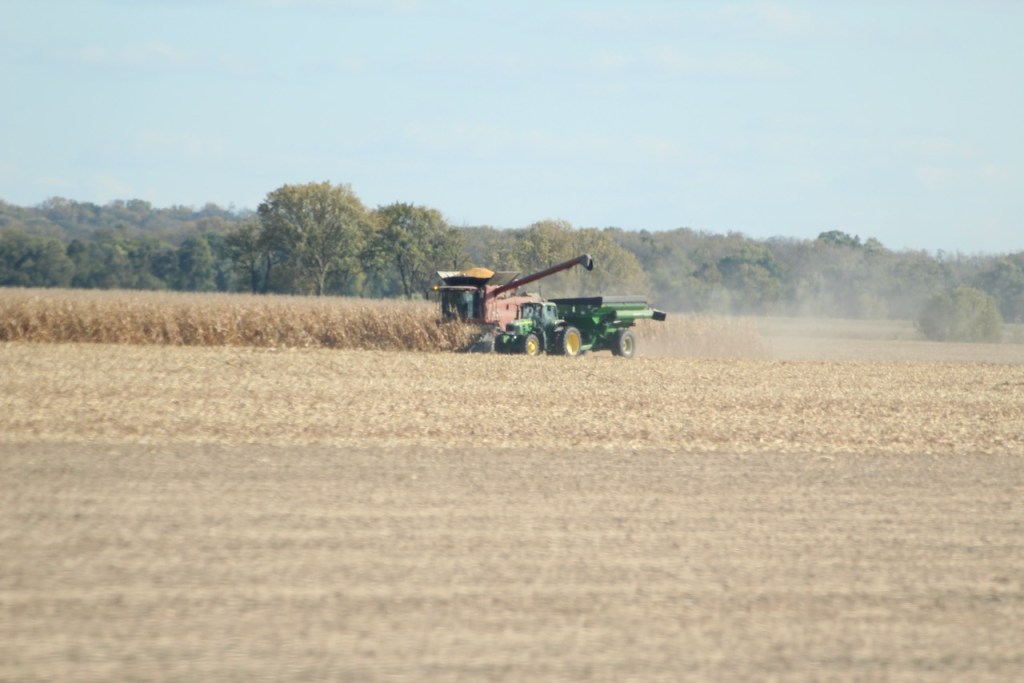
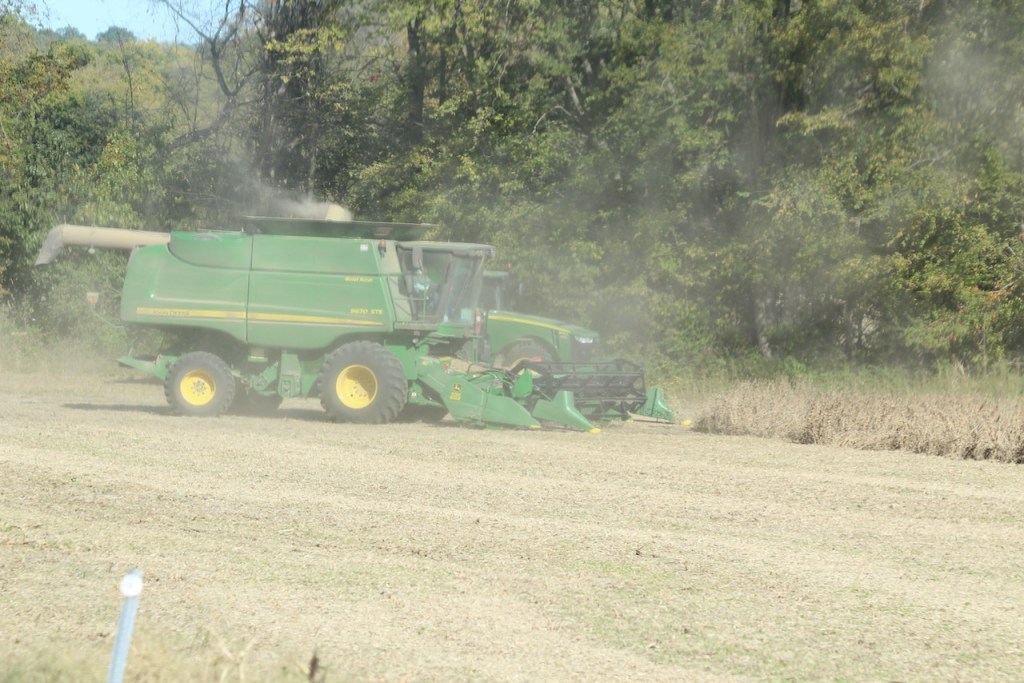
We drove on to the Toolesboro Indian Mounds – not much to look at – they are the unmowed areas in the picture. But it was a comfortable spot to have our lunch. Then driving down the road we saw more harvesting going on.
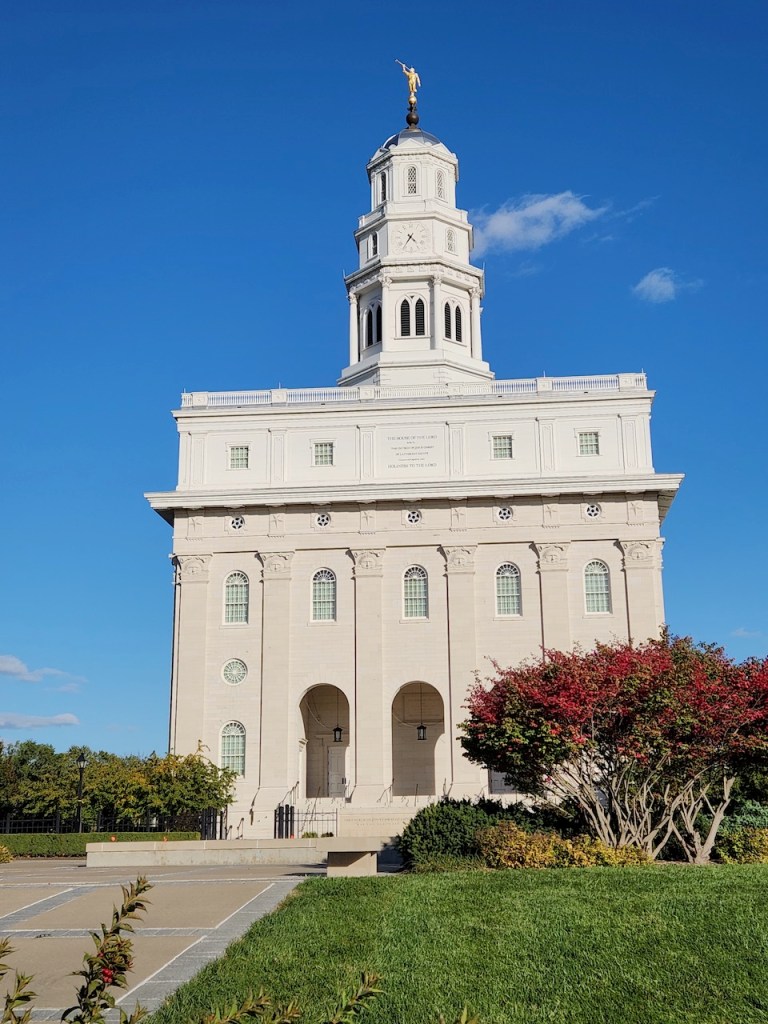
Our next stop was in Nauvoo, IL (yes we crossed the river again, and I don’t have a picture.) Nauvoo was a stop on the Mormon’s search for a place to escape conflict with governments. The area was purchased in 1839, and by 1844 there were over 12,000 Mormon’s living here. The original temple on this site was the 2nd Mormon temple built, and was designed by Joseph Smith. It was begun in 1841, and only the first floor interior was complete when the Mormon’s were driven off in 1846. The temple was destroyed by arson and a tornado in 1850, and completely gone by 1858. In 2000, the church decided to rebuild the temple here, as closely as possible to the original design, and it was completed in 2002. It is huge – do you see Trish in the 2n’d picture?
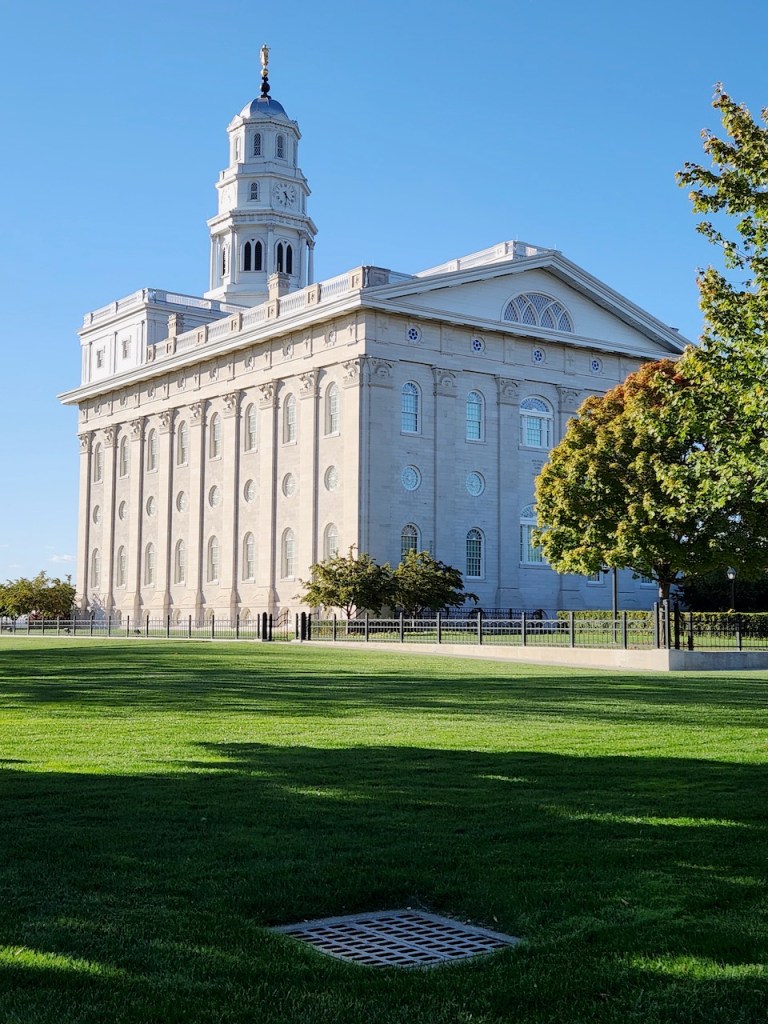
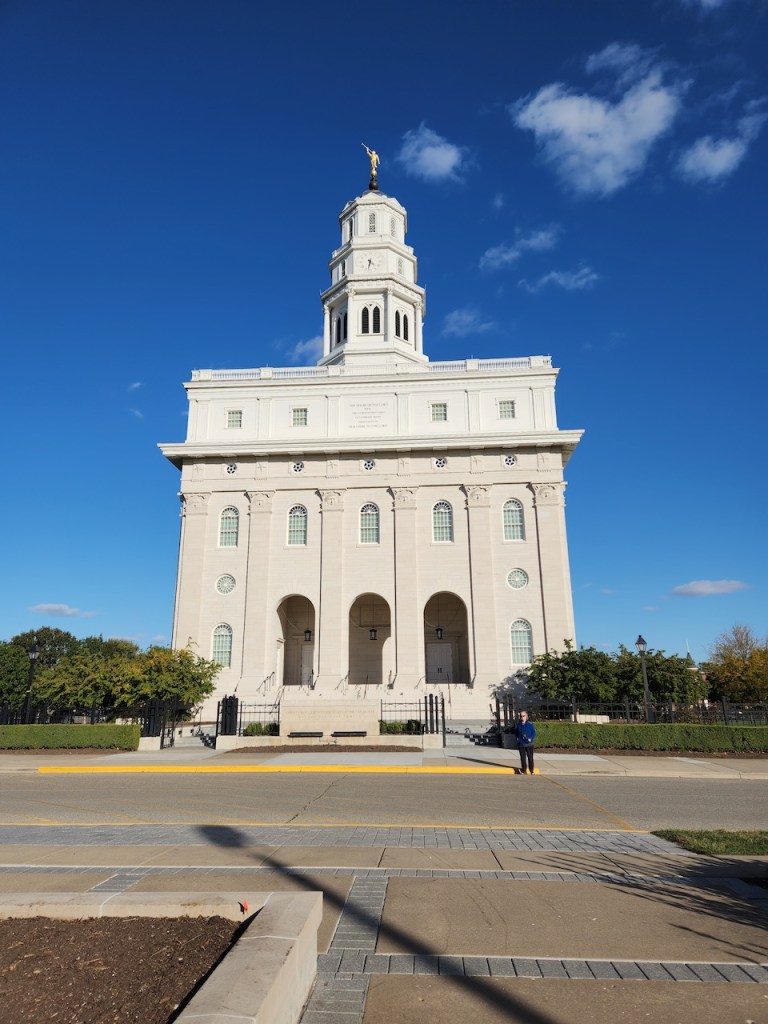
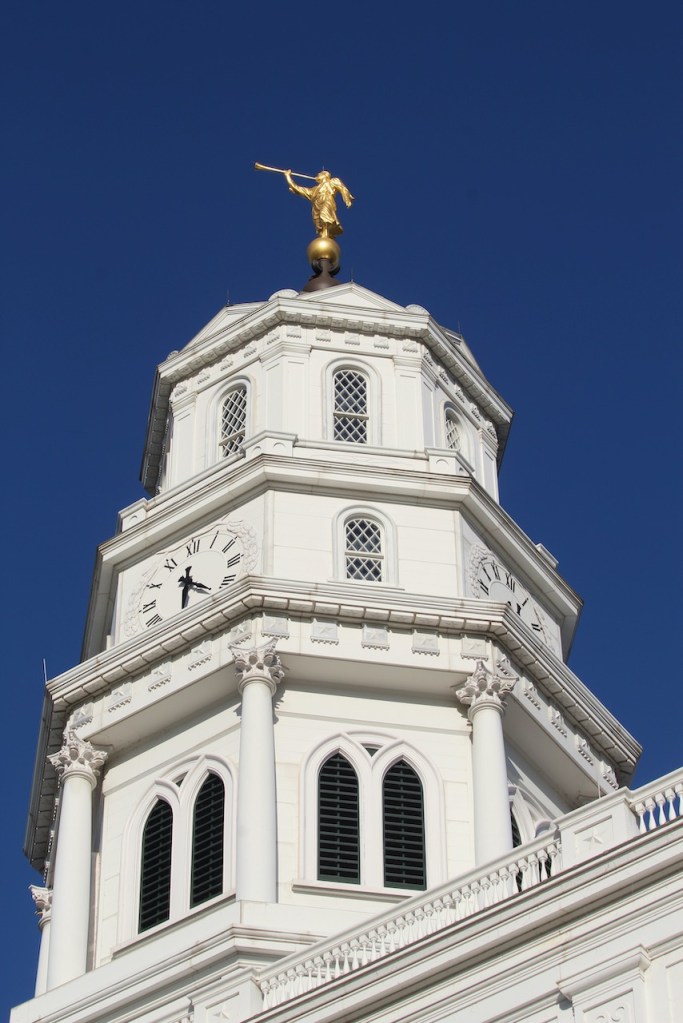
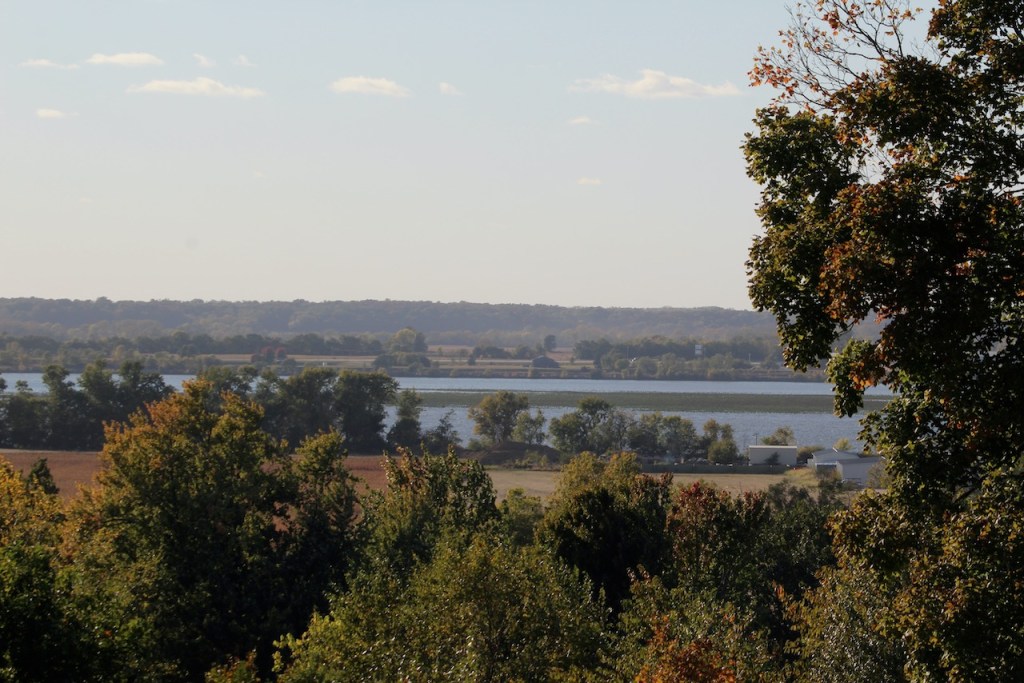
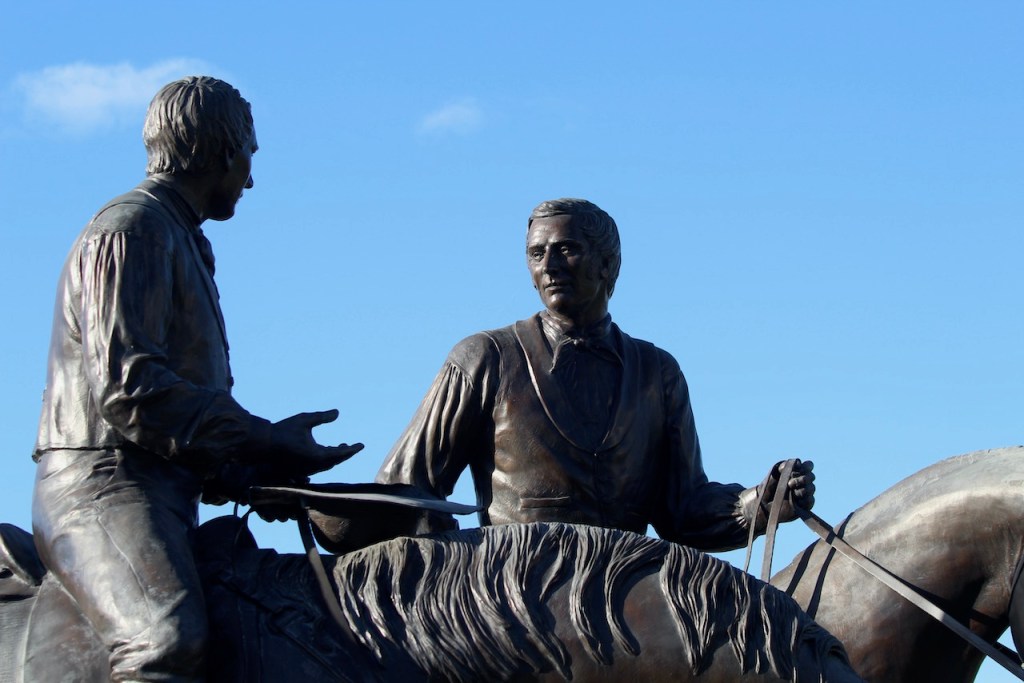
The statue on top is of the Angel Moroni – who is said to have delivered the Golden Plates (the source of the Book of Mormon) to Joseph Smith. The temple is in a very commanding position above the Mississippi River. There is a statue on the grounds of Joseph Smith and his brother Hyrum riding off to Carthagei in 1844 – where they were eventually killed by a mob.
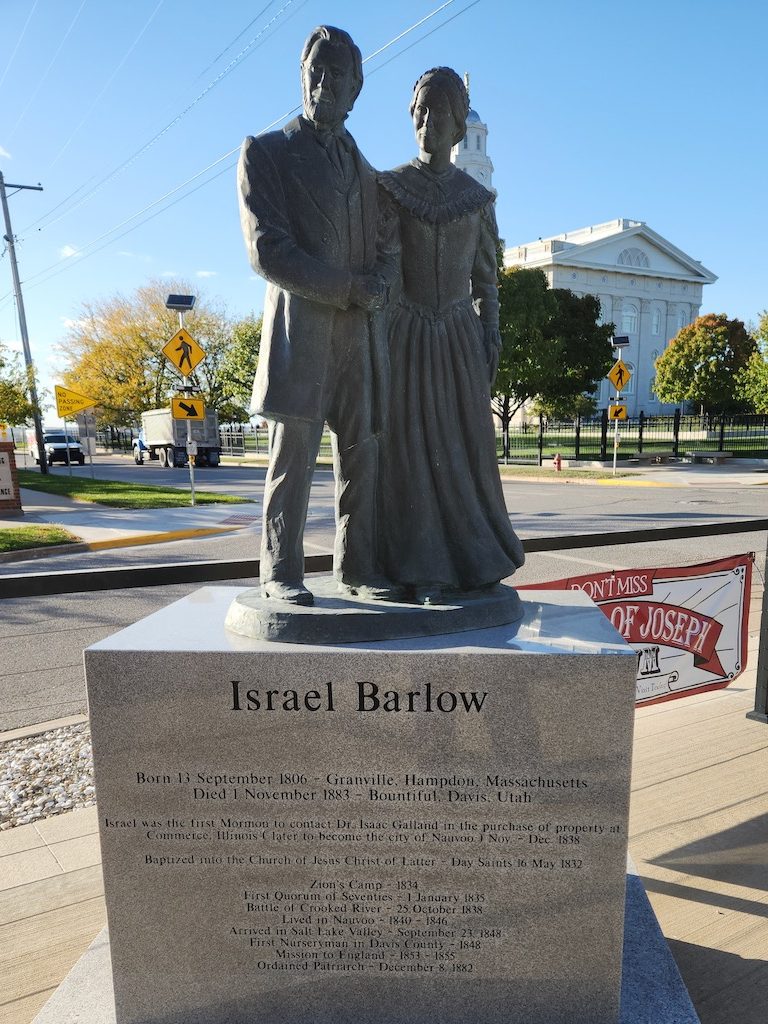
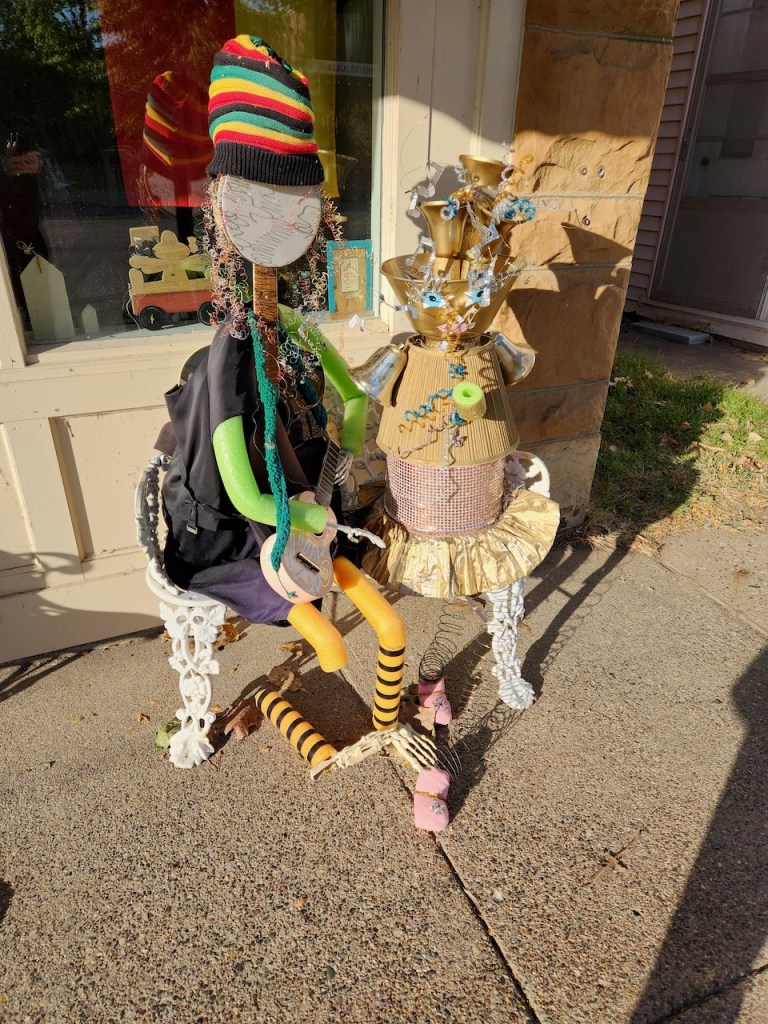
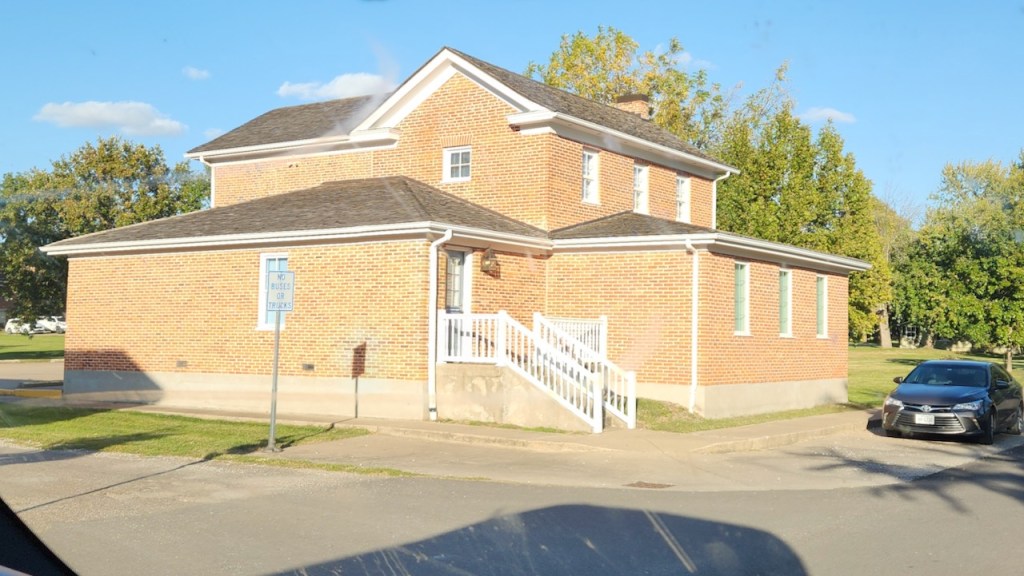
Israel Barlow was the Mormon who initially purchased that land that became Nauvoo. I just had to contrast this statue of him and one of his wives with what I think were Halloween decorations on the street in Nauvoo. Below that is one of the houses that have been restored in the historic area that is now owned by the Mormon church – we went by Joseph Smith’s house, as well as Brigham Young’s house – I don’t think this is either of those, but they all looked very similar.
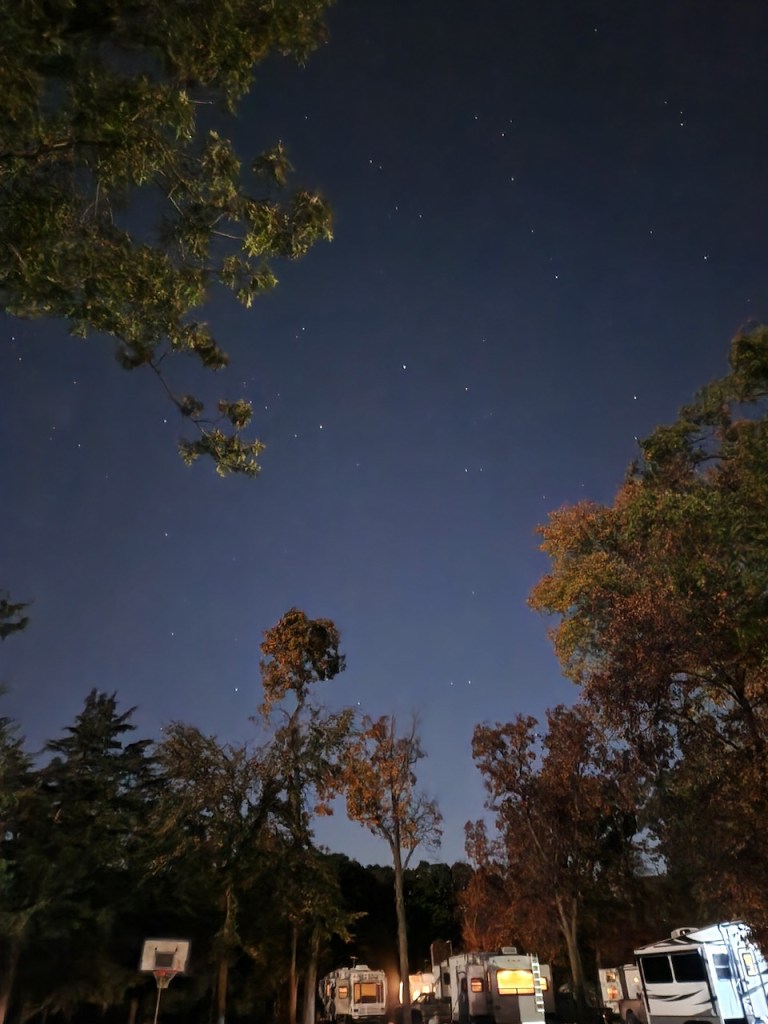
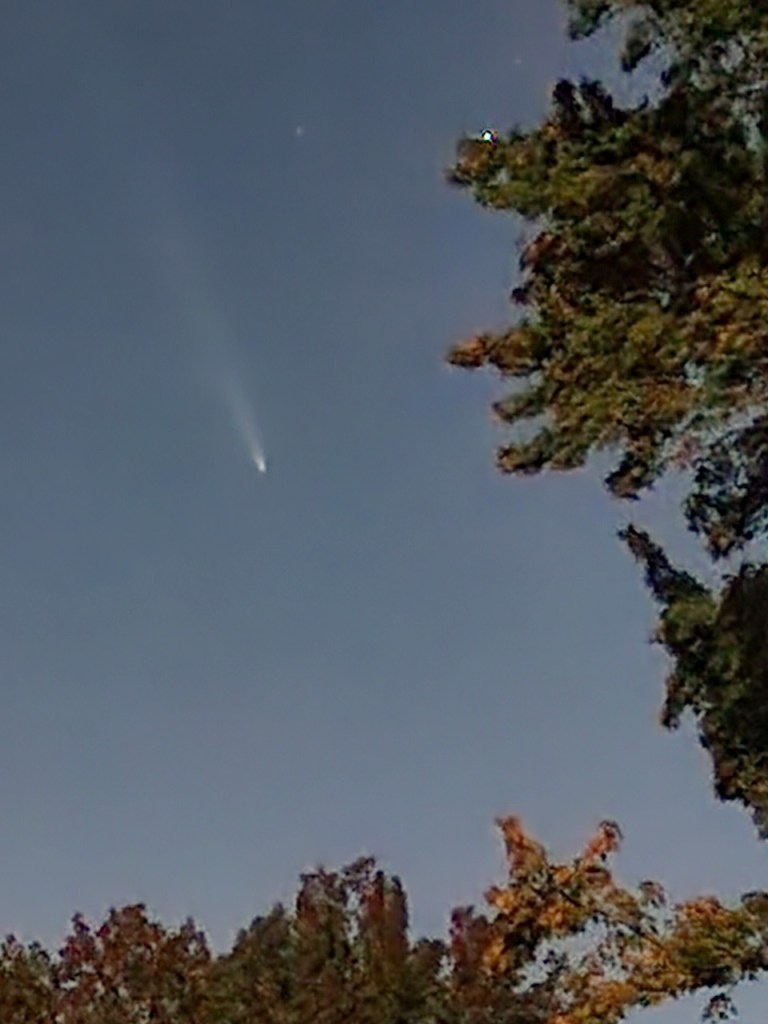
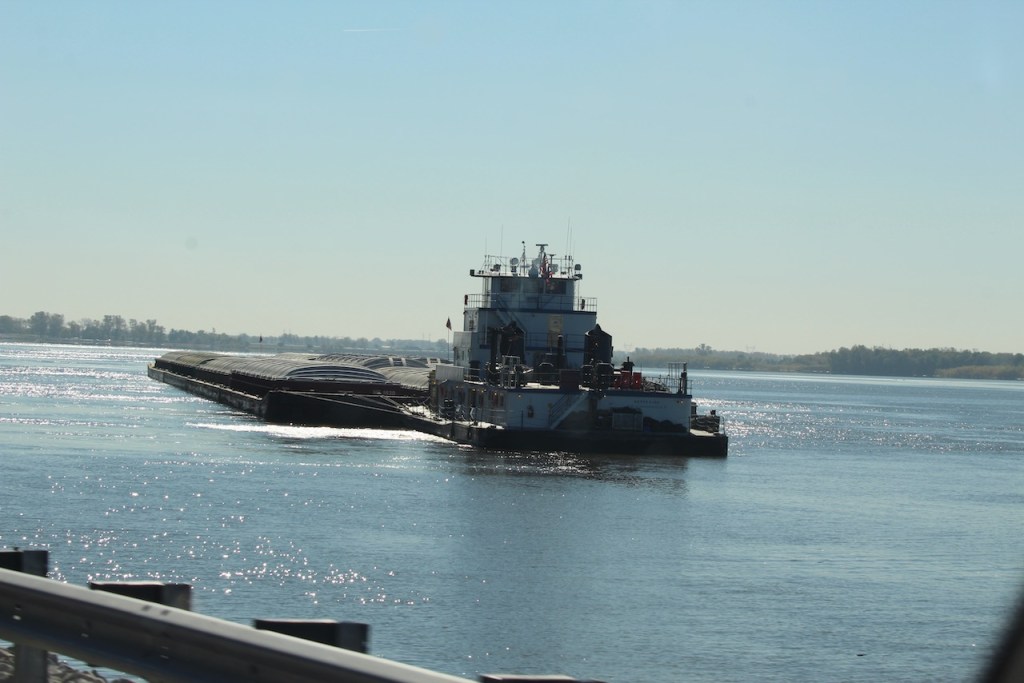
We finally spotted our first barge as we drove back across the Mississippi to Keokuk, IA. Another industrial area, but we did sight a few birds at one of our stops. And when we went over the river, there was a barge in the locks. After setting up camp, we had another unsuccessful night of comet hunting.
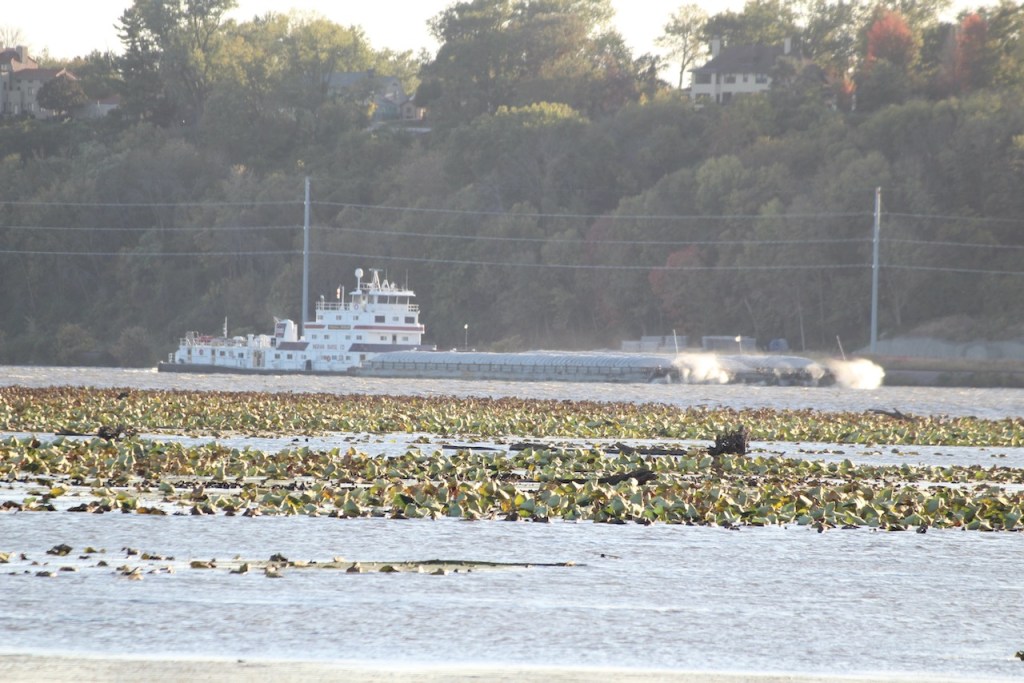
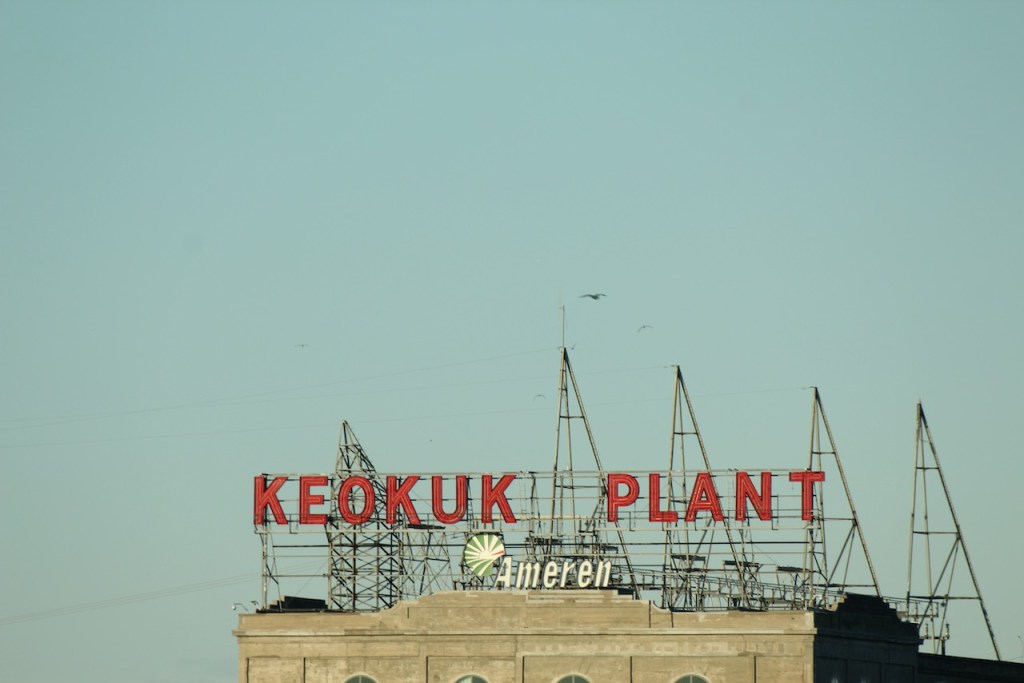
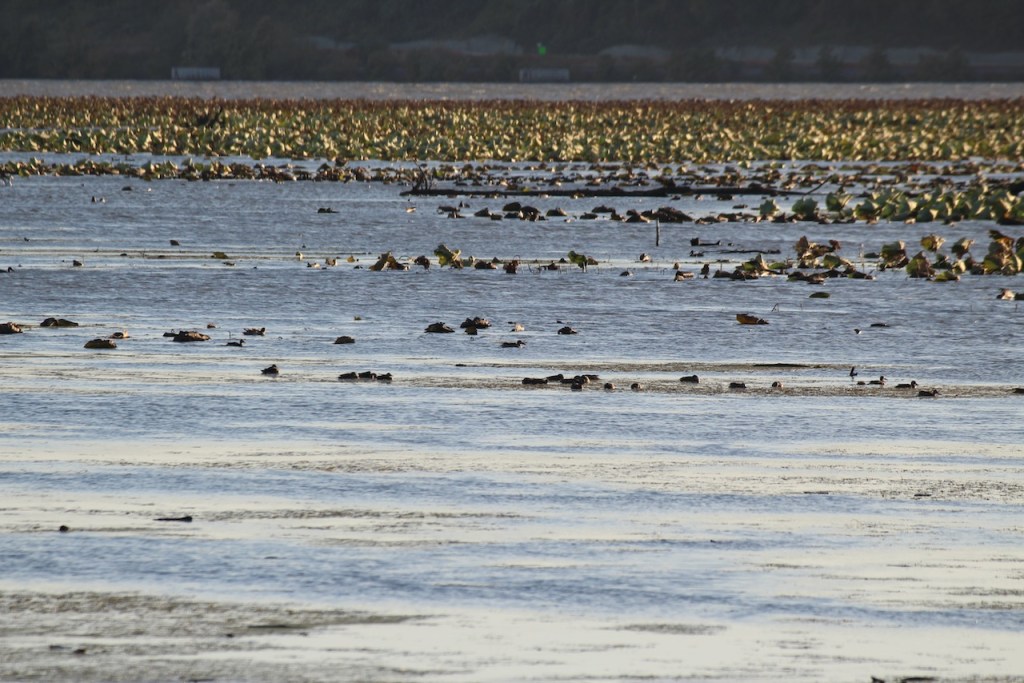
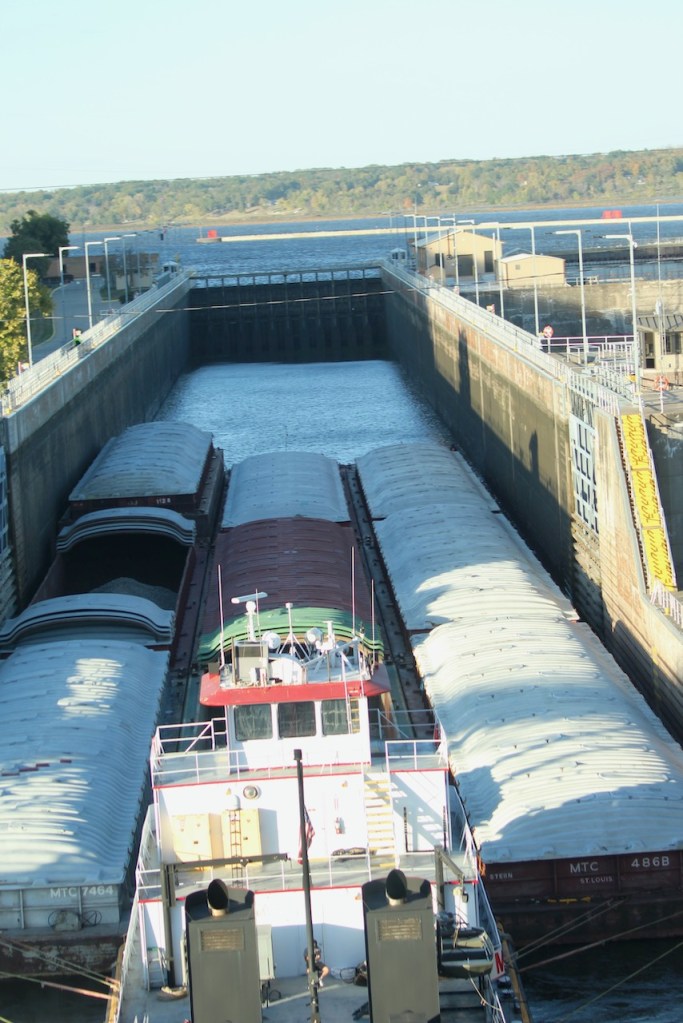
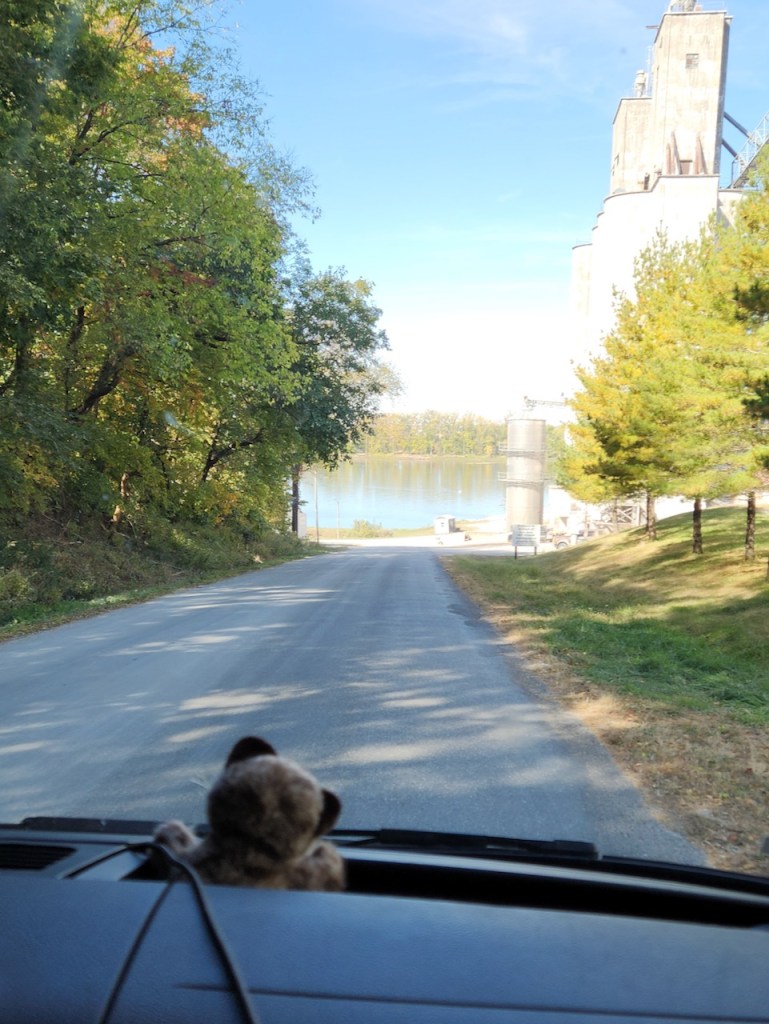
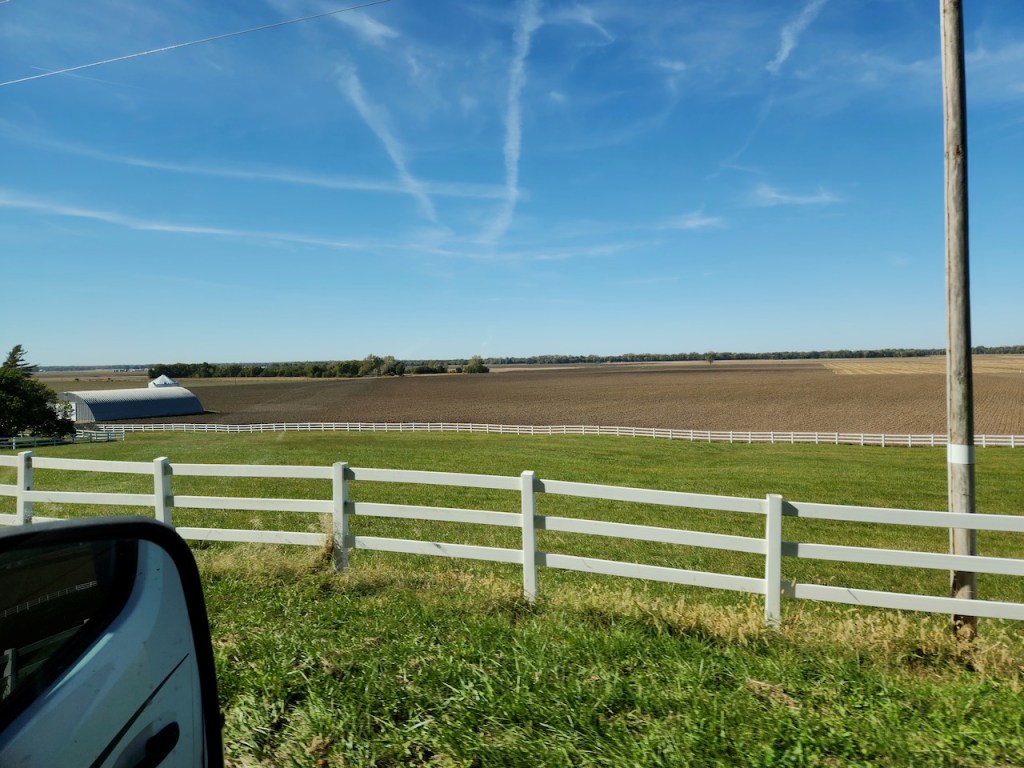
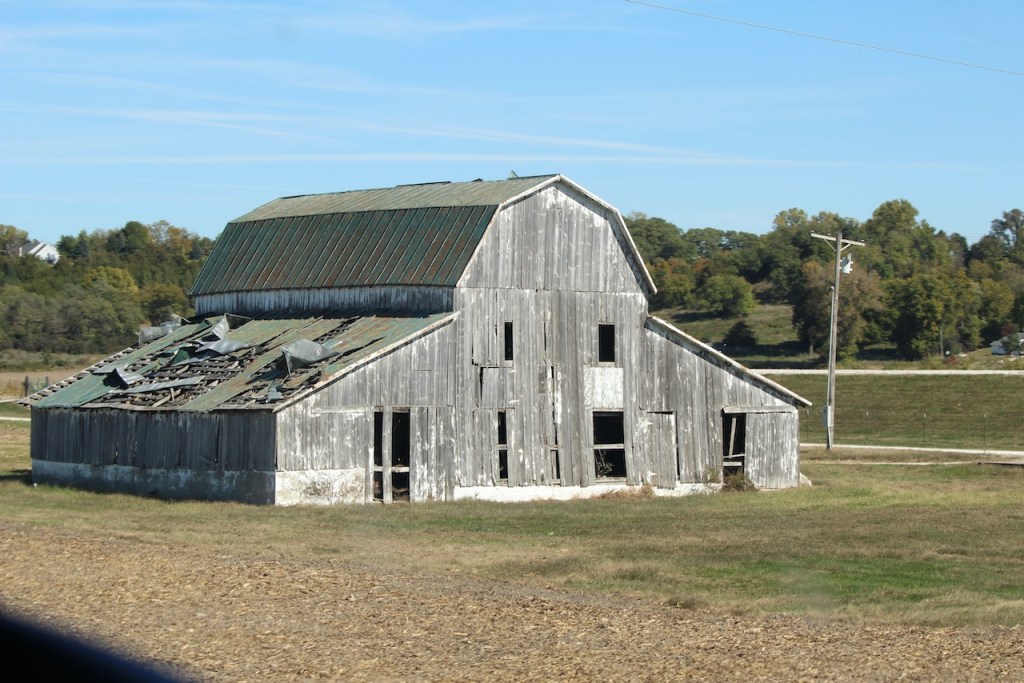
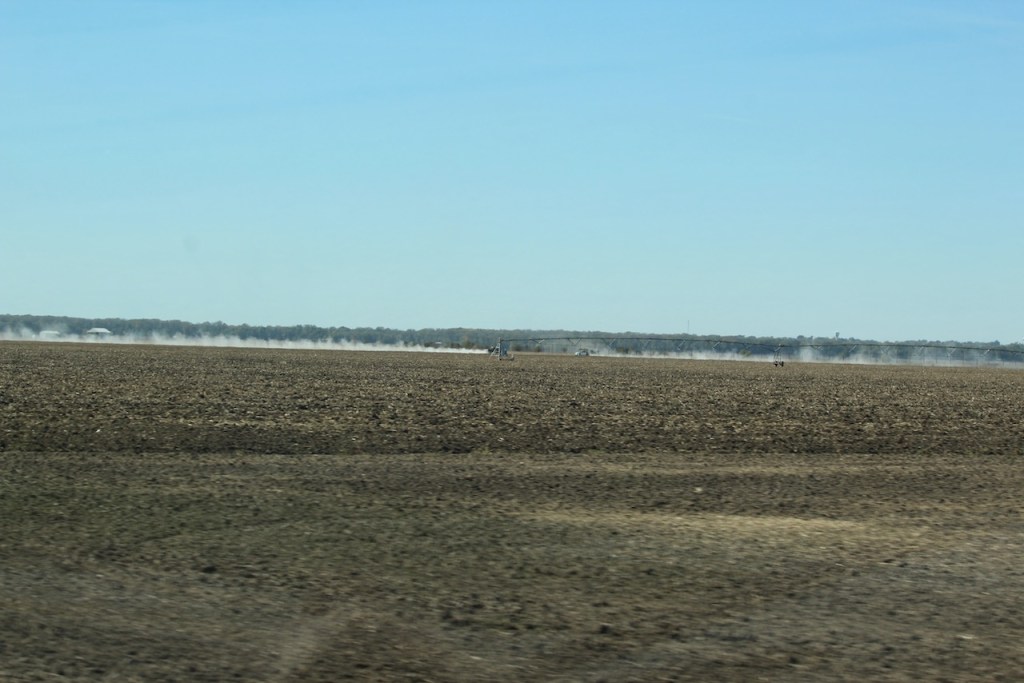
On Wednesday, after I got up very early for A YMCA Finance Committee meeting, we made a stop at WalMart to pick up some chemicals for the toilet. Then it was off to driving through some more farm country, with glances of the river along the way.
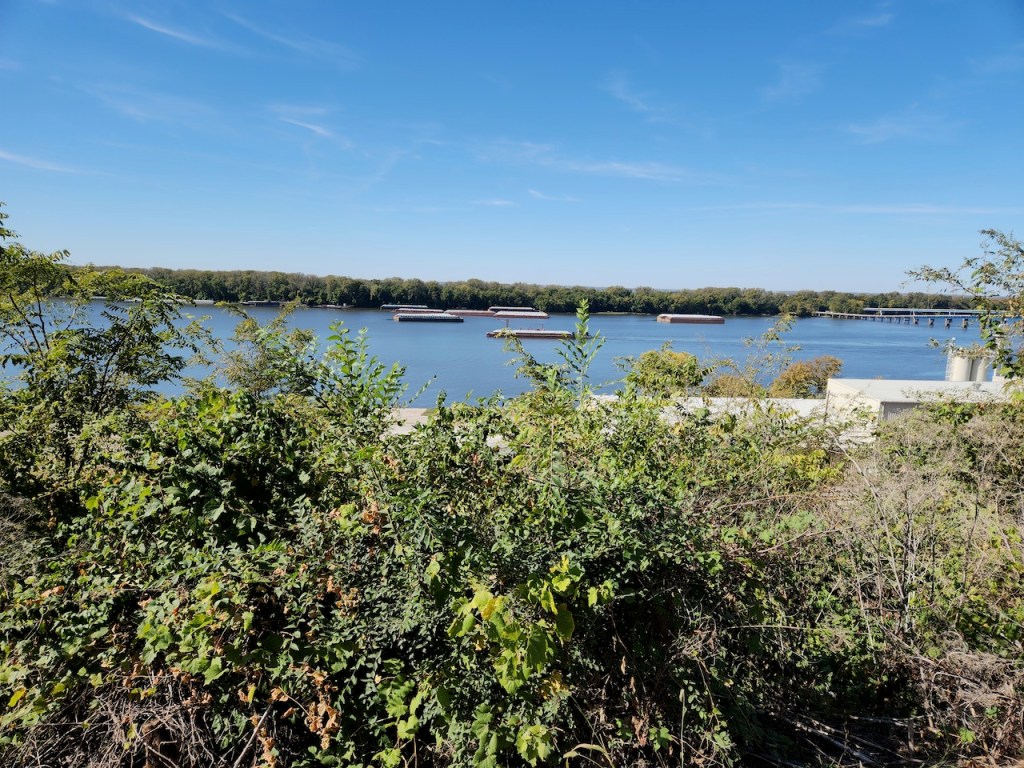
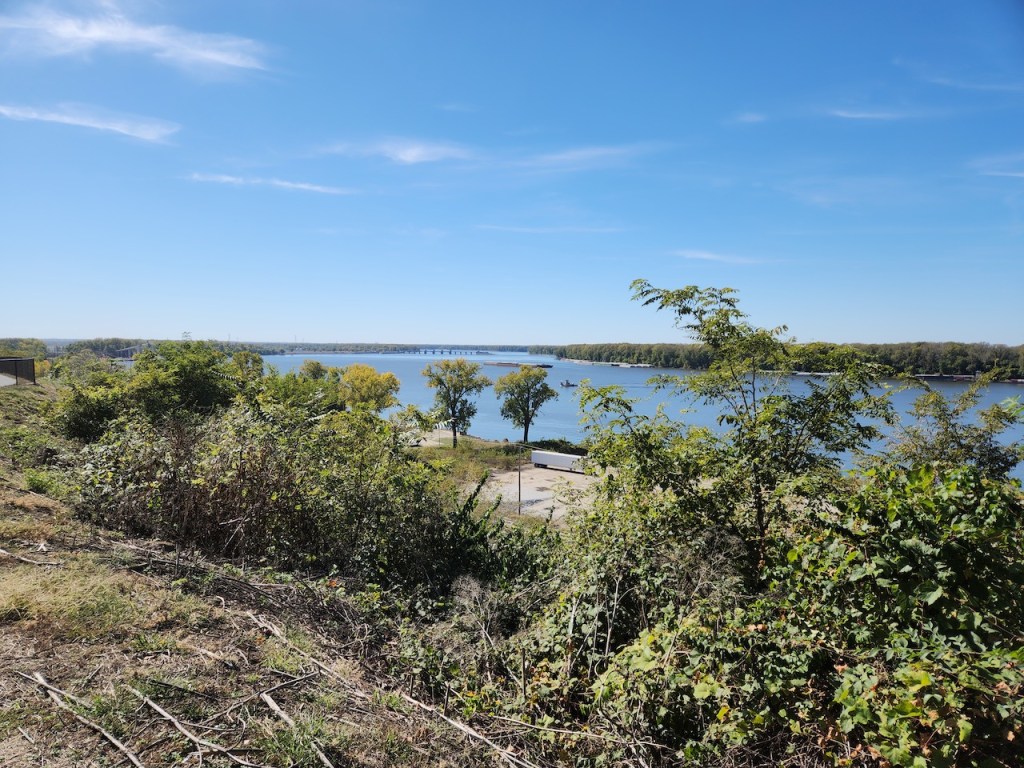
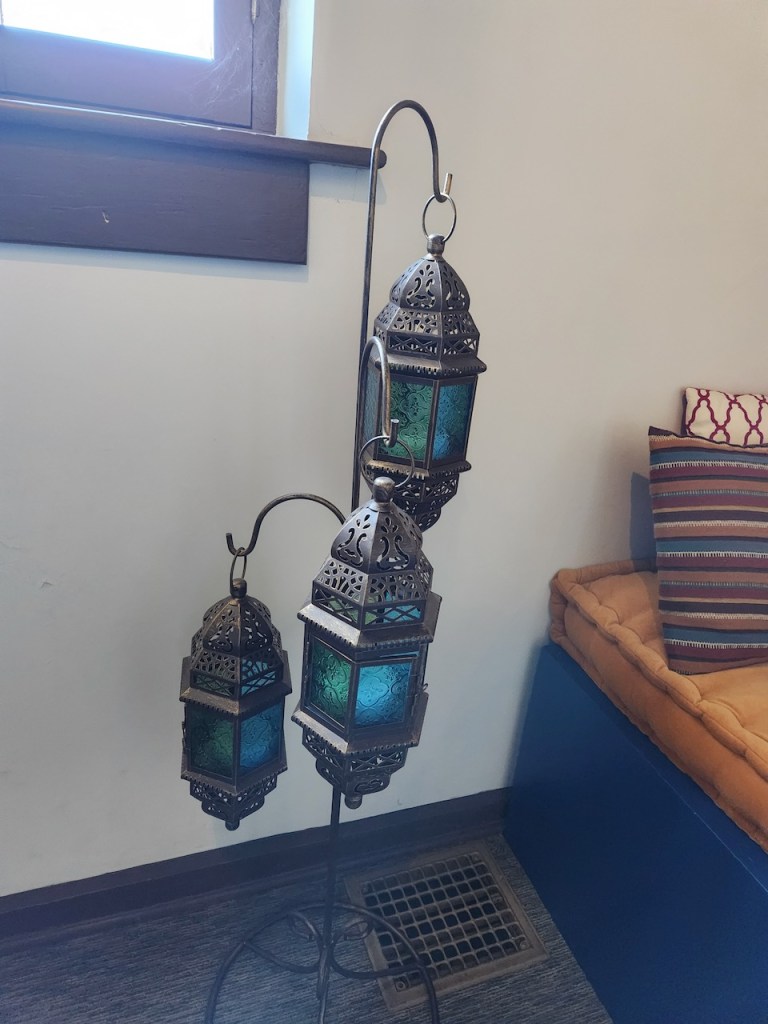
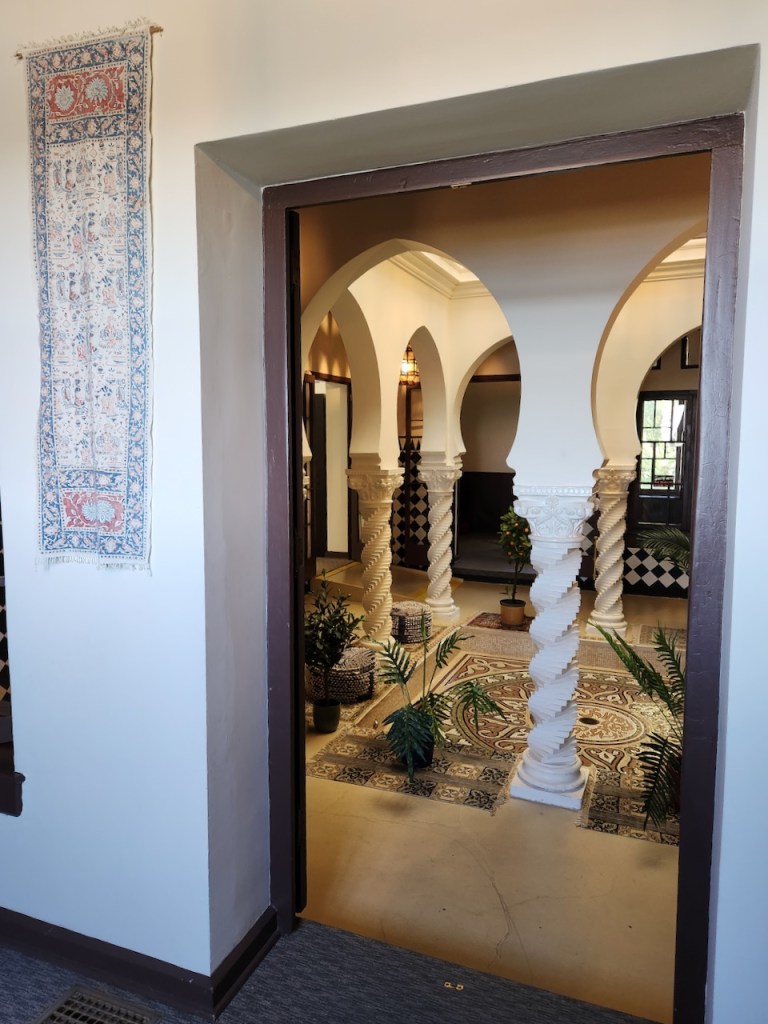
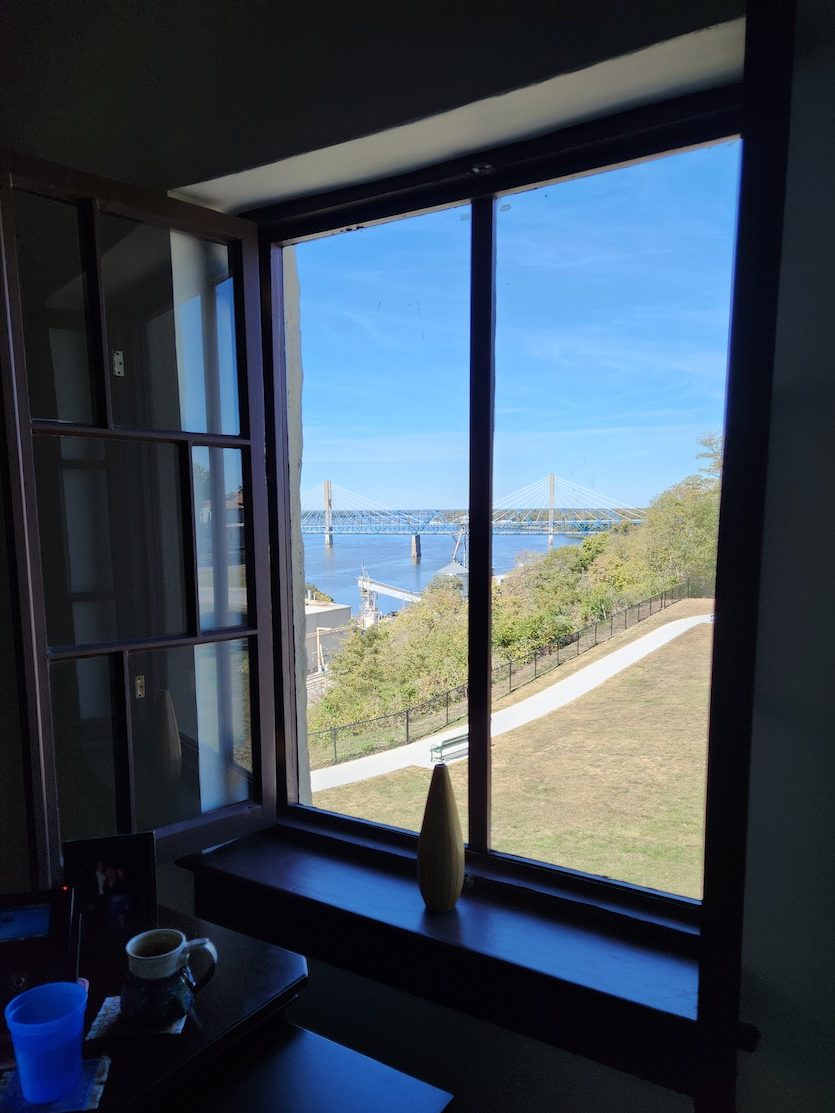
We went to the visitor’s center In Quincy, IL, which is in a house built in the Moroccan style in 1900. The Villa Kathrine was built For George Metz from sketches that he made of Islamic architecture he had seen during his travels, especially a castle he had seen in Algiers. It was built on a bluff overlooking the Mississippi River. As the house was sold in 1912, and fell into disrepair by the 1950’s, there are not many original furnishings that are left. This blue lantern is one of them.
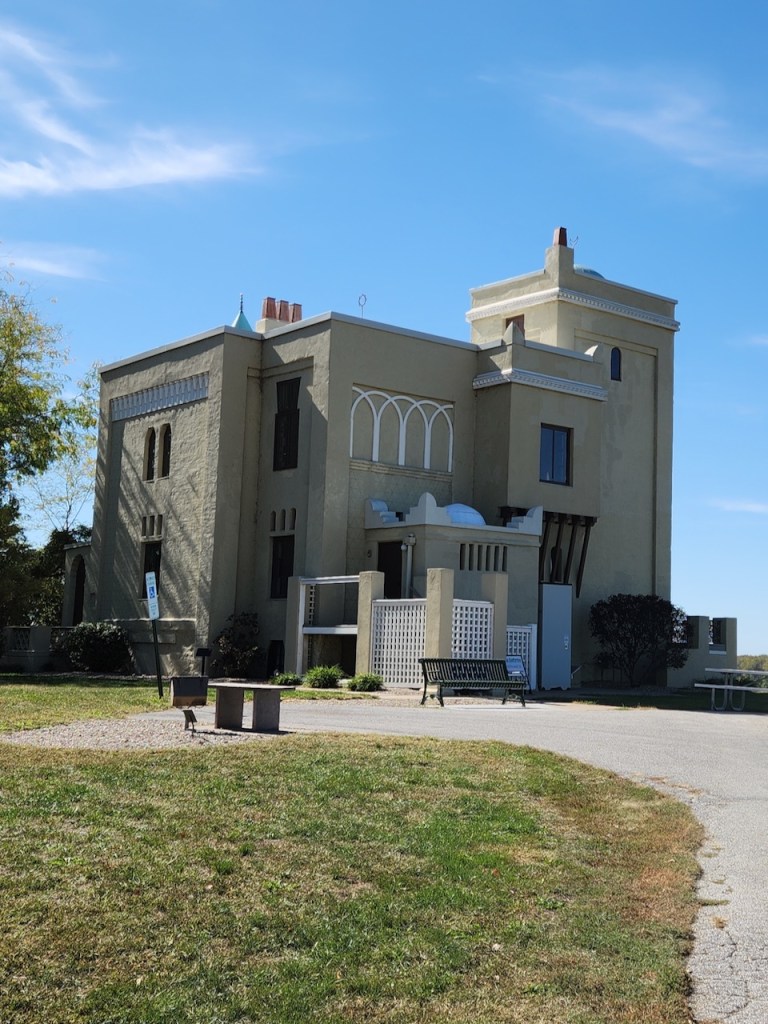
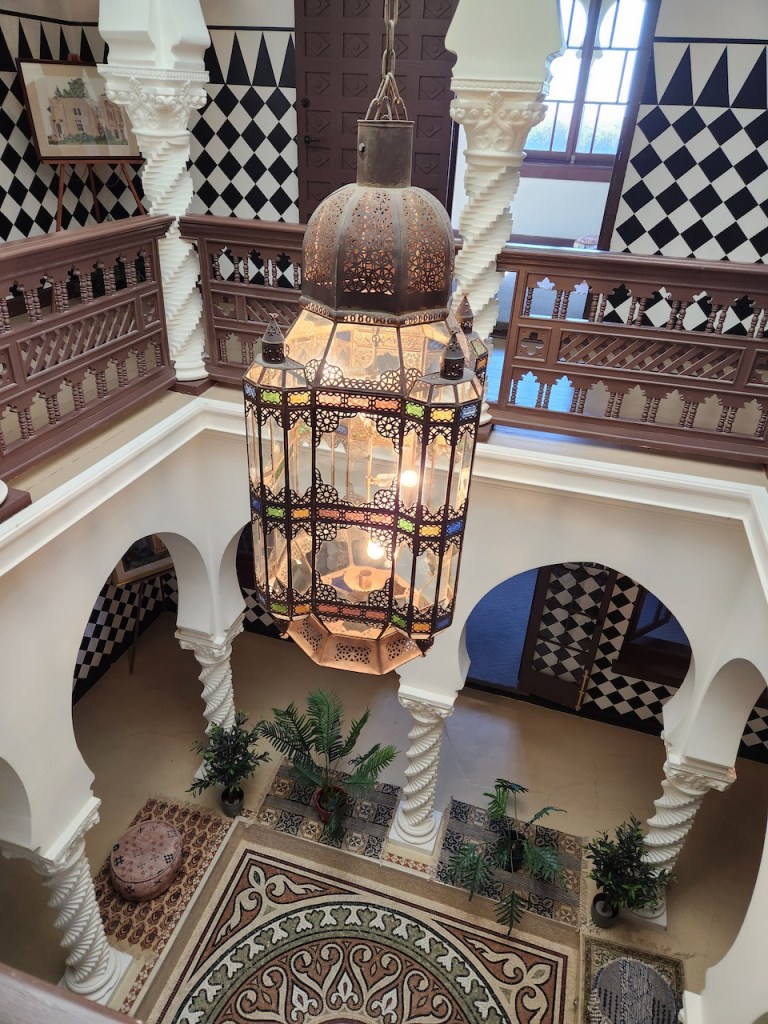
The building was saved from demolition in the 1980’s and restored by 1998, by The Friends of the Castle. All of the interior moldings and doors are original, note the columns are made of from square pieces of wood layered to create the spiral. And they have used the original colors and designs to paint and tile the walls. The view of the Mississippi from the master bedroom – it didn’t have the bridge or all that industry in 1900.
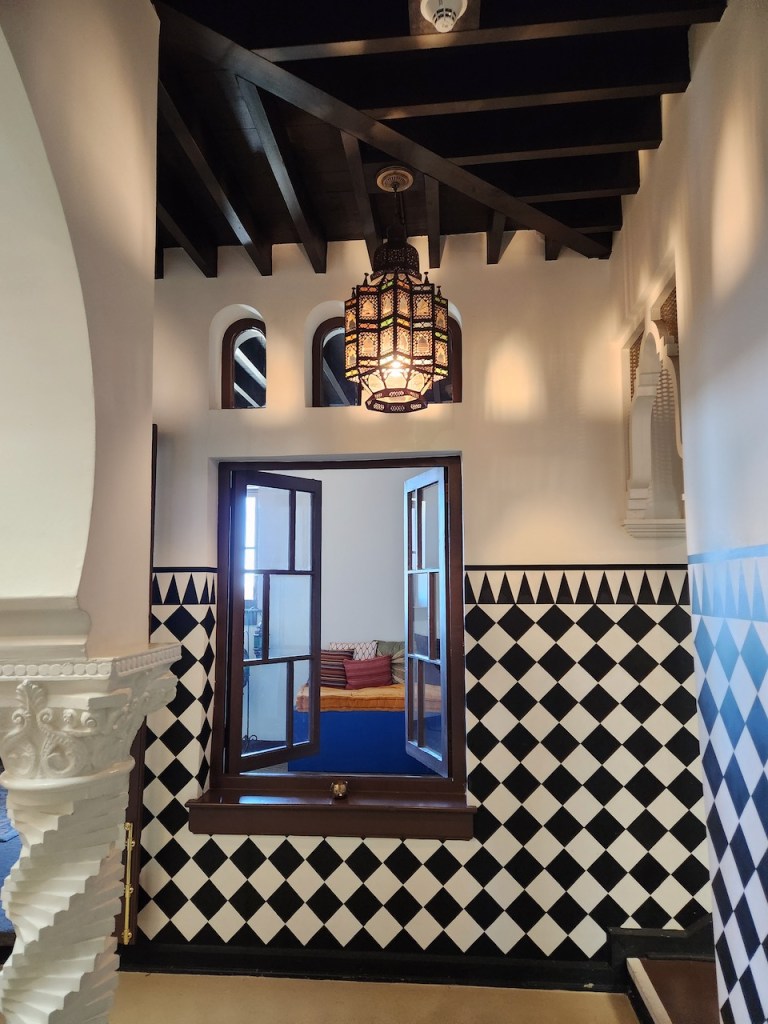
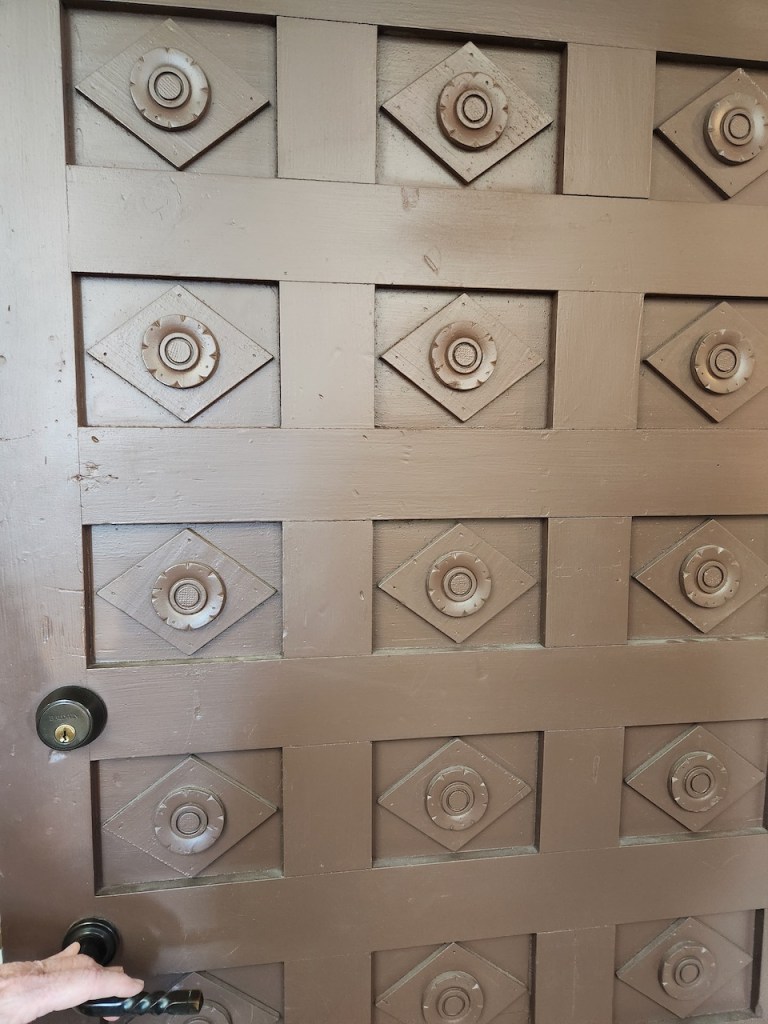
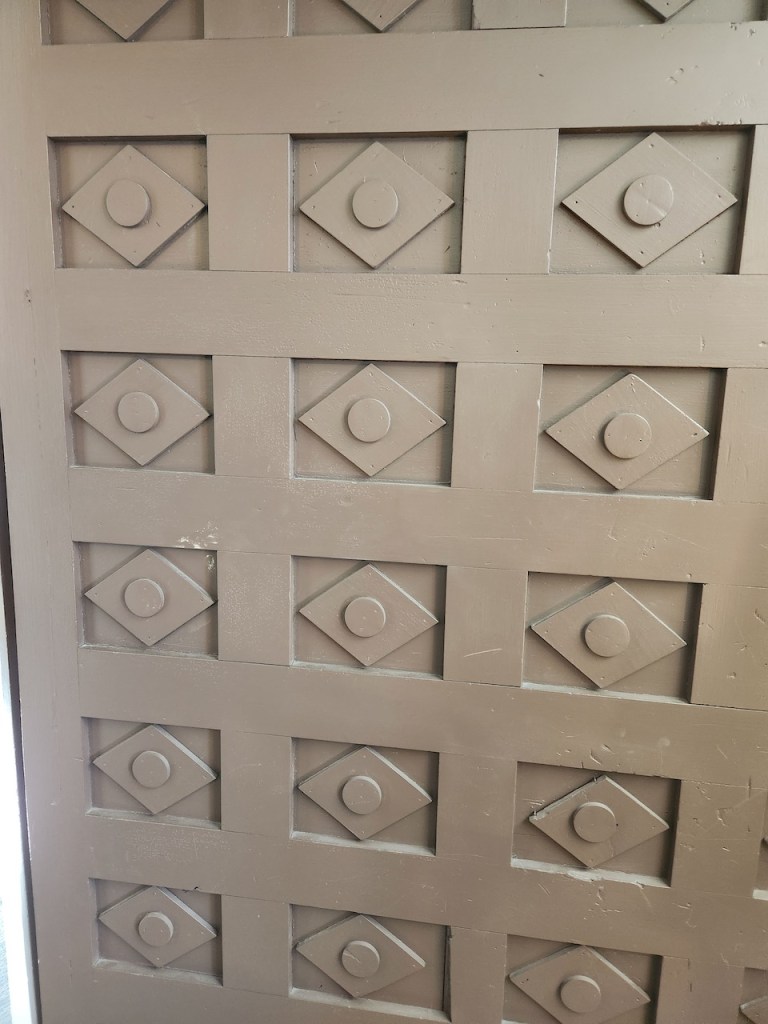
This is an original door – the hall side has rosettes inside the diamonds while the side in the room has circles inside diamonds. Better to impress the guests.
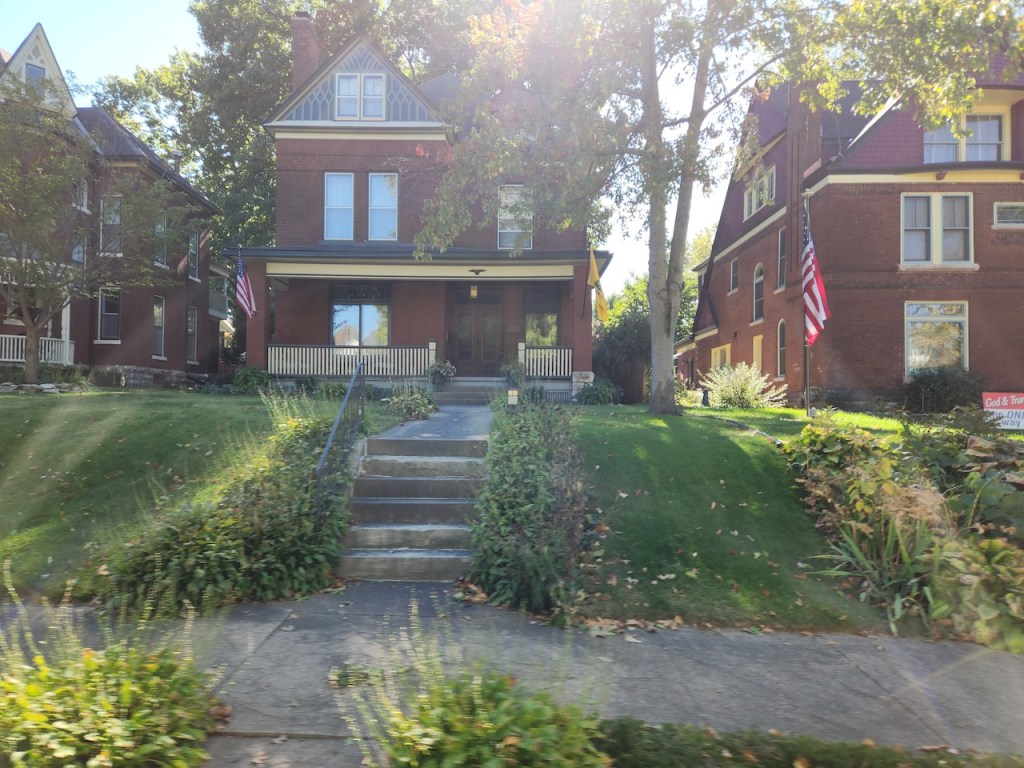
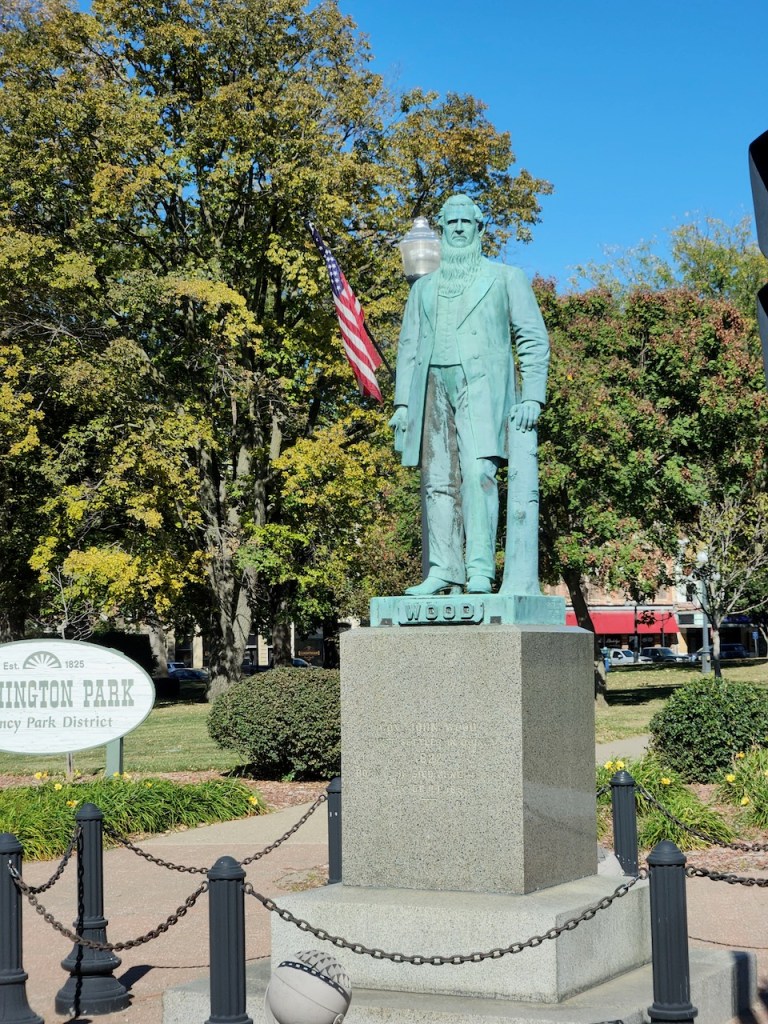
Houses on the streets of Quincy, IL.
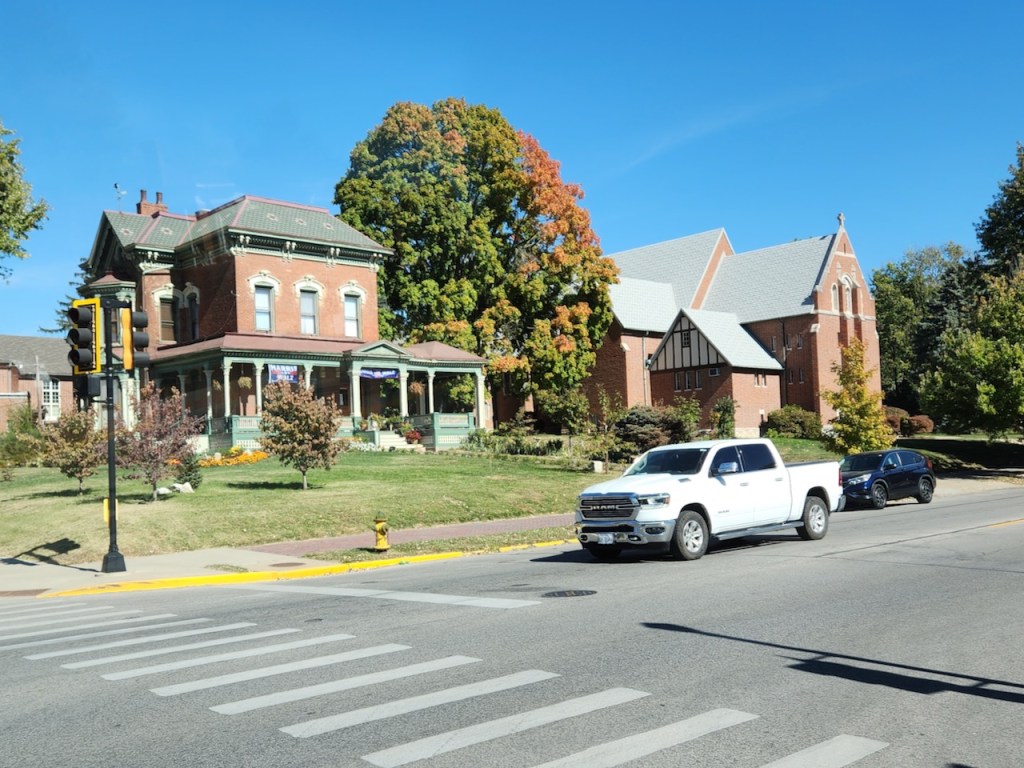
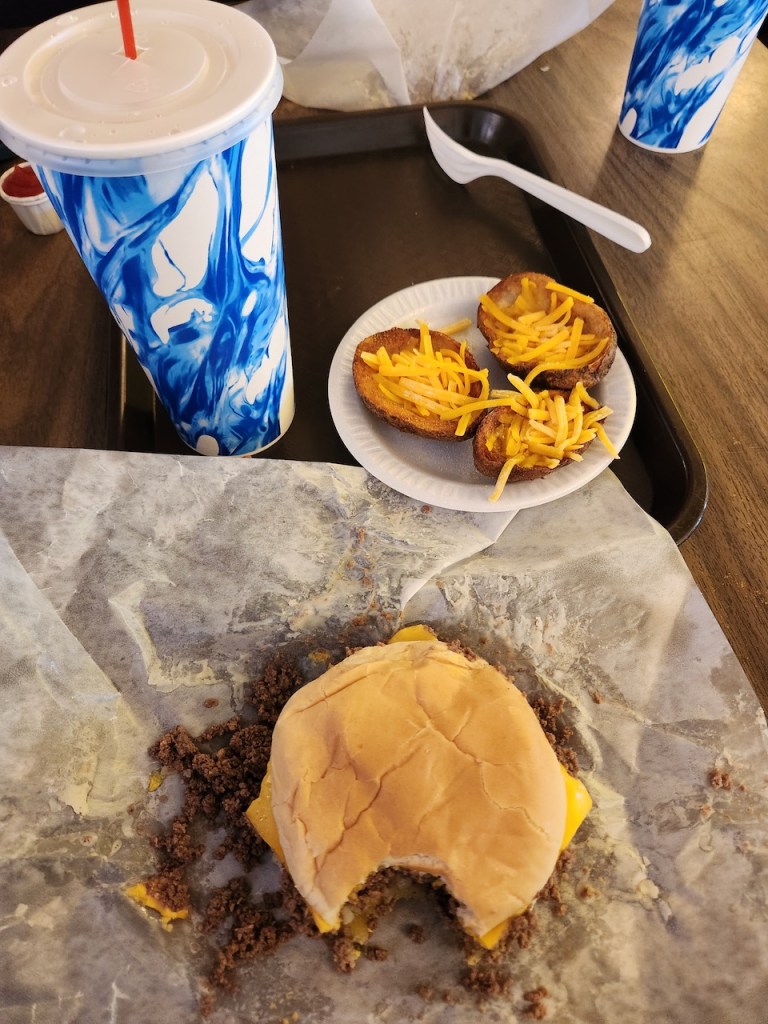
We had heard that while we were in Illinois we should have a Maid-Rite sandwich – and that the store in Quincy was one of the originals. Turns out a Maid Rite is like a Sloppy Joe. It was good, but we don’t have to search it out next time we are through the area.
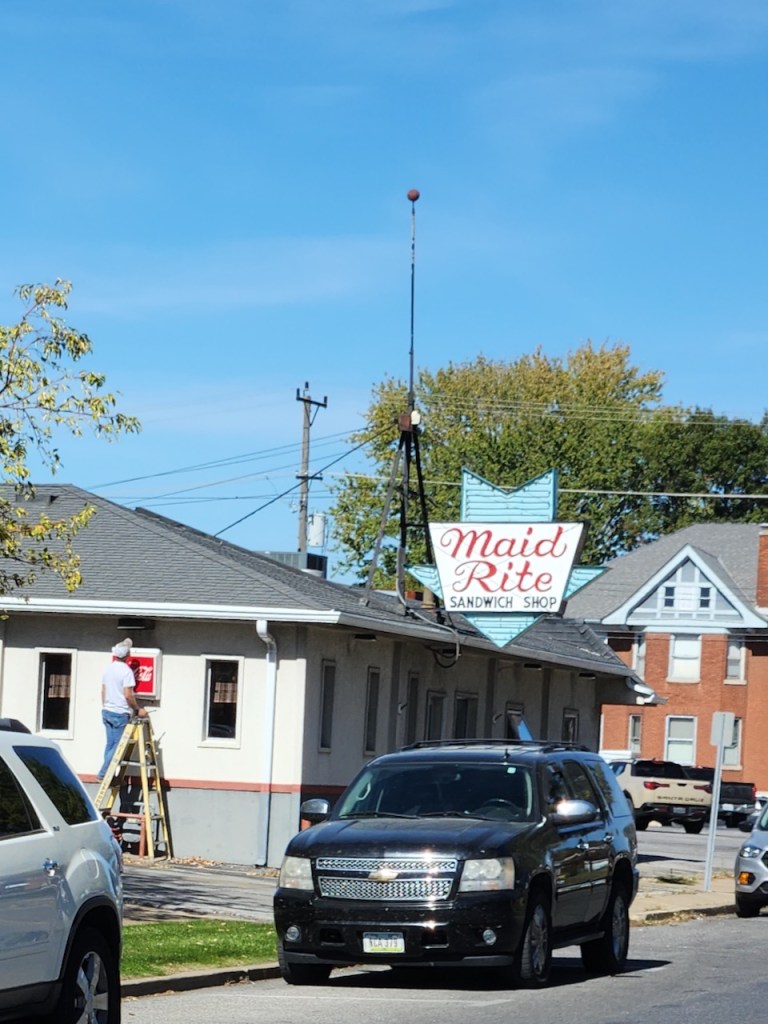
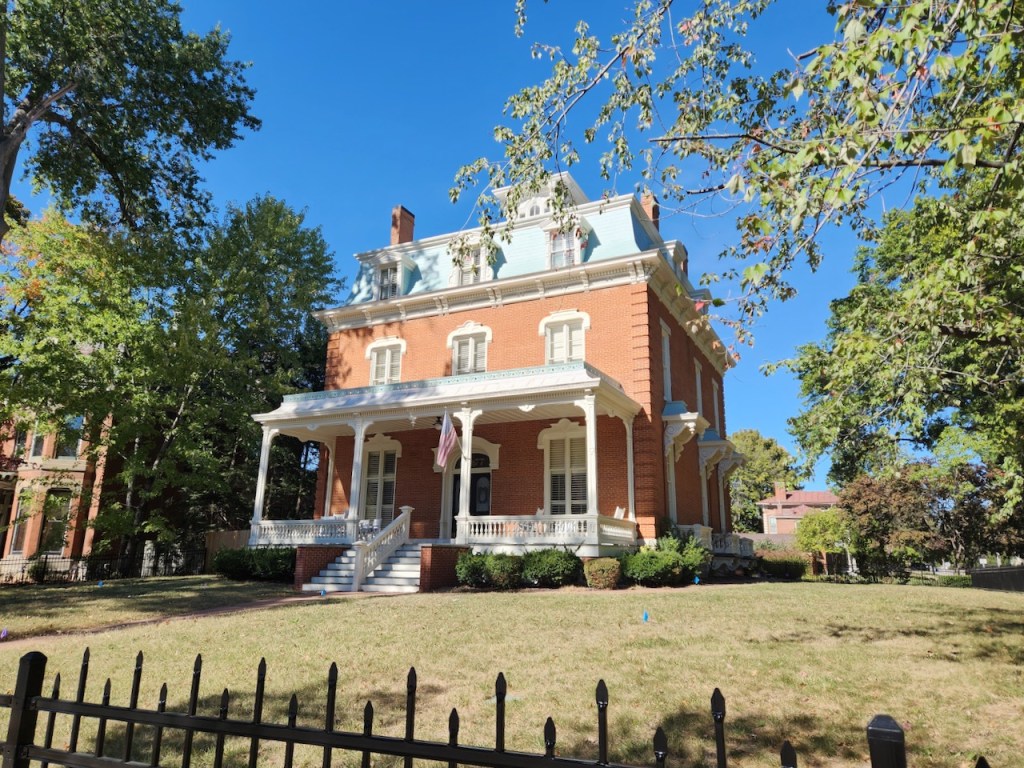
More small town views in Quincy.
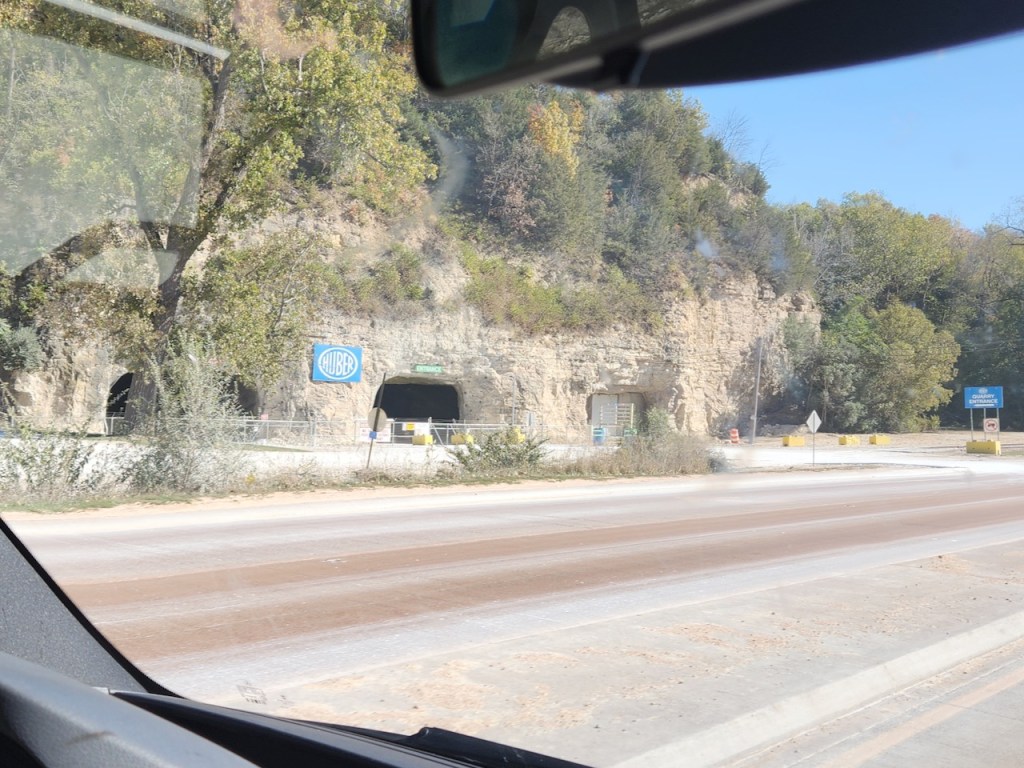
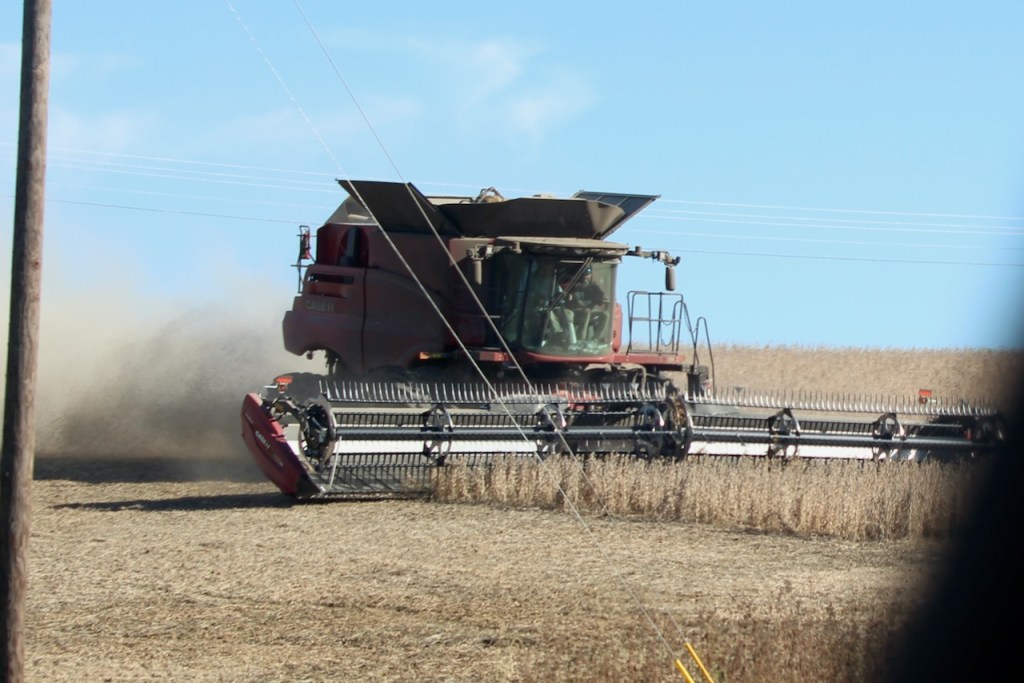
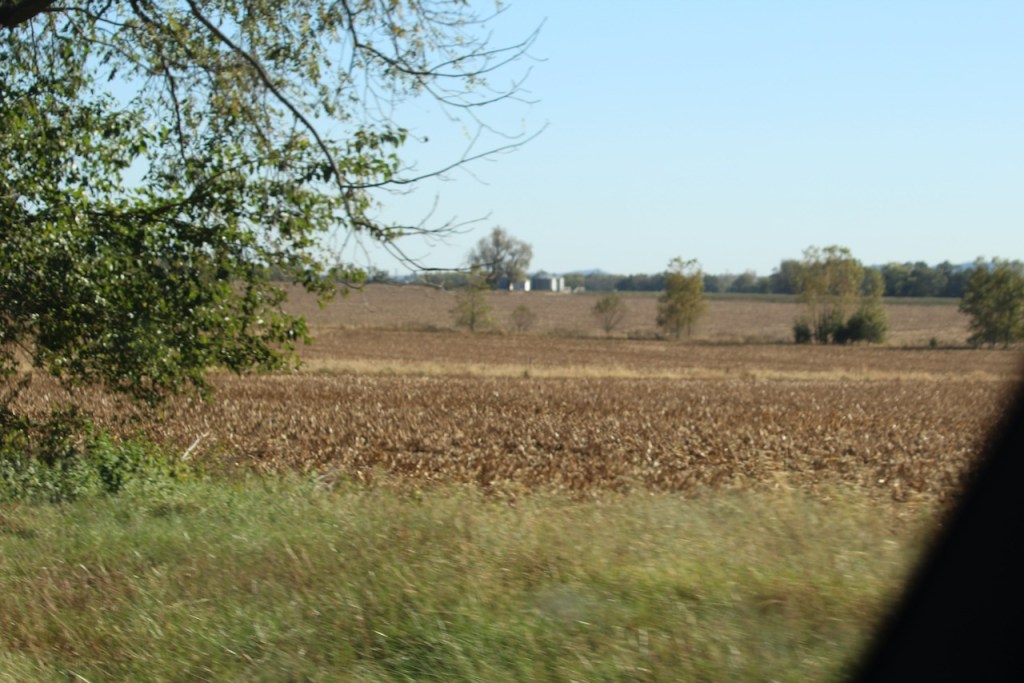
There were several of these mine opening along the road. Originally they mined limestone in the area, and now the caves that were created are used for storage spaces. We traveled by many more soy and corn fields being harvested.
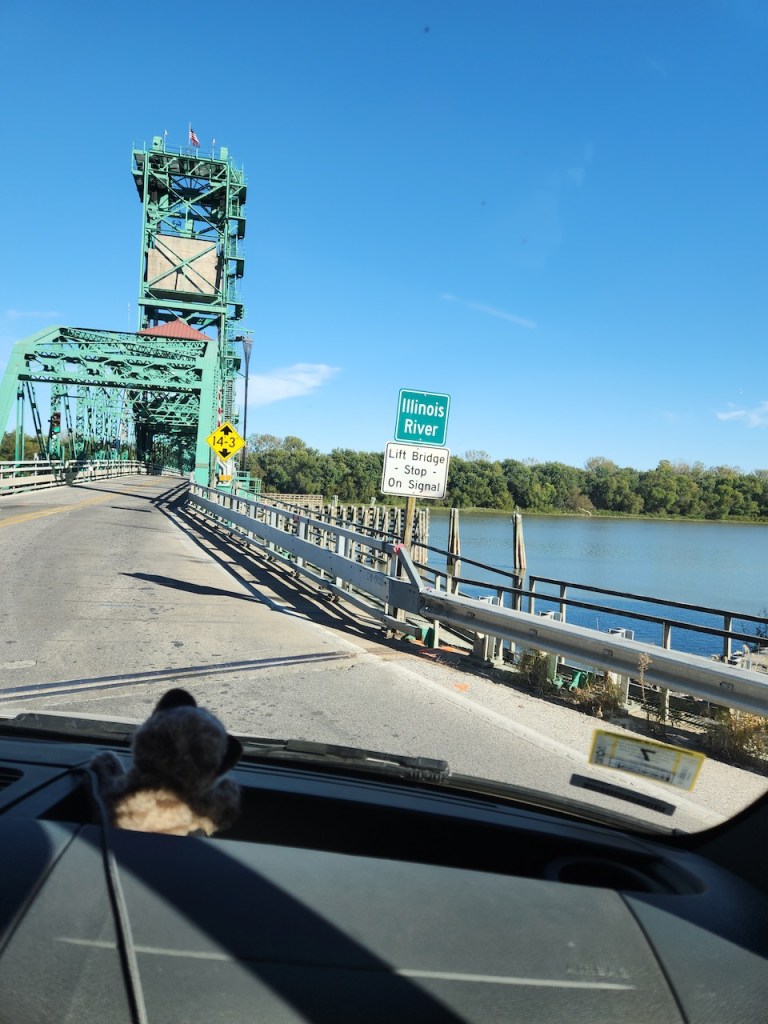
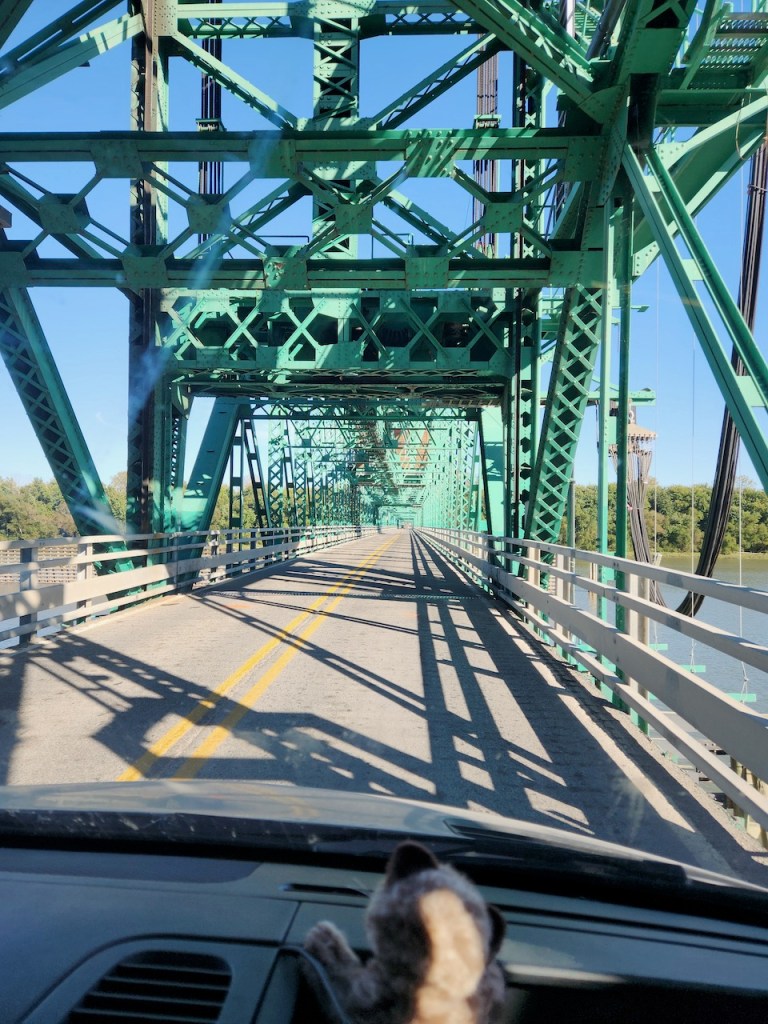
Not the Mississippi River – we were getting close to where the Illinois River joins the Mississippi and we made our way across it to our camp ground for the night.
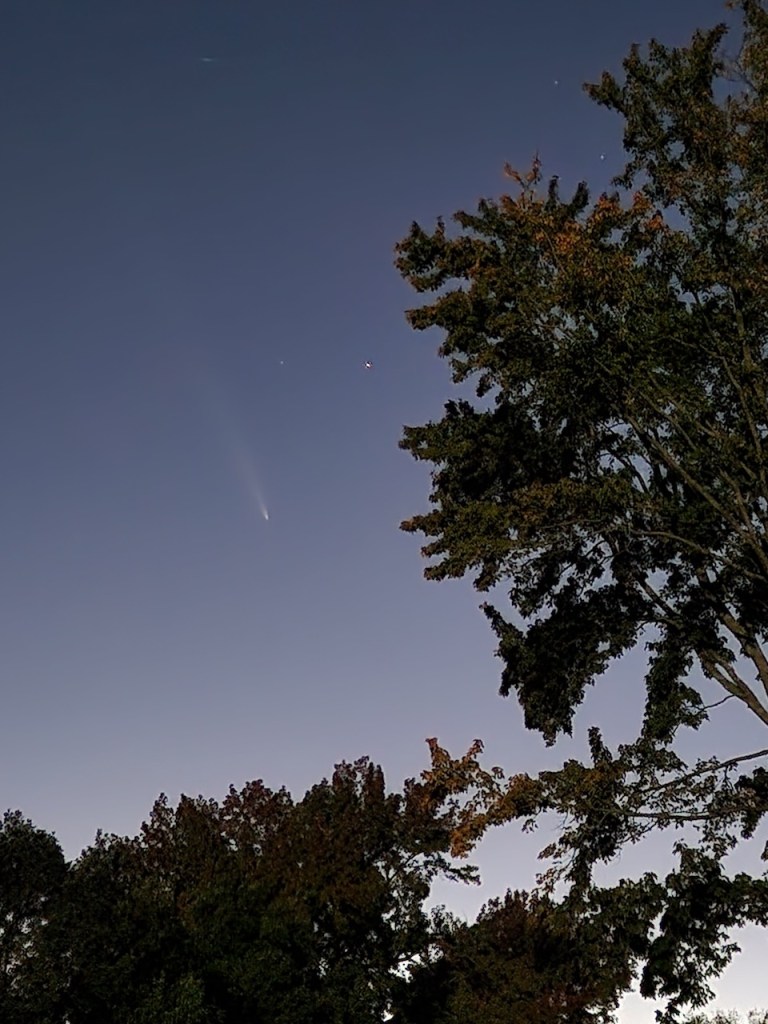
Finally at Pere Marquette State Park we had success with our comet hunting.
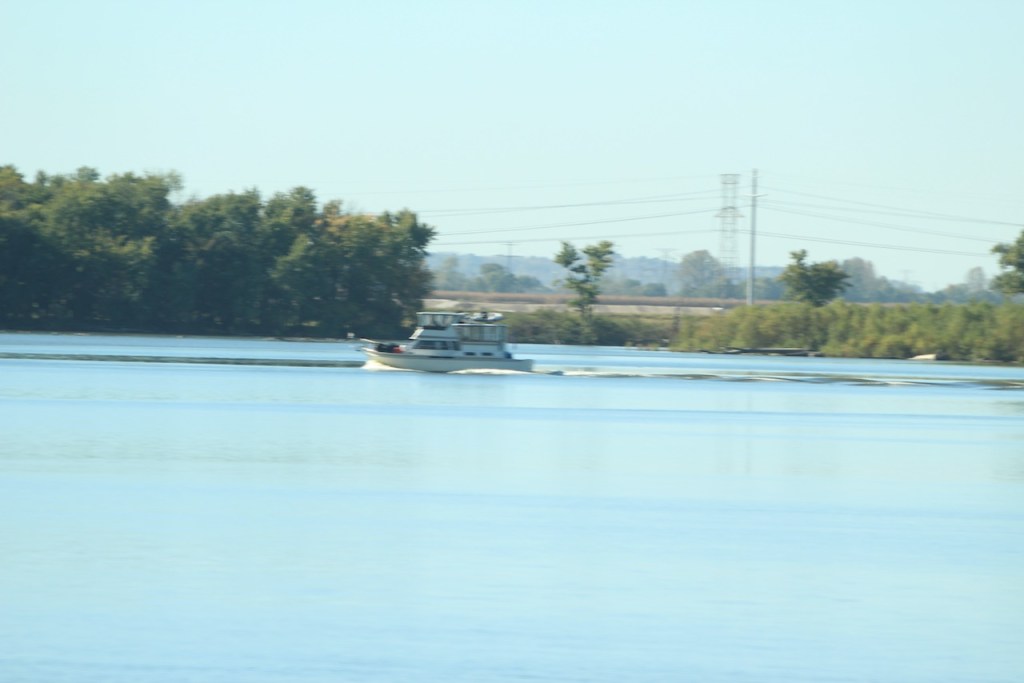
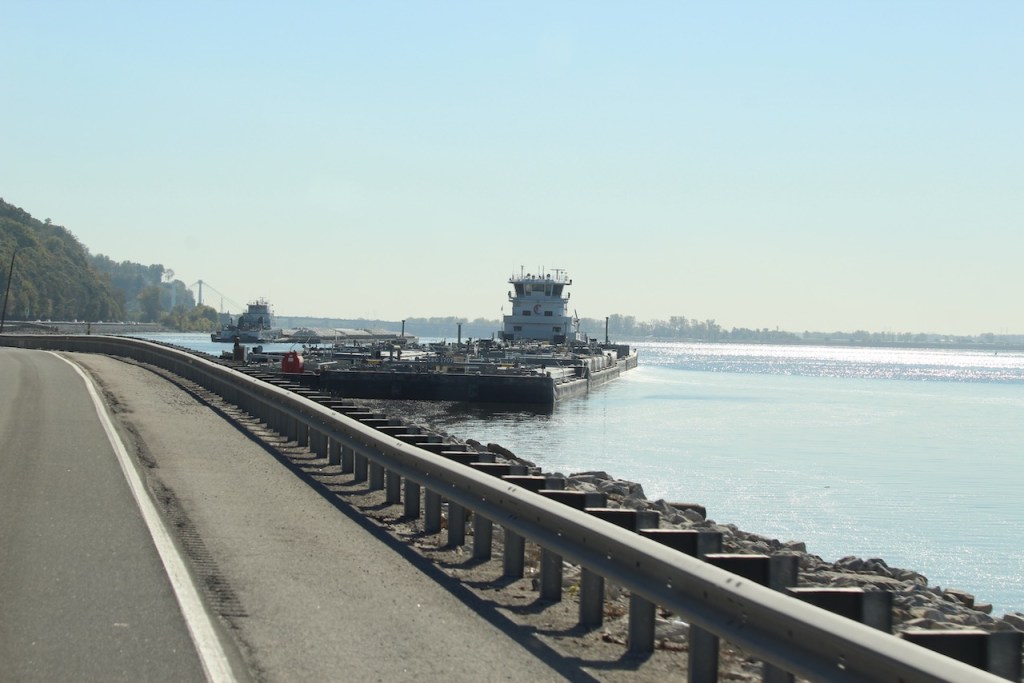
On Thursday, October 17 we drove one of the prettiest parts of the GRR. It starts along the Illinois River around Grafton and then you go to the confluence of the two rivers at Alton. We had driven most of this before, in 2018 when we met Bruce and Sue on the Great Loop boat trip. We saw some loopers, some great scenery, the marina where we met Bruce and Sue, and many more barges.
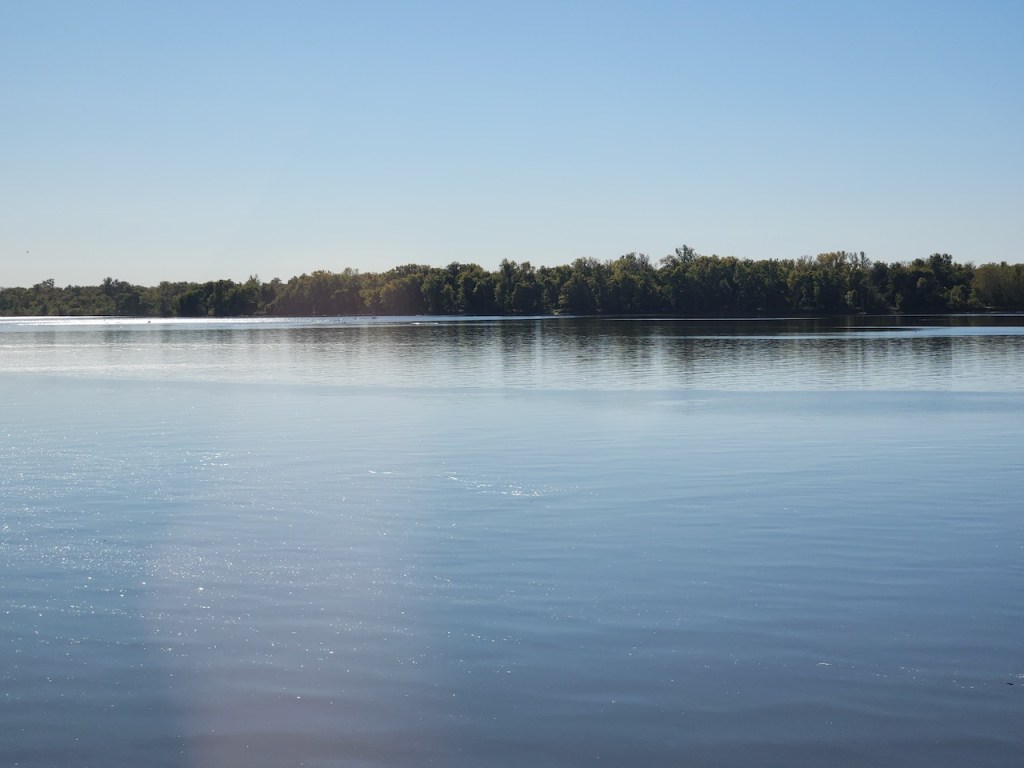
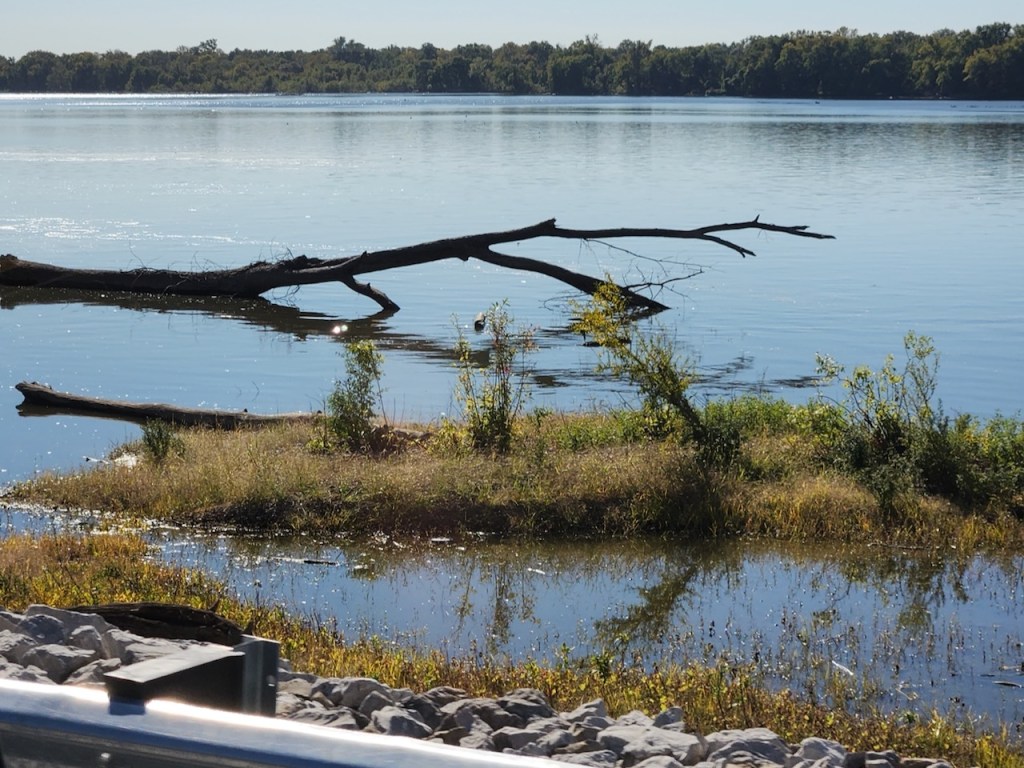
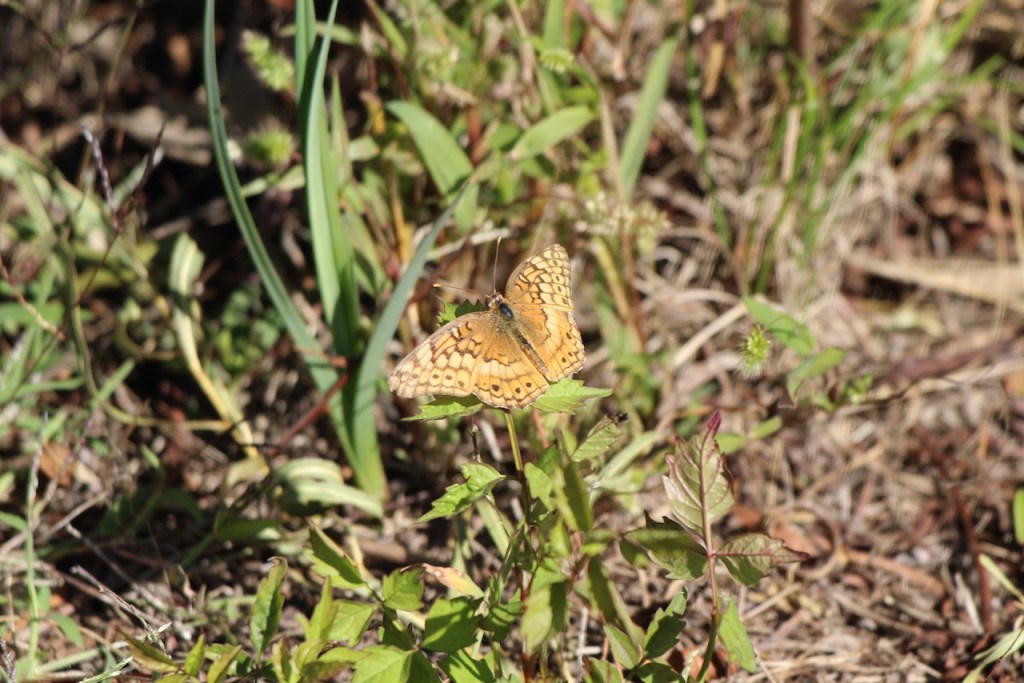
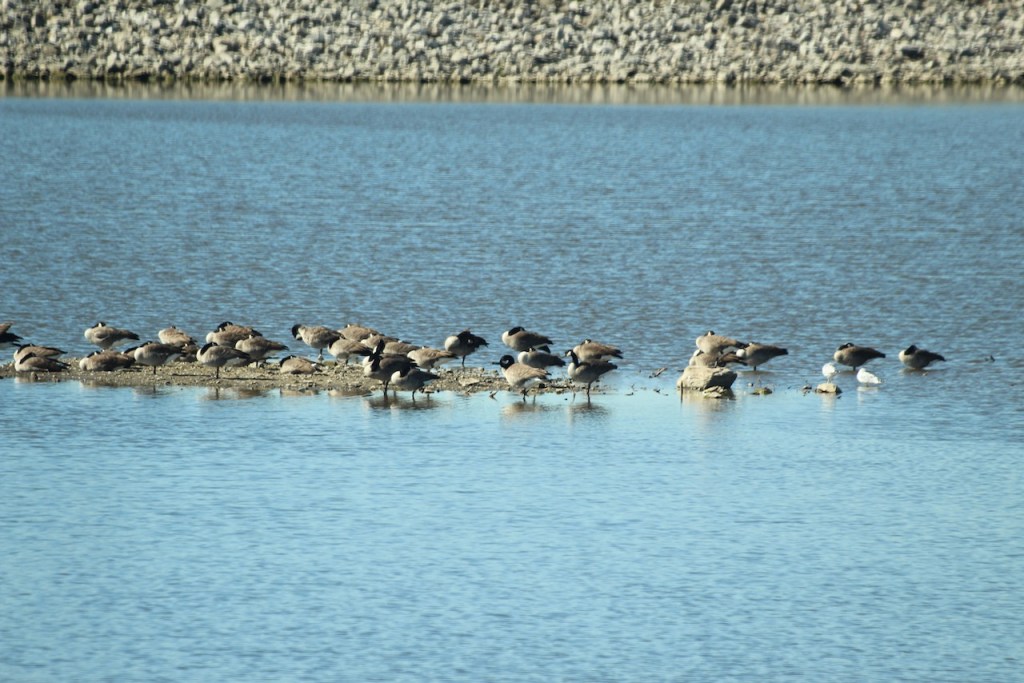
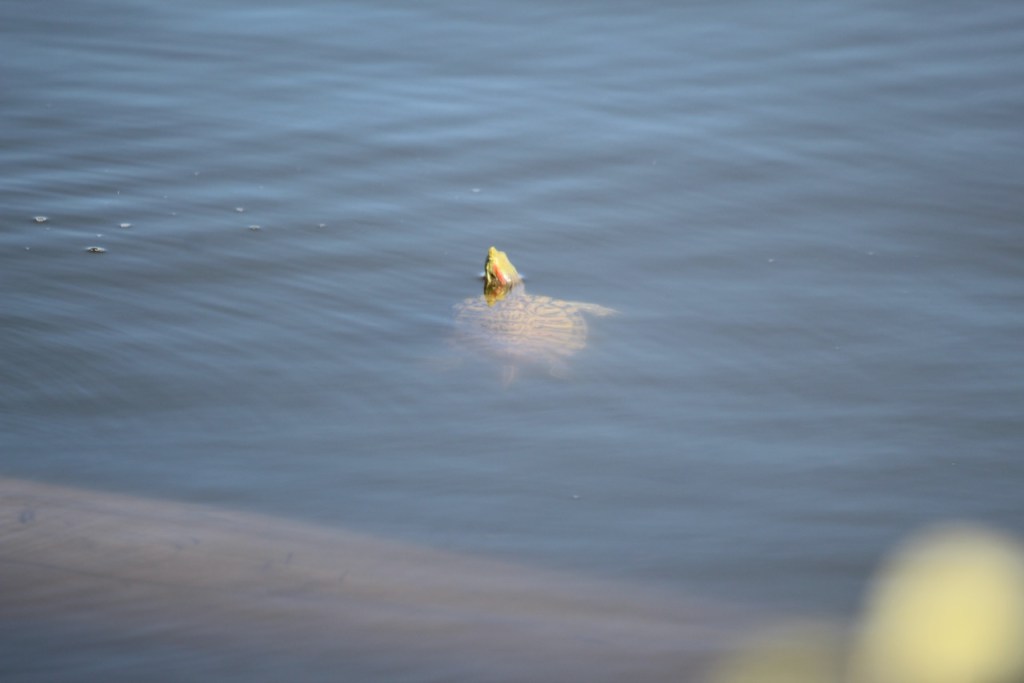
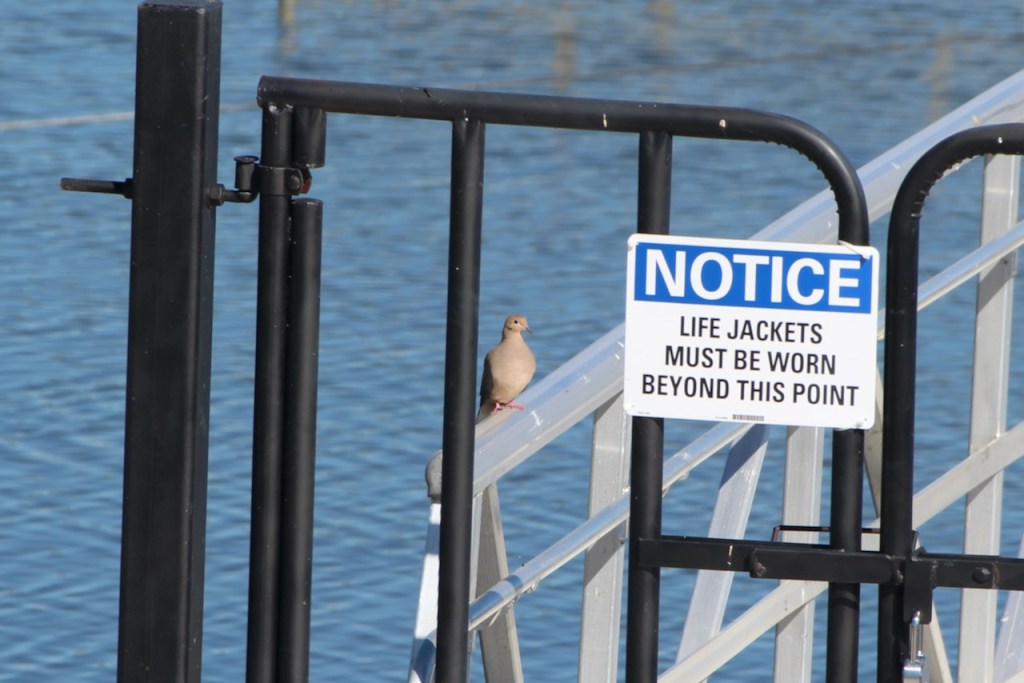
We took a walk at the Audubon Center at Riverlands. We didn’t spot too much on our walk – butterflys, Canada geese, turtles, and this morning dove that apparently can’t read the sign on the dock.
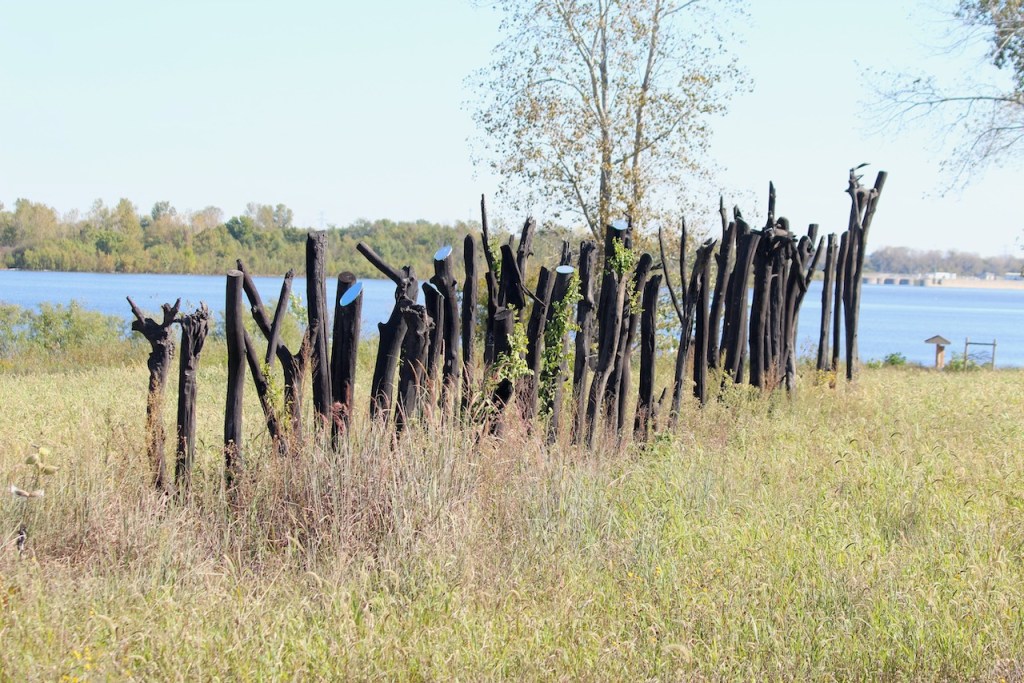
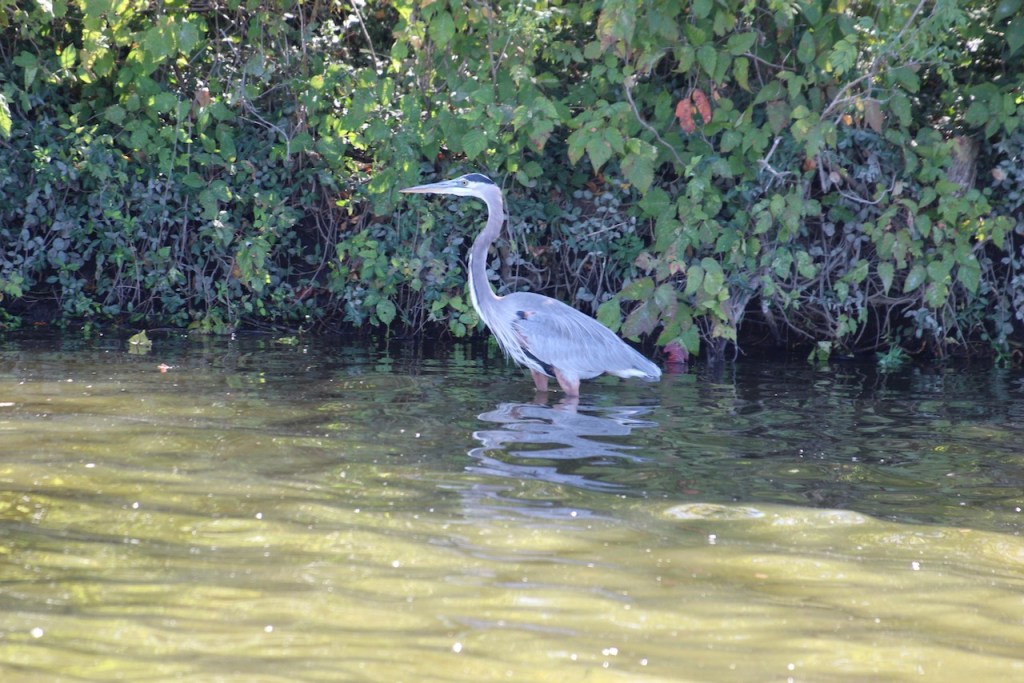
You were admonished not to climd on this sculpture. We we drove around to another viewing area, we did see this great blue heron.
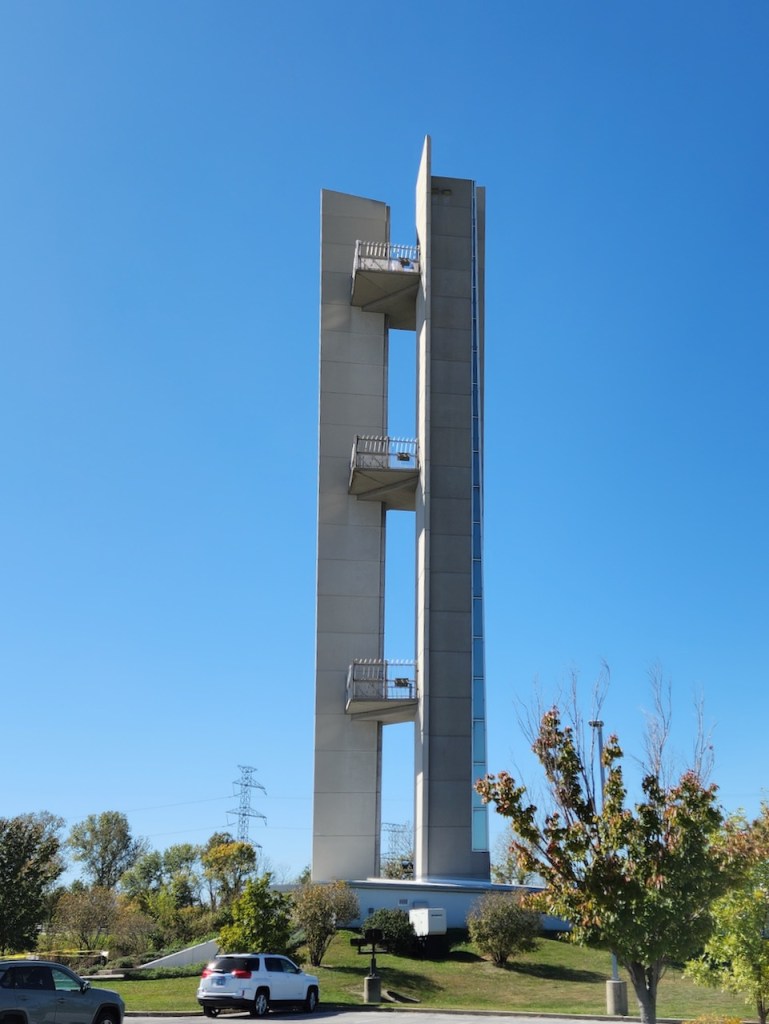
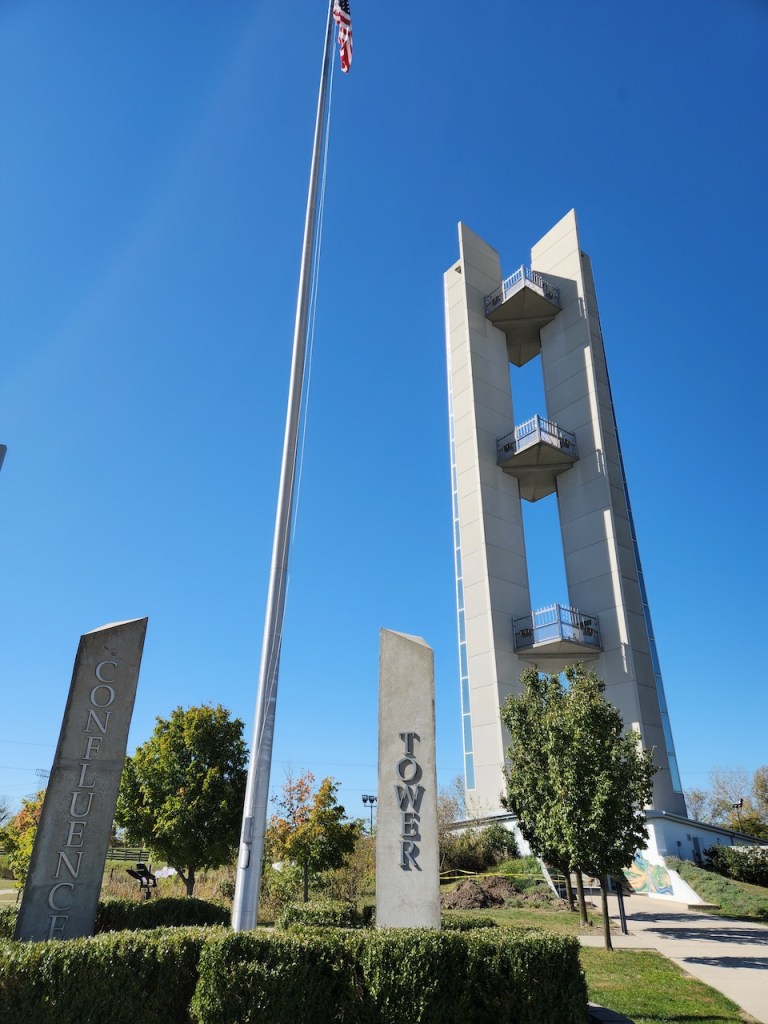
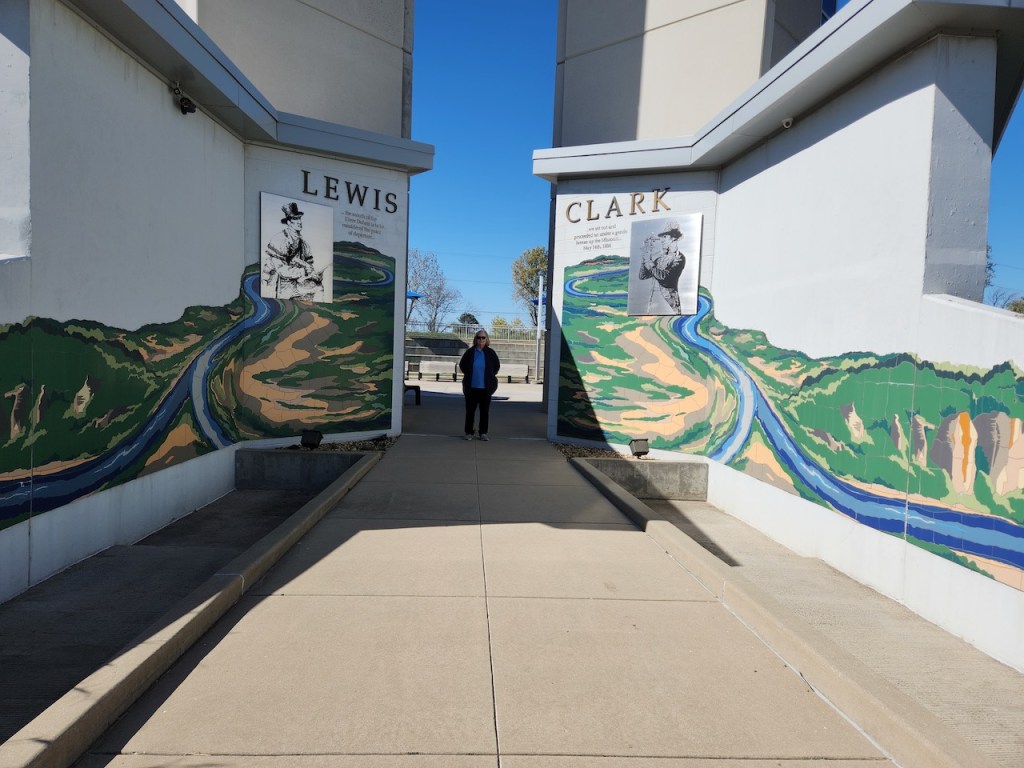
This is the Confluence Tower, overlooking where the Illinois and the Mississippi Rivers meet. It is over 150′ tall and you get to look at the view from 50′, 100′ and 150′. Not too far north of St.Louis, this spot is considered to be the start of the Lewis & Clark expedition. That’s our RV from 100′.
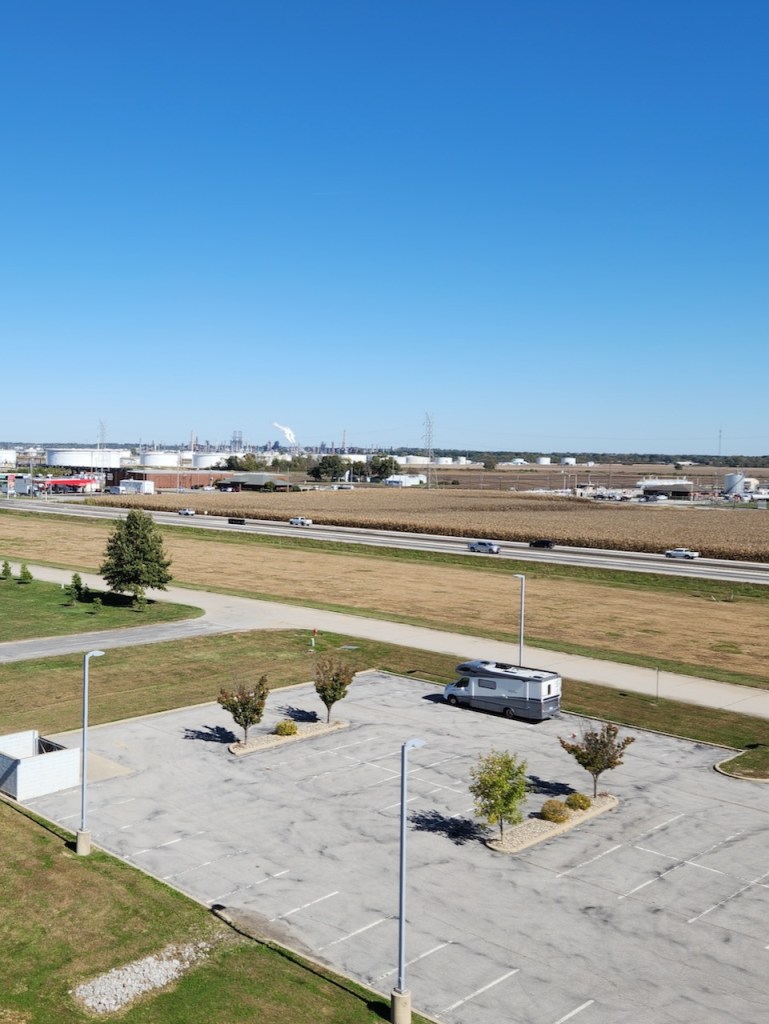
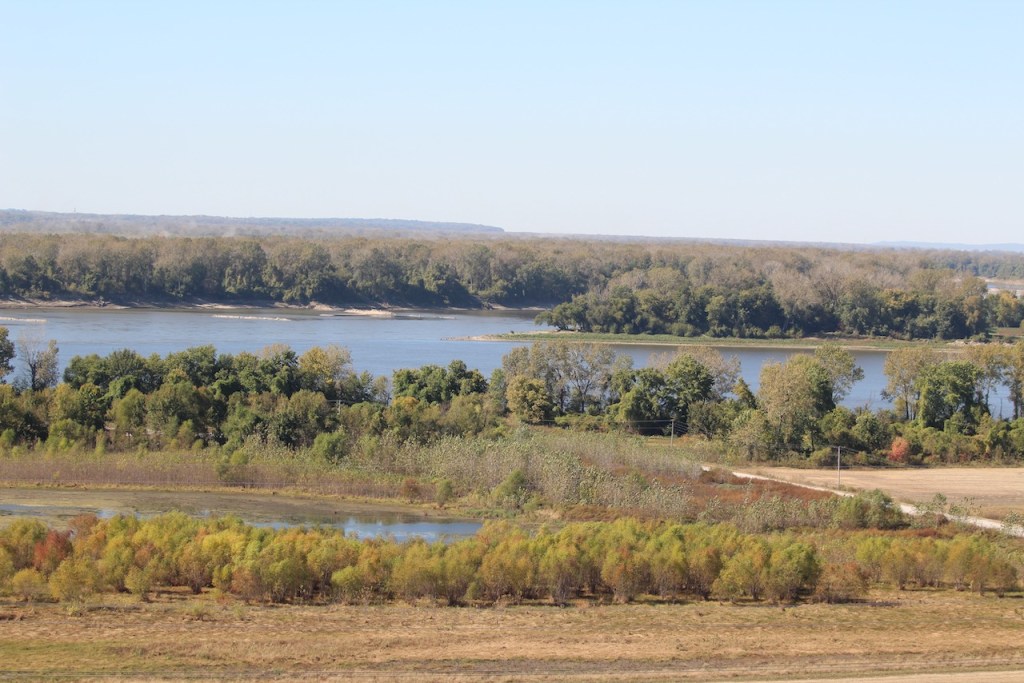
In the first picture the Illinois is the river that you can see coming in from the right, it joins the Mississippi about half way across the picture where you see that point of land. The 2nd picture is zoomed in on the Mississippi river.

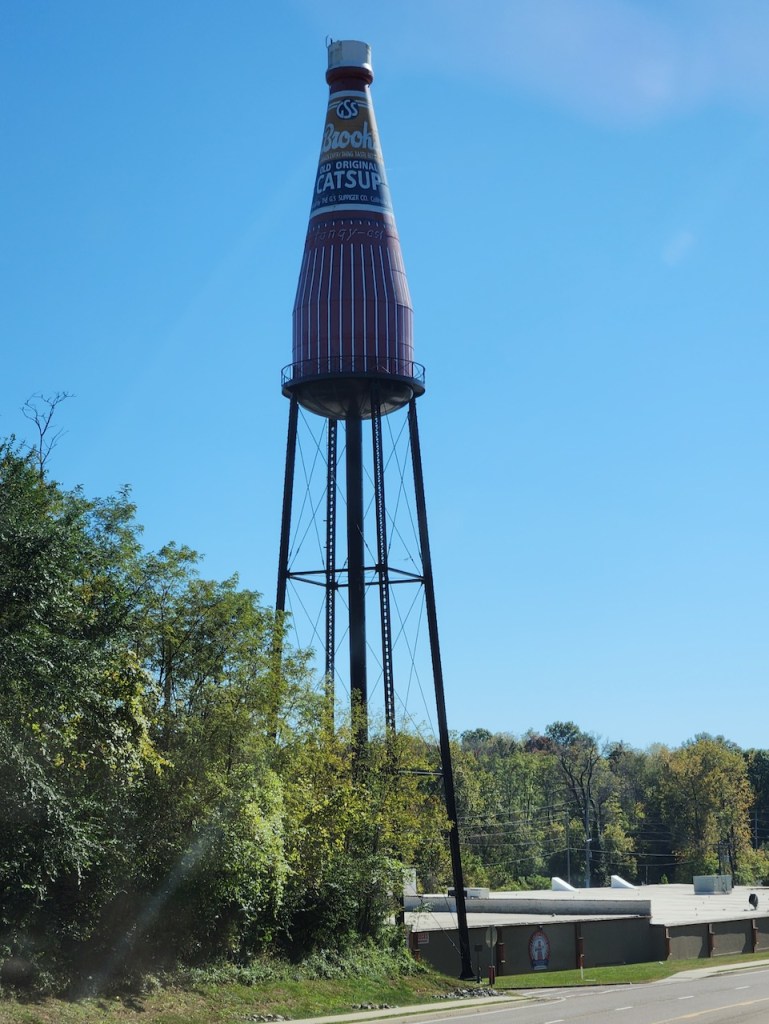
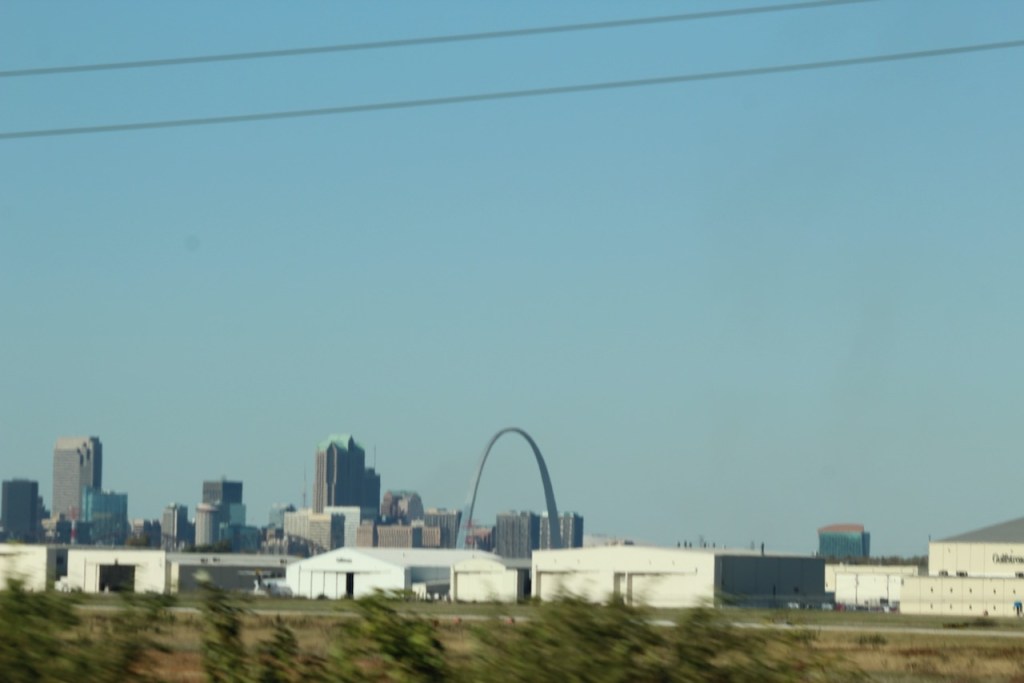
We drove by the Worlds Largest Catsup Bottle (actually a water tower) in Collinsville, IL. We did spot the Gateway Arch when we were driving around St. Louis, but it took my highest zoom to get this photo.
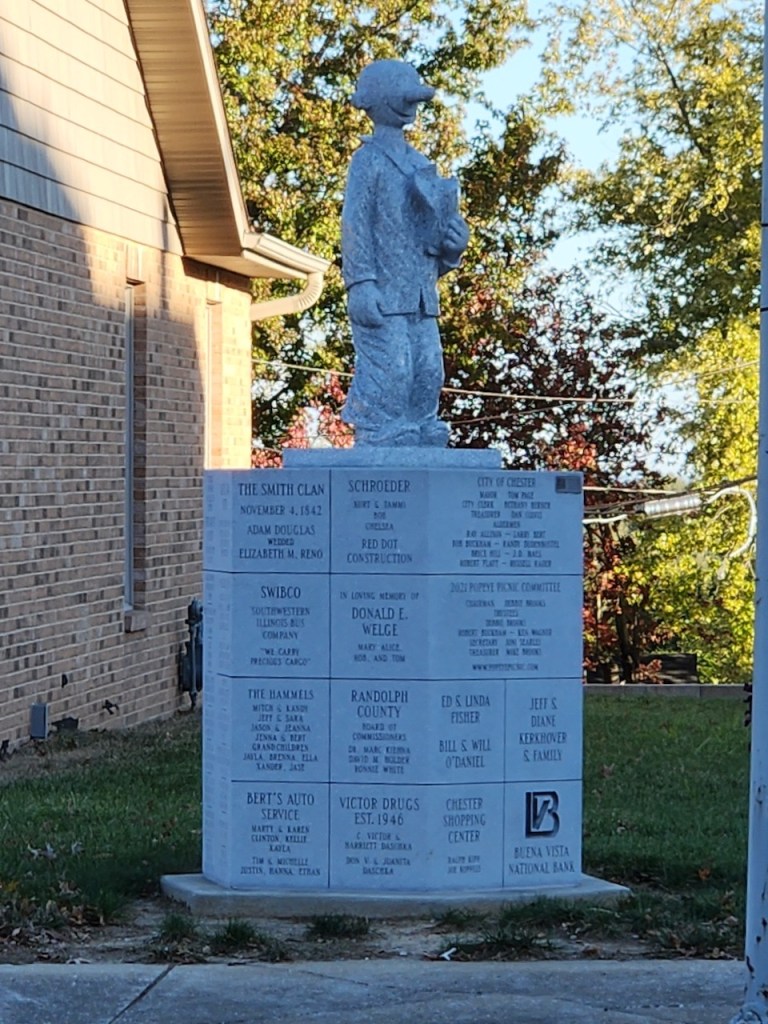
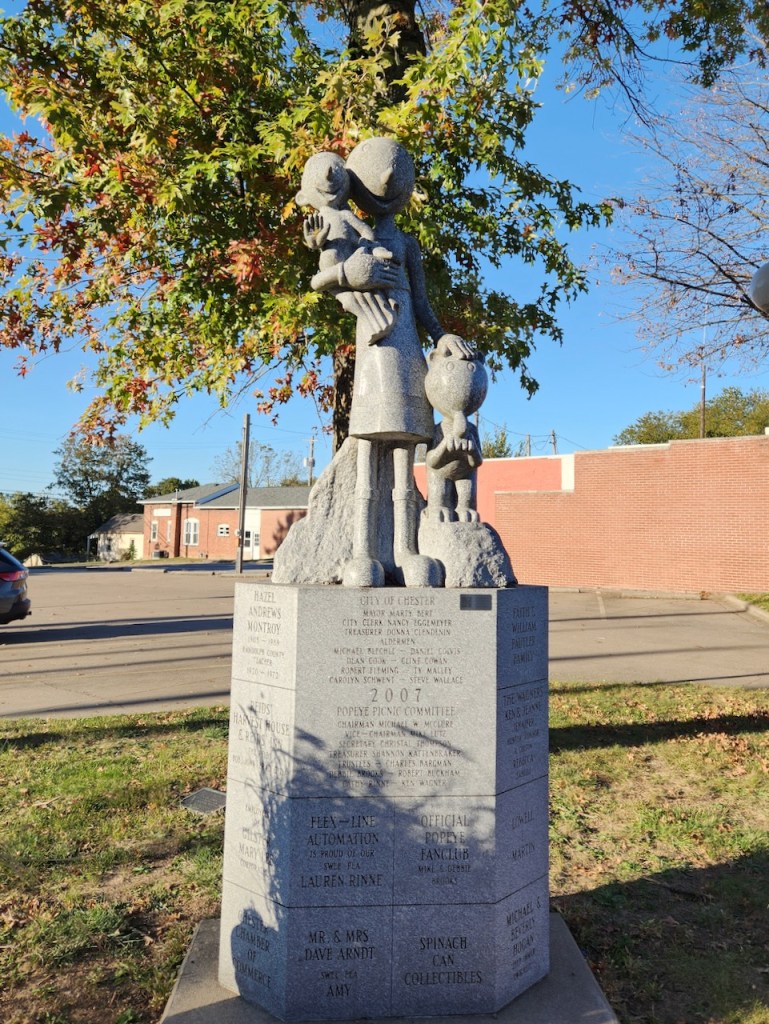
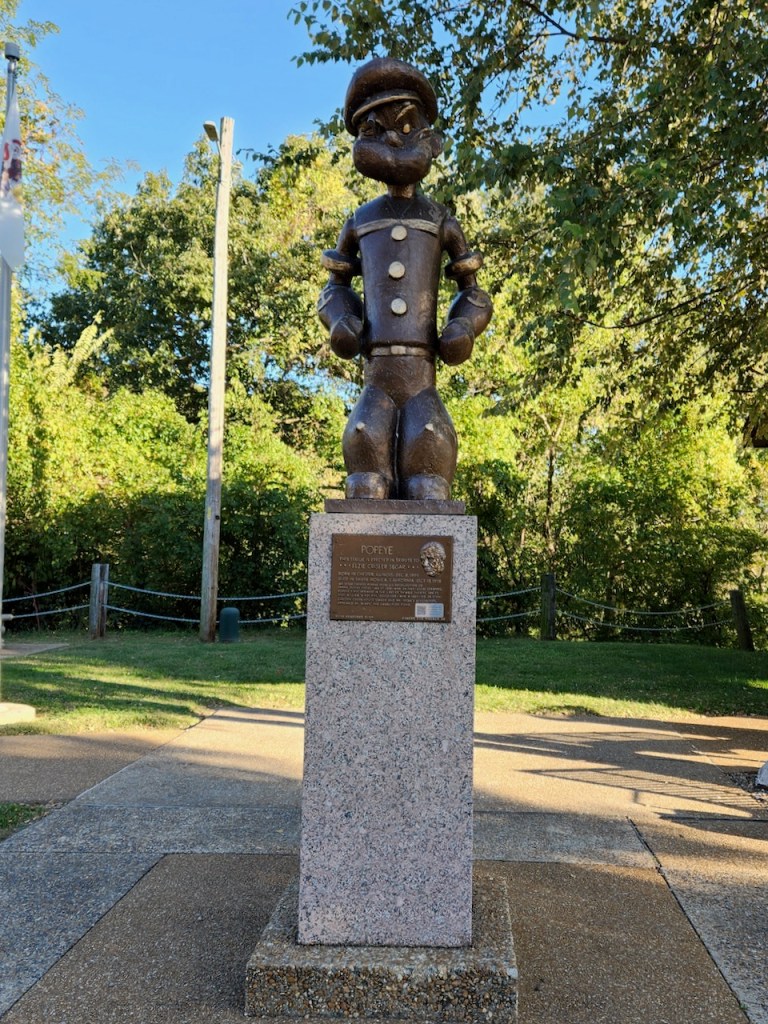
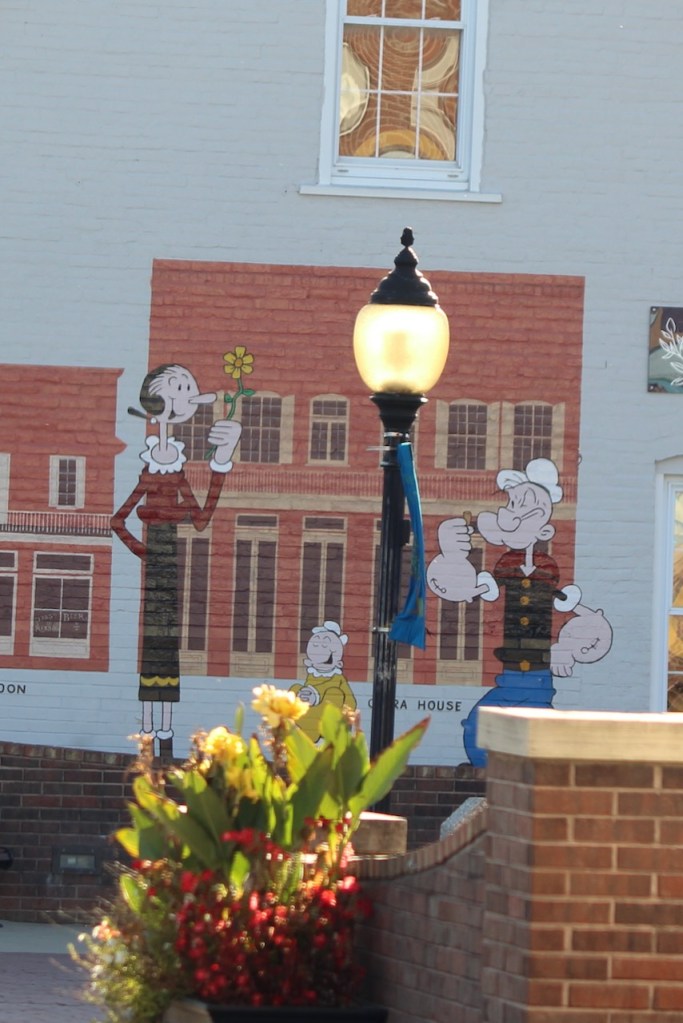
Our last stop of the day was Chester, IL. It is the home of Elzie C. Segar, who created the Popeye character. There are statues of Popeye and all of the other characters. We didn’t search for all of them, but here are a few
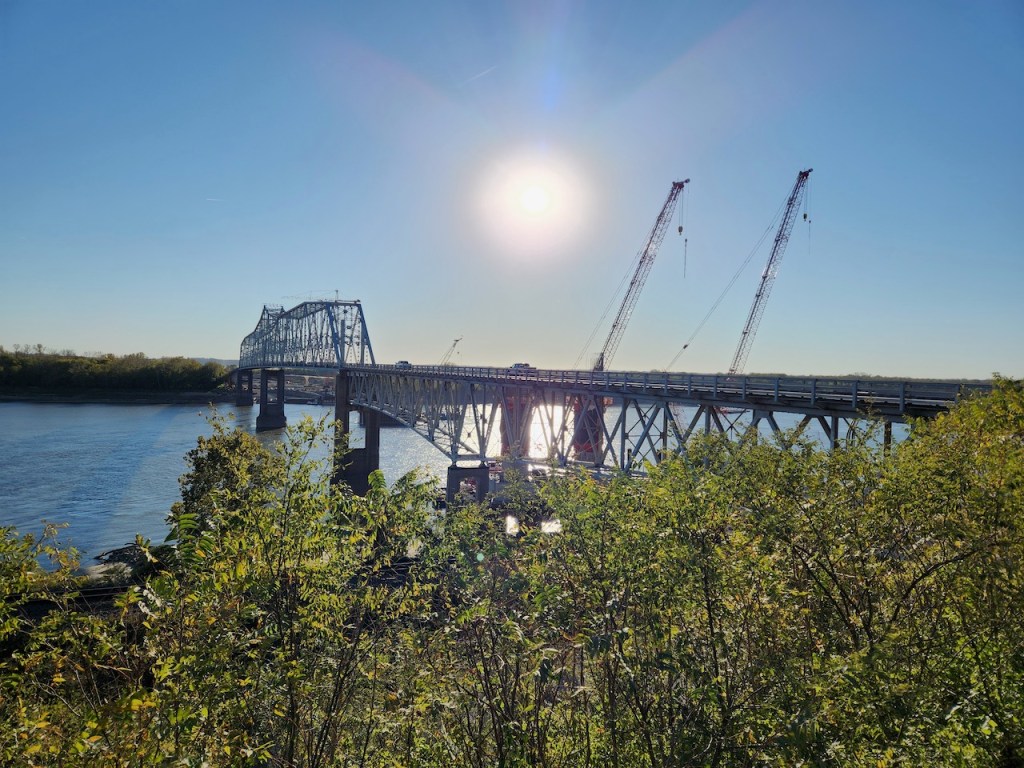
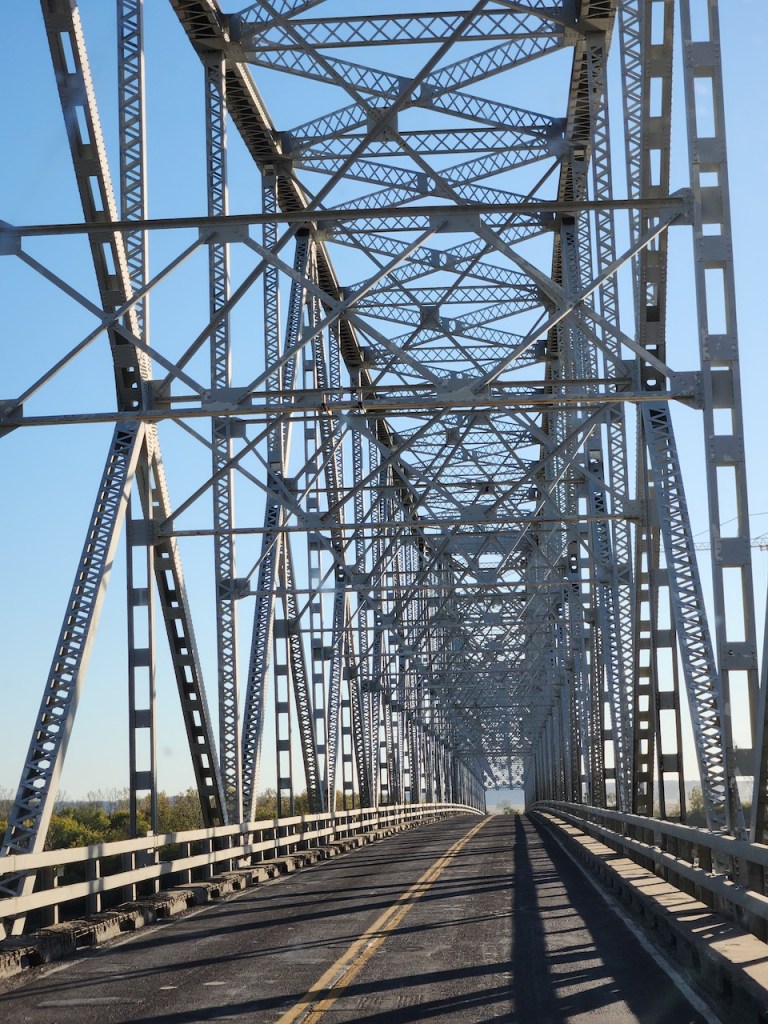
Another bridge over the Mississippi – this time it’s taking us to Missouri – the 5th of the ten states that the Mississippi runs through or by.
Next up – getting to Memphis.
Until then, safe travels!
 Trish & Anne RV Adventures
Leave a comment