I showed you our first stop in Yellowstone in my last post – in this one I will give you the full experience. I have over 2,600 pictures that I took there – my first pass at trimming that down got me to 330. I got that down to about 200 for this post, but we were there for a week, so that’s probably close to my usual per day average. And as I said before, pictures just don’t do justice to this place either.

Yellowstone is a big place, 3,500 square miles or 2.2 million acres – that’s bigger than Rhode Island, with many fewer roads. It was made the first national park in the world in 1872 – signed into law by President Grant. There is evidence of 3 massive volcanic eruptions in the area – the oldest at 2.1 million years ago and the most recent is 640k years ago. The grayish line on the map above shows the caldera, or rim, of that eruption – it is about 30 x 40 miles across. Also, there are many small earthquakes in the area, and any of those can change the behavior of the geysers and hot springs — the magma beneath Yellowstone in some places is only 8 to 10 miles below the surface.
On Tuesday, September 5 we entered through the West Yellowstone gate and drove through the center of the park to get to our campground at Fishing Bridge – the only full service RV park inside the park.
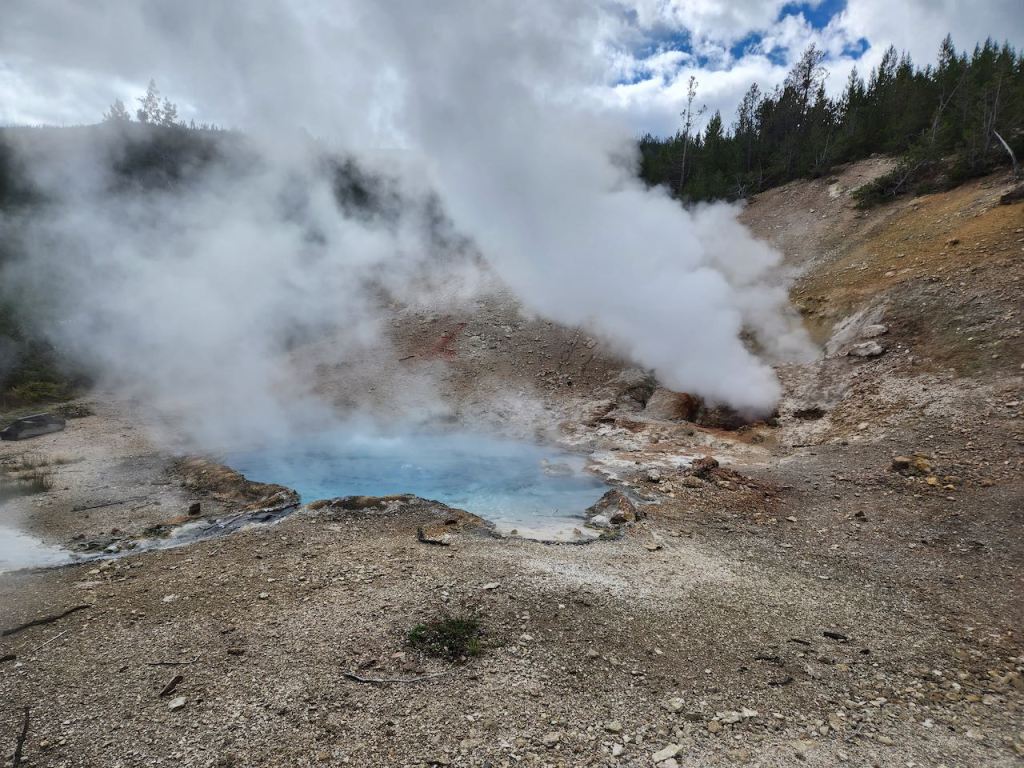

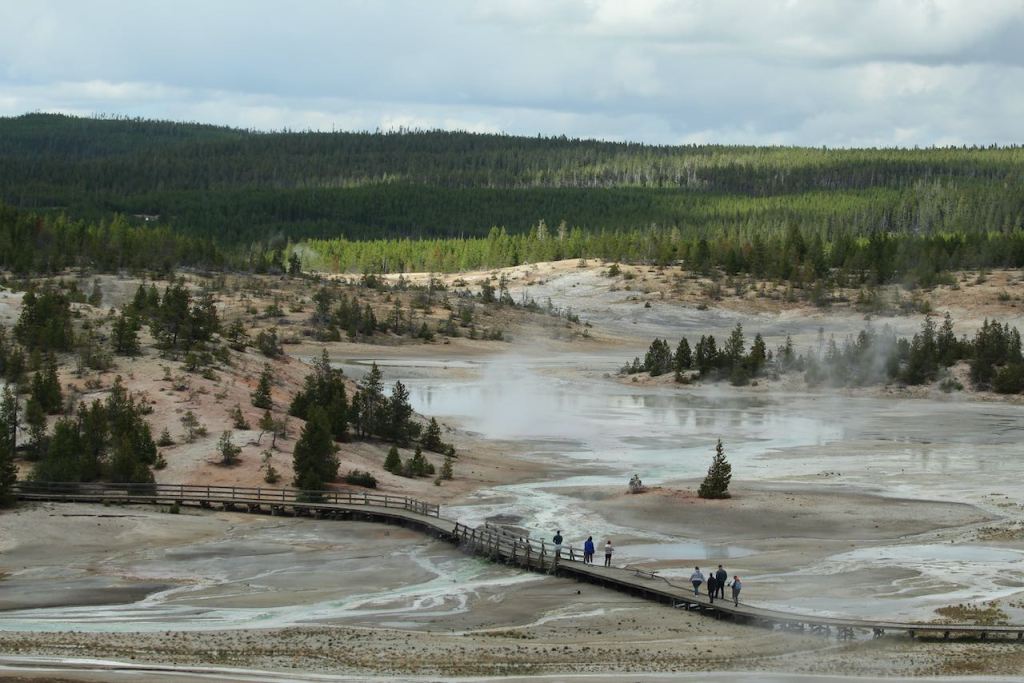
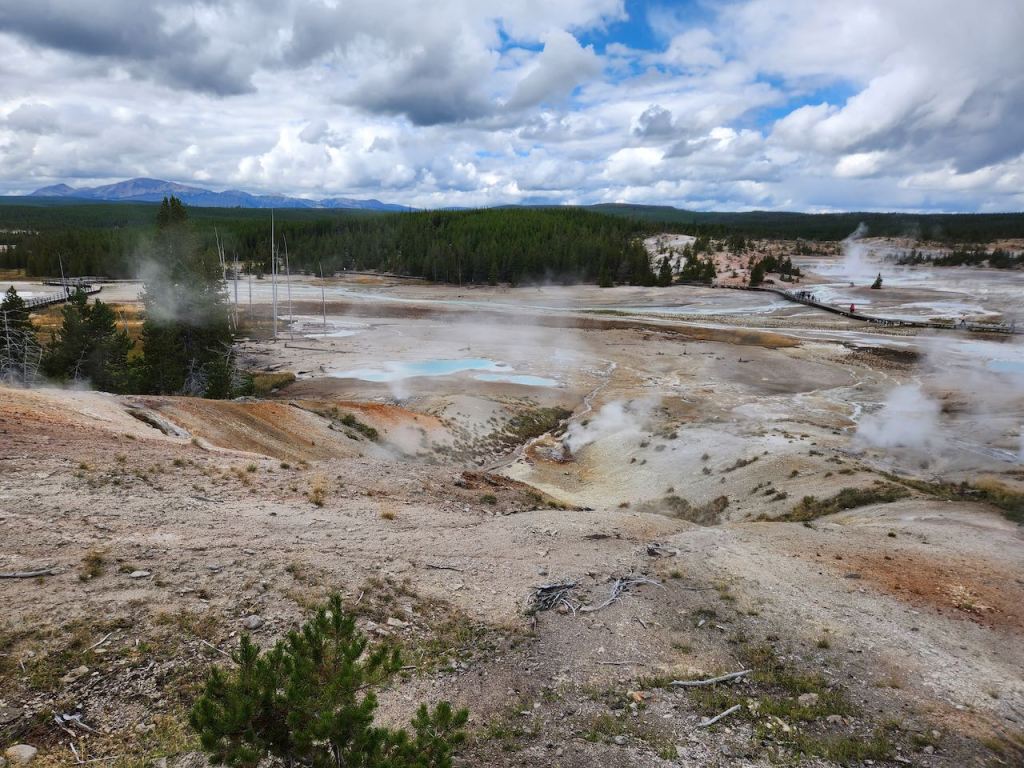
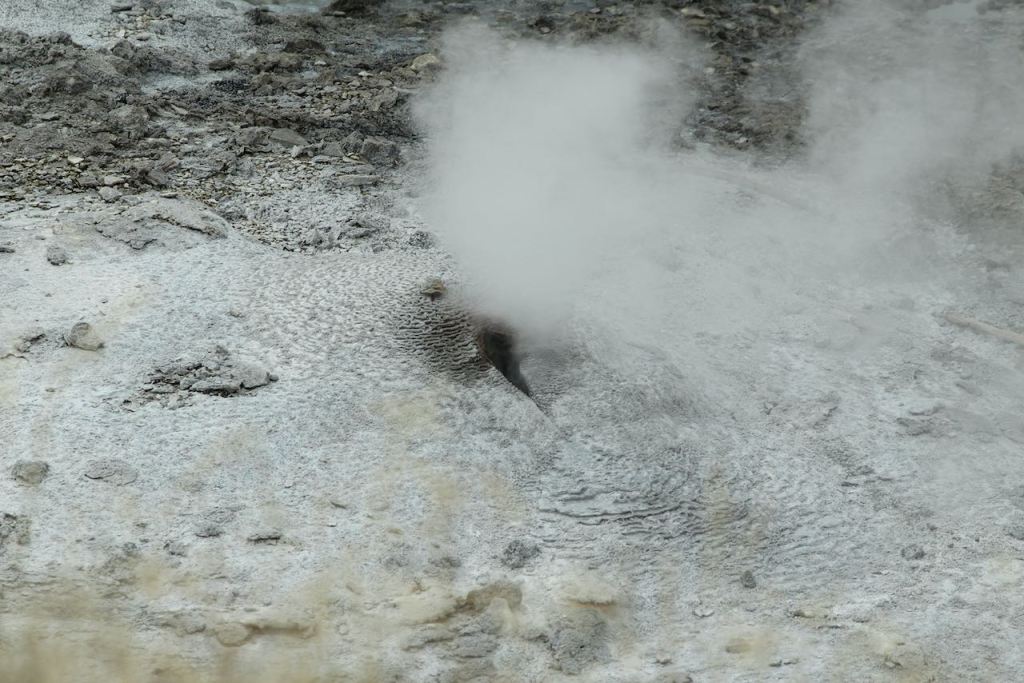


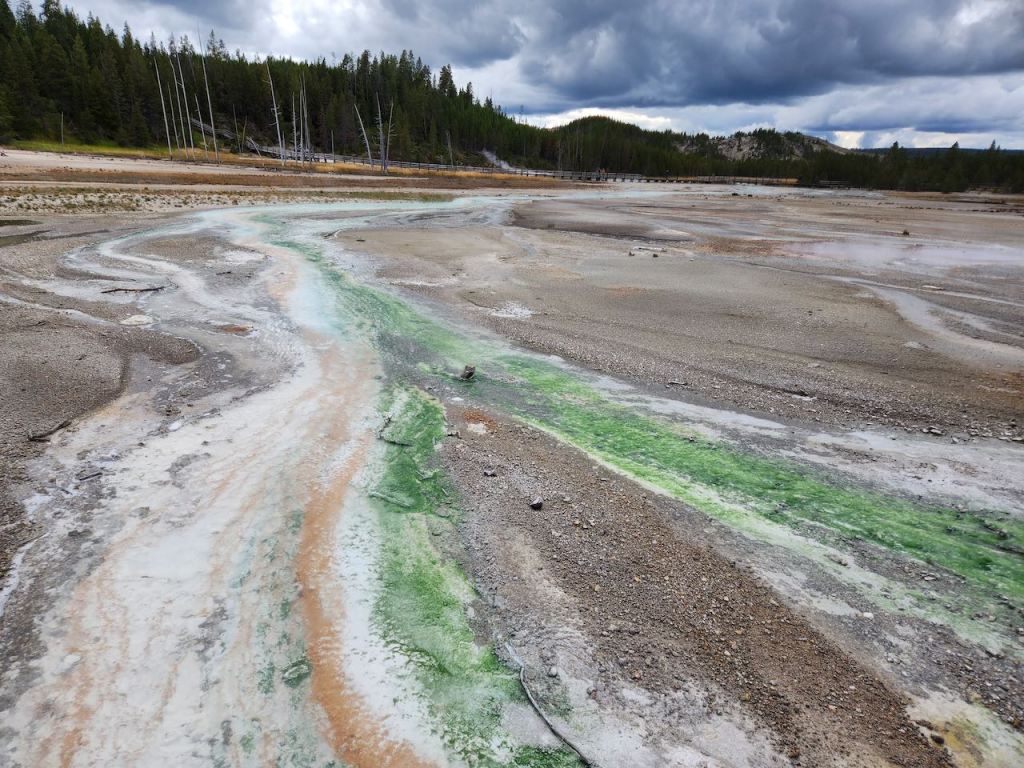

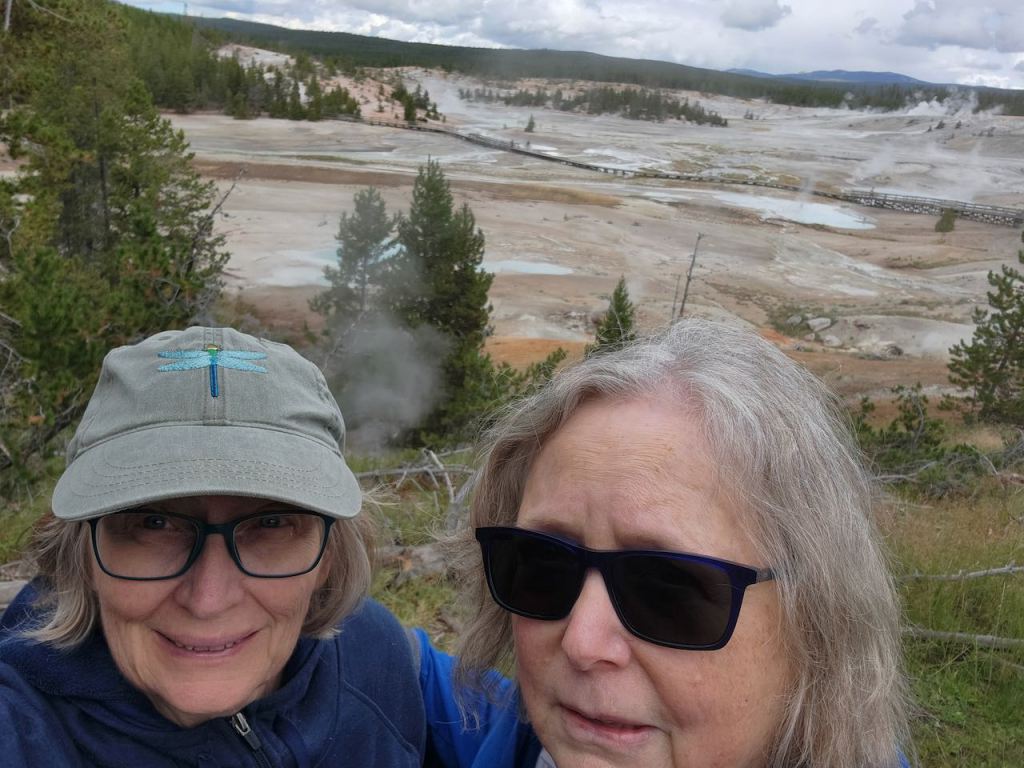
Then it was on to the Norris Geyser Basin, the hottest, oldest, and most dynamic of Yellowstone’s thermal areas. The boiling point at this altitude is 199 degrees, and most of the features in this area are at least that hot. We did get warm as we walked through the area on the boardwalk. All four type of thermal features are in this area – geysers, fumaroles, mud pots and hot springs. Geysers erupt – they have a chamber below where steam builds up and when the pressure gets high enough it blows out through a constriction between the chamber and the surface. Fumaroles are essentially steam vents, releasing hydrogen sulfide, which gives the area the rotten egg smell. Mud pots are created when the steam and acidic water eat away the rock and a slurry forms – they vary in how muddy they are. And hot springs are the collection of the hot water on the surface. Here is a link to some of the fumaroles doing there thing: https://www.dropbox.com/scl/fi/b69eddgpv3bybl7rztwok/IMG_5565.MOV?rlkey=s80a6981f24y7j60dmbhwobbu&dl=0
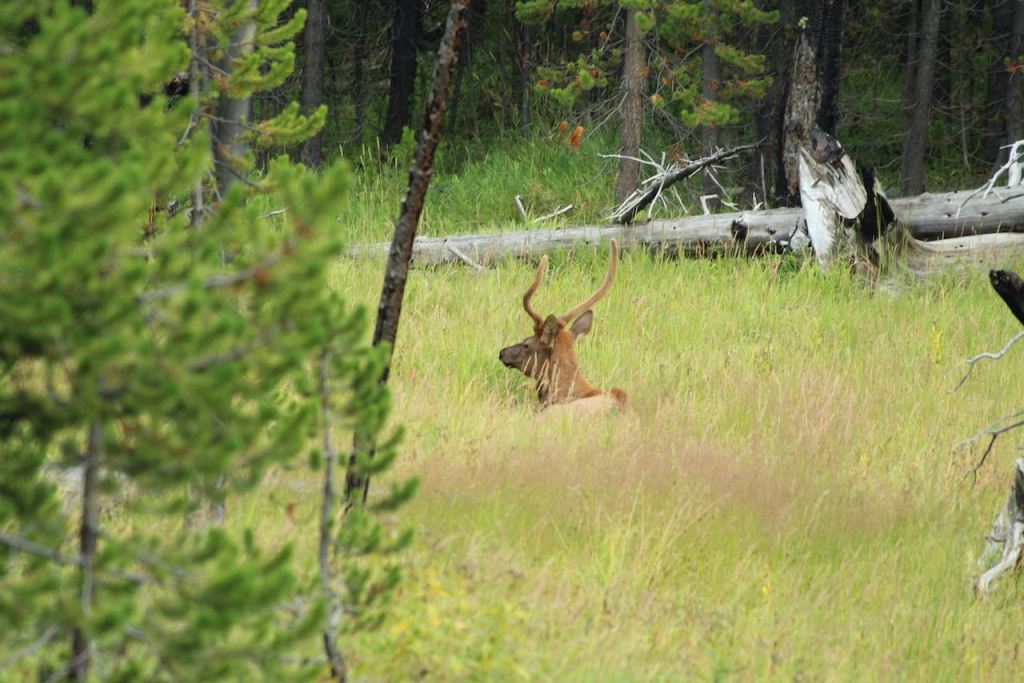
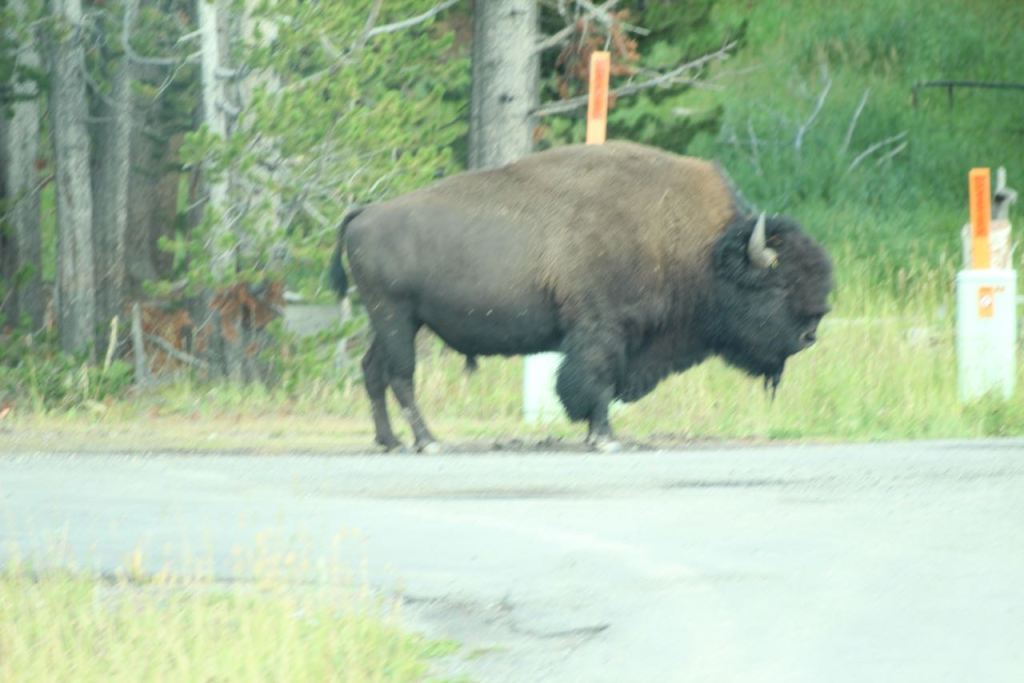
Our final drive the first day was through the Hayden Valley – known for it’s wildlife. We saw this young elk and our first Yellowstone bison.
On Wednesday, Sept 6, our first full day in Yellowstone, we scheduled what is called the Circle of Fire Tour. We were picked up at the campground at about 10 AM and driven in a large bus around the lower loop of Yellowstone, which is about 96 miles. We arrived back at the campsite about 6:30 PM, exhausted but having seen many of the sites and a few more animals along the way.


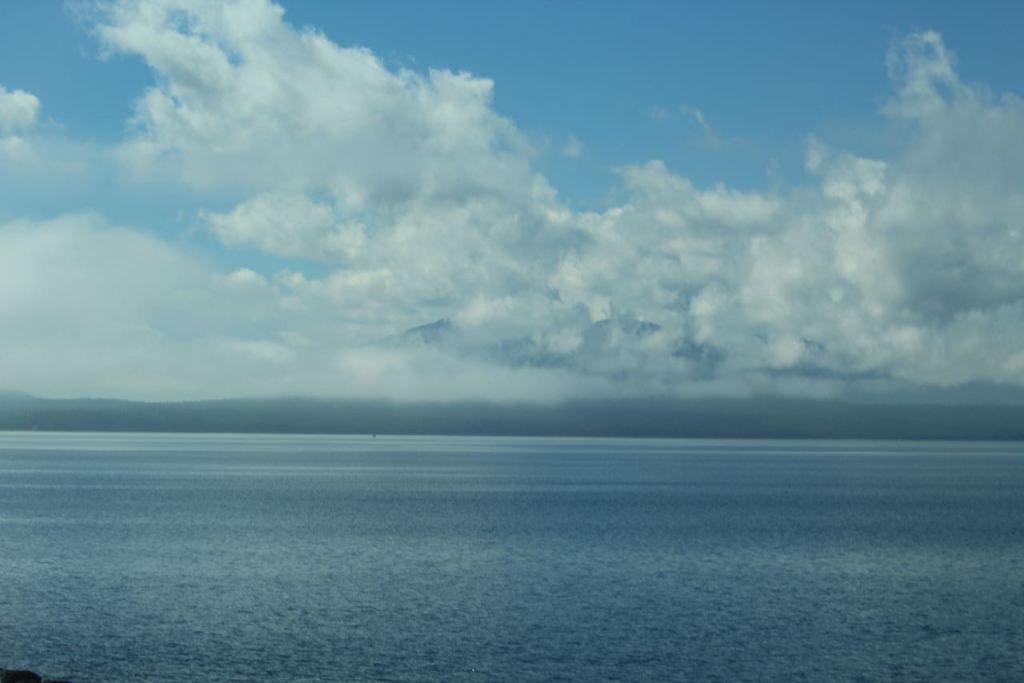
One of our first stops was at Pumice Point on Yellowstone Lake. That’s Rob from Montana, who was our bus driver and guide. He’s telling us about the lake, which is the largest lake above 7,000 feet in North America. It’s about 20 miles long and 14 miles wide, with over 140 miles of shoreline. The cutthroat trout is the native species that is under attack by the illegally introduced invasive lake trout. Lake trout can have 10 or more cutthroat in there stomachs when they are caught. They have brought in several fishing boats and crew to catch and kill the lake trout. The lake trout hang out lower in the lake then the cutthroat, so that also adversely effected the population of osprey and eagles around the lake. Nature is so integrated – the cutthroat are making a comeback, maybe soon there will be more osprey again.

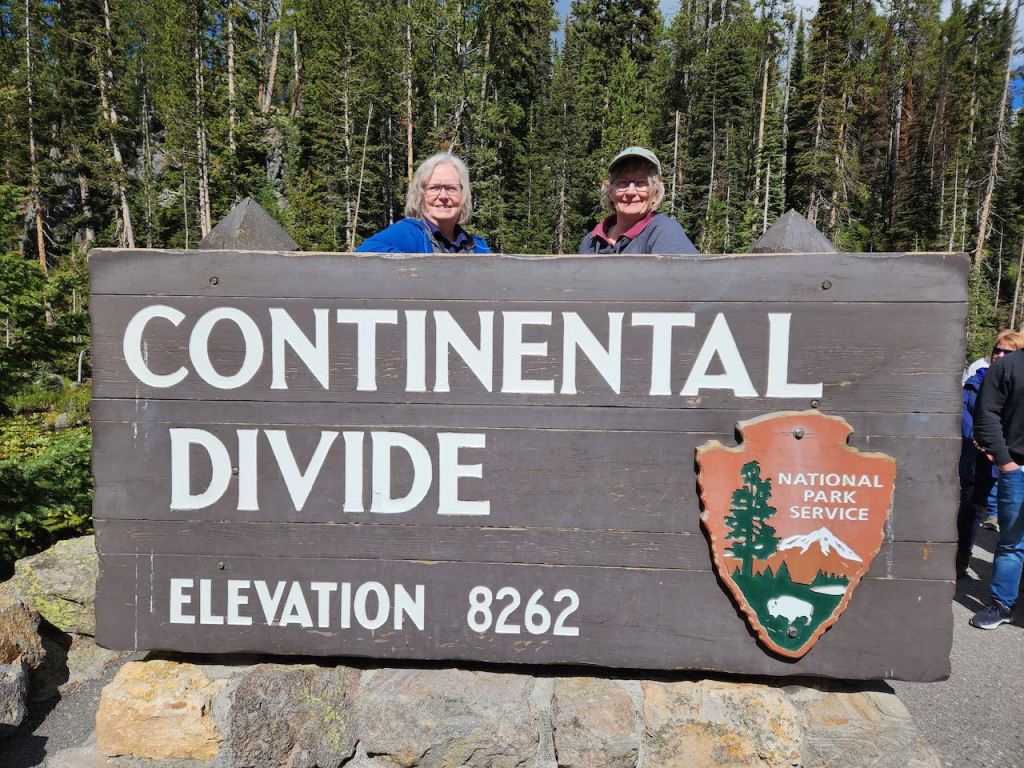
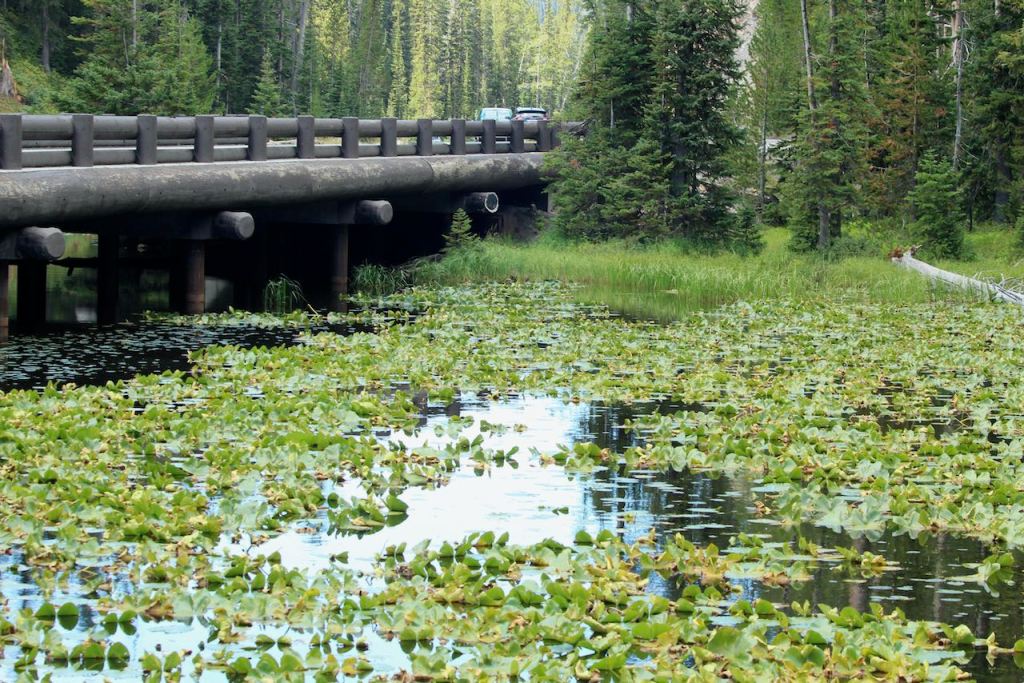
We drove over the Continental Divide three times on this trip — and this is Lake Isa, which is actually on the divide and has outlets that go both to the Pacific and the Atlantic (well Gulf of Mexico.)

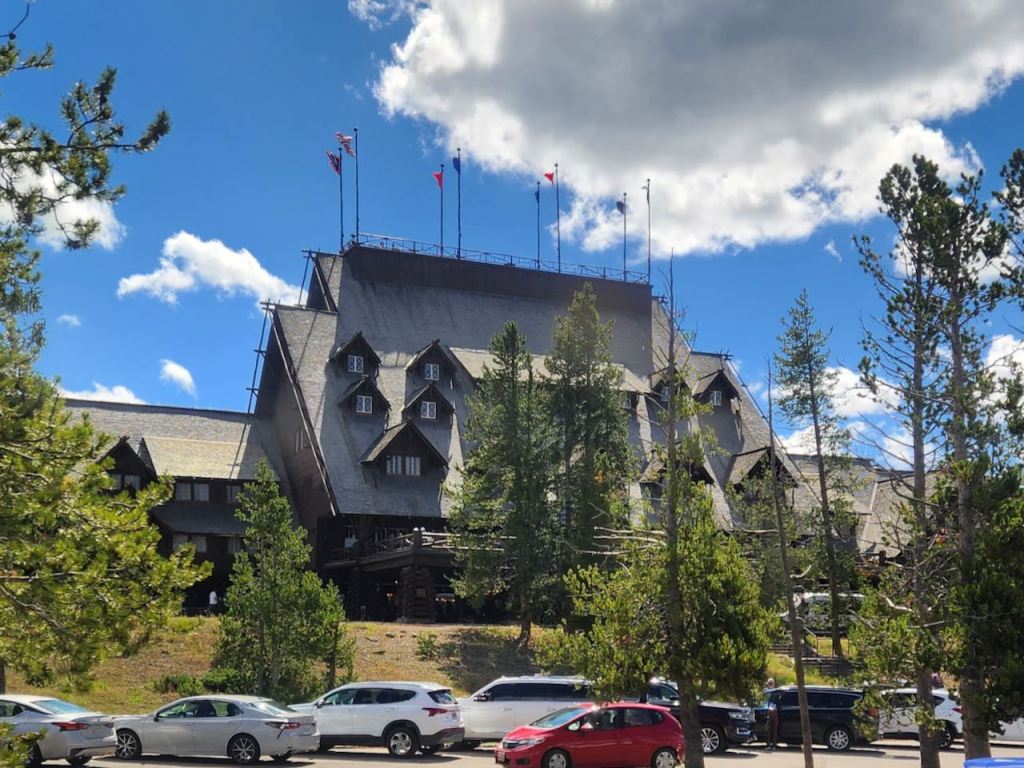
Our next major stop was the Old Faithful area – where there was a bison walking through the parking lot. Rob was perturbed with the tourons (tourist morons) who were way too close taking pictures. Did you know they can clear a 6 foot fence from a dead stop and run at 35 mph? And that’s the Old Faithful Inn.
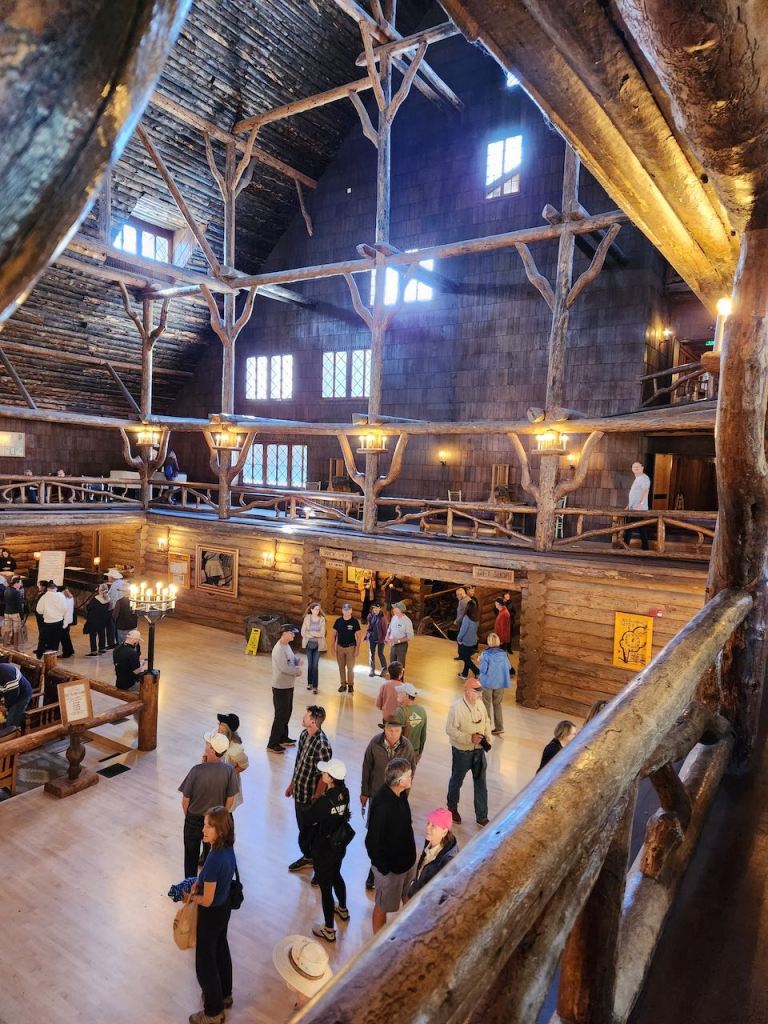
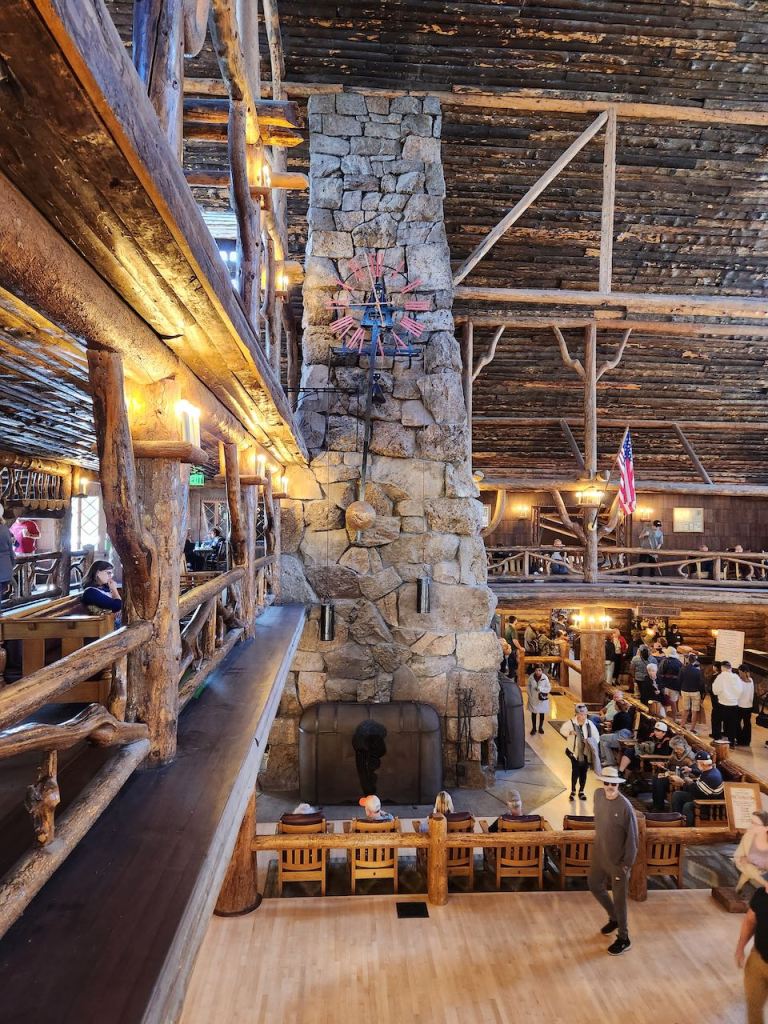
Here are some shots of the interior of the inn. It was built in 1904 from local logs and stones. It is the largest wooden building in the world, per the NPS. The lobby is 6 stories high and I could stand in that fire place. We ate our lunch on the outside patio and then got some huckleberry ice cream before we went out to watch Old Faithful erupt.
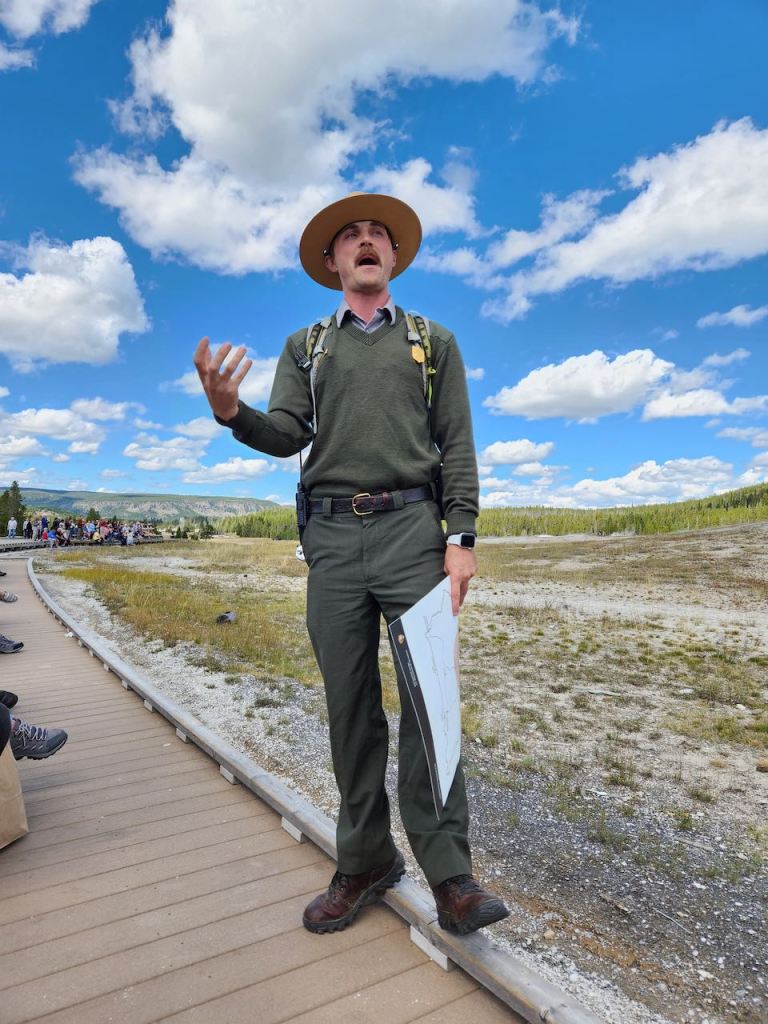

That’s the ranger telling us how and why Old Faithful erupts. You know it isn’t the largest geyser in Yellowstone, it’s famous because it’s so reliable – erupting about every 90 minutes. When it’s not going off it just looks like this big steam vent.
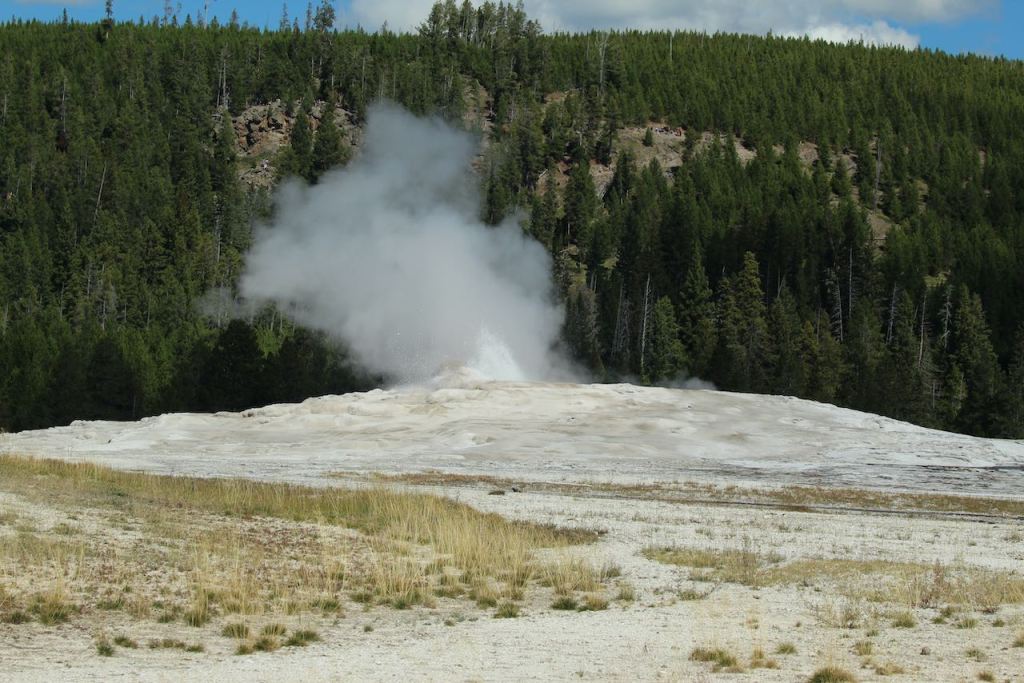
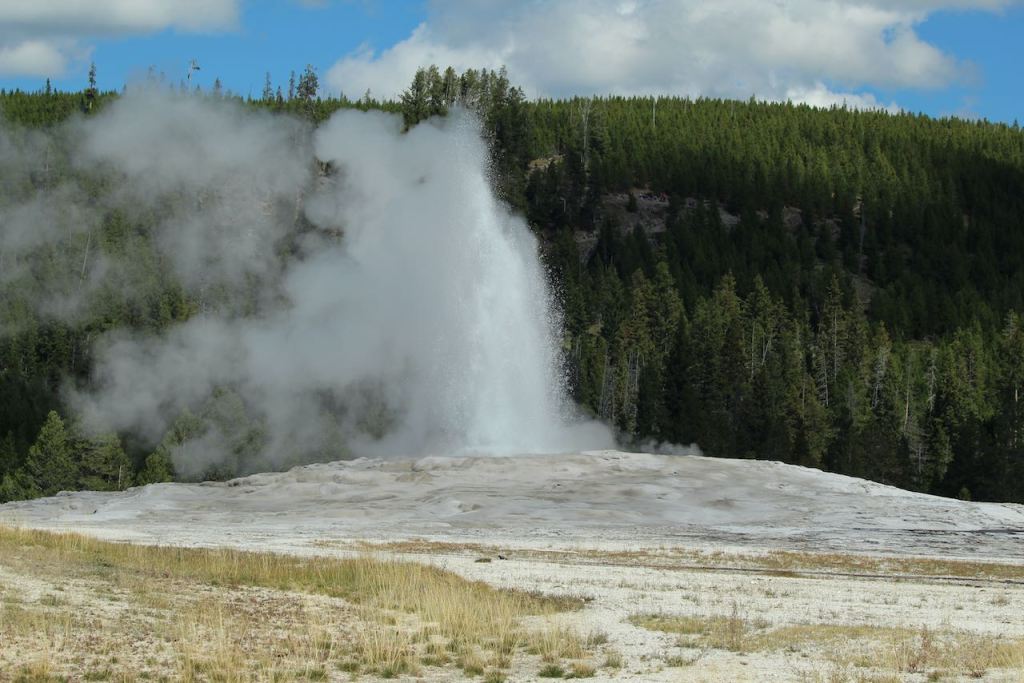

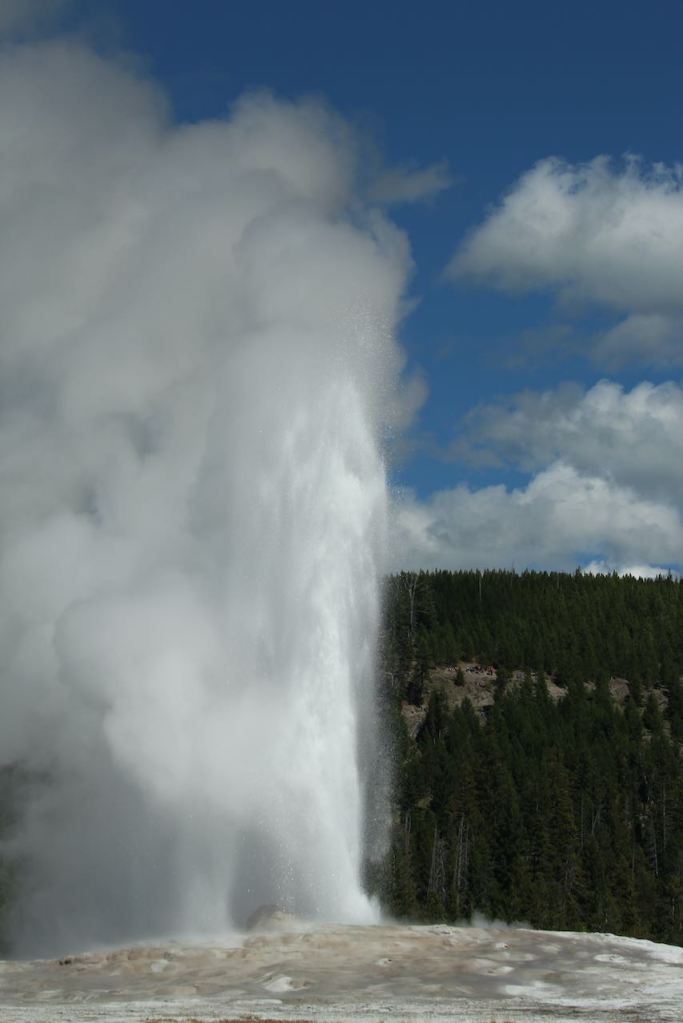
Here is a sequence of the eruption – and here is a video if you want to see it that way: https://www.dropbox.com/scl/fi/8ztu8yn9bmds8v6ddw1tw/IMG_5651.MOV?rlkey=fqfb8iknd5m3i4fxzg29wb57s&dl=0

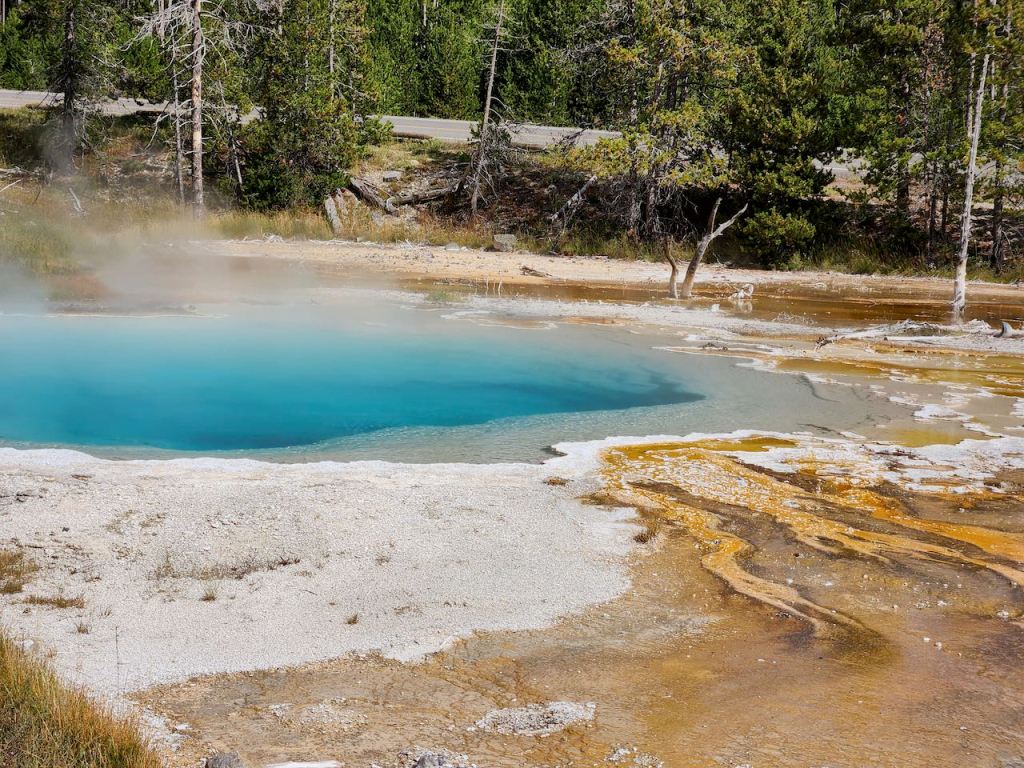
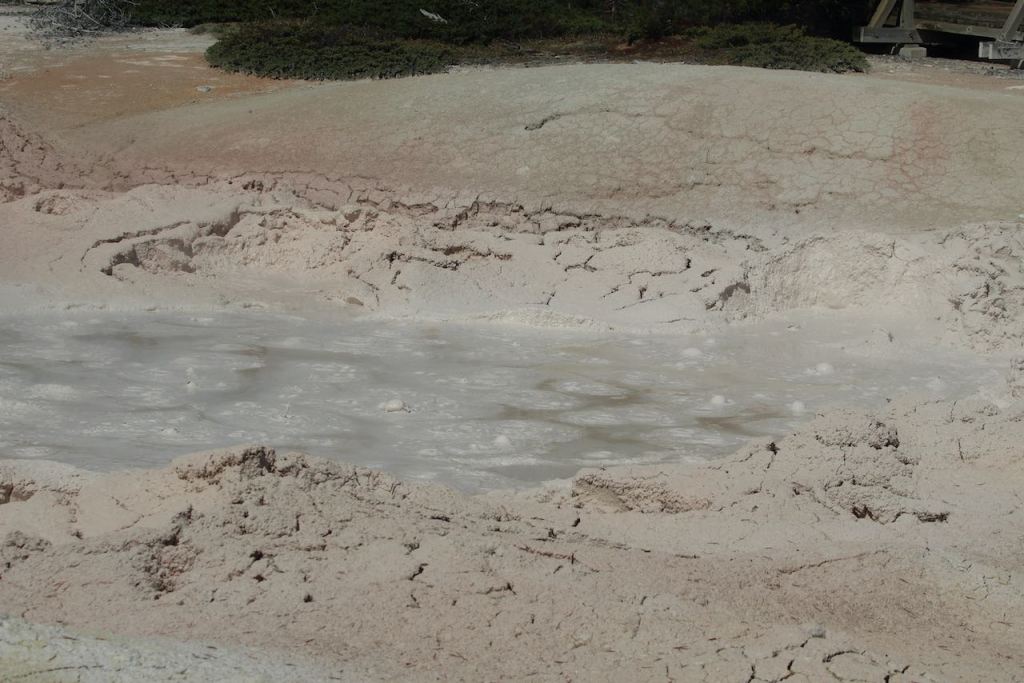

Our next stop was the Fountain Paint Pot area. Those trees are called bobby socks trees – that’s a silica that has made it’s way up the trunk – it’s a bit like when trees get petrified. There are several hot springs in this area. But the big draw are the mud pots. Here is a video of some of them bubbling: https://www.dropbox.com/s/oddwnioiitrojpv/2023-09-06%2014.50.14.mov?dl=0
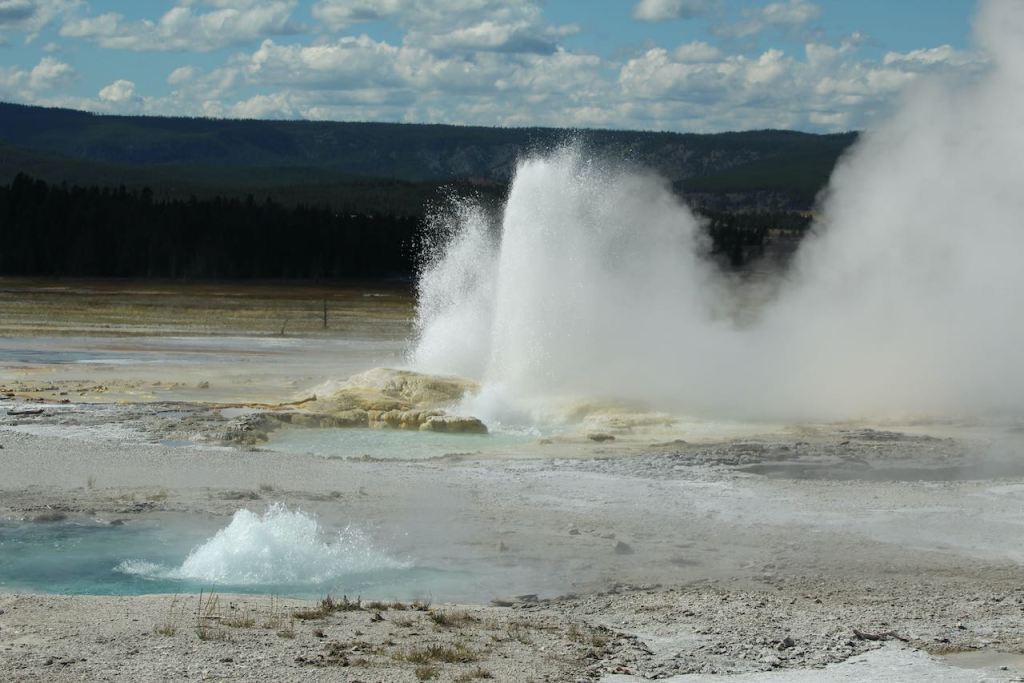
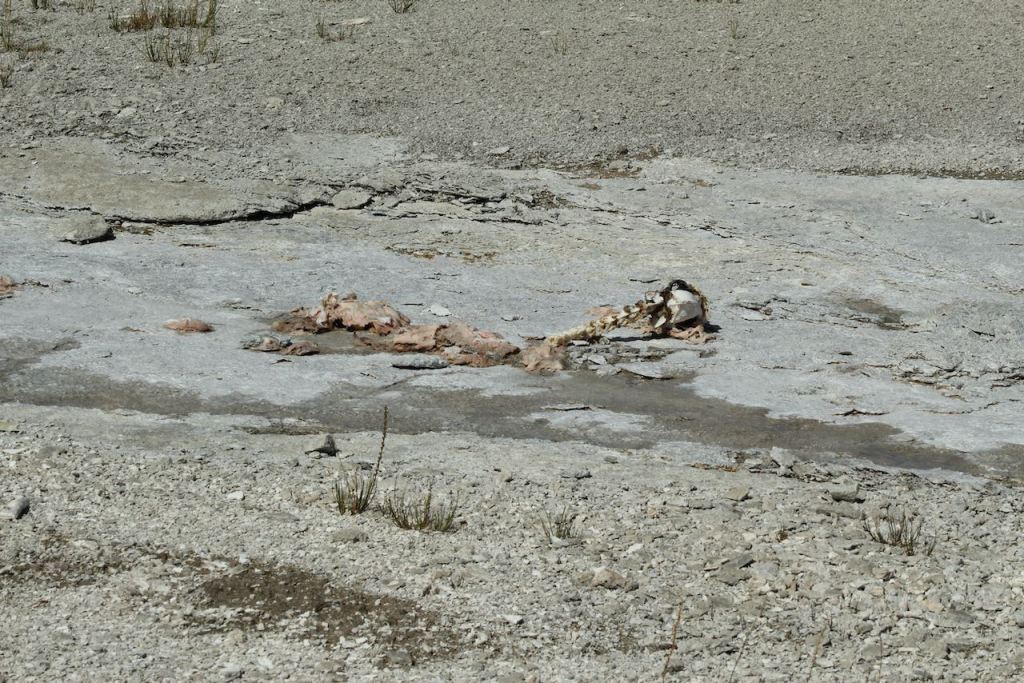
There are also some small geysers and these remains of a coyote – theorized to have fallen into one of the geysers and then been spit out in an eruption.
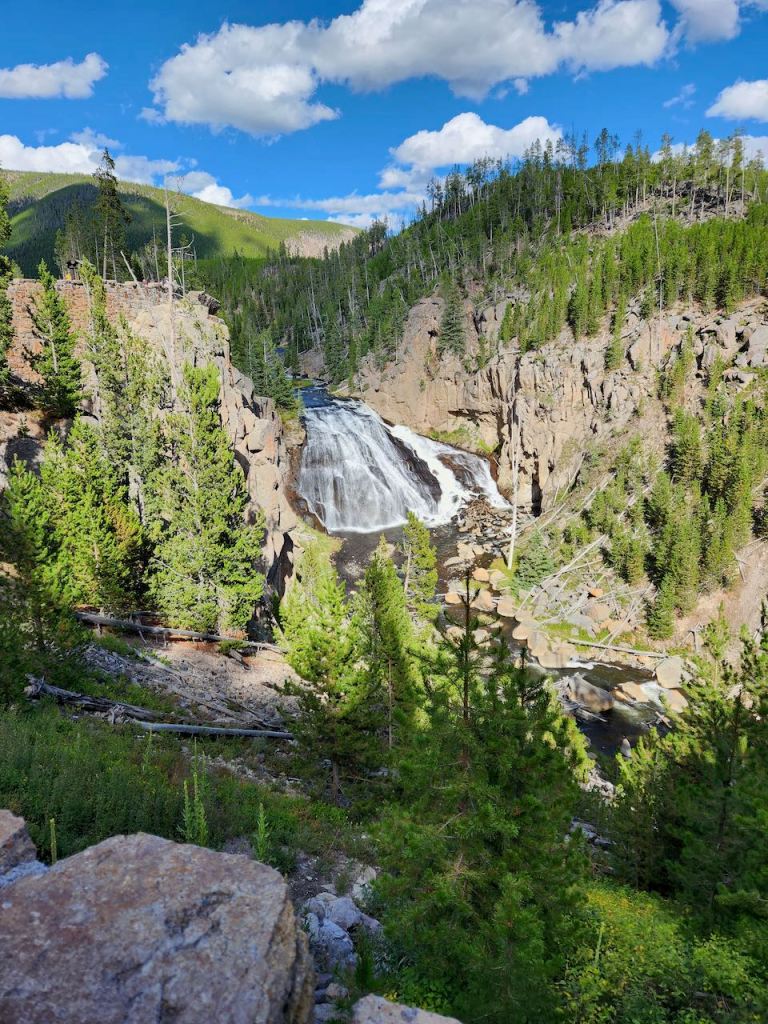
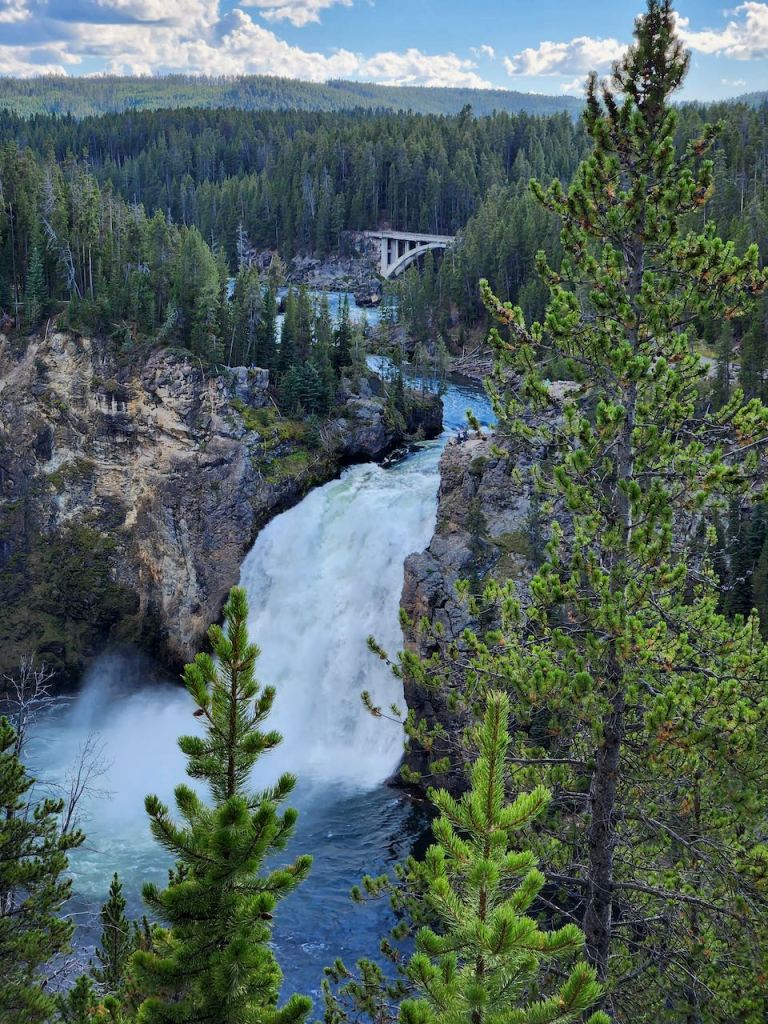
Next stop, the Grand Canyon of Yellowstone. It was hard to believe that this was less than an hour from those geysers on the other side of the park. This is the Yellowstone River after it flows out of Yellowstone Lake – the waterfalls here are the 109-foot Upper Falls and the 308-foot Lower Falls.
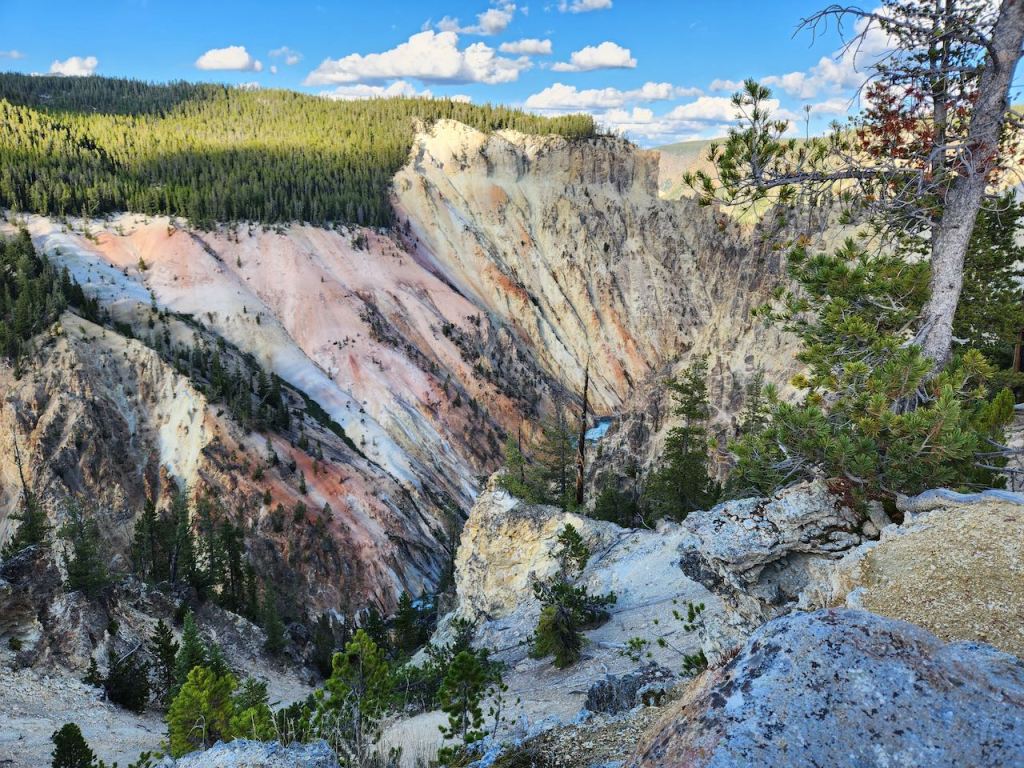
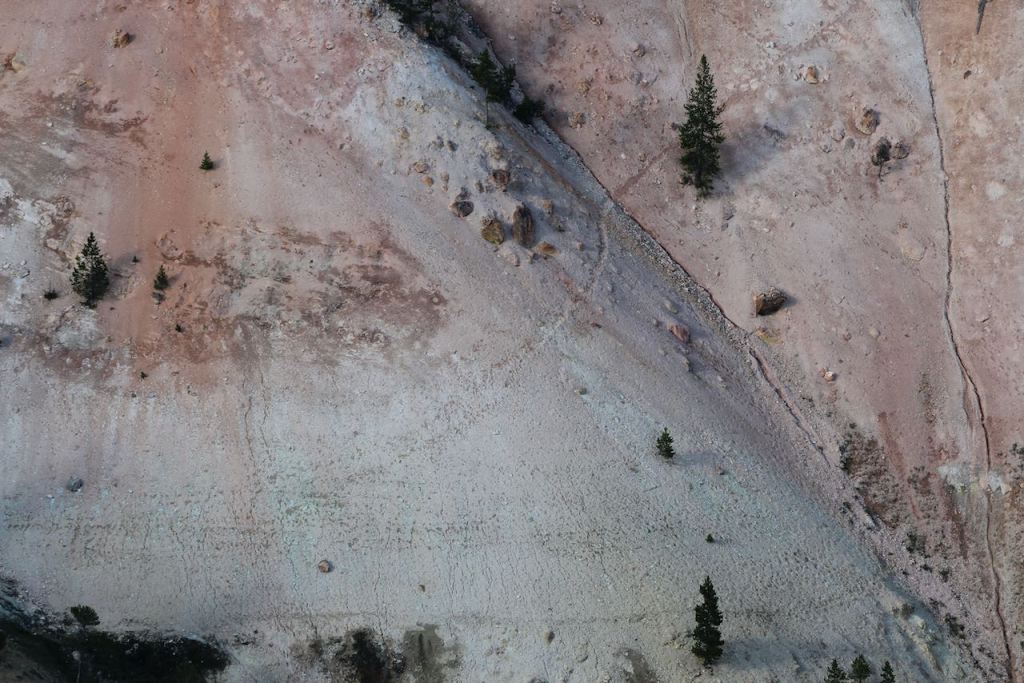
These are the cliffs across the valley downstream of the falls — the lines running across the cliff are where the elk walk across.

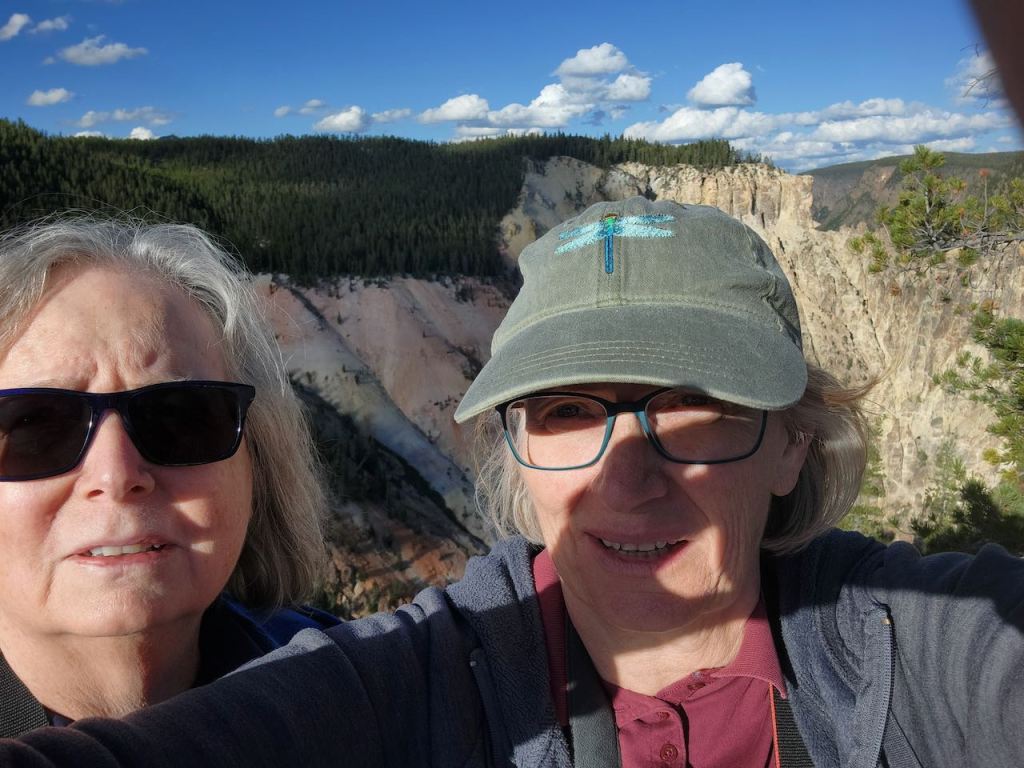
A final view of the canyon and a selfie.
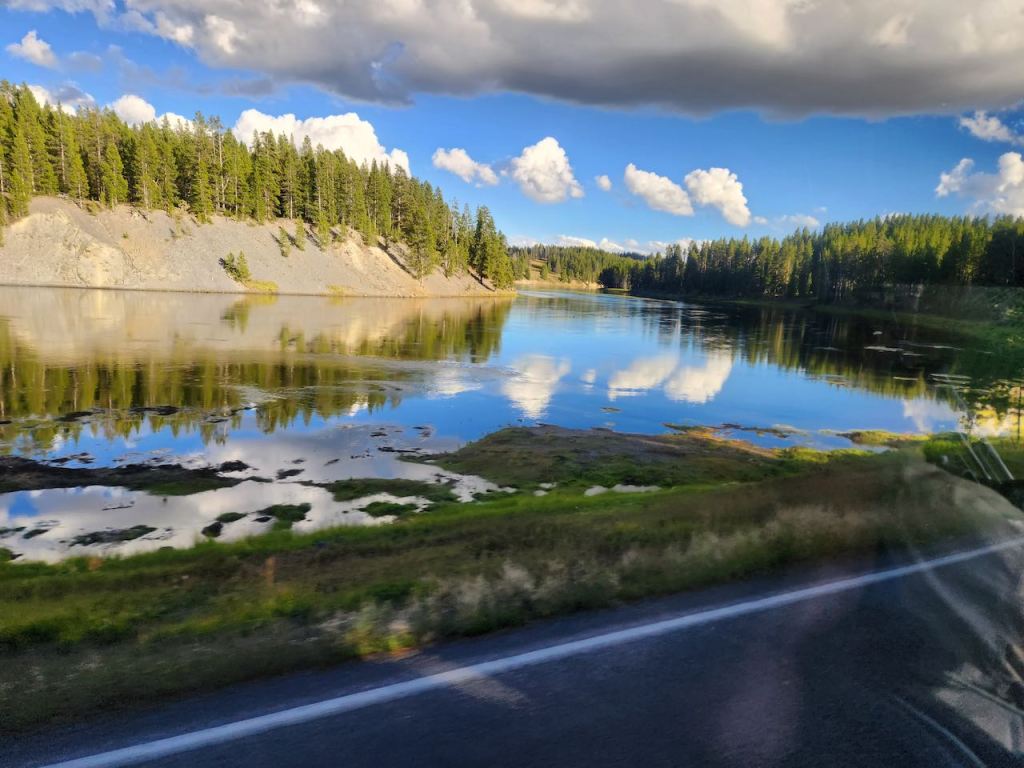
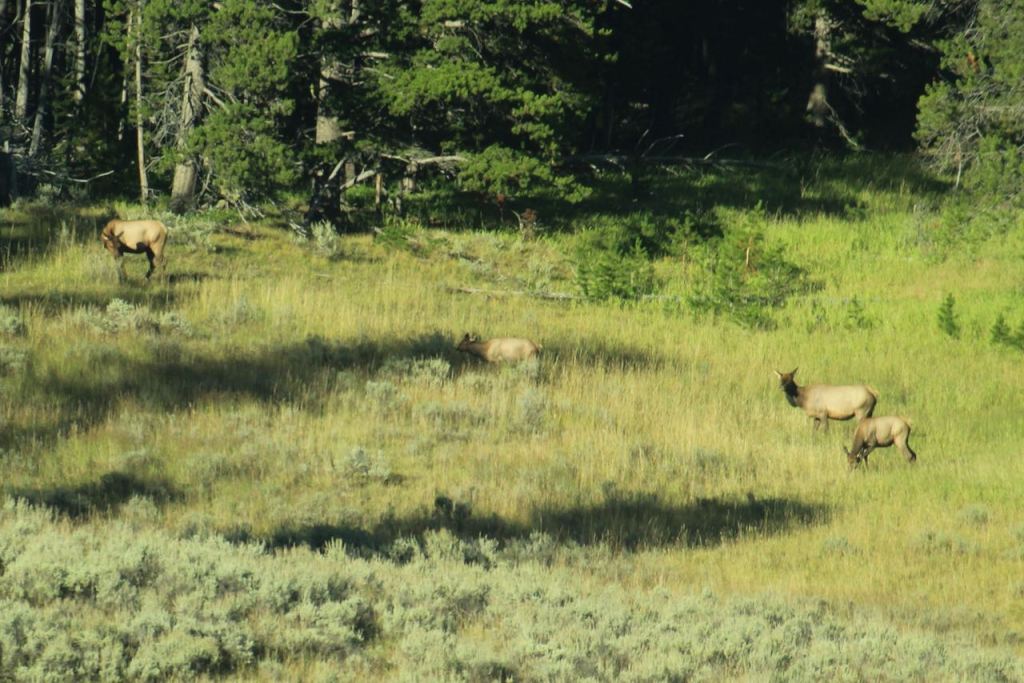
Then we were driving back through the Hayden Valley – which runs along the Yellowstone River. There were a bunch of folks pulled over, so the bus did too — and we were pleased to spot a few elk across the river.
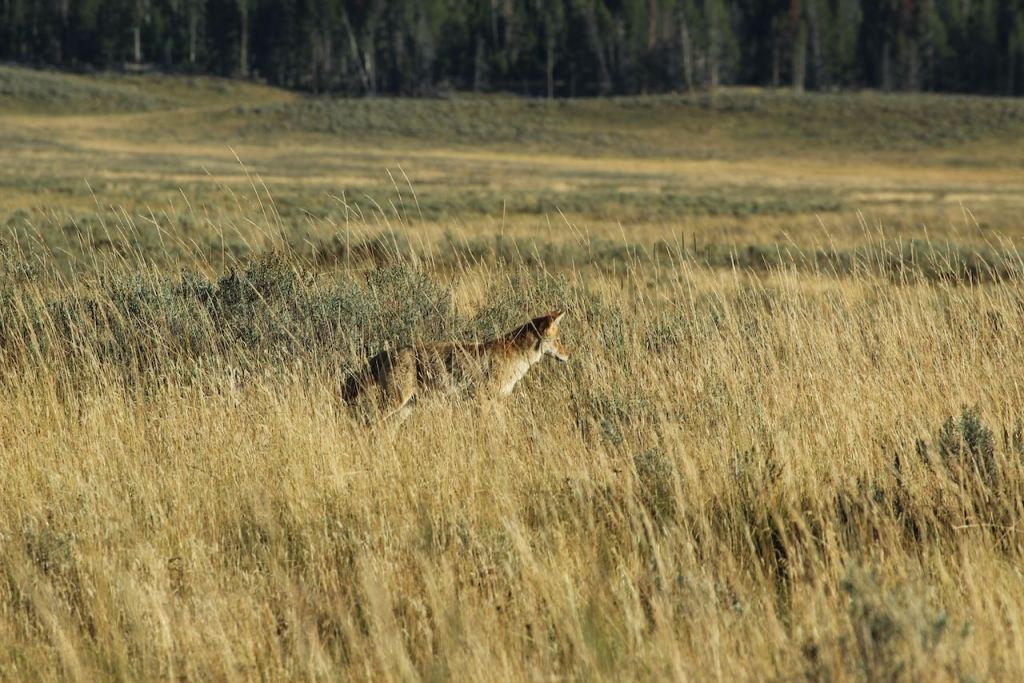
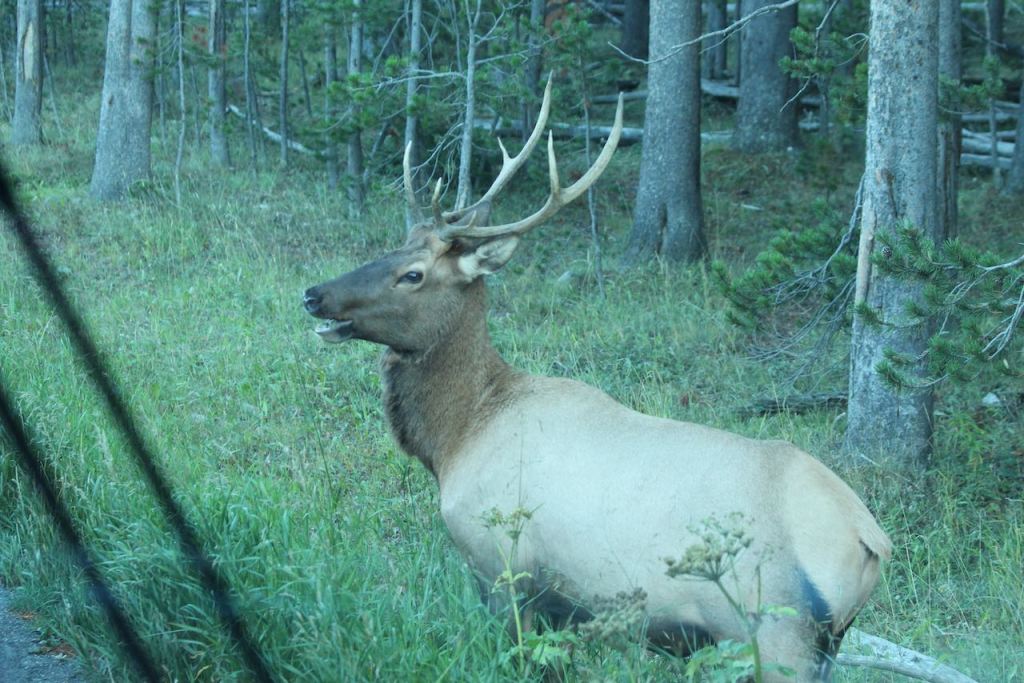
And the there was this coyote stalking something through the field. And another elk along the road as we were driving back to the campground.
On Thursday we had scheduled an early morning Photography Safari. That meant getting up at 5:15 AM so we could pack up the RV and drive to the Lake Hotel. It was only 10 minutes away, and we had done some prep the evening before, but it was still a chore to be there by 6:30 AM.


There were just 10 of us on the tour in this old national park bus. (These pictures were not taken at 6:30 in the morning.) This bus was originally used in Rocky Mountain NP in 1937. It was sold off at some point and eventually bought by the tour company for $50k, and they put another $200k into fixing it up – yes, that’s a total of a quarter of a million dollars. There were only doors on one side, and I got in first – so every time we got out, I had to slide across the full seat. Those are not decorations around the roof, but the ties downs for canvas top. And that’s our driver and photography guru Alex.

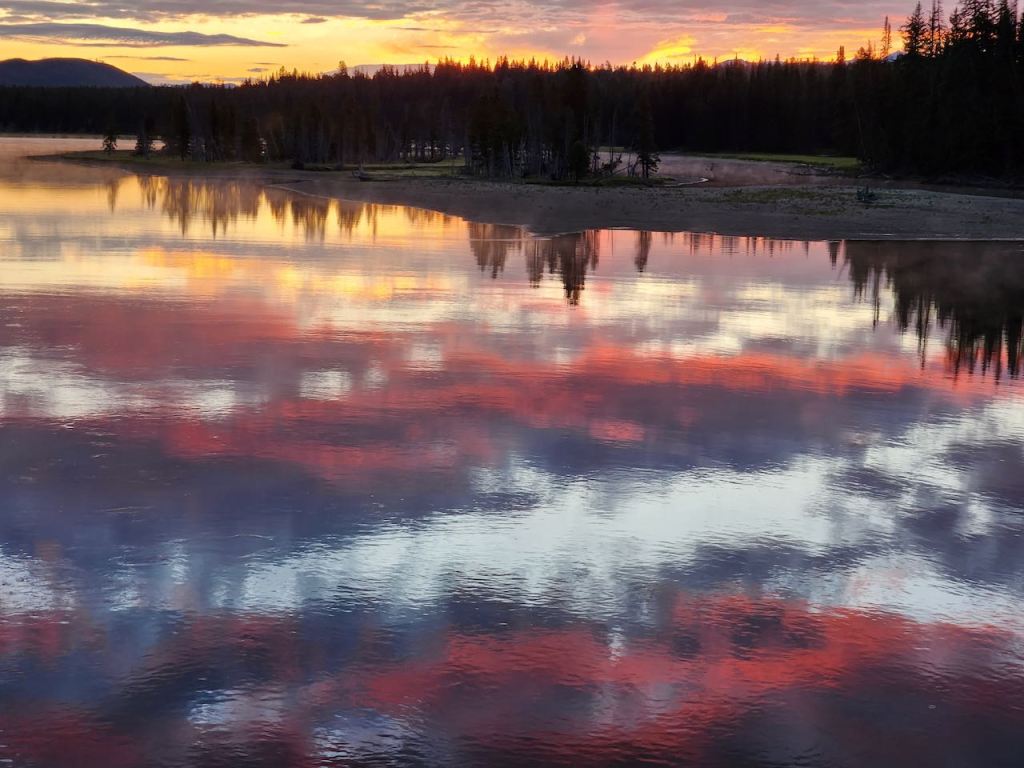
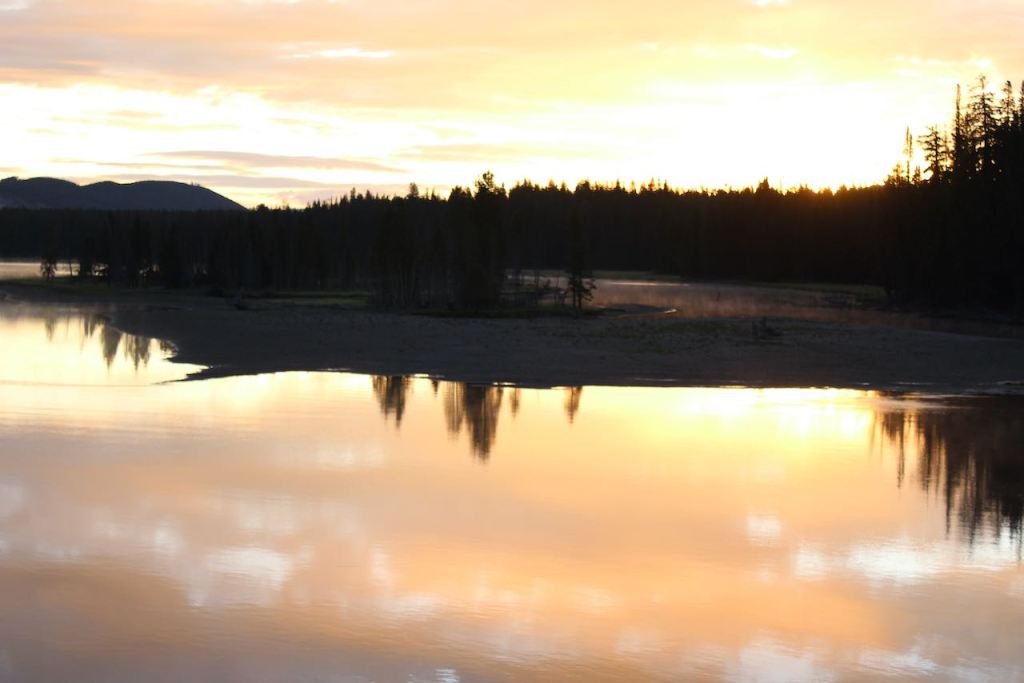
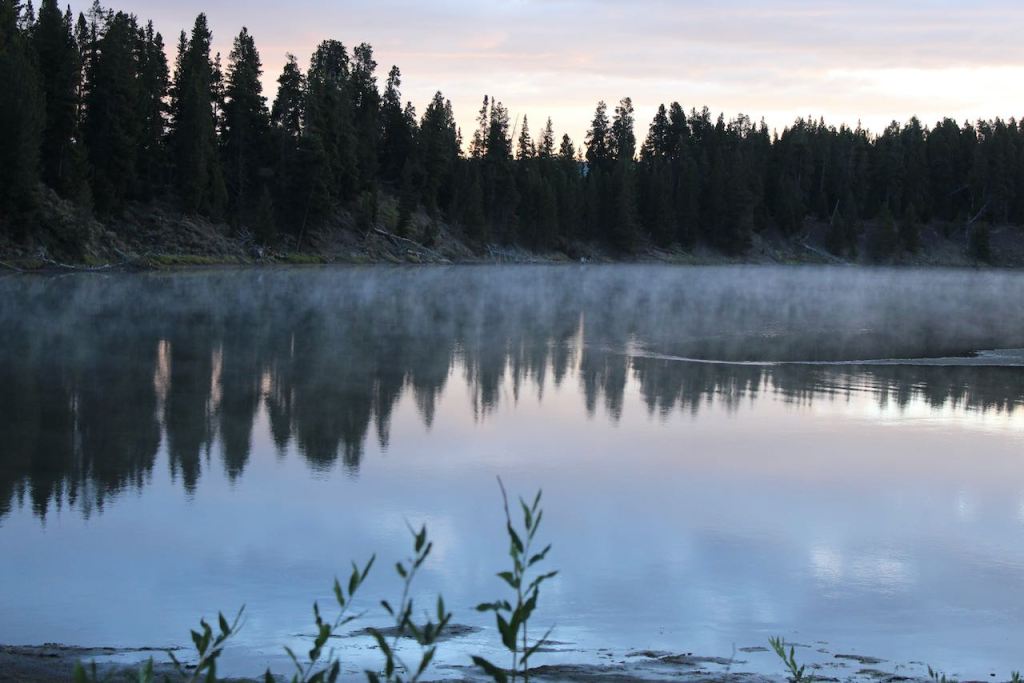
Our first stop was the bridge at Fishing Bridge for sunrise photos. It’s actually a non-fishing bridge, as back in the day there were so many people fishing they kept hooking each other. I think I got some pretty good shots, having a few clouds helps.
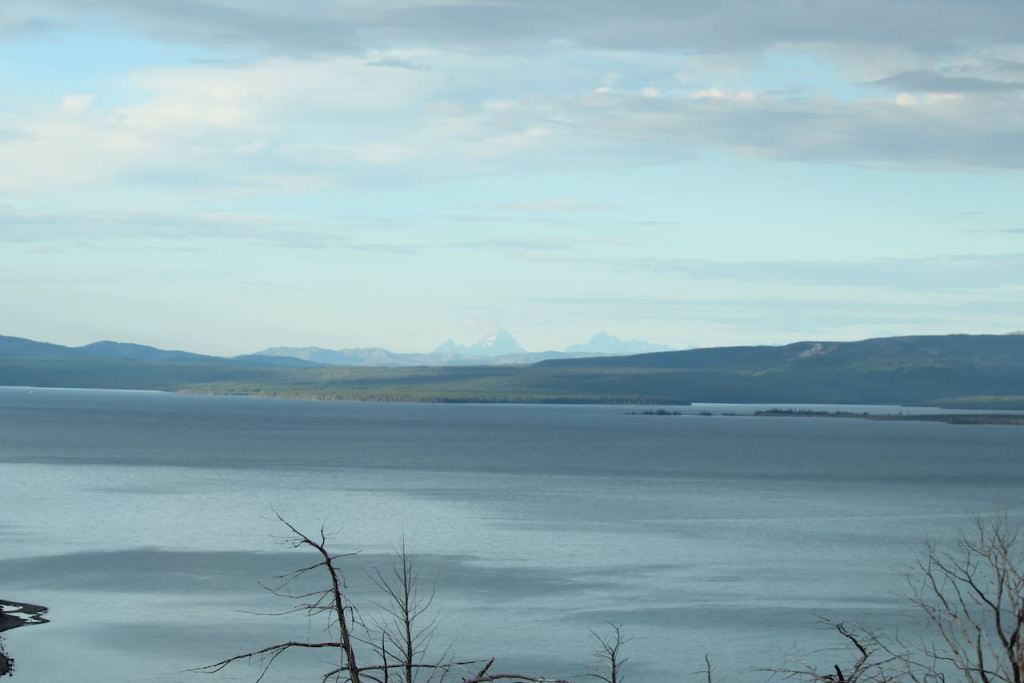
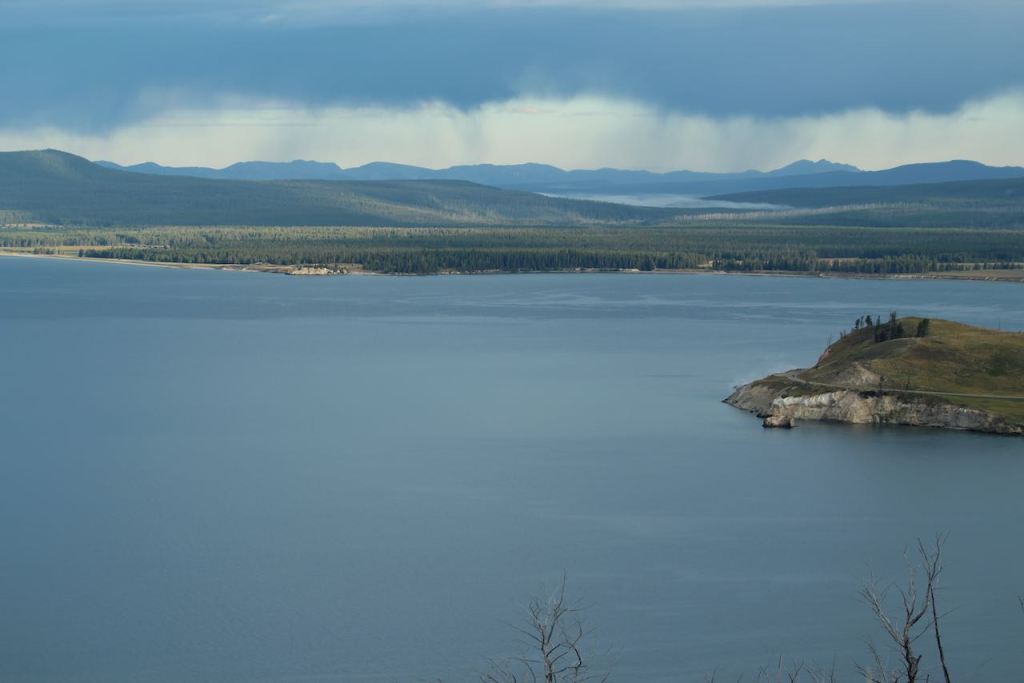
A couple of views of Yellowstone Lake – if you look very closely in the left hand picture you can see our first view of the Great Teton – but that’s about a week away. And it was definitely raining across the lake.
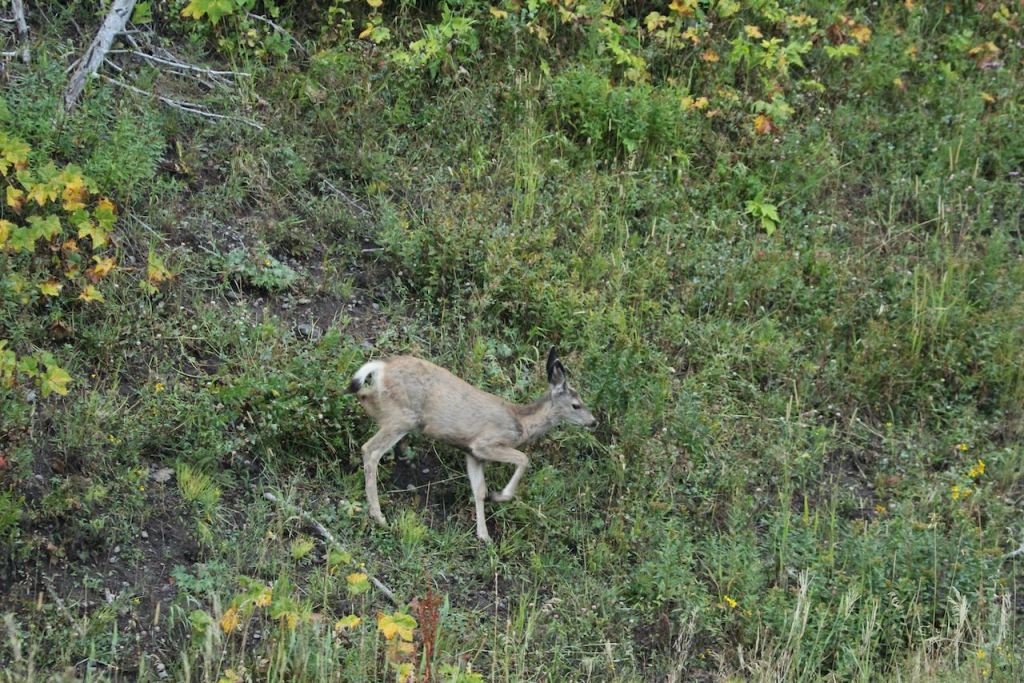
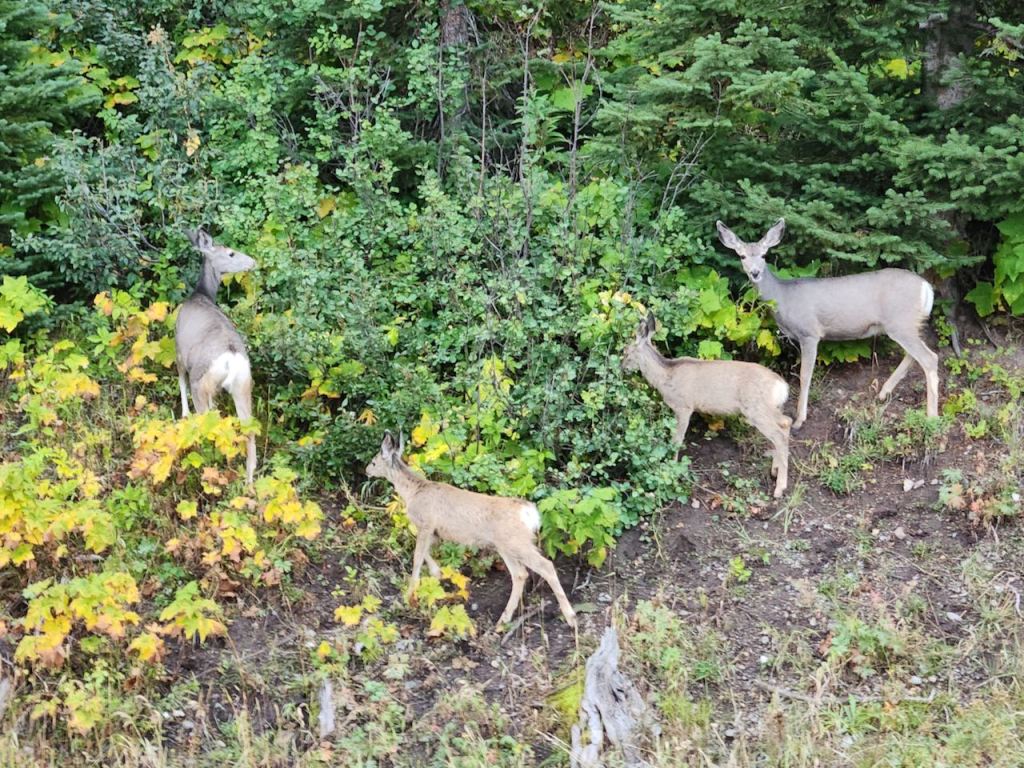


Then we saw these guys. A mule deer mom with her babes and a beautiful bald eagle posing for us.
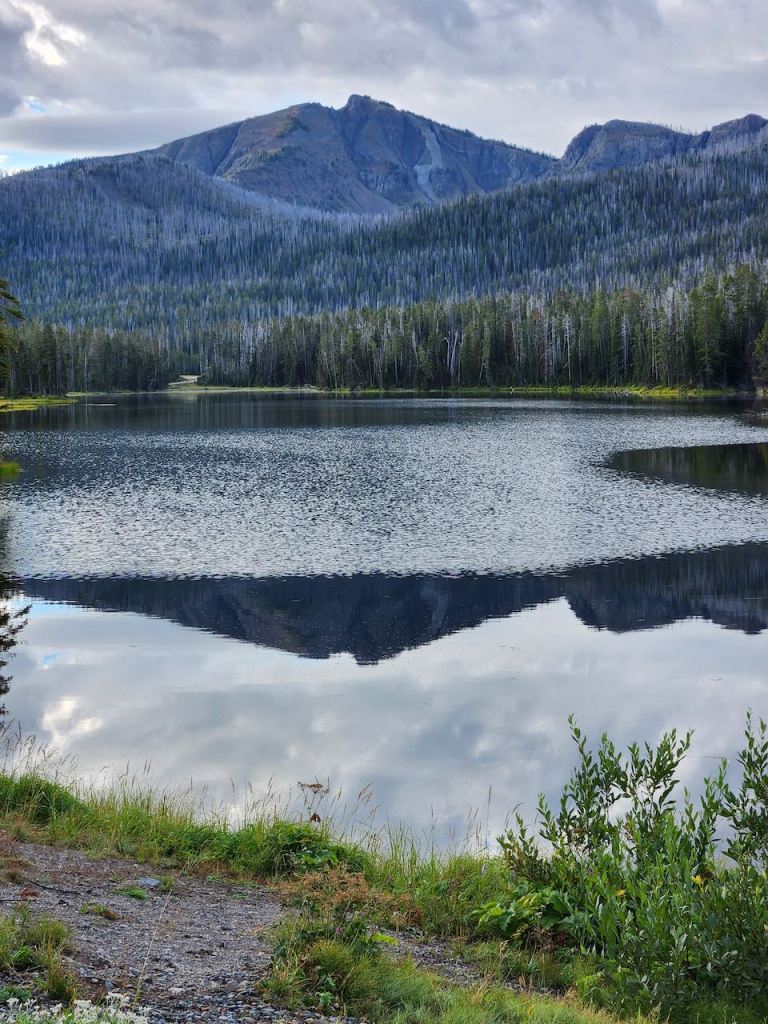

This is Sylvan Lake — if it was a little calmer, the reflections would have been better, but caught some of them anyway.
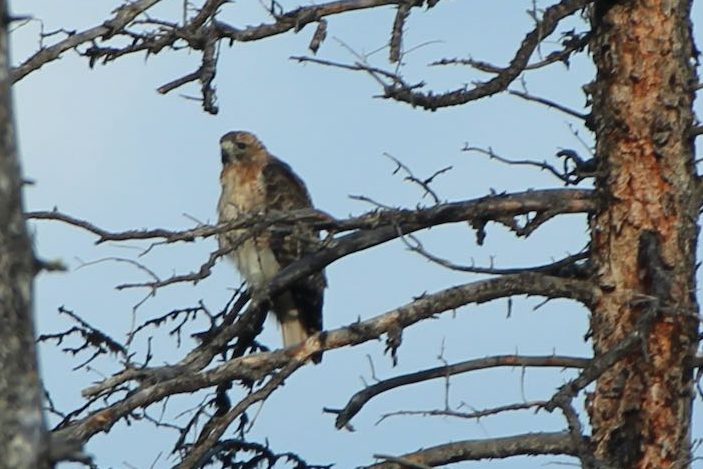
And this hawk was sitting in a tree by the lake.
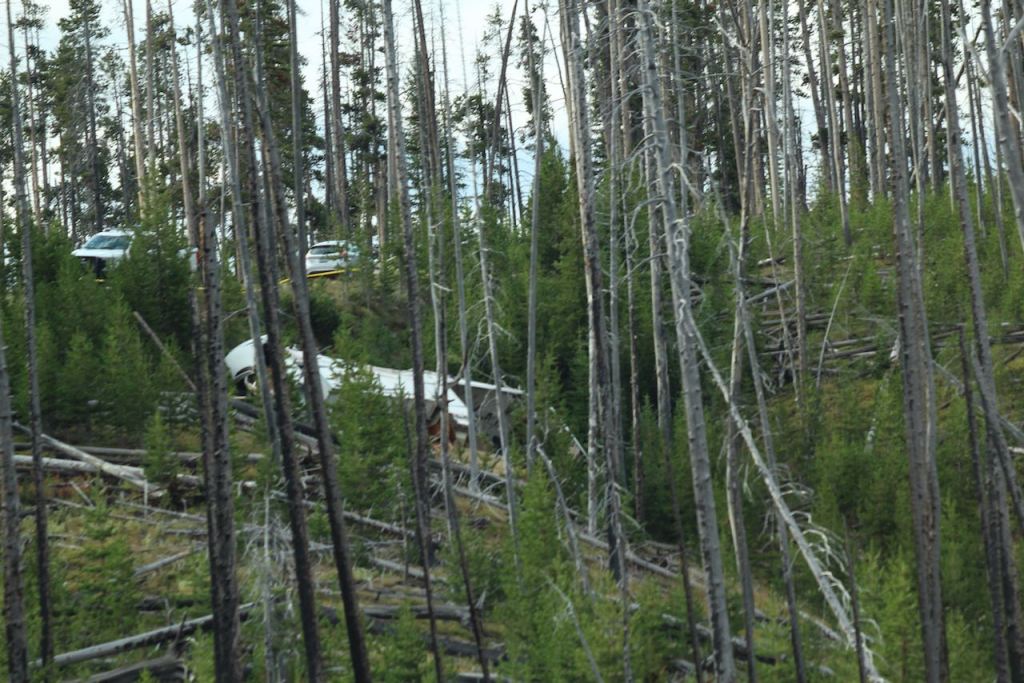
This is a travel trailer that had gone off the road the night before. Our guide didn’t have many details, but we later learned that when the driver was going down this pass on the east entrance road his hitch failed and the trailer rolled off the road. It sure looked nasty, but no one was hurt.
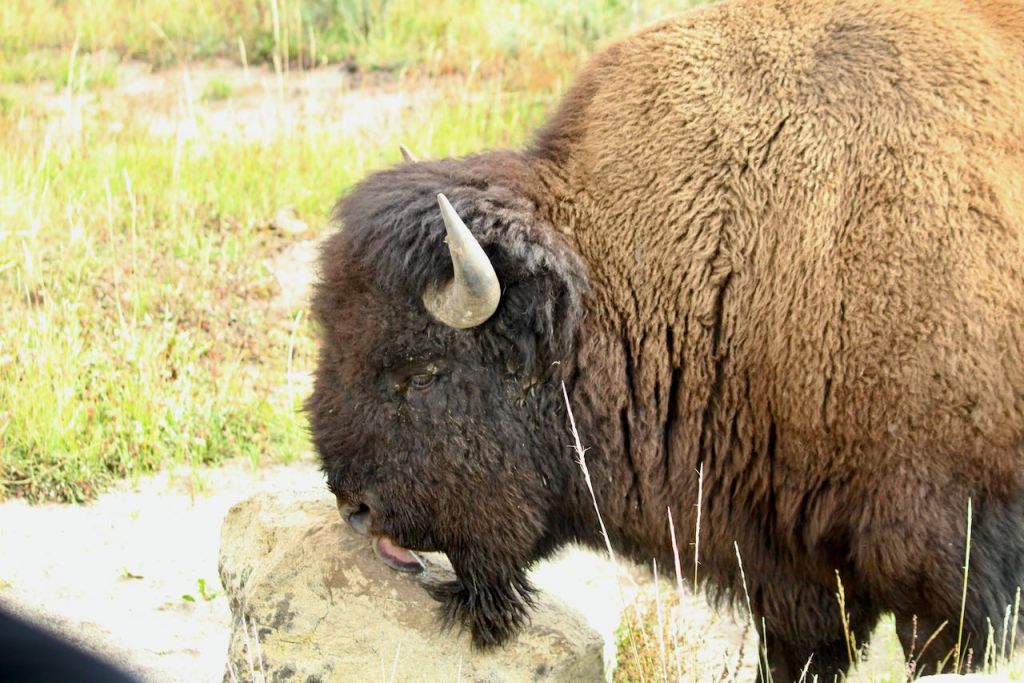
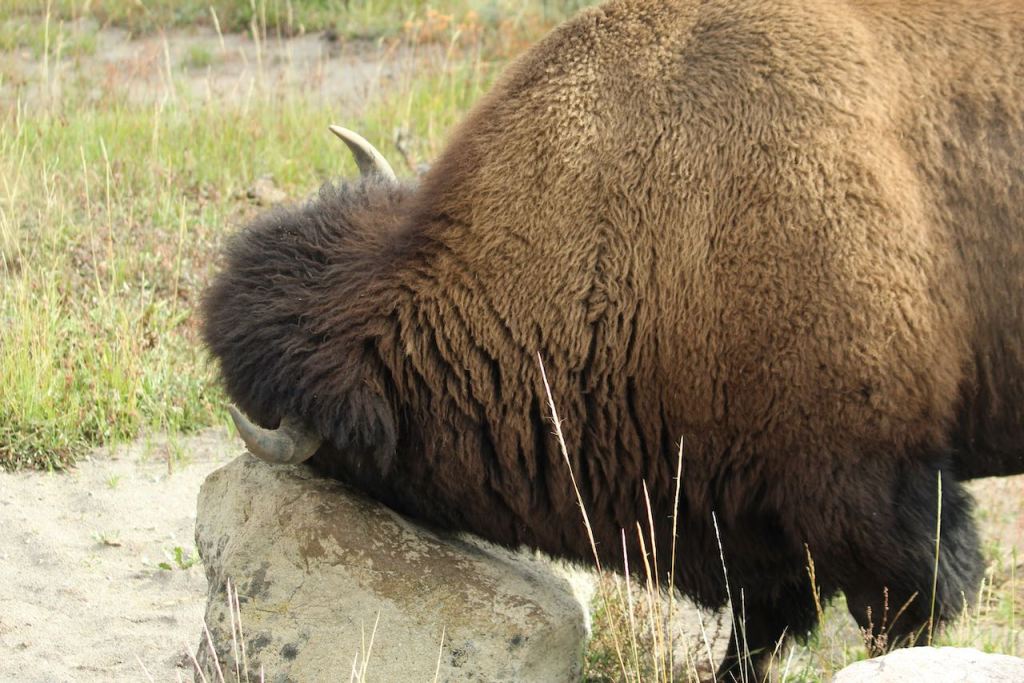
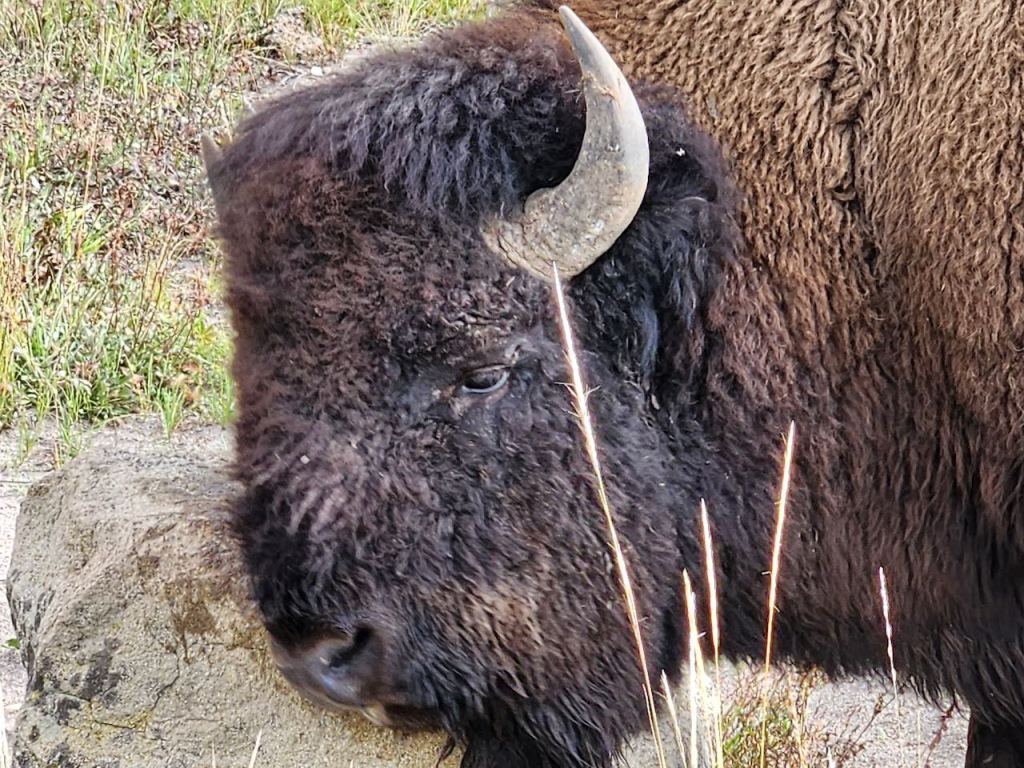
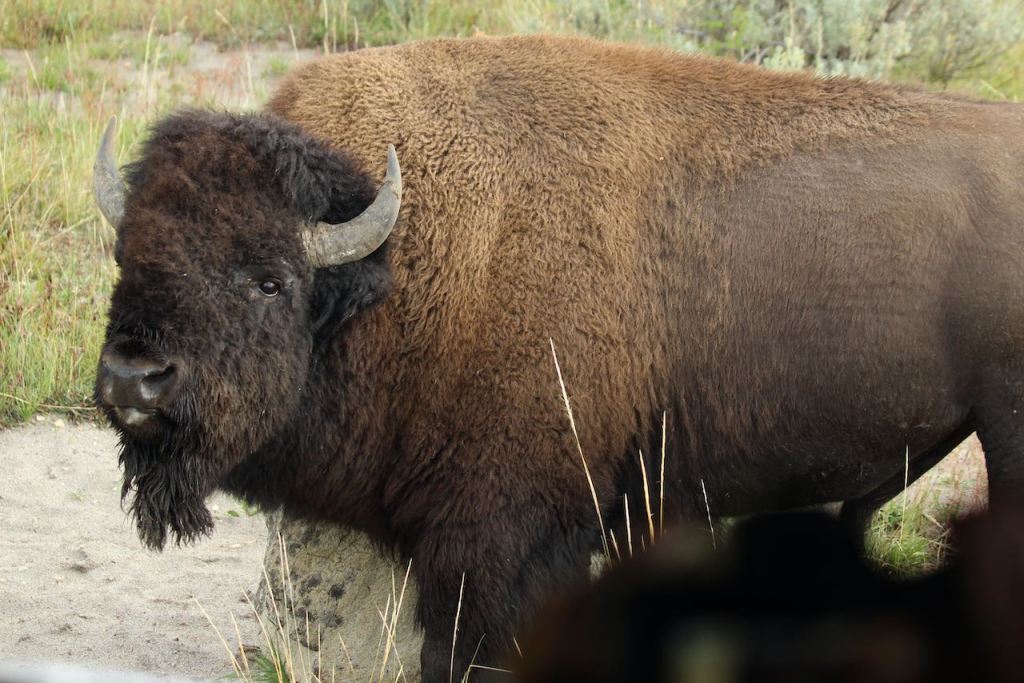
Then we came across this bison licking and loving this rock — I guess there was some salt in it. These pictures were taken through the bus window as we were pulled up almost right next to him. This video will give you an idea of how close we were: https://www.dropbox.com/scl/fi/eifi6htjix2zezisi6bfd/IMG_5669.MOV?rlkey=1twz5dlywi6gta6uwu5ipu0ab&dl=0


Then we saw this mule deer and coyote along the road.
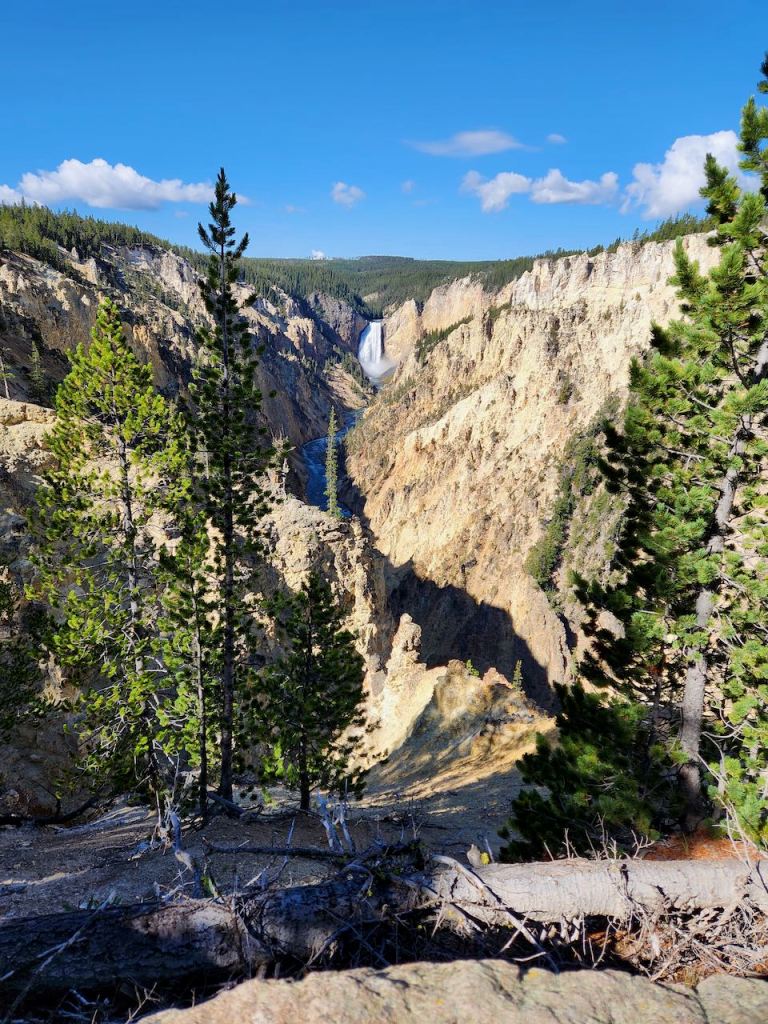
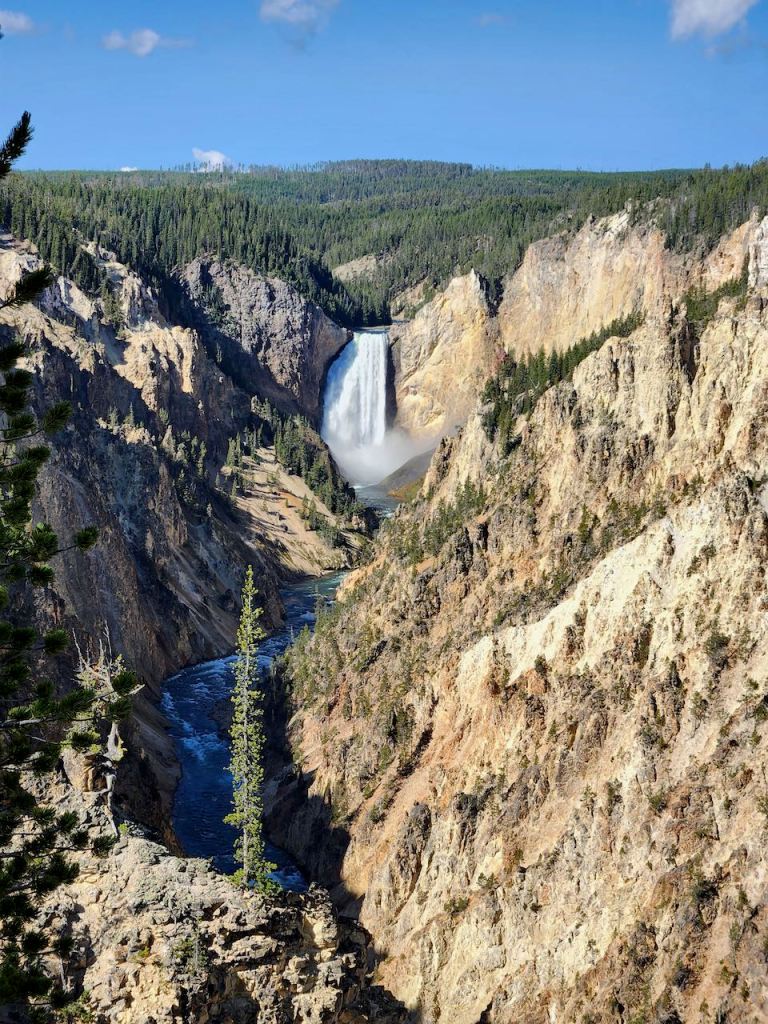
Our final stop was back at the Grand Canyon of the Yellowstone – so these shots have some almost noon sun. After we were dropped back off at the hotel, we had our lunch in the RV in the parking lot.
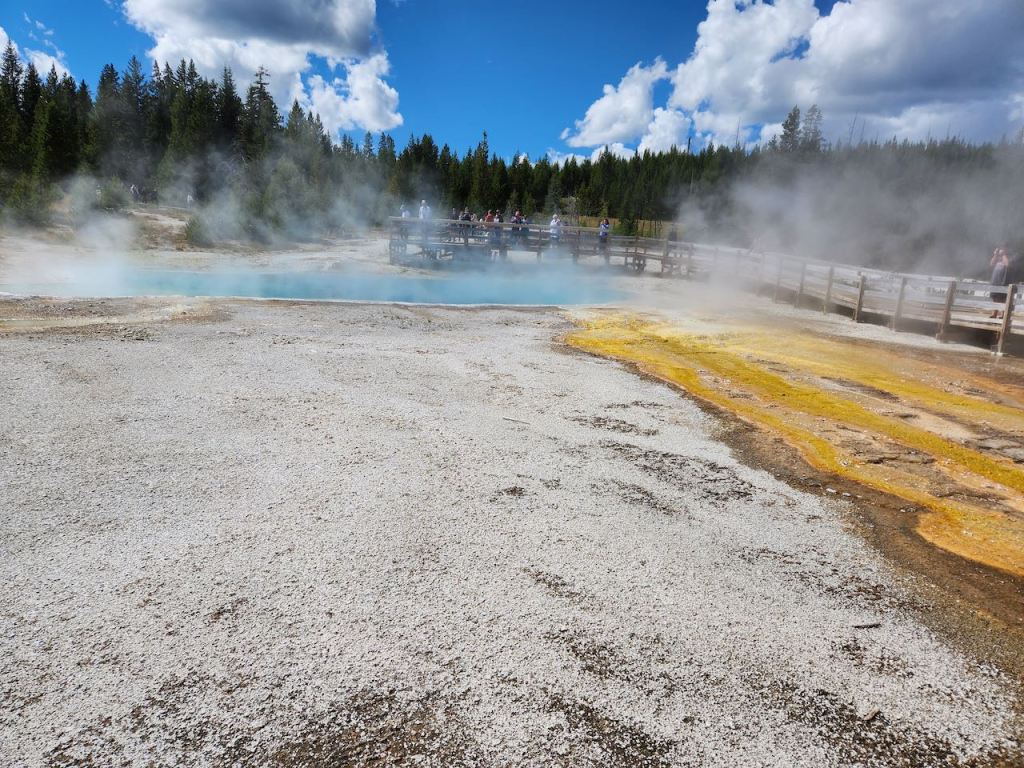

Then we took the RV to the West Thumb Geyser area – another place with plenty of thermal features – and the largest such area on Yellowstone Lake. And in fact there are thermal features here that are under the lake.
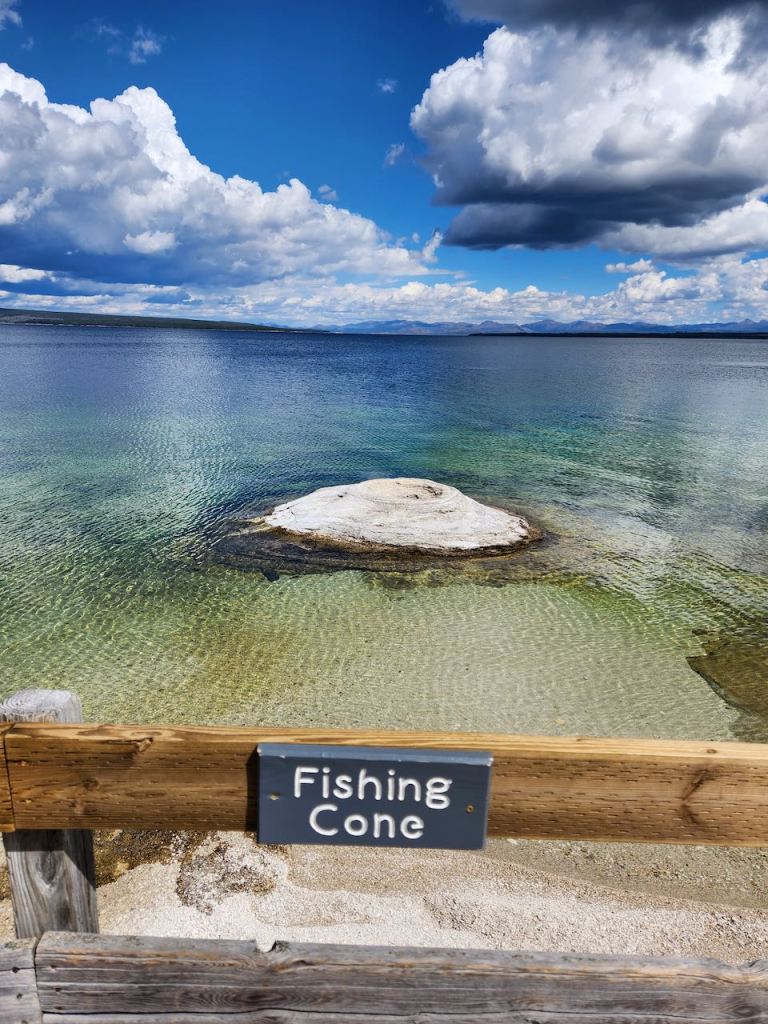

We walked the boardwalk that went along the lake. The Fishing Cone geyser was used in the 1870’s to cook fish that were caught in the lake. Just leave them on the hook, drop them in and in 10 minutes you had a poached trout. Although the superintendent of the park used to do this for visitors in the early 1880’s, it is not allowed now.

This is Abyss Pool – it is measured at over 50 feet deep — and it is very clear. We didn’t visit here on our Circle of Fire Tour, but Rob told us he found a foot in a sneaker in the pool in 2022. I looked it up. I didn’t find Rob’s name, but sure enough there was a foot found in July 2022, that was later identified through DNA and a car left behind as a tourist that had been visiting the park. Reports said no foul play was suspected.
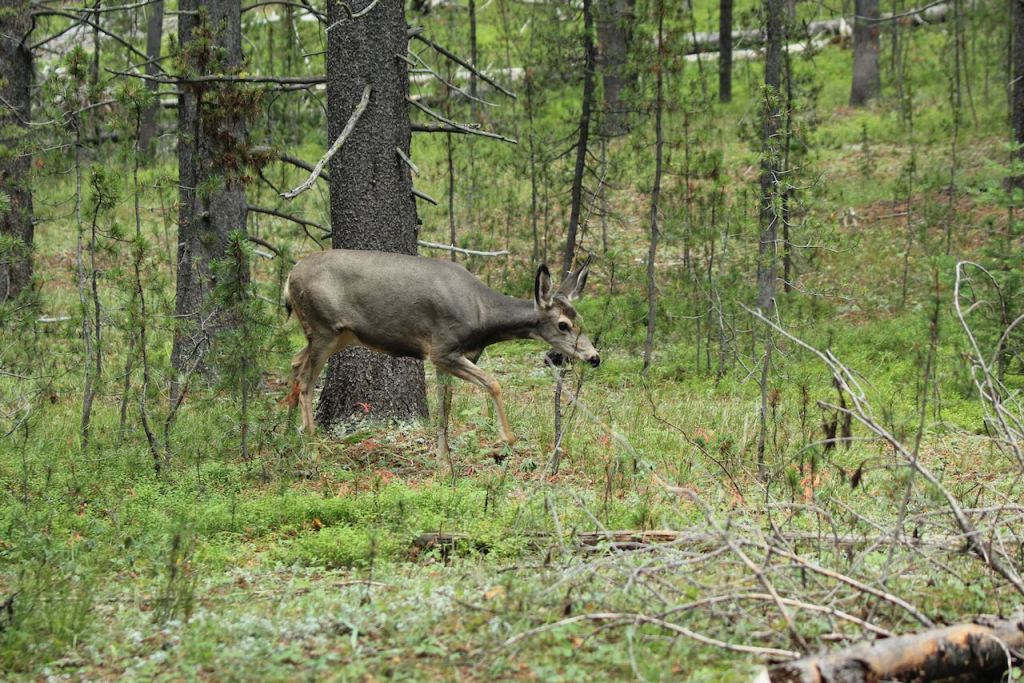
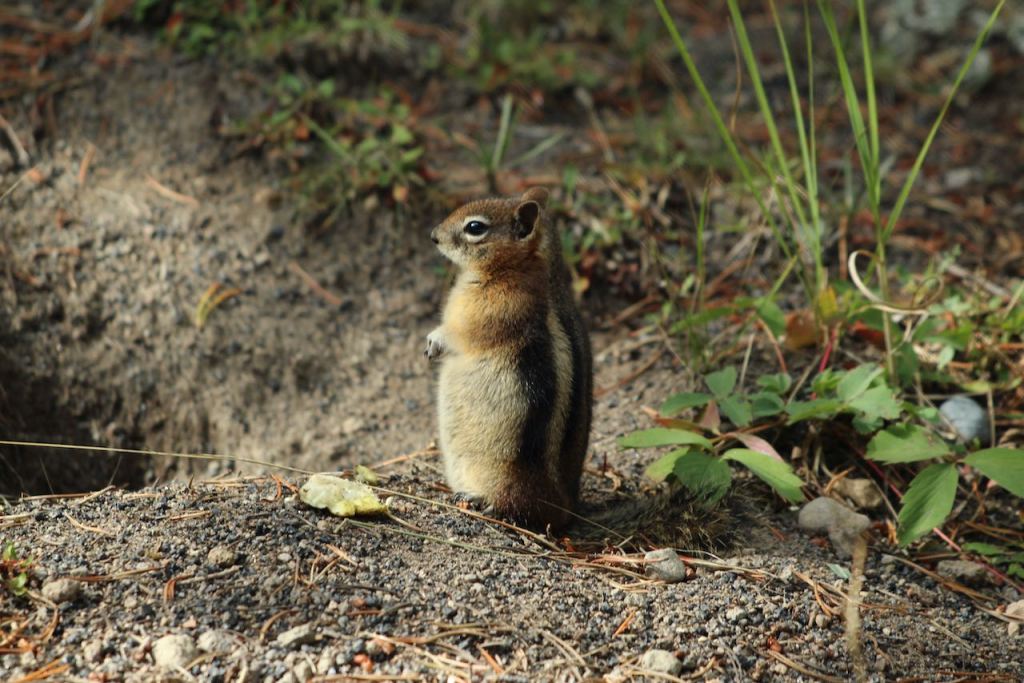
Our next stop was the Natural Bridge Hike – we were accompanied part way by this mule deer and saw the fattest chipmunk we have ever seen.
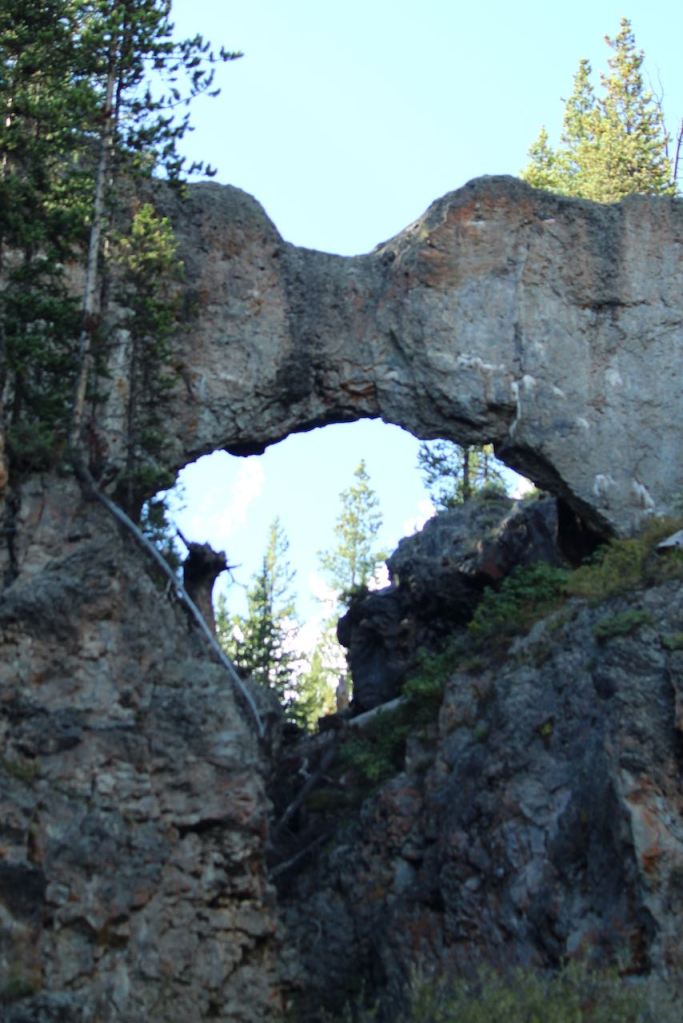
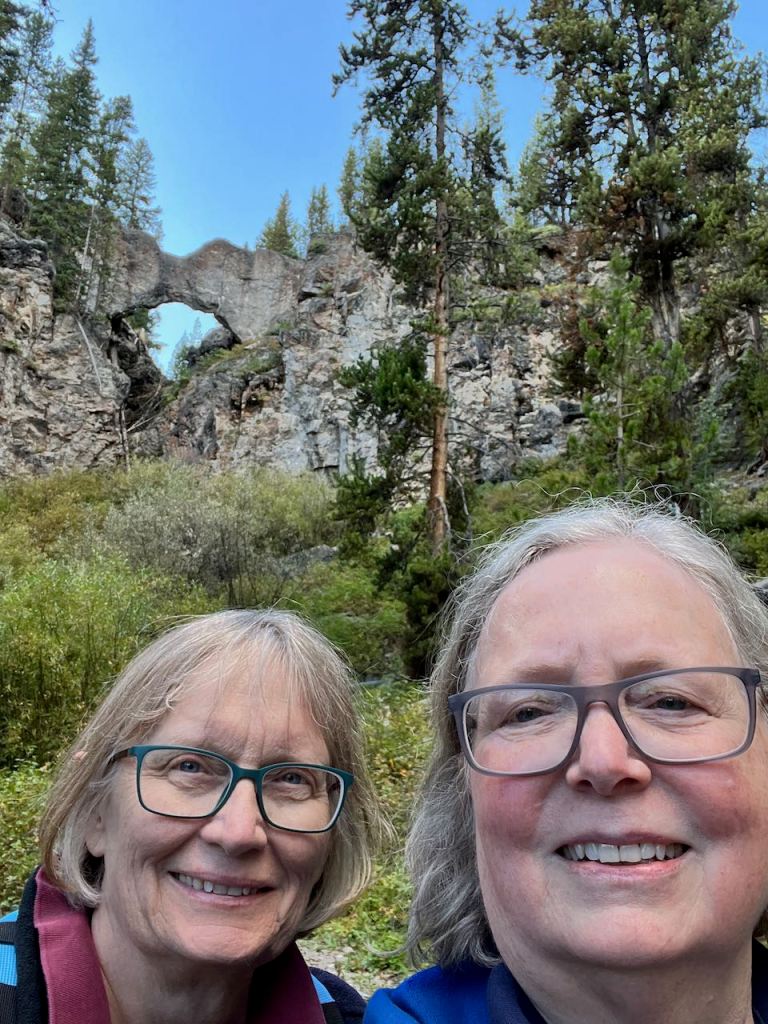
We did eventually make it to the bridge – but we decided not to go up and over, but just to admire it from below.
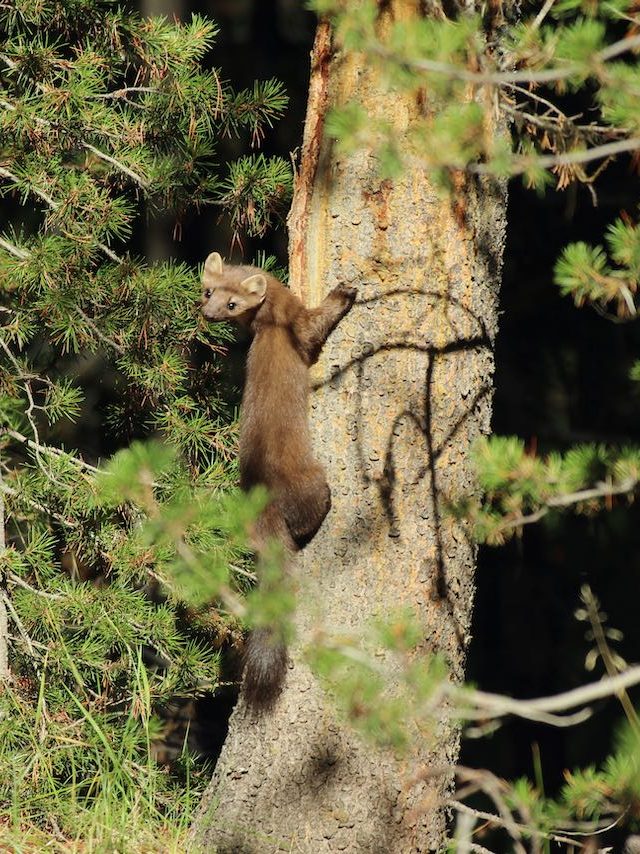

On the way back we spotted this American Marten – sometimes called a pine marten. It’s a member of the weasel family. This one stayed ahead of us, darting from tree to tree and peeking out to see if we were still on the path. Very cute!
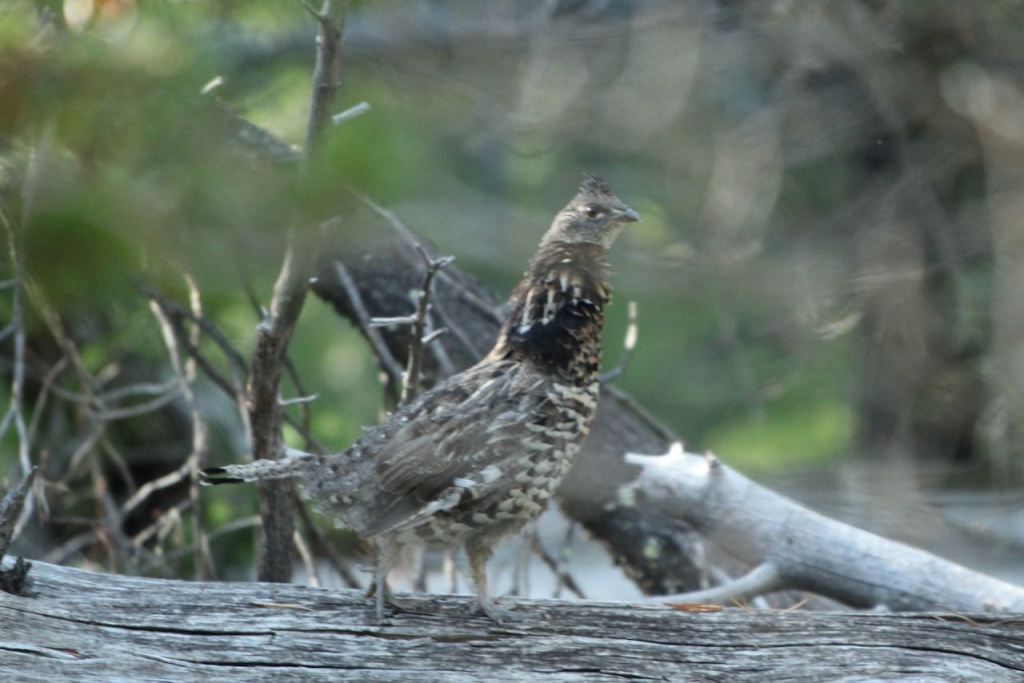
We also caught sight of a flock of ruffed grouse.


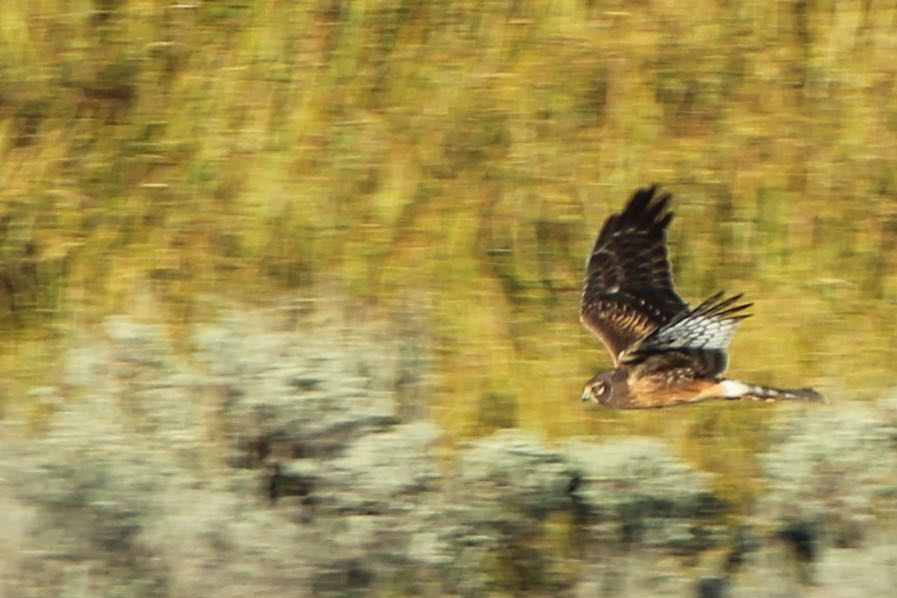
Before heading back to our campsite, we took another run through the Hayden Valley – we didn’t see any large mammals, but we were lucky to be next to someone who spotted this golden eagle! Then is was back to camp for a steak dinner.
On the photography trip on Thursday we met some very nice people. One was Ericka, and she was from Rhode Island. She has visited Yellowstone many times, and was on her own in the park until her sister was joining her on Saturday. As she was in the same campground as we were we made arrangements to get together on Friday – and she had a Jeep Renegade so we’d have some transportation.
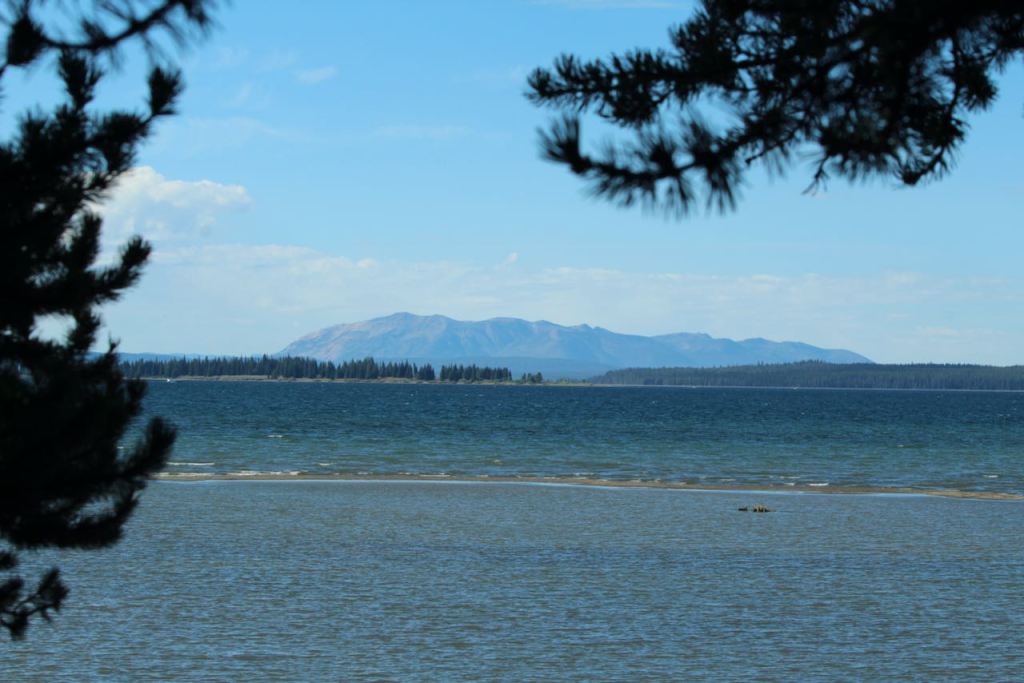
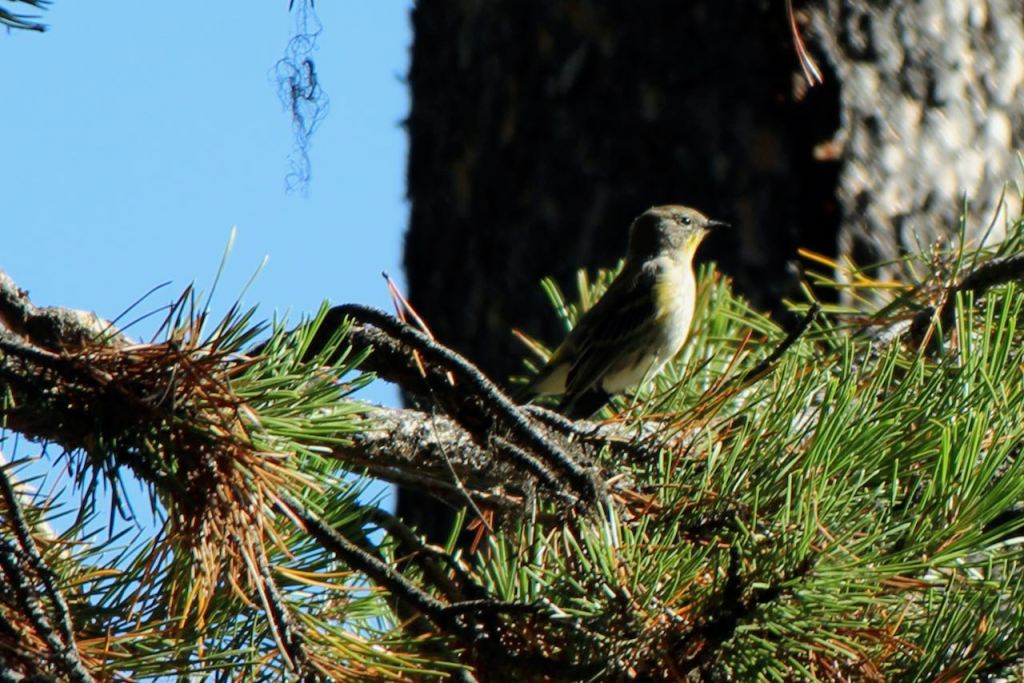
It had rained over night, but by 9:30 when we got together, it had pretty much stopped. Our first stop was the Pelican Nature Trail. It was a short walk through the forest and along the beach on Yellowstone Lake. We didn’t see any pelicans, but we did see a few birds.
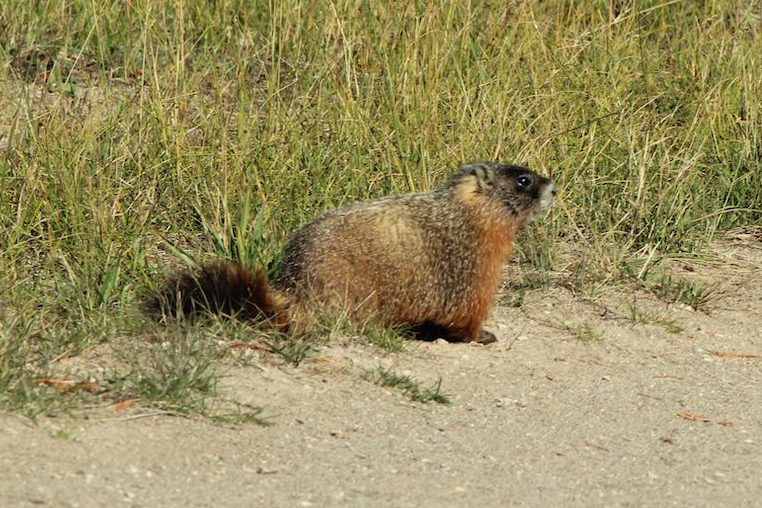
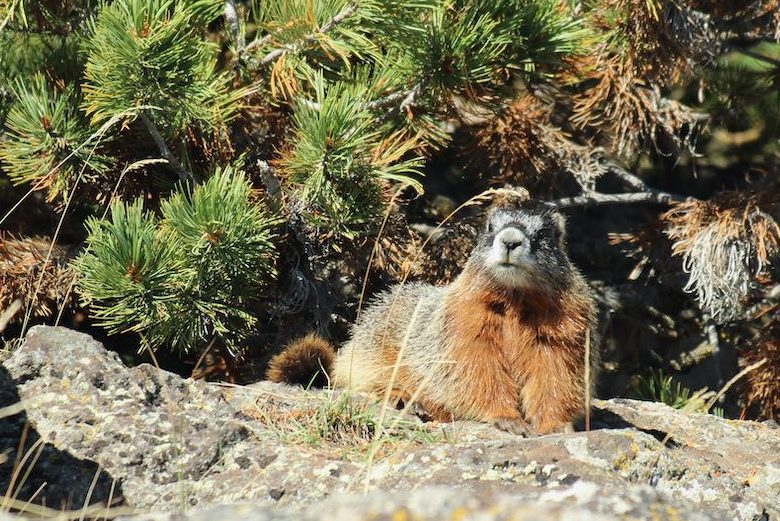
Our 2nd hike of the day was the Storm Point Trail – it is a 2.4 mile lollipop trail – that is one where you walk a path, then do a loop and then return to your starting point on the original path you walked. This trail also took us along the lake and through some forest area. One of the animals we spotted were these Yellow-bellied marmots. It’s said that they hibernate for 8 months, and when they aren’t hibernating, they sun themselves for many hours each day. They are the largest member of the squirrel family.
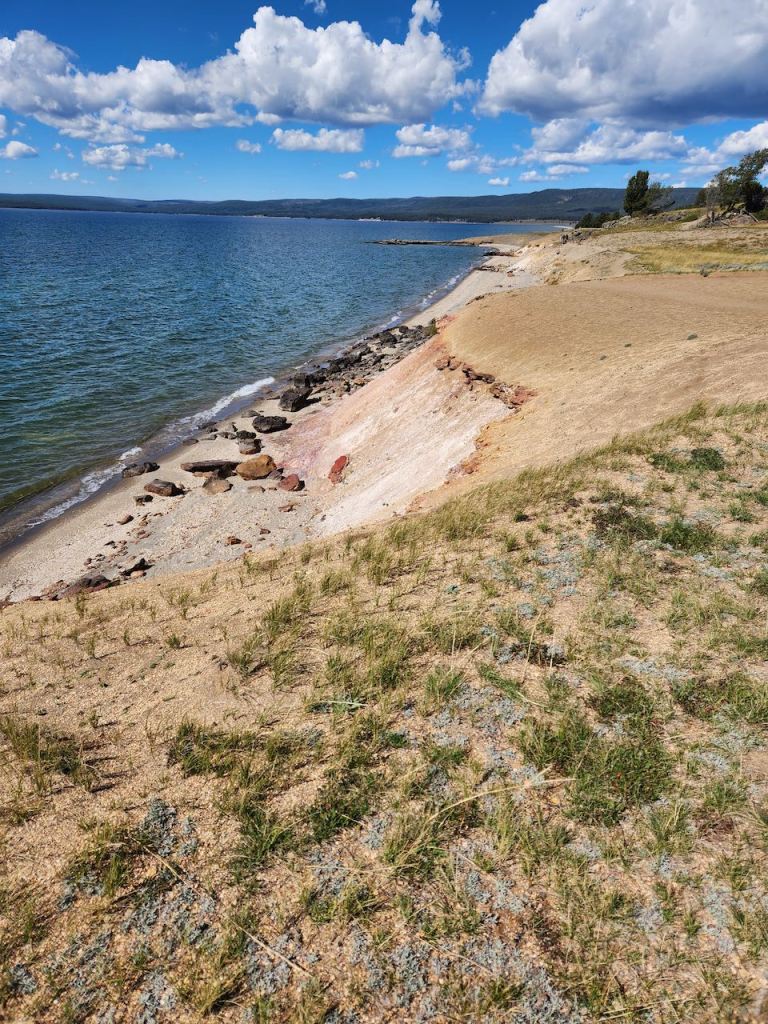
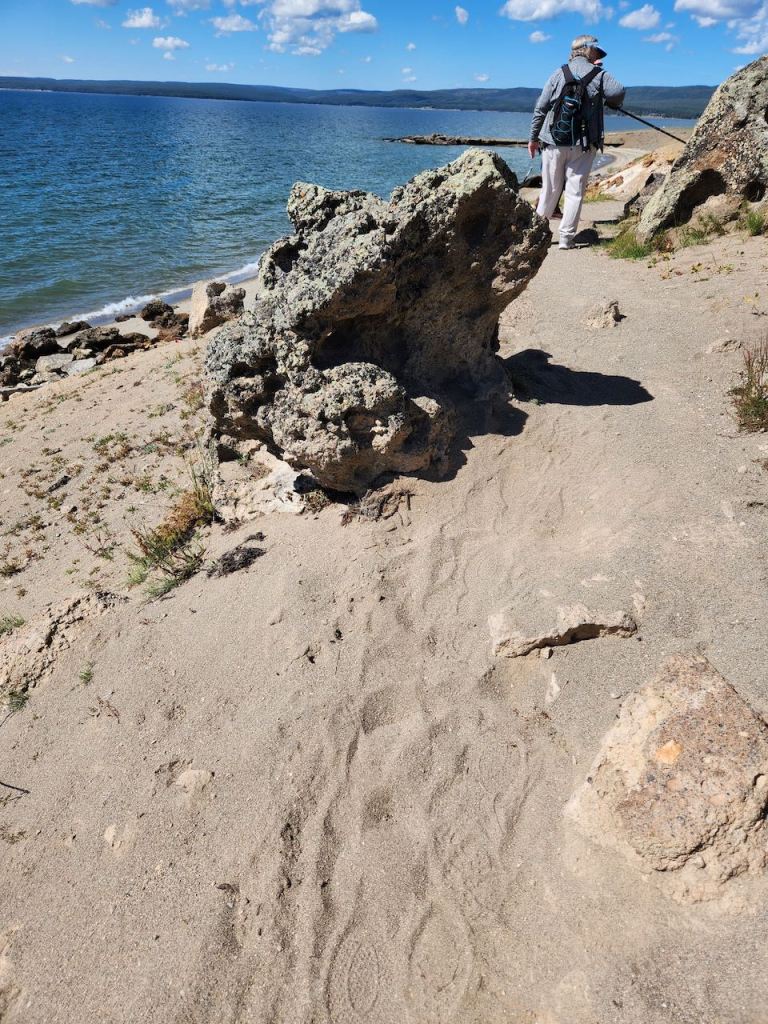
Views along the lake. That’s Trish with her walking stick.
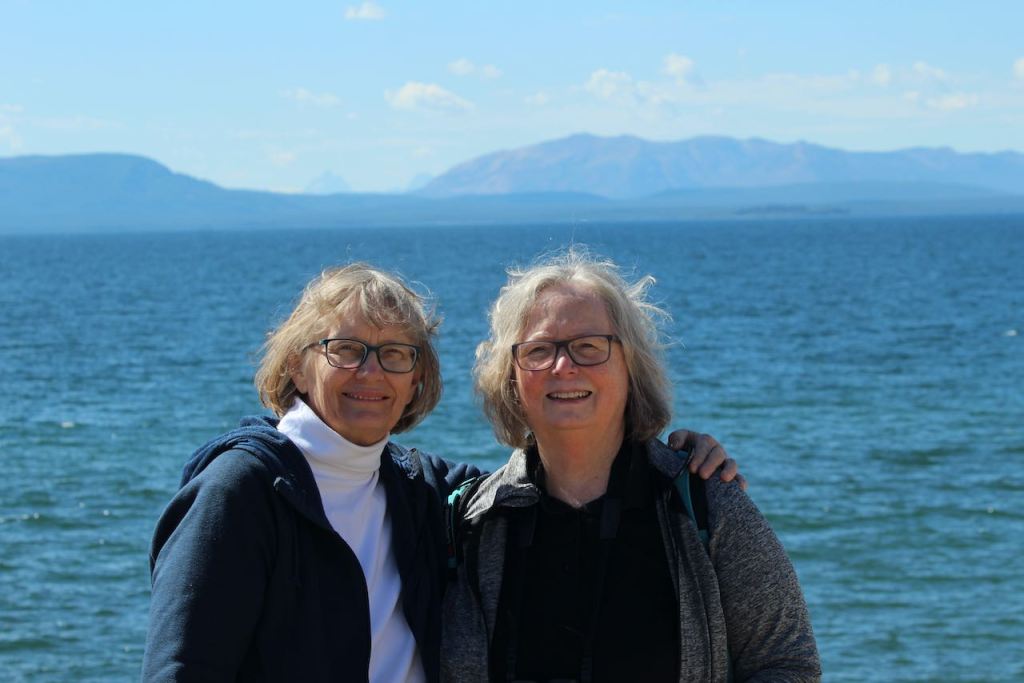
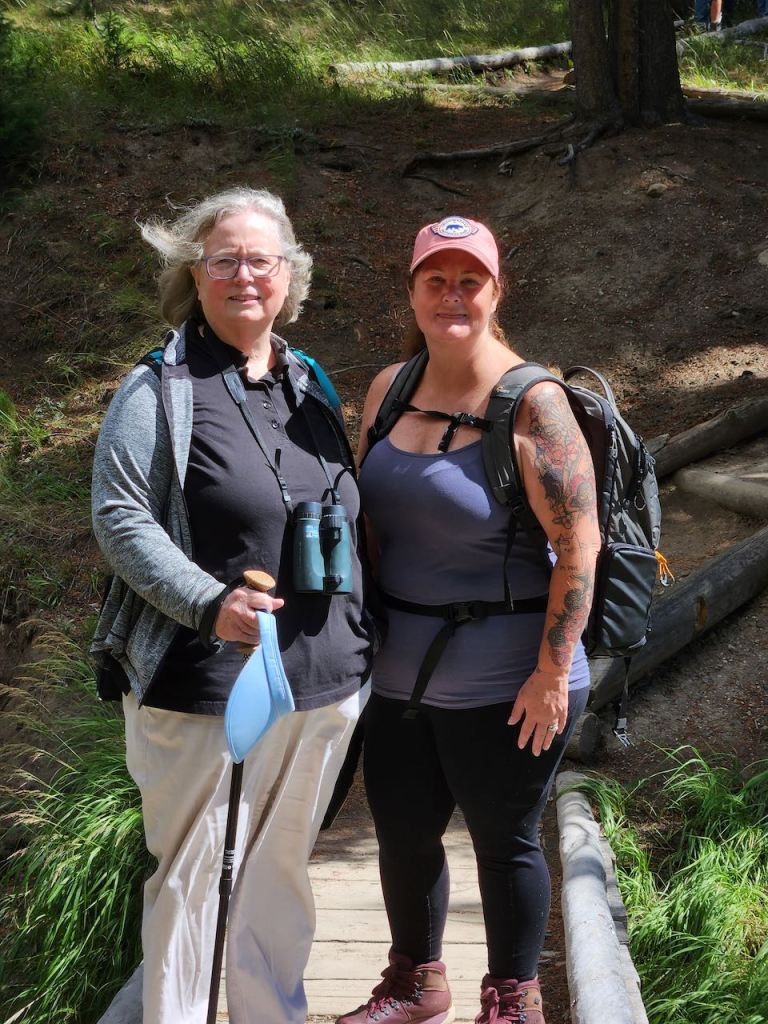
And this is Trish with Ericka – almost to the end of our hike.

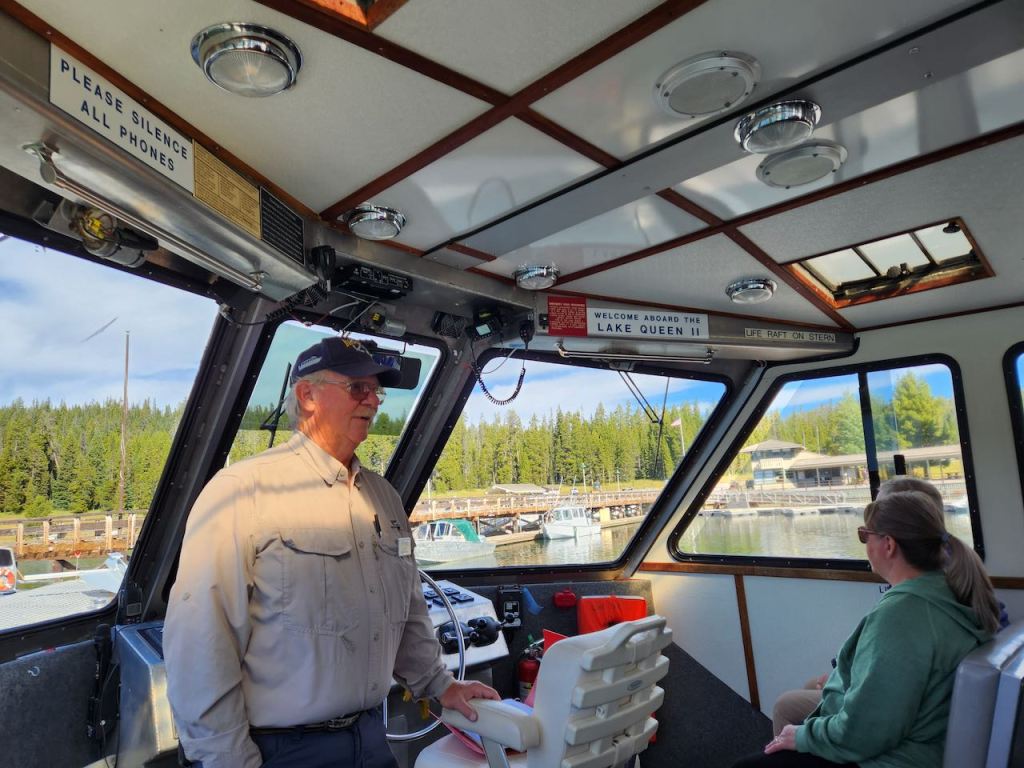

On Saturday, Sept 9th our first stop was another tour – this time it was a boat tour of Yellowstone Lake. It was an hour tour that left from the Bridge Bay Marina. That’s our captain and tour guide, and a view of the Lake Hotel from the water. The Lake Hotel was built in 1891 and is the oldest operating hotel in Yellowstone.
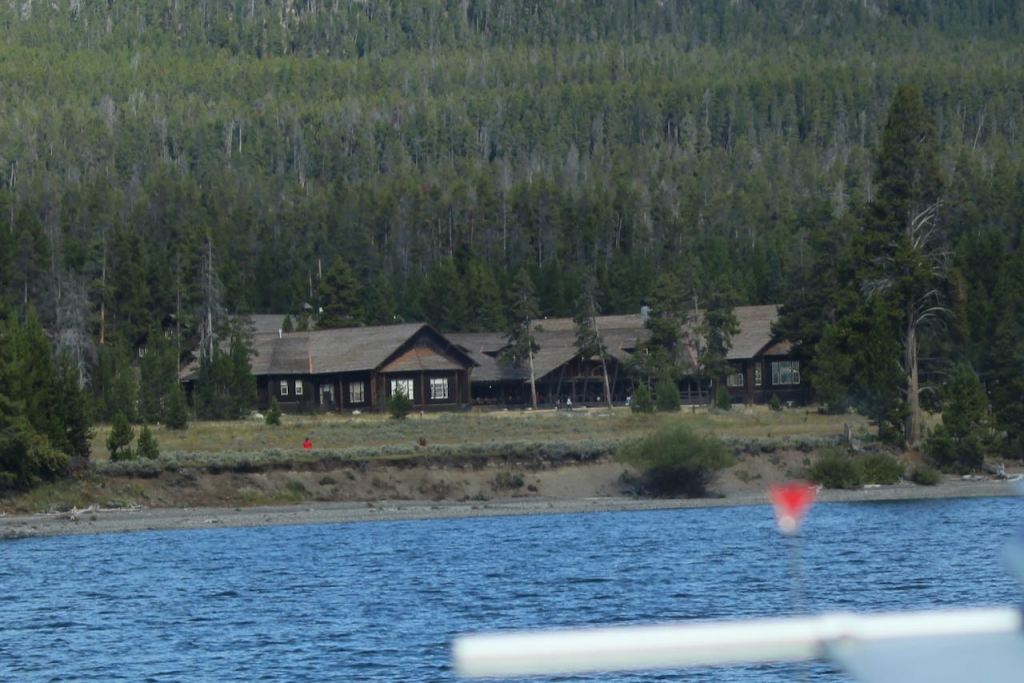
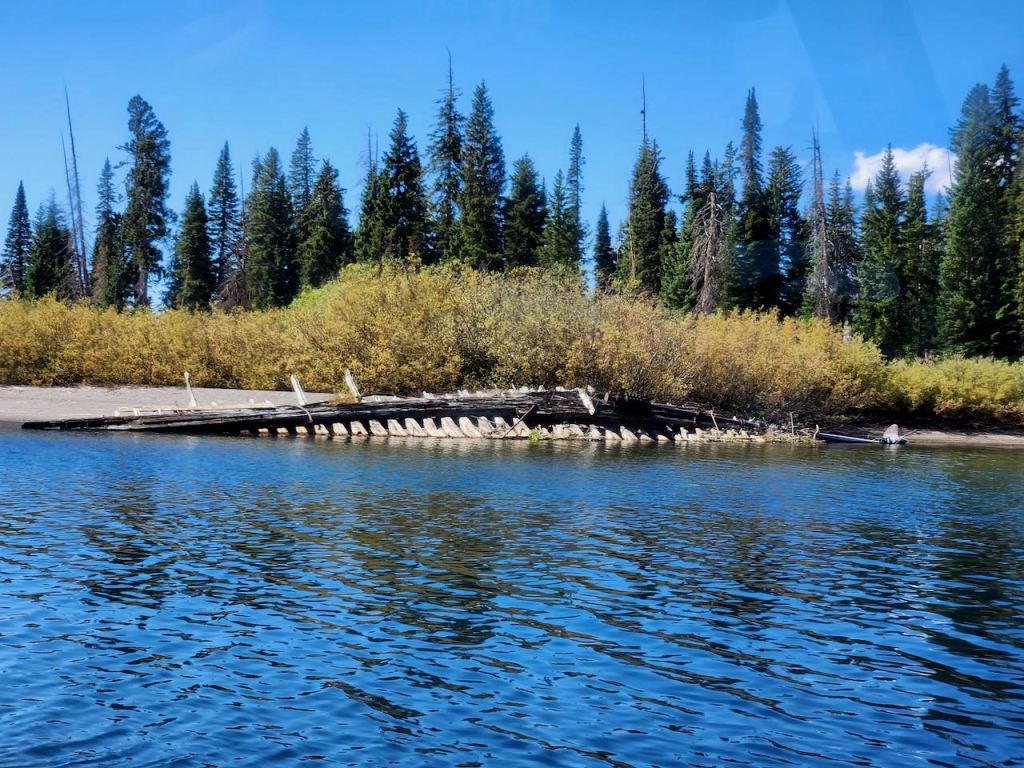
And that’s the Lake Lodge at the left, in the same area as the Lake Hotel – and the tour guide said it was a great place to have a drink on the porch and watch the sunset. On the right are the remains of the EC Waters Steamship. EC Waters was one of the first entrepreneurs at Yellowstone. In 1891 he brought a steamship to the lake and ferried folks tired of stagecoach travel from one hotel to the next. He also created a “zoo” with bison and other wild animals on a small island in the lake. But he was unscrupulous and after taking people to the zoo he would tell them their fair didn’t cover the return trip and they needed to pay for that to get back on the boat. By 1905 he thought he could use a bigger ship, so he brought a 500 passenger steamship from Lake Minnetonka in Minnesota and named it the EC Waters. But because of his bad treatment of the animals and his passengers, the park service would not give him a license to operate as a ferry. Eventually EC Waters was barred from business in the park and the boat was run aground on Stevenson Island. Today all you can see are the remains above.
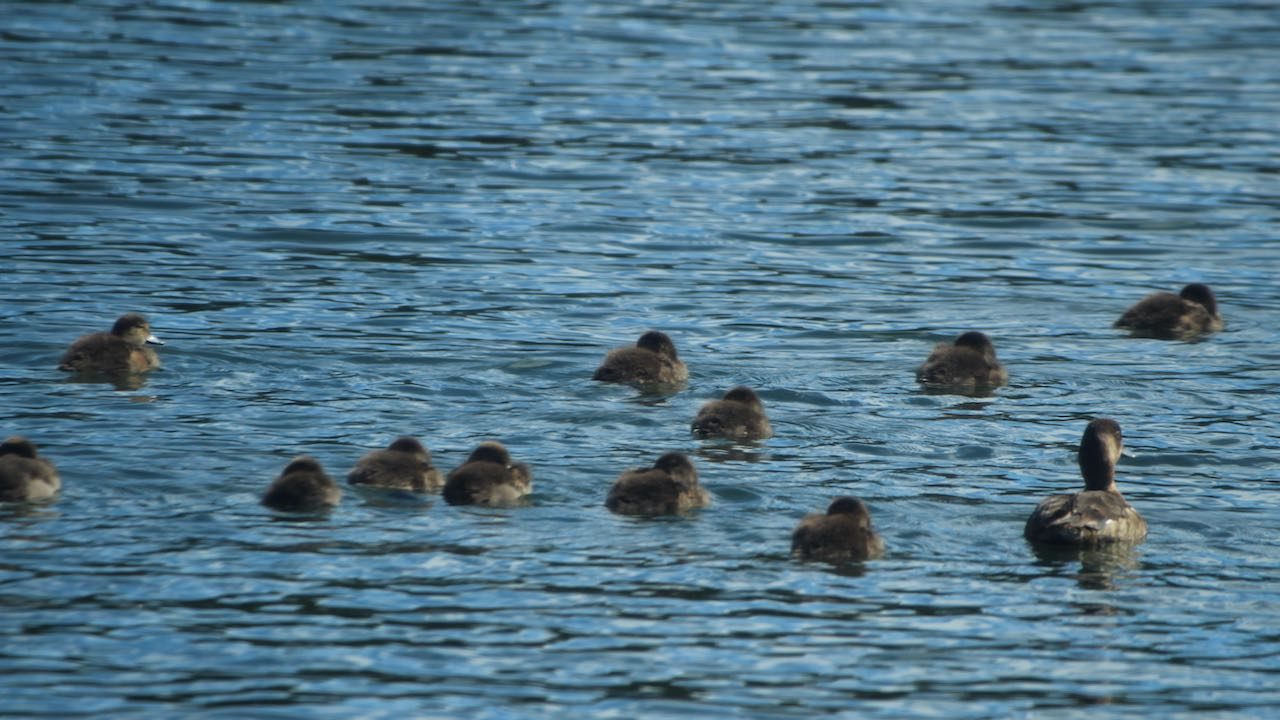
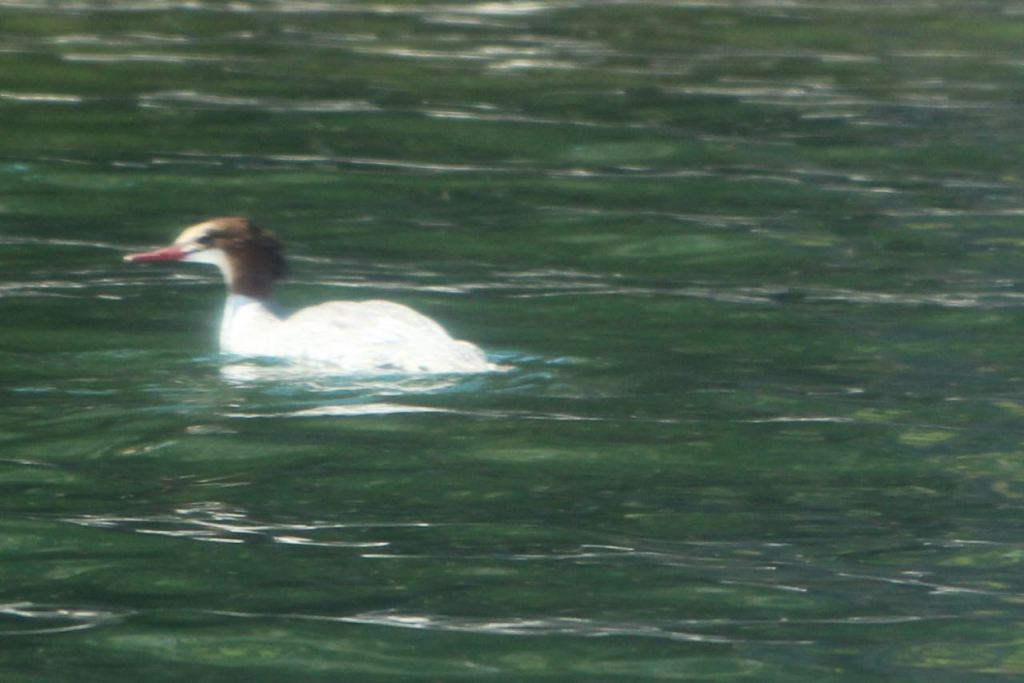
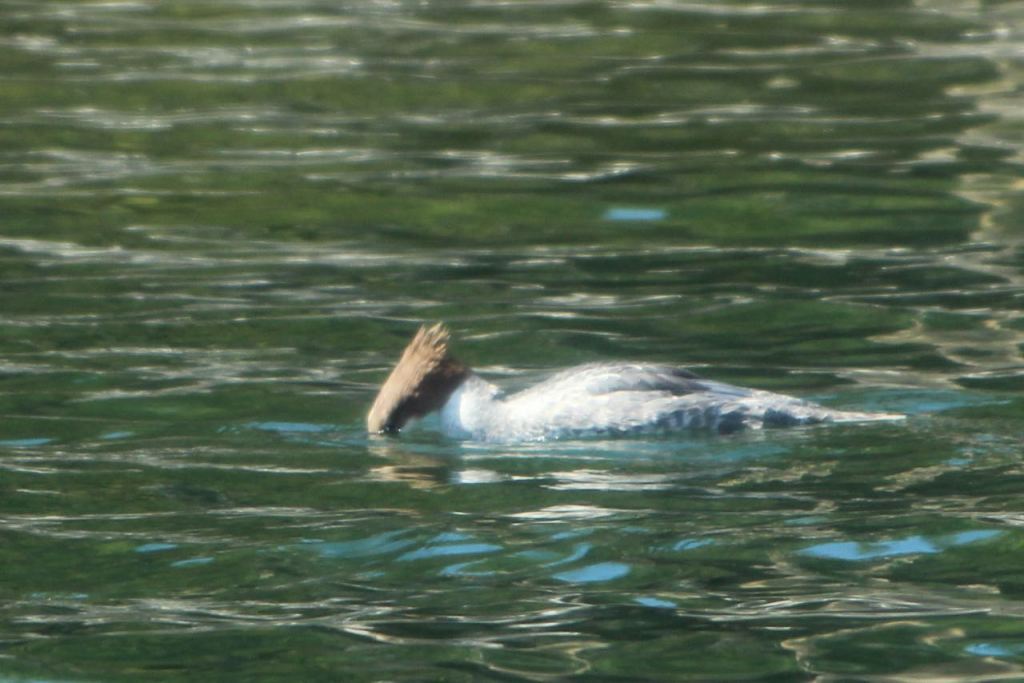
We also saw these ducks – whatever they are, and several Common Mergansers. Although we had fun, and got some different views of the lake, unless you have lots of time in Yellowstone, I’d say you can skip the boat tour. Because of where we were in the park, we had planned to make Old Faithful our next stop – so that Suzy could see it. Anther idea was to go to the Grand Prismatic Spring. But it was Saturday and the traffic in the area was awful, so we drove on and went back to the Fountain Paint Pots area.

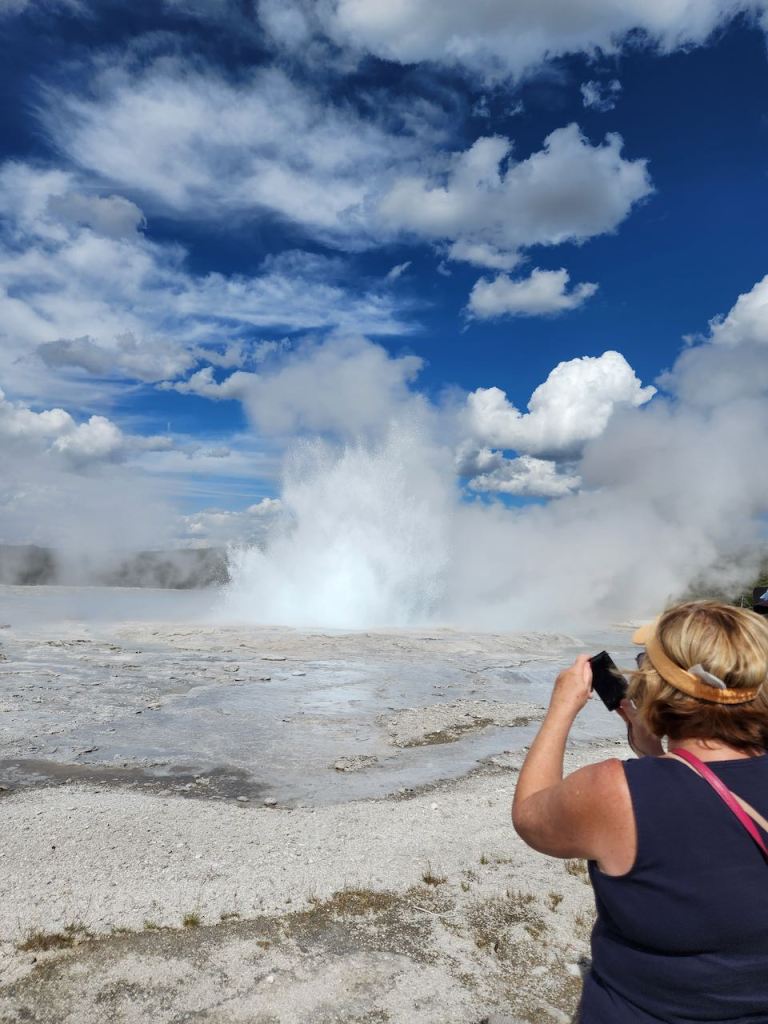
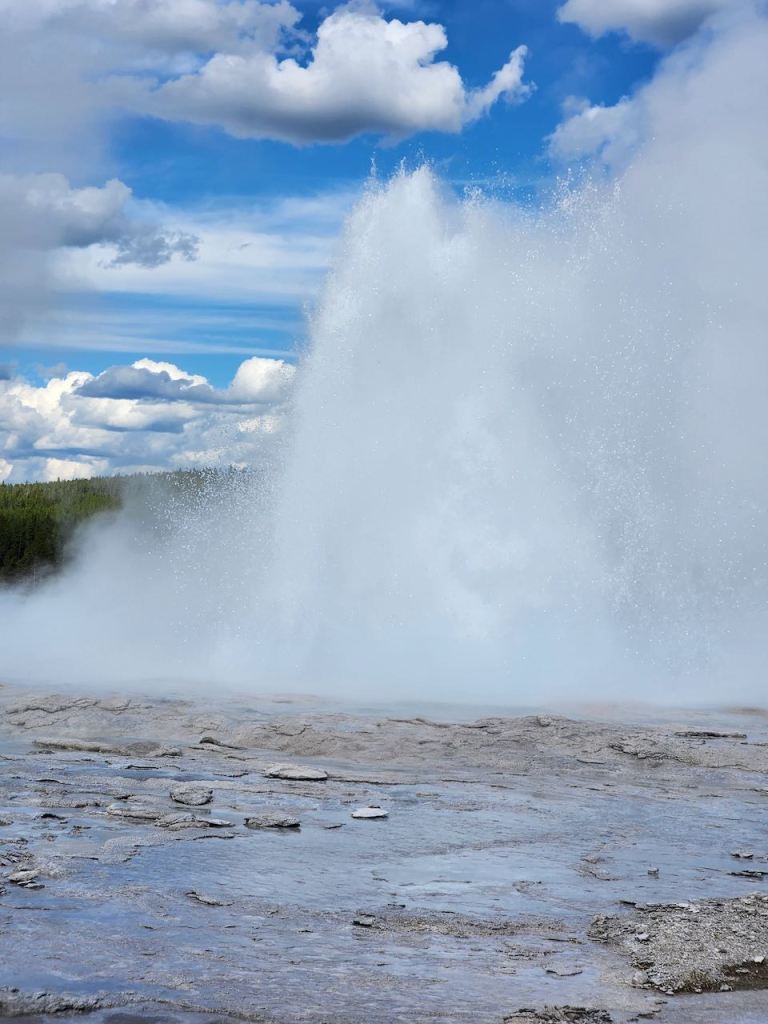
This time while we were there we got to see the Fountain Geyser erupt. It is not very predictable but when it starts it spouts for about 20 minutes. The photos above show the different levels of the water while this video give you a bit of an idea of what it looks like: https://www.dropbox.com/s/oy6elr16qezt390/2023-09-09%2015.23.02.mov?dl=0. One of the volunteer watchers said it probably got to 35 or 40 feet while we were there.

Selfie with the Fountain Geyser.

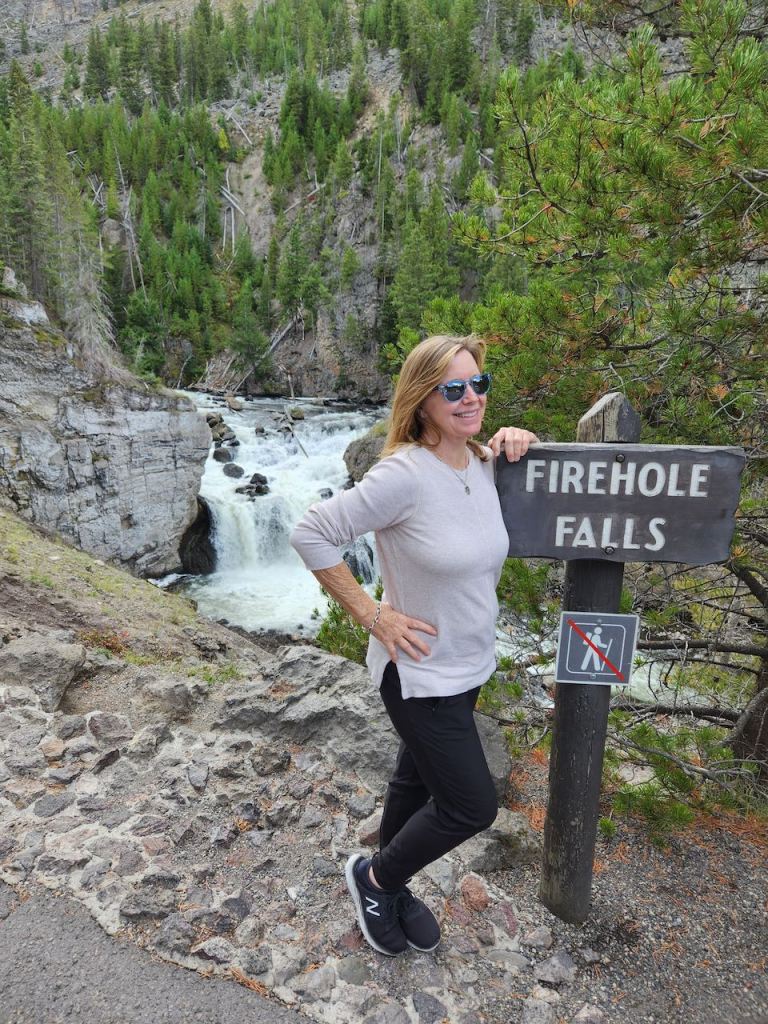
Then we drove the Firehole Canyon Drive – it’s a side trip off the Loop Road the takes you to this waterfall. The river flows through this canyon, which is where two lava flows met – one from 110k years ago meeting up with a cooled one from 160k years ago.
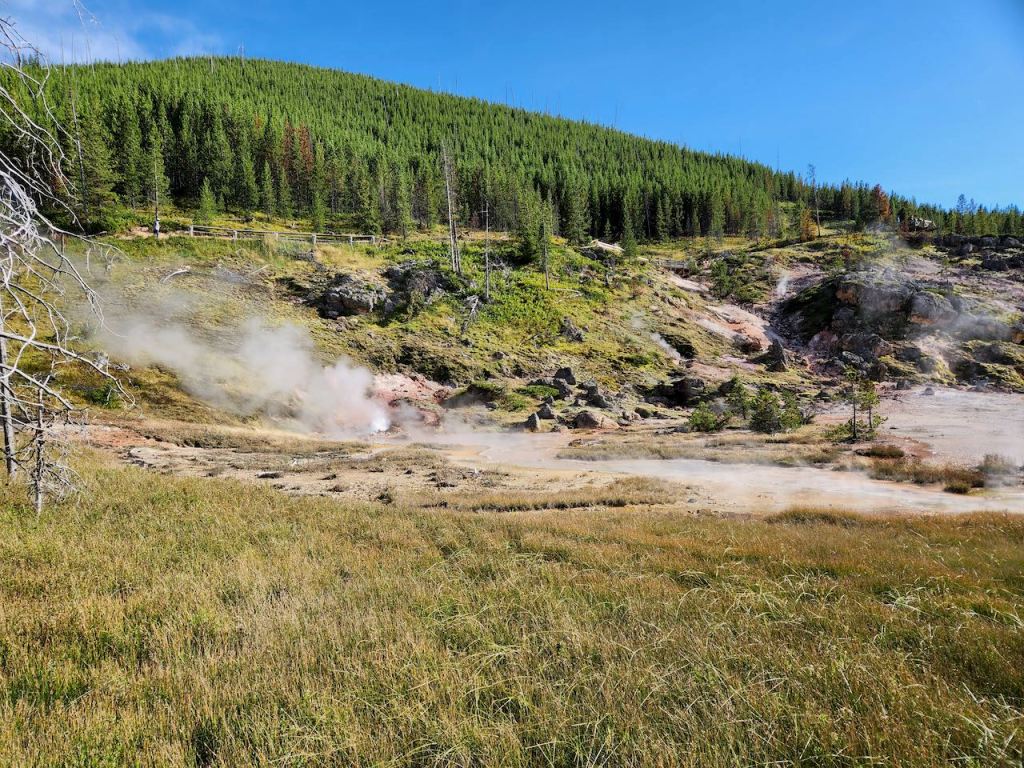
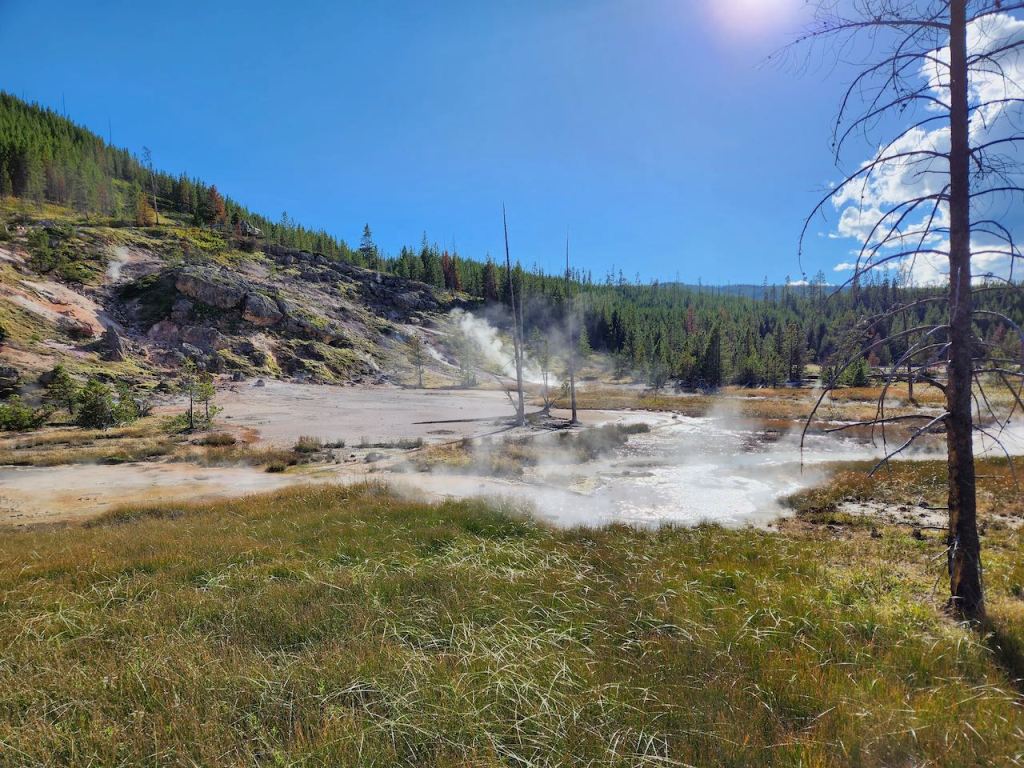
Our last stop of the day was an area called the Artists Paint Pots. As we approached on the path it looked like most of the other thermal areas that we had seen. But then Suzy and I walked the trail that goes up along the base of the trees you see in the above photos.
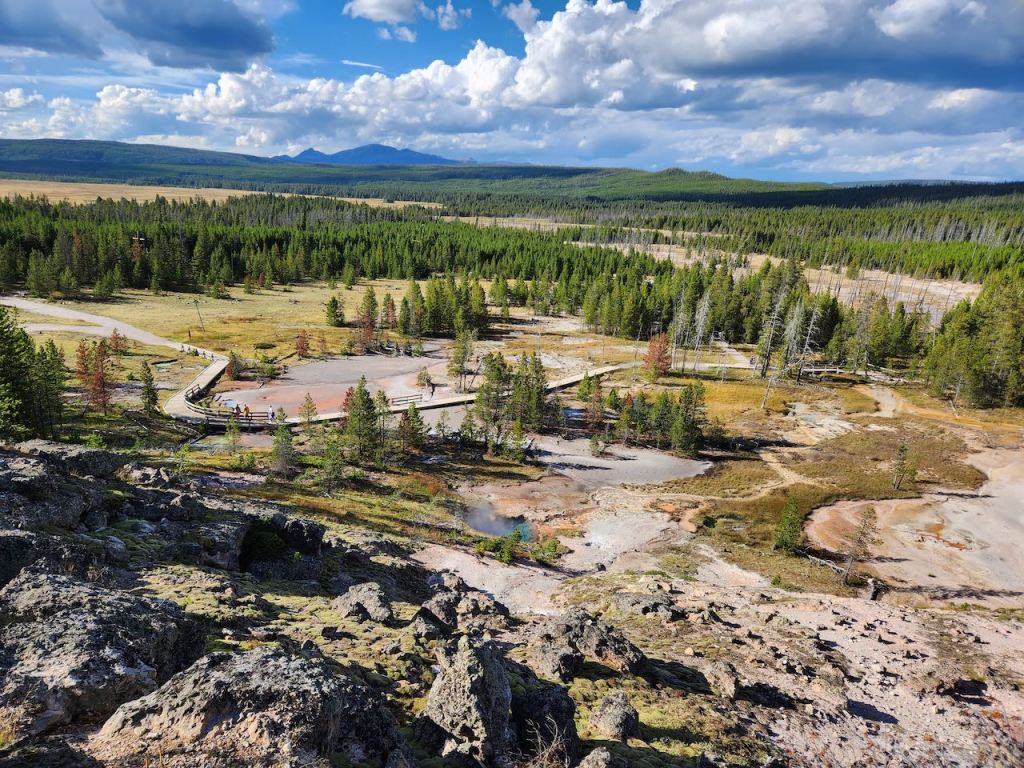
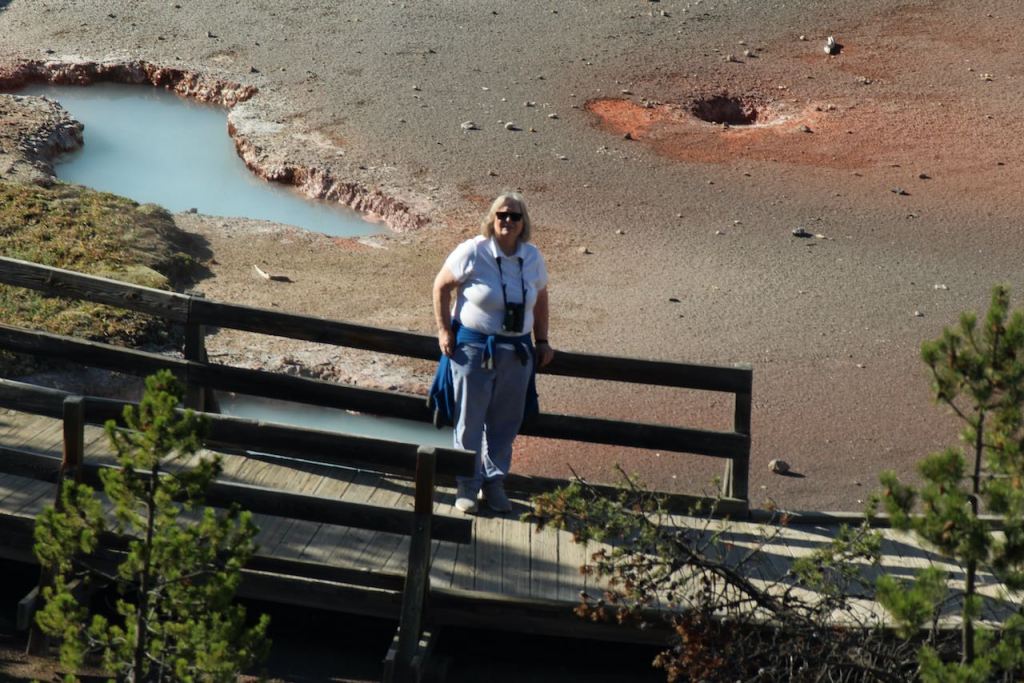
There you can look down over the valley and see the hot spring below, and catch sight of Trish who didn’t join us for the 125 foot elevation gain.
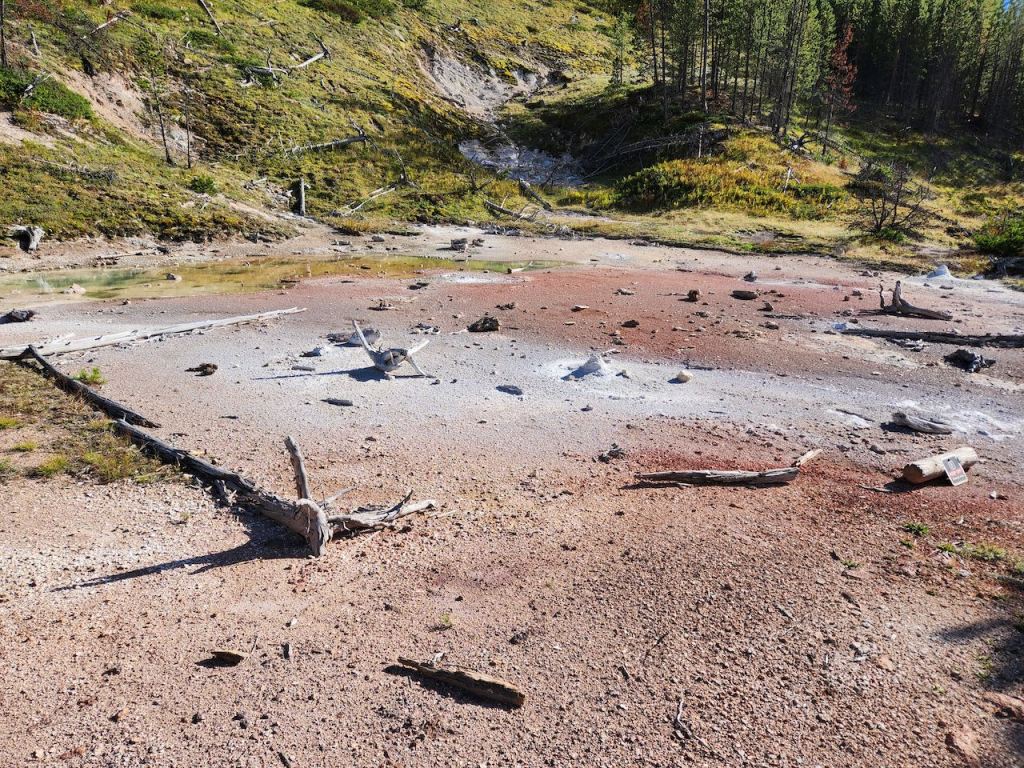
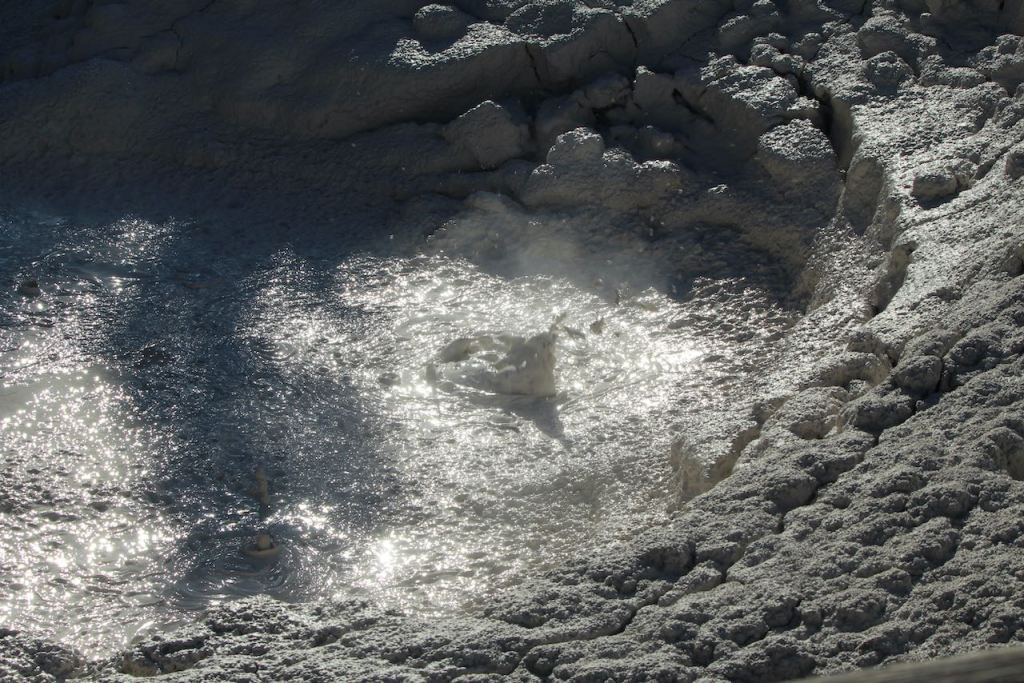
Also up above are more paint pots – and here is a video of them plopping: https://www.dropbox.com/scl/fi/ogydsu5r74afantxf5na1/2023-09-09-17.14.55.mov?rlkey=day32dizmciq82aod370qwnix&dl=0
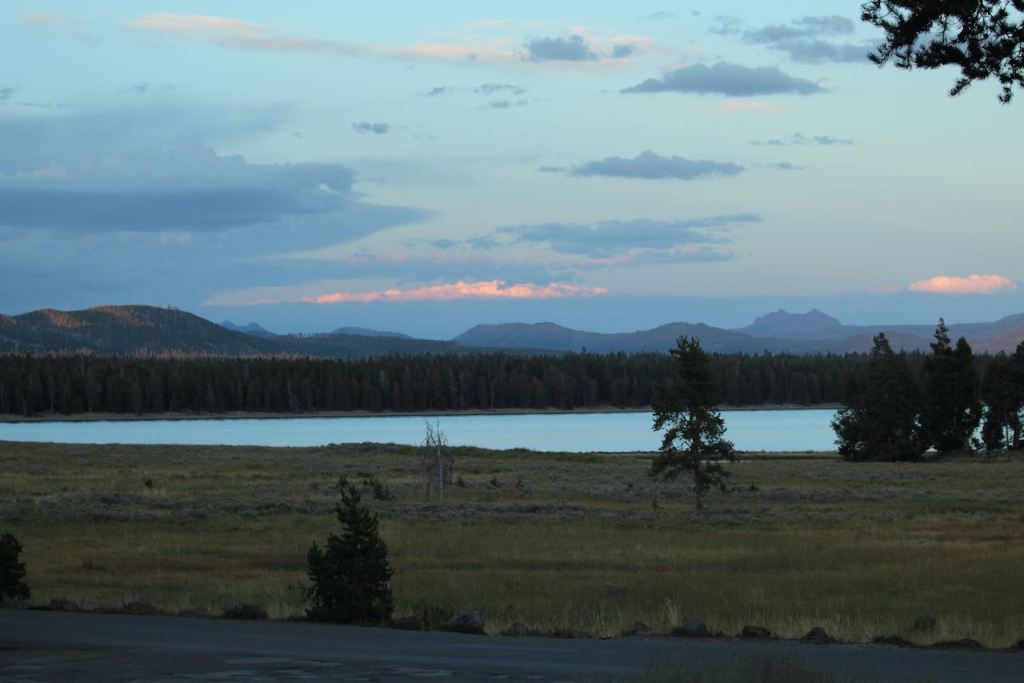
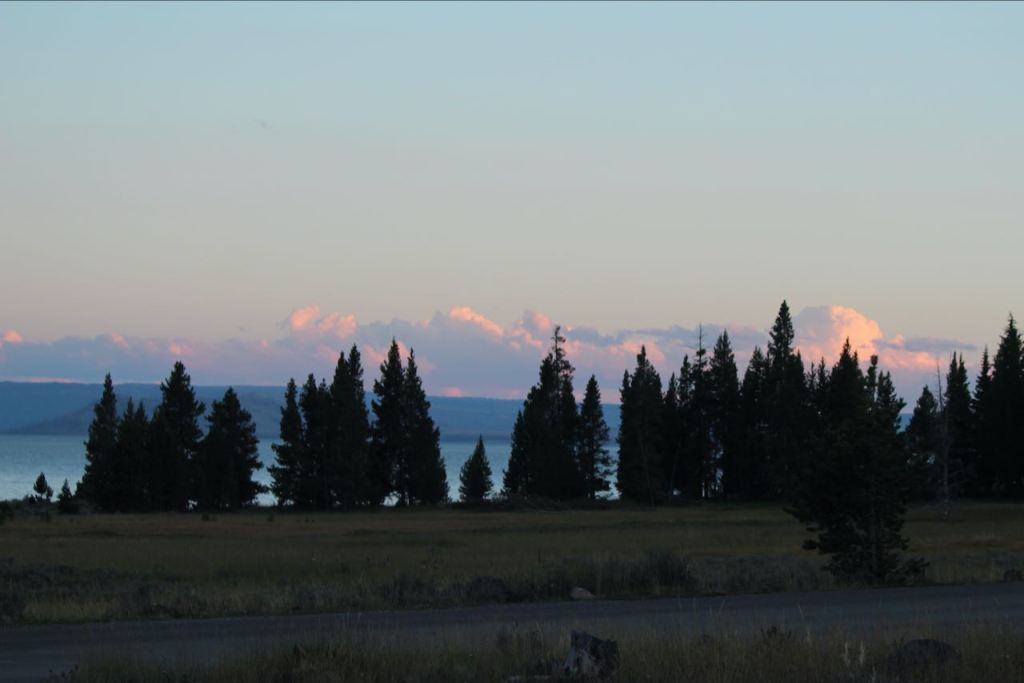
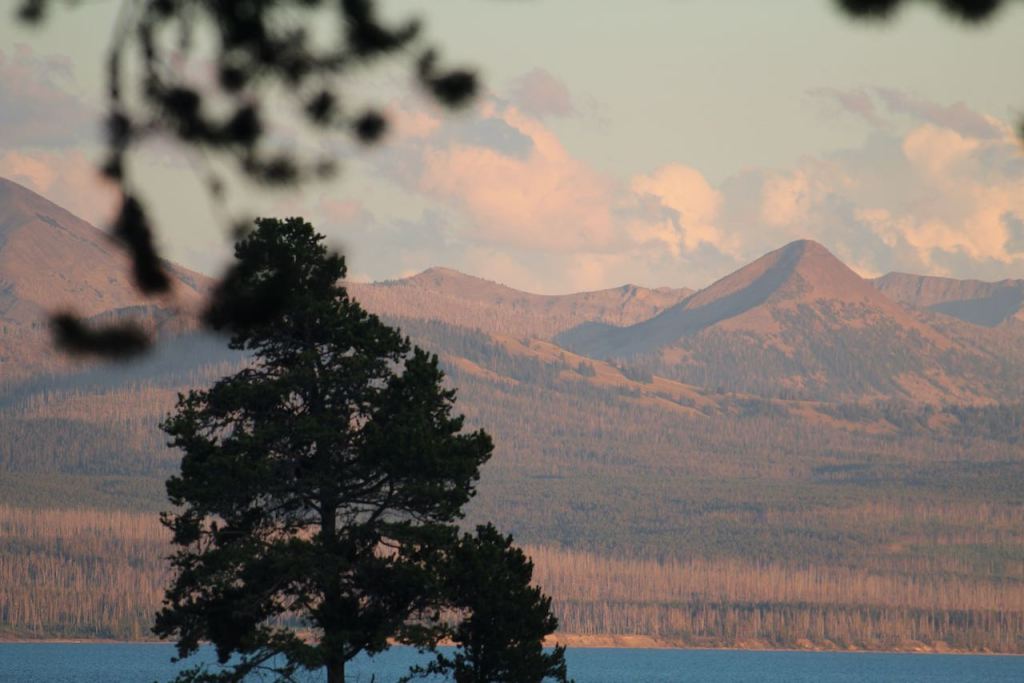
We were headed to the Lake Hotel for dinner, but had time for a visit to the Lake Lodge to sit on that porch the boat captain had told us about. You look toward the east from the porch, but the setting sun on the mountains and clouds across the lake gave some decent color.
I forgot to take any pictures inside the Hotel – but what I can say is it was very nice and we stuffed ourselves with cheese, trout and ice cream – yum!
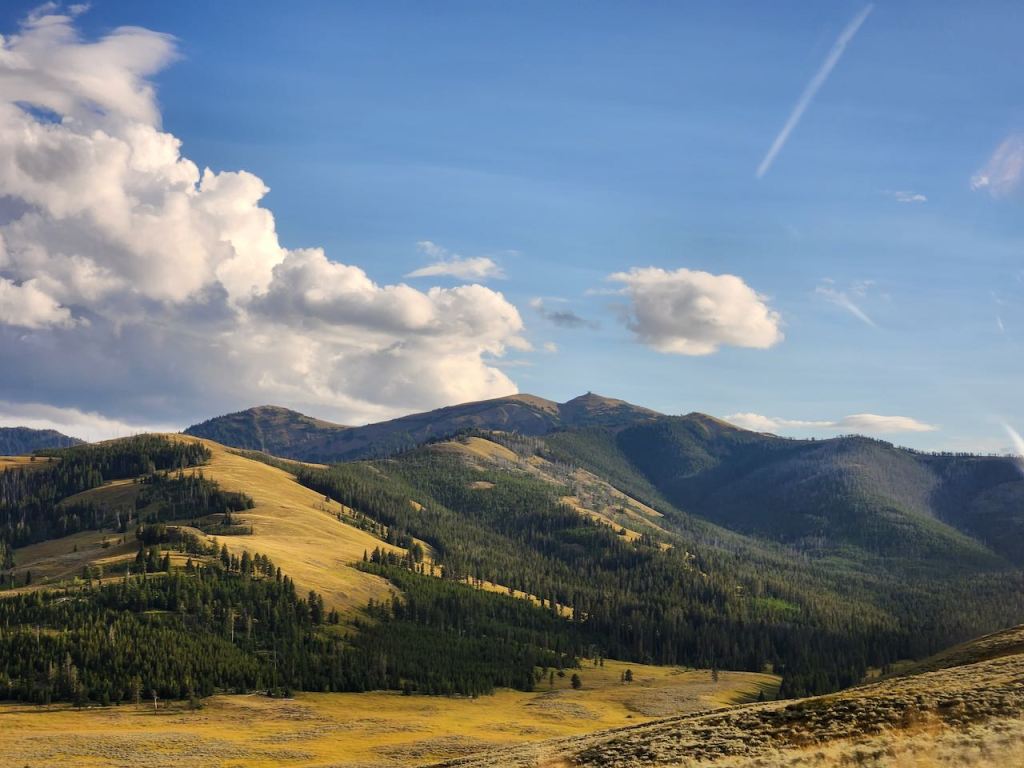
On Sunday, September 10 we decided to head to Lemar Valley, that’s along the Northeast entrance road and is know for its wildlife viewing. We were heading to drive the Beartooth Highway, which is a beautiful, switchback full mountain pass drive not too far beyond the Northeast Entrance — but, we ran out of time because we made too many stops and side trips on the way there. We did see other great stuff and we left the Beartooth Highway for next time.
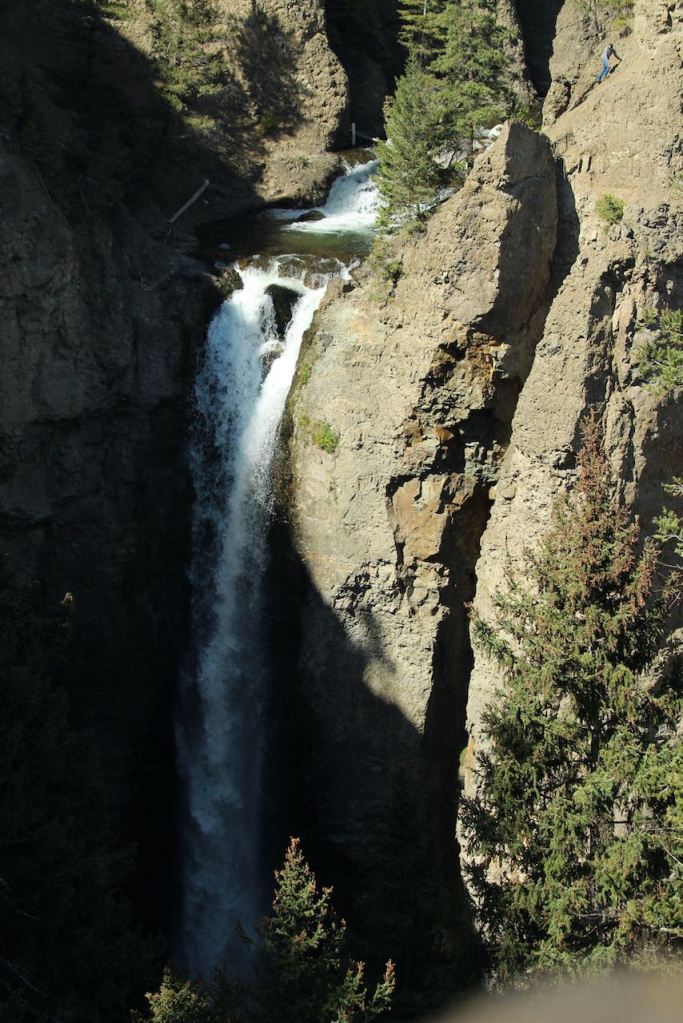
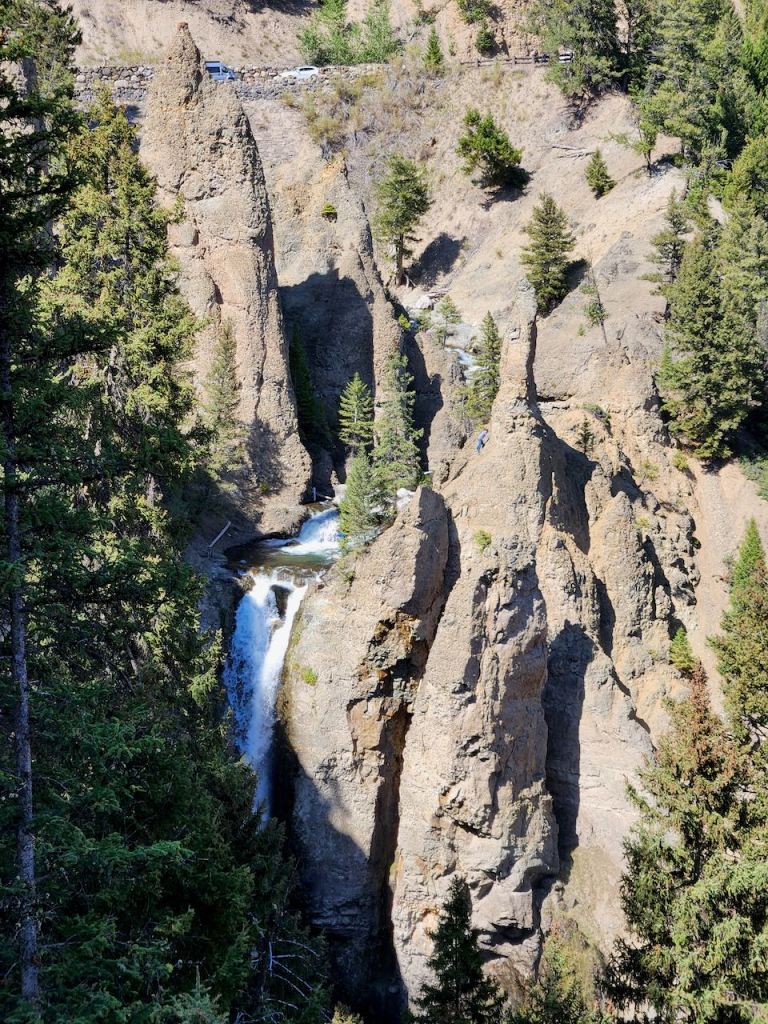
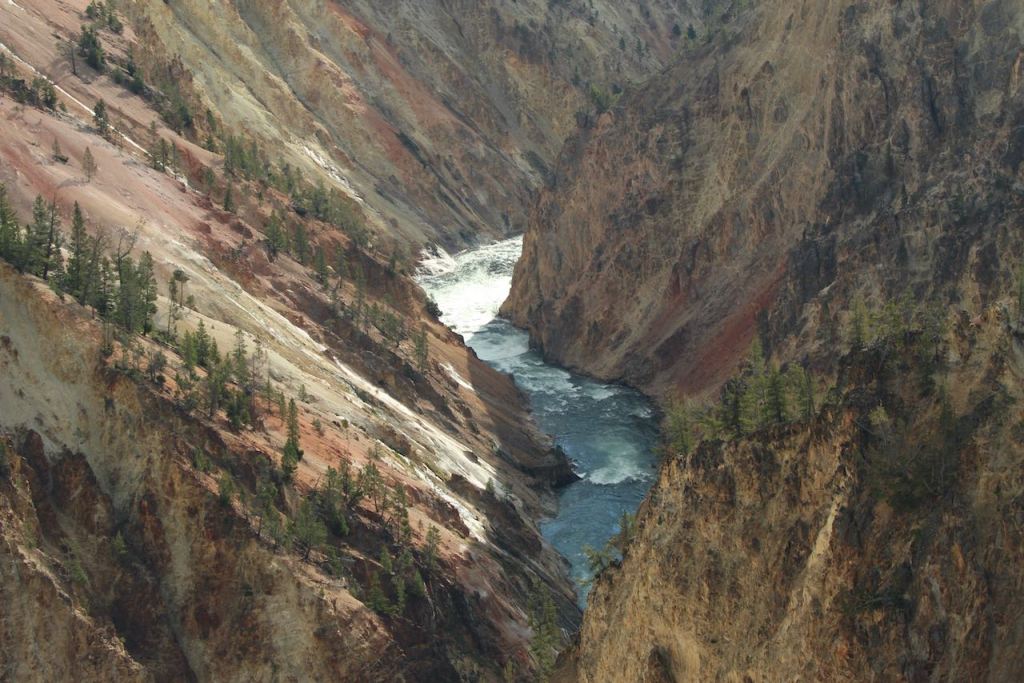
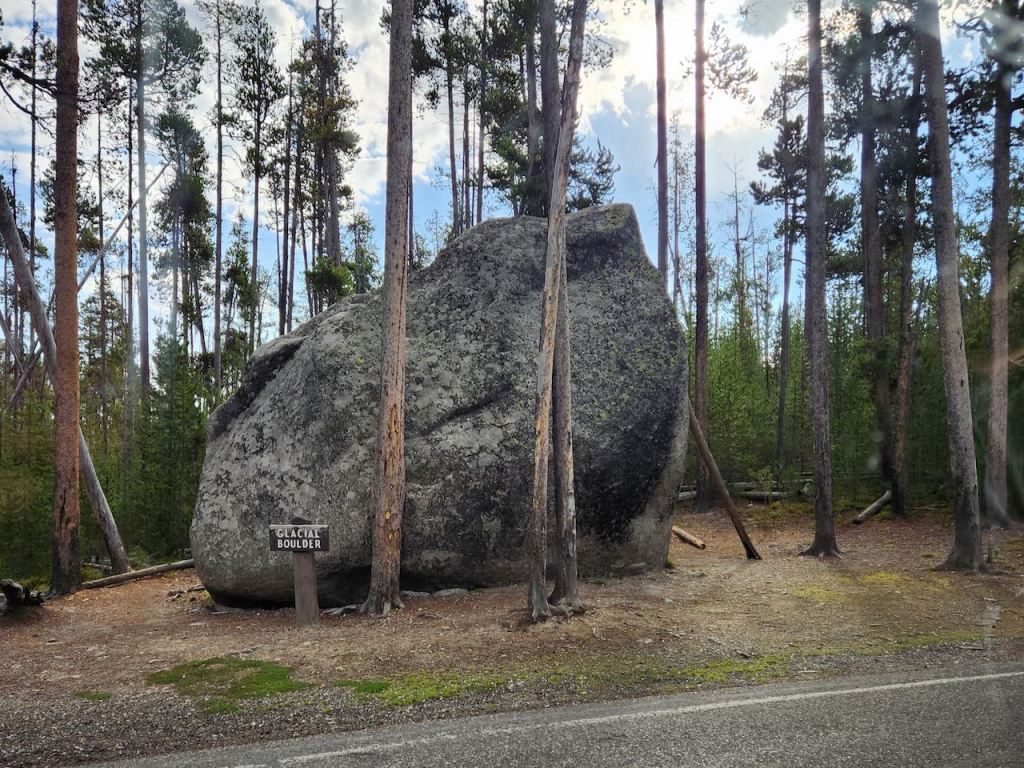
There were also new views of the Yellowstone River and this boulder that was dropped by a glacier after the last ice age.
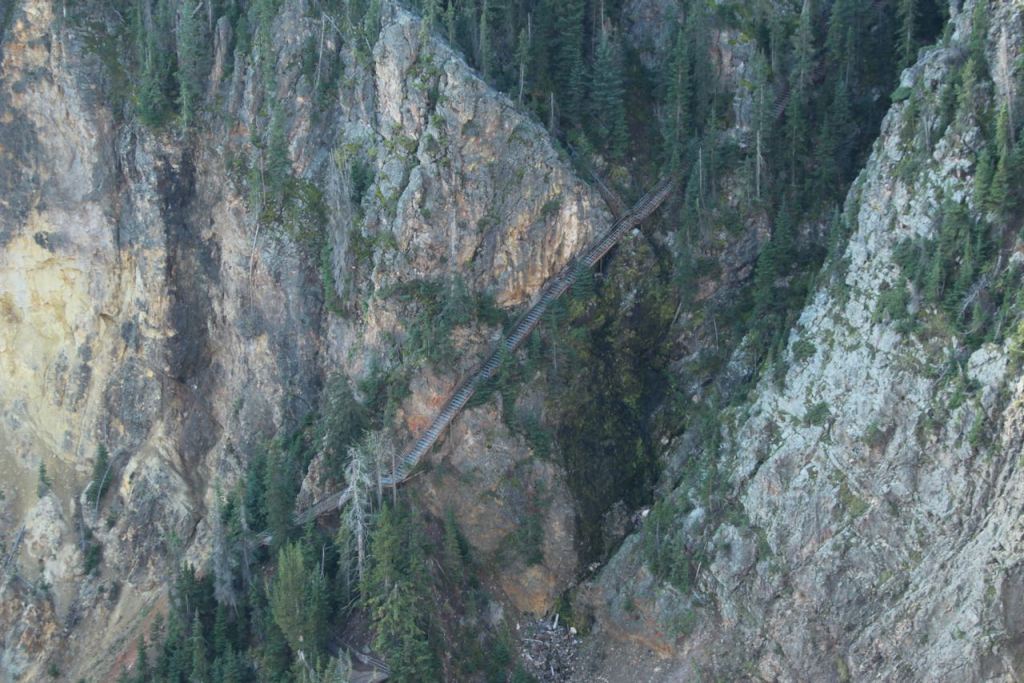
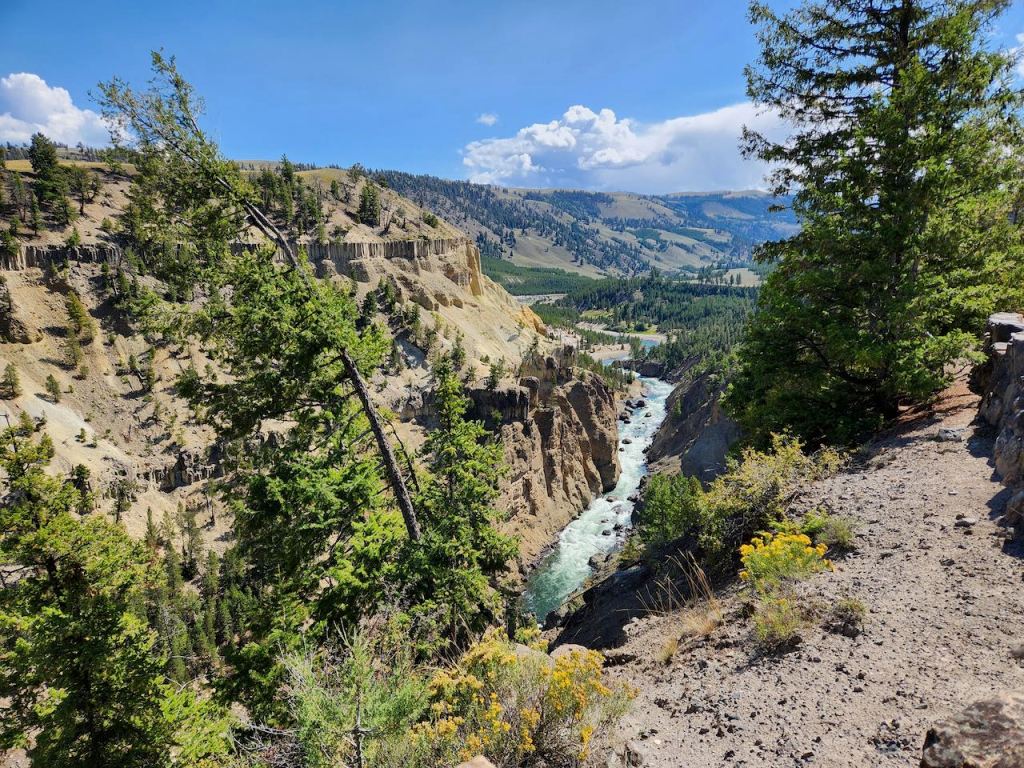
On the left are some old wooden stairs that were used in the early 1900’s for people to get down to the river – but they did have to repel the last 50 feet or so. There are trails that go down today, but they were not for us.
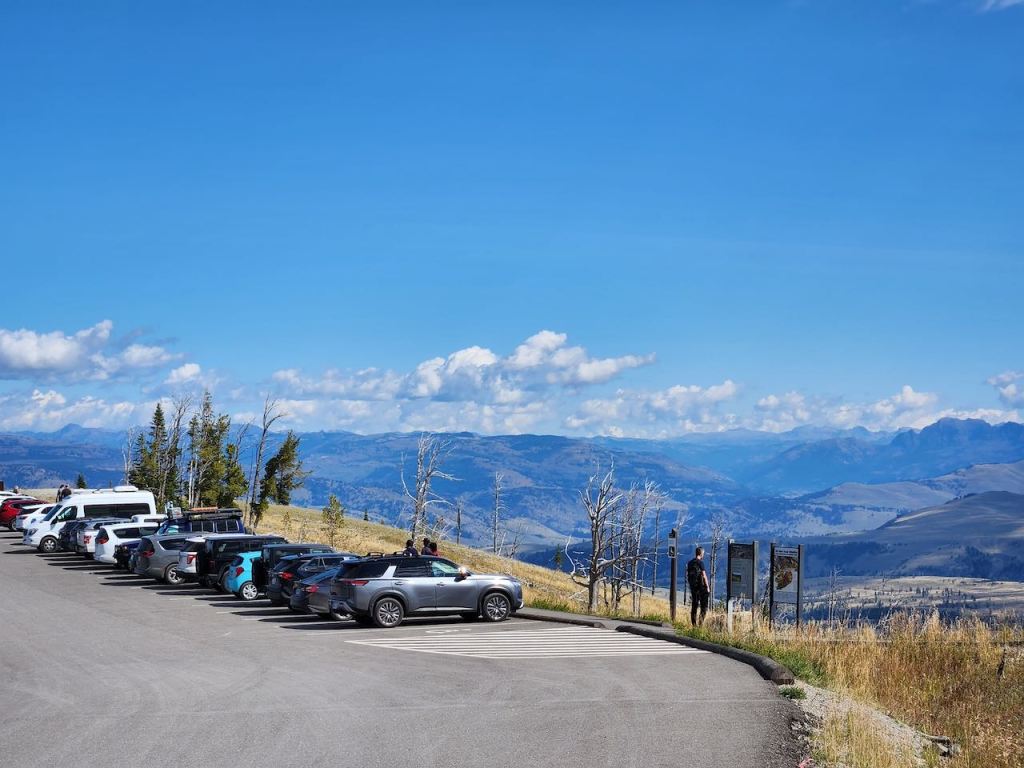


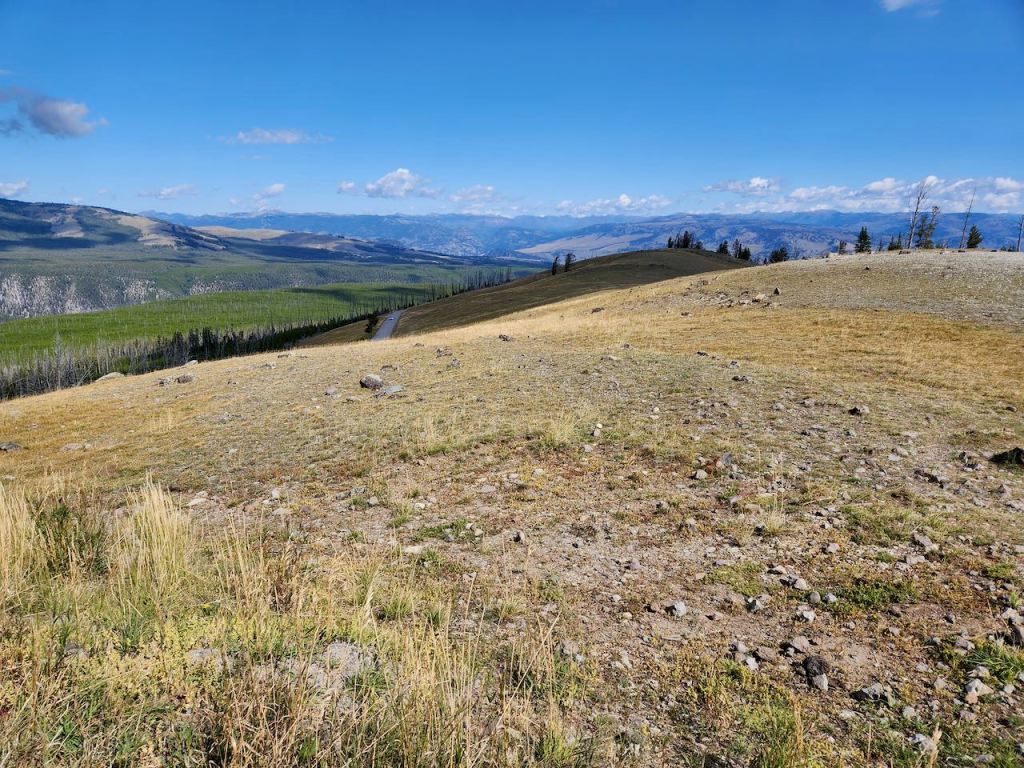
These are photos from the highest point you can drive to in the park – 8,743 feet. It is the parking lot at the end of Chittenden Road. You can hike another 2.5 miles up an additional 1,500 ft to get to the top of Mount Washburn – we didn’t have enough water with us to do that hike. And we spotted some bison in the distance.

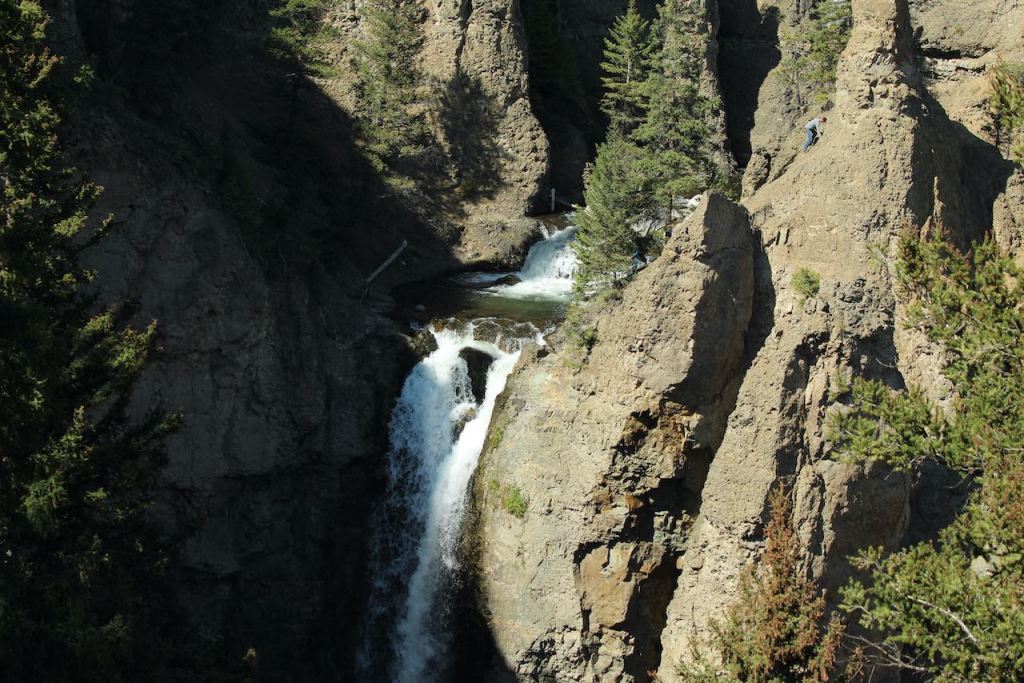
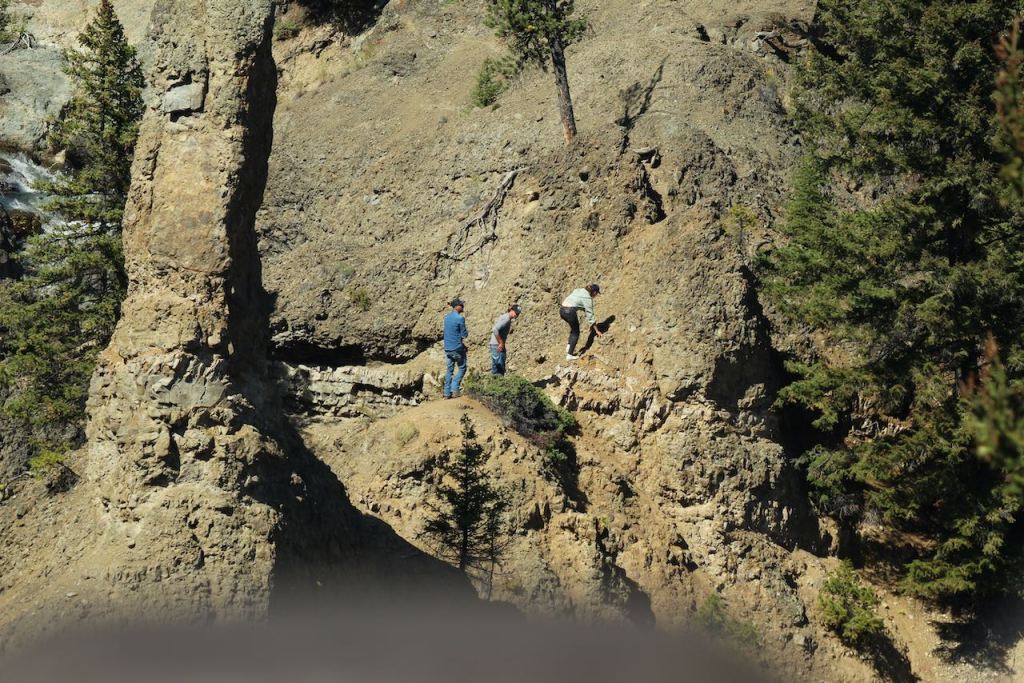

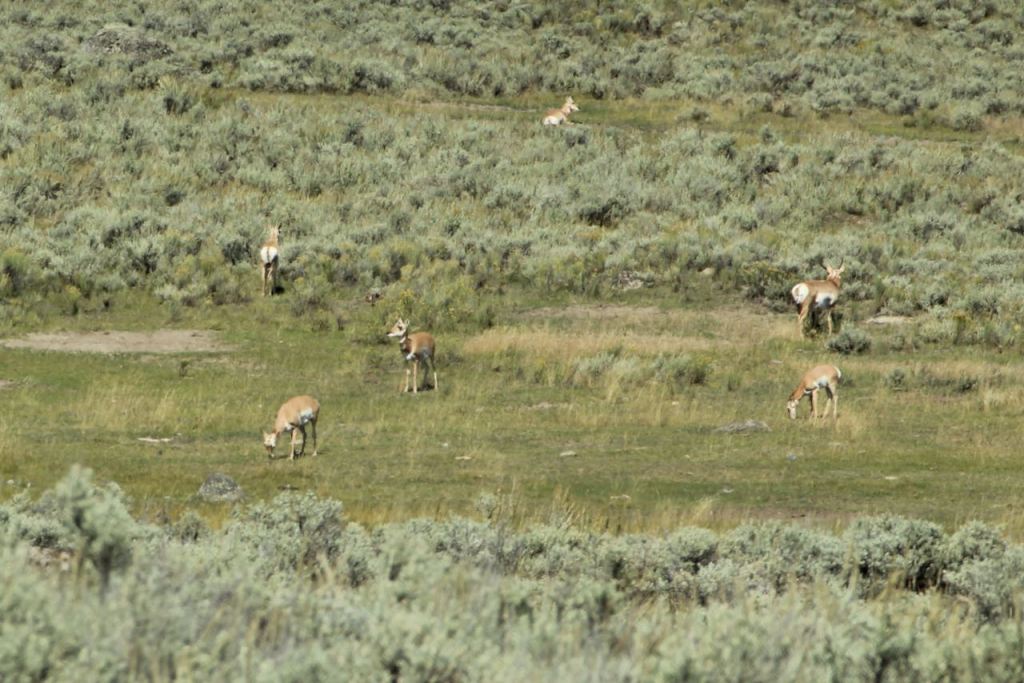
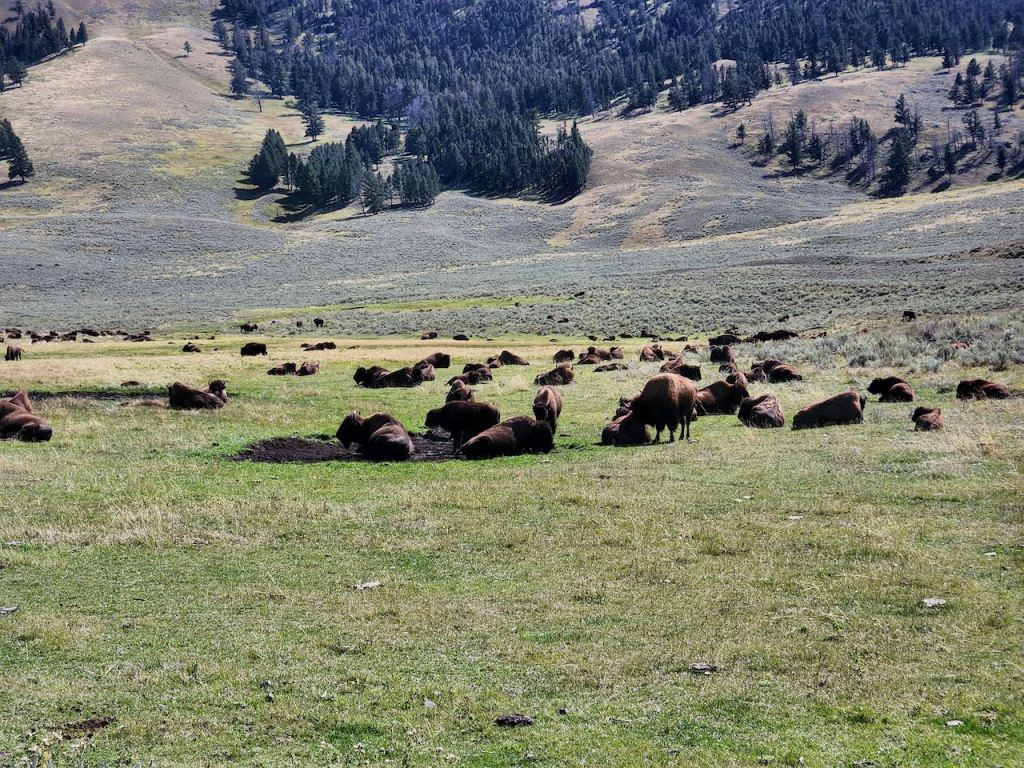
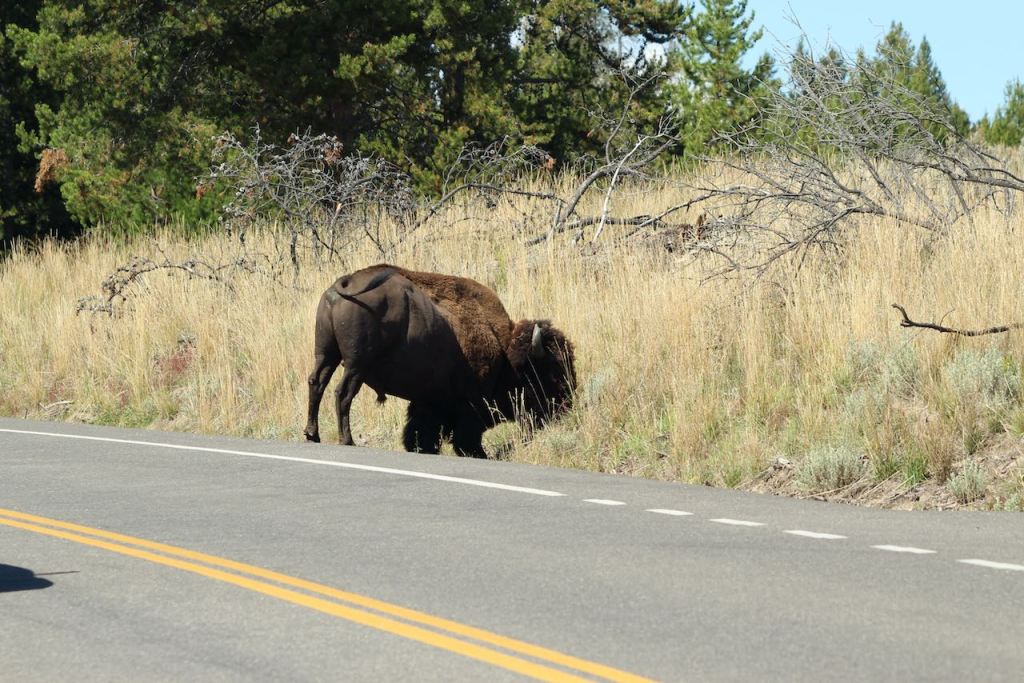
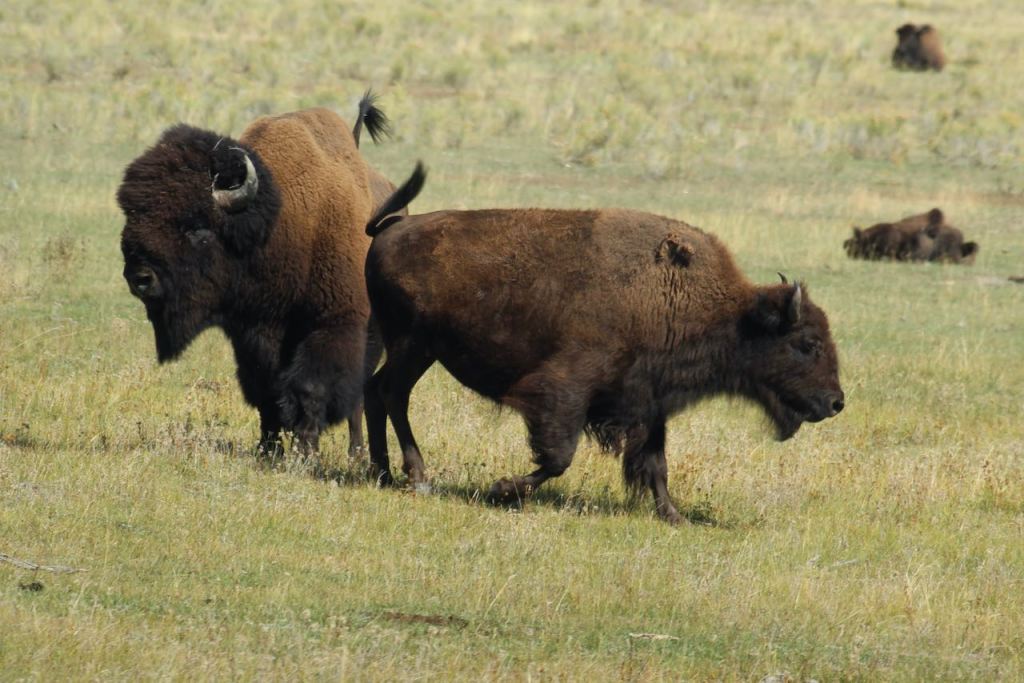
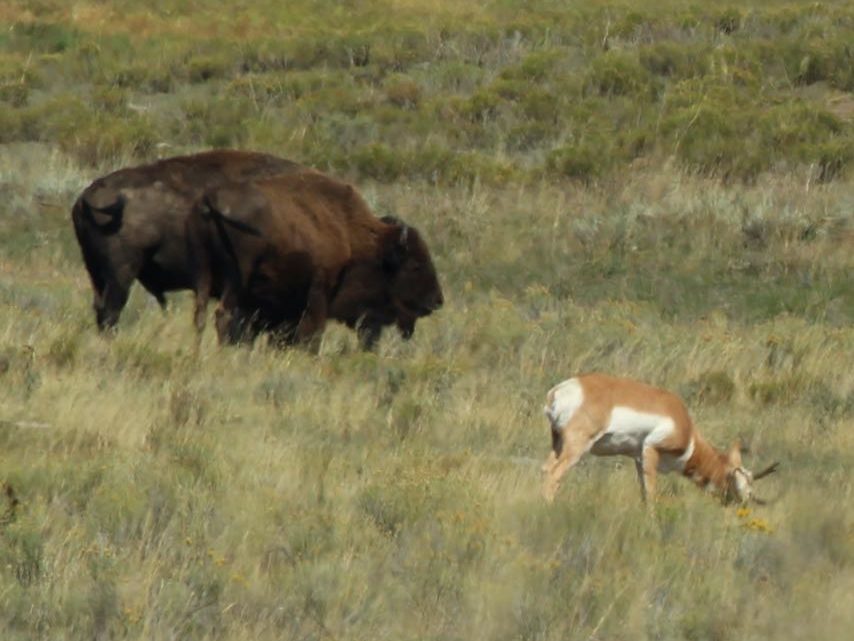
We were finally in the Lemar Valley but it was about 1 PM – not prime wildlife viewing time. We saw these pronghorns and a pretty big herd of bison. And there are some close ups too!


We then drove out the Northeast Entrance to Cooke City for lunch. We found a sandwich shop, checked out a couple of shops and then got some ice cream, at the Sinclair Station – it was very good for gas station ice cream. And Trish spotted this bison walking through the town.
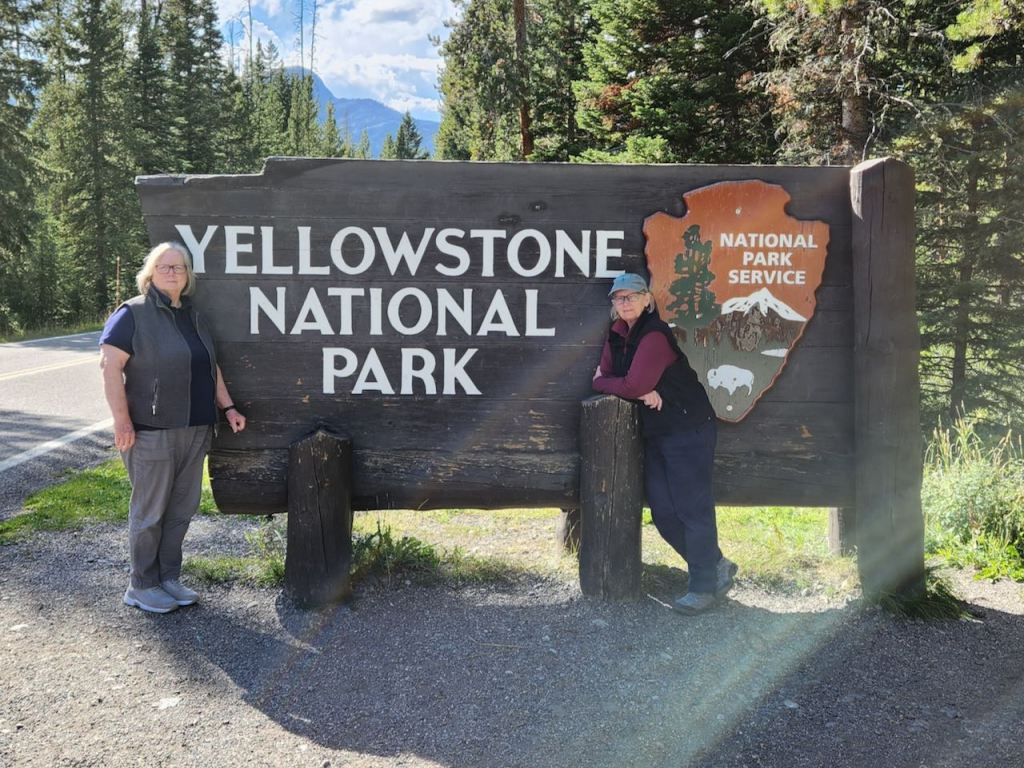
Then, as we reentered the park we got a photo with the National Park sign.


Then, as we were driving back through the Lemar Valley we got caught in a bison backup as we followed two bison down the road and then the herd decided they wanted to get to the other side of the road. Here is a video of our experience: https://www.dropbox.com/scl/fi/ipnkx1vwqapzsepcpehta/2023-09-10-17.12.47.mov?rlkey=80uwjenws7m46gfif64b16456&dl=0

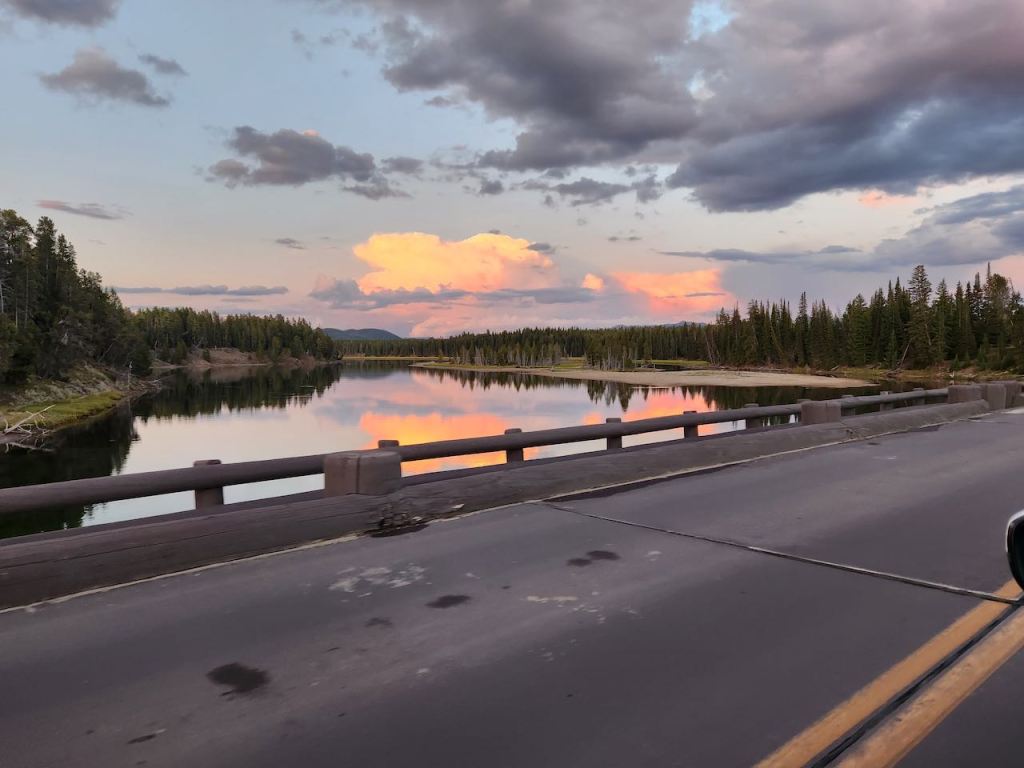
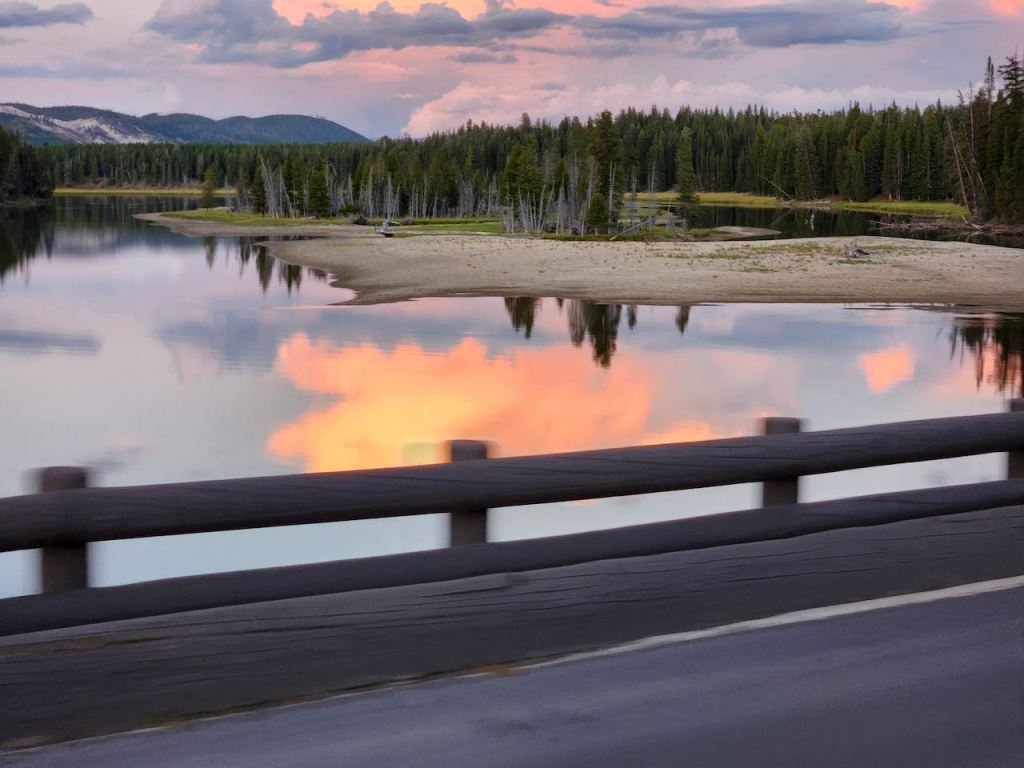
By the time we were back to the Hayden Valley and driving along the Yellowstone River, we started to get some sunset views.
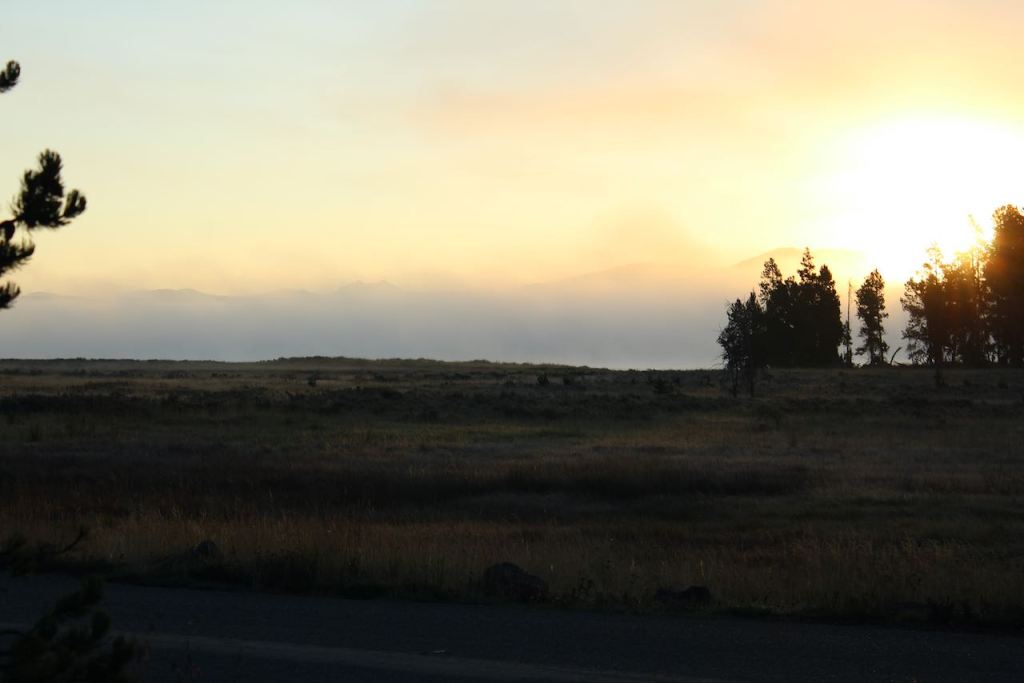

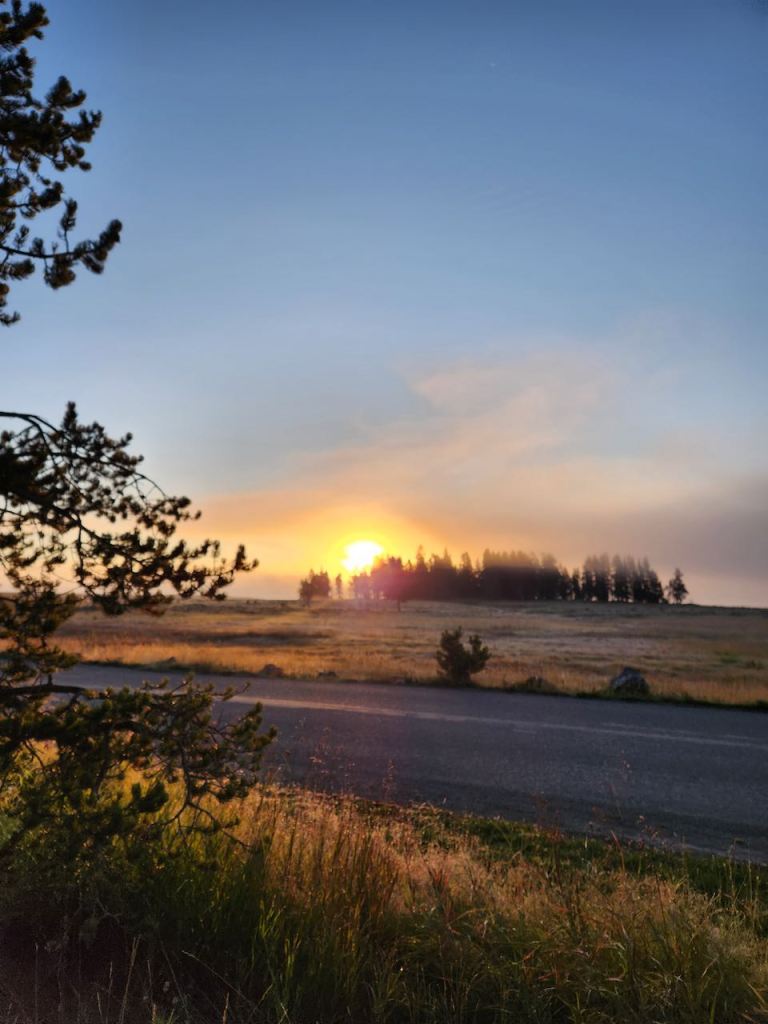
We got up early on our last full day in the park — hoping to get some good sunrise photos. But it was very foggy. Finally found a spot that where there wasn’t any fog.
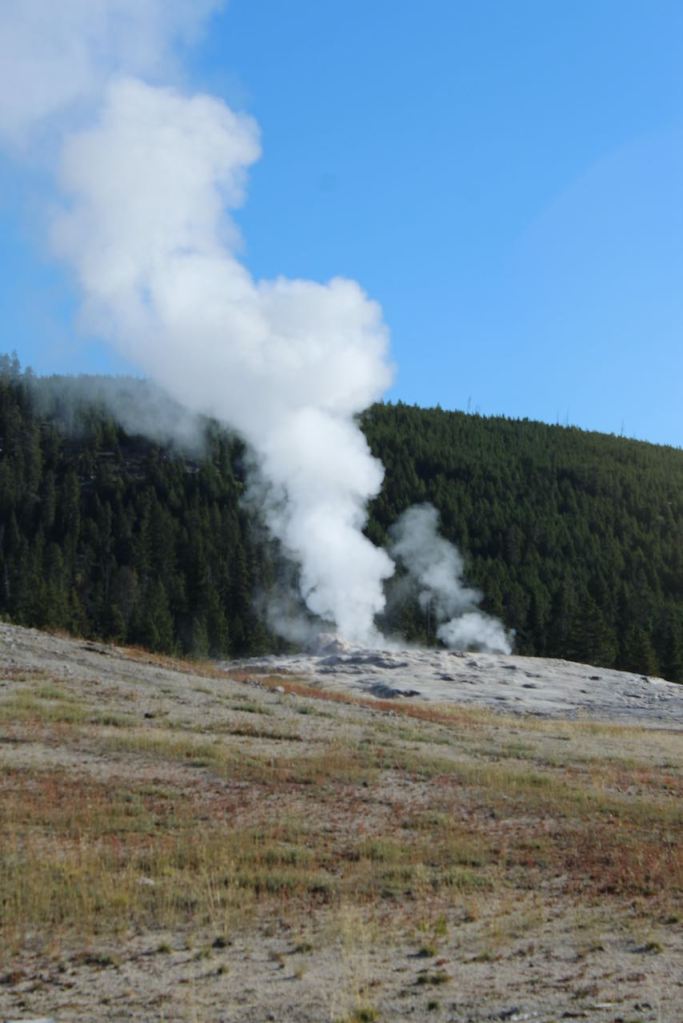
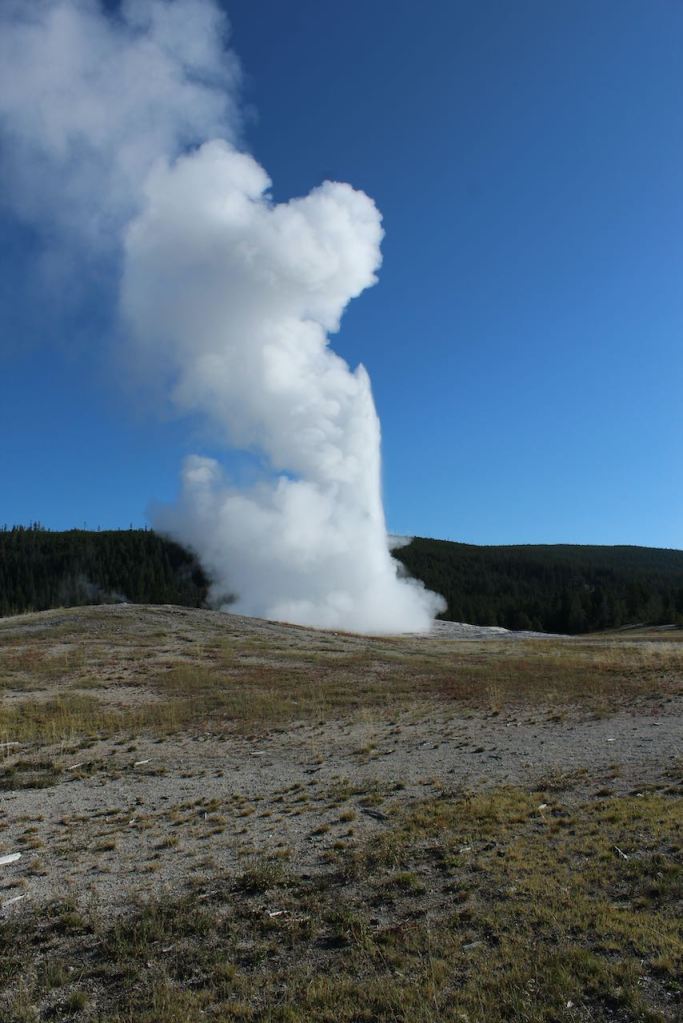
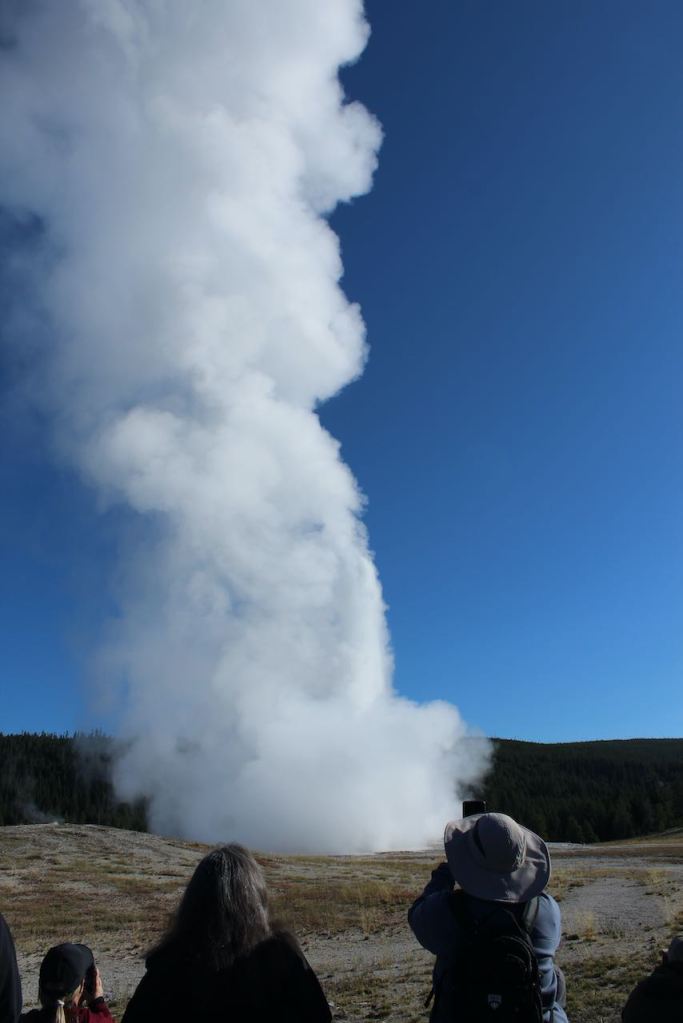
As it was now a Monday, and pretty early we were able to get parking at Old Faithful. We had a great spot picked out to watch, but were disappointed when as soon as it started erupting the wind shifted so we mostly just saw the steam, not the water.


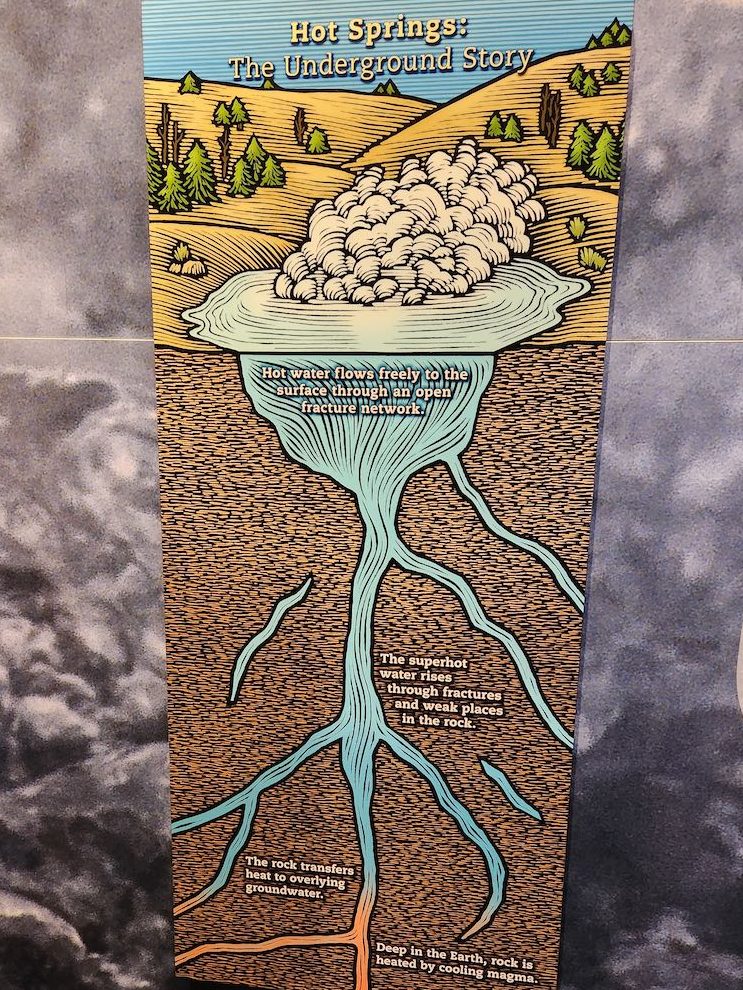
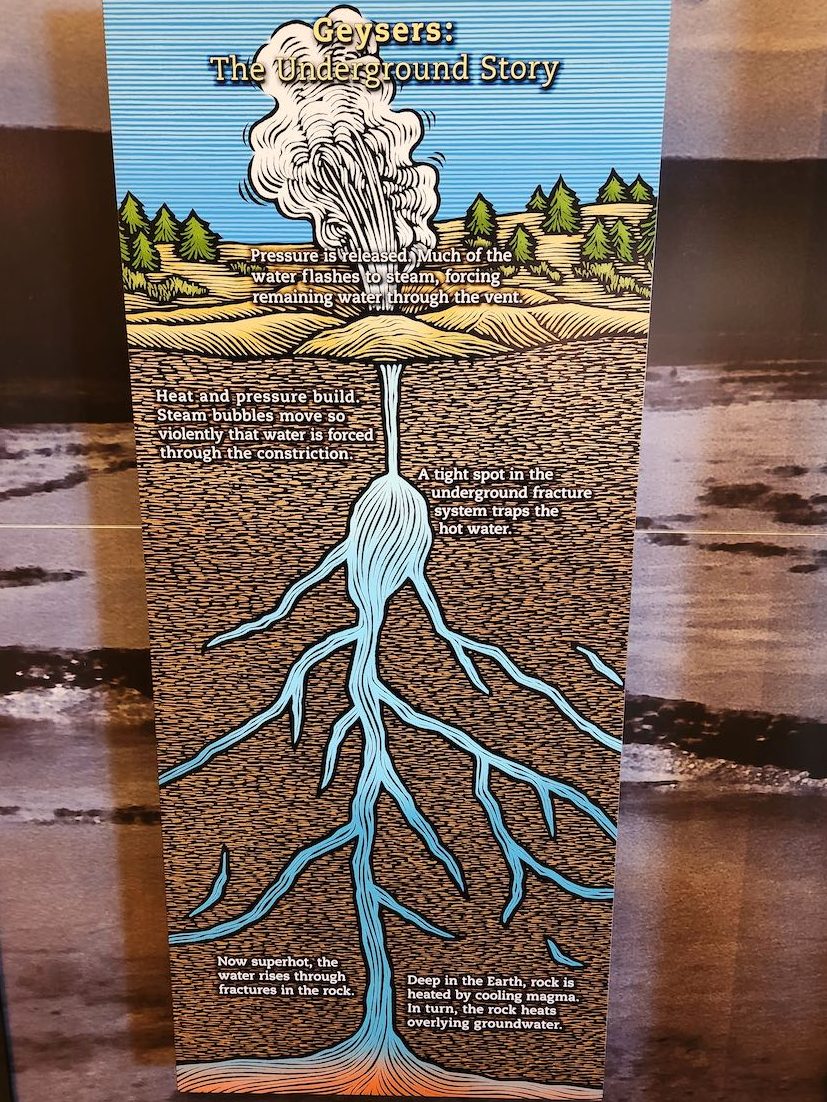
This time, we had time to go into the exhibit – so here are some better explanations about the four different types of thermal features.

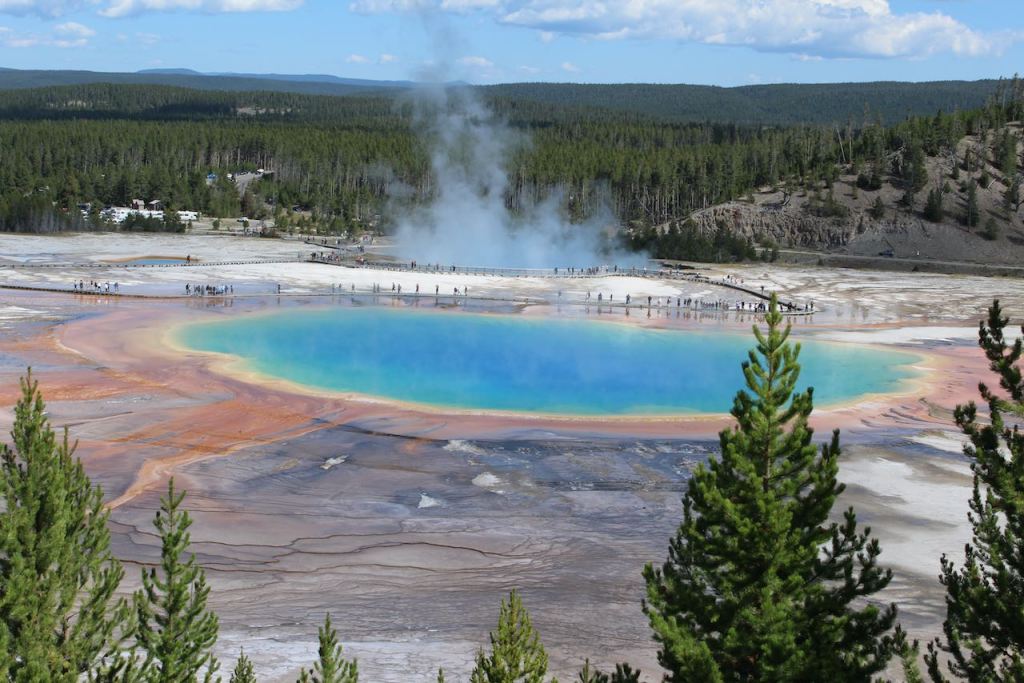
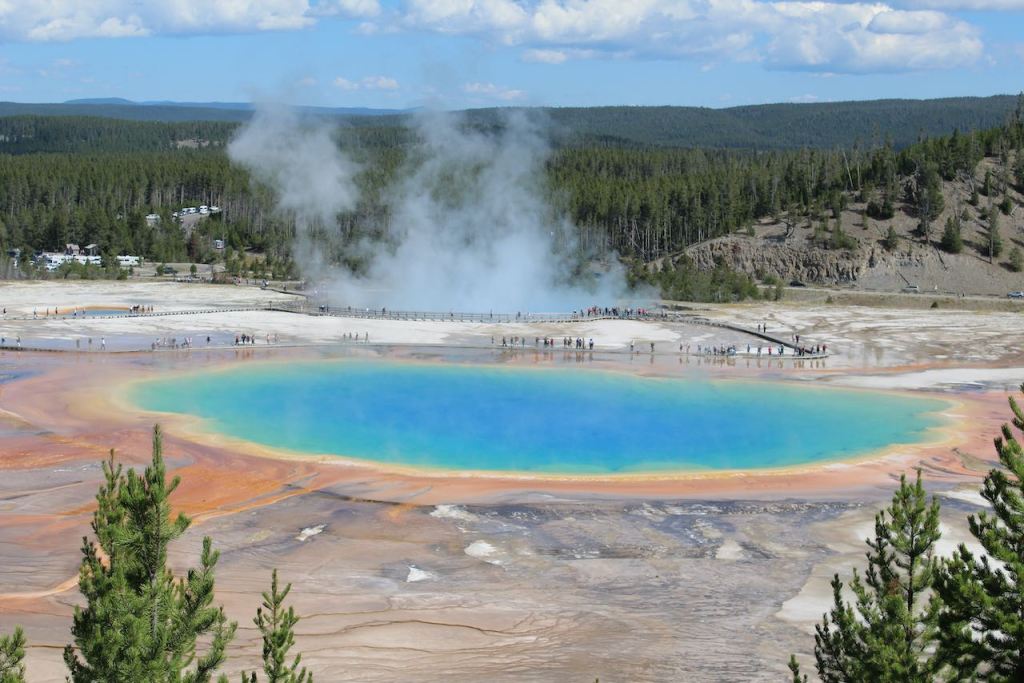
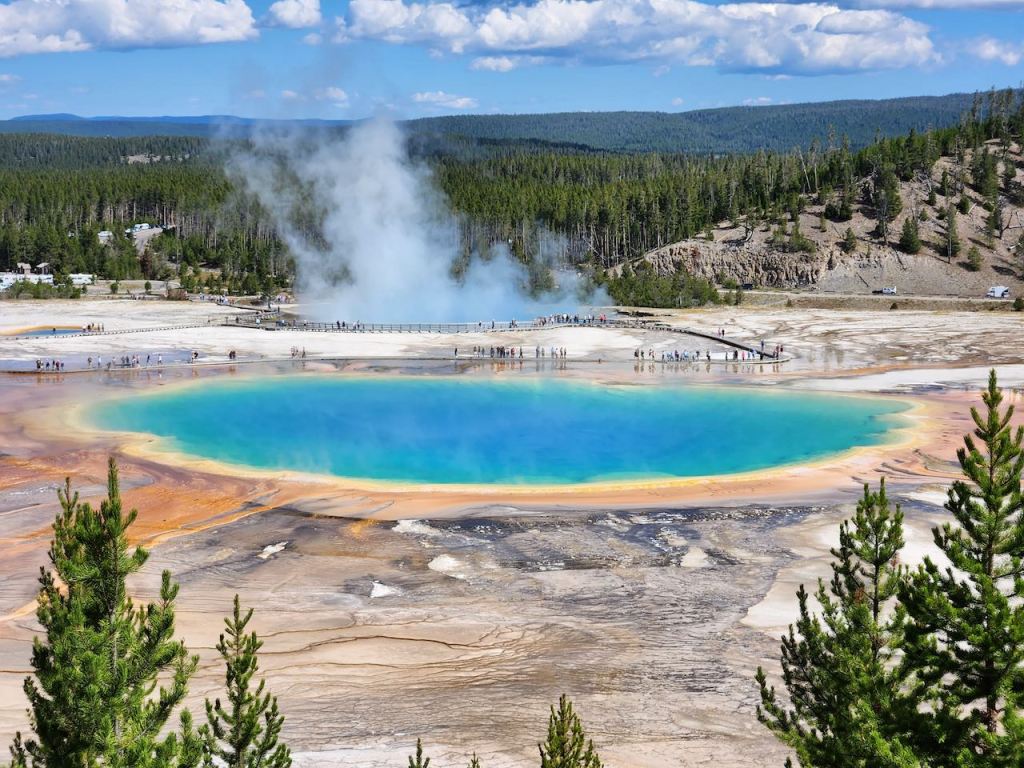

Since it was still relatively early, we were also able to get a good parking space at the parking lot for the trail that goes to the overlook of the Grand Prismatic Hot Spring. It is North America’s largest hot spring and is about 370 feet in diameter and is 160 feet deep. The colors are caused by the thermophiles (microbes that love heat.) Different types like different temperatures and they are are different colors, thus giving the rainbow like effect at the edge of the spring.
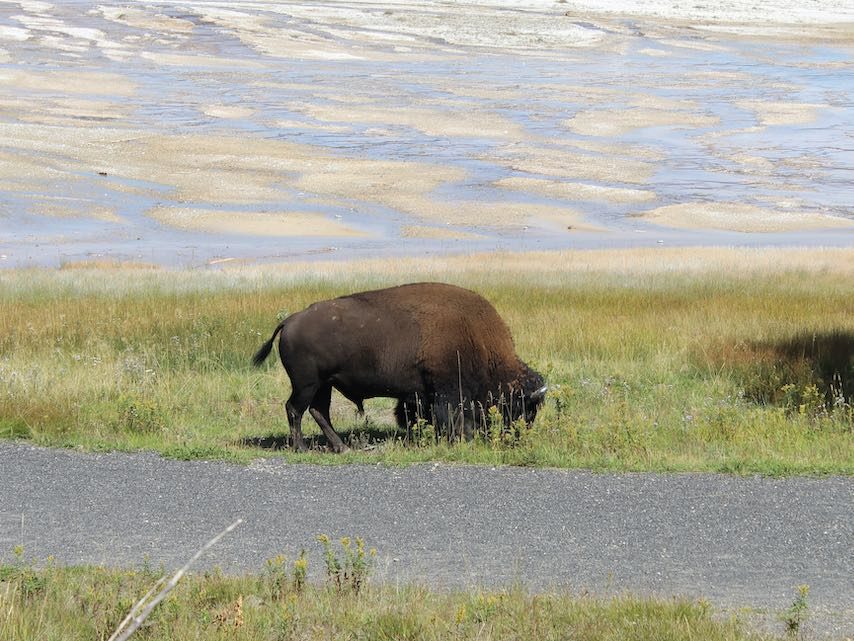
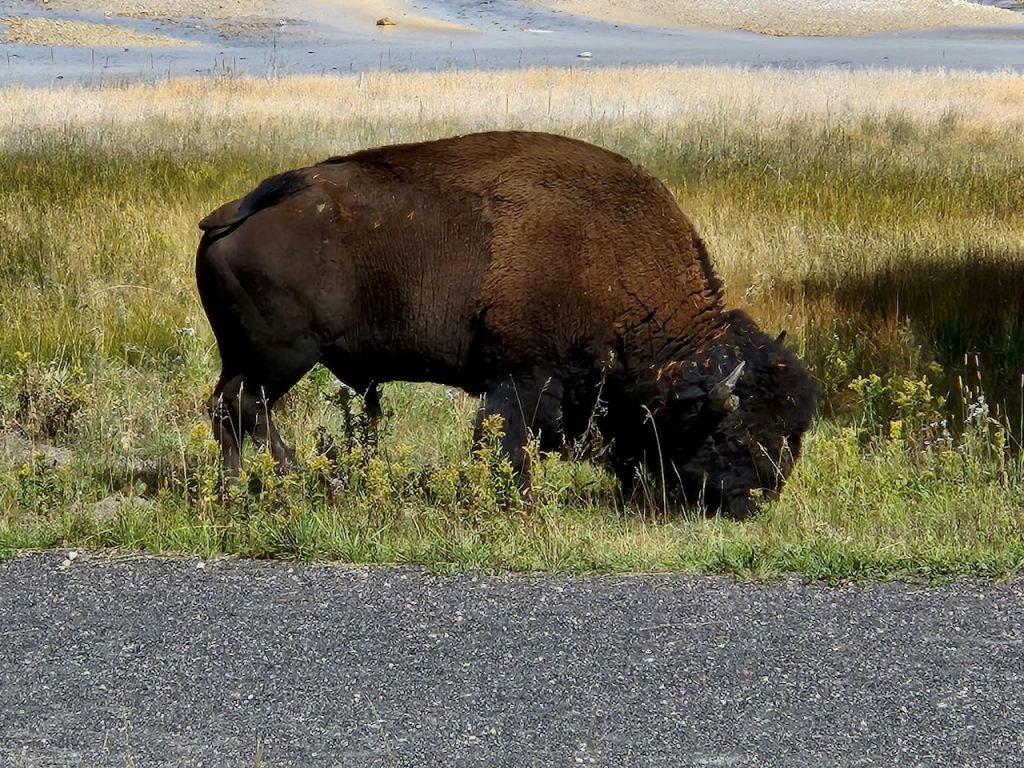
Then walking back to the car we had to let this bison decide which way he was going before we went down the trail.
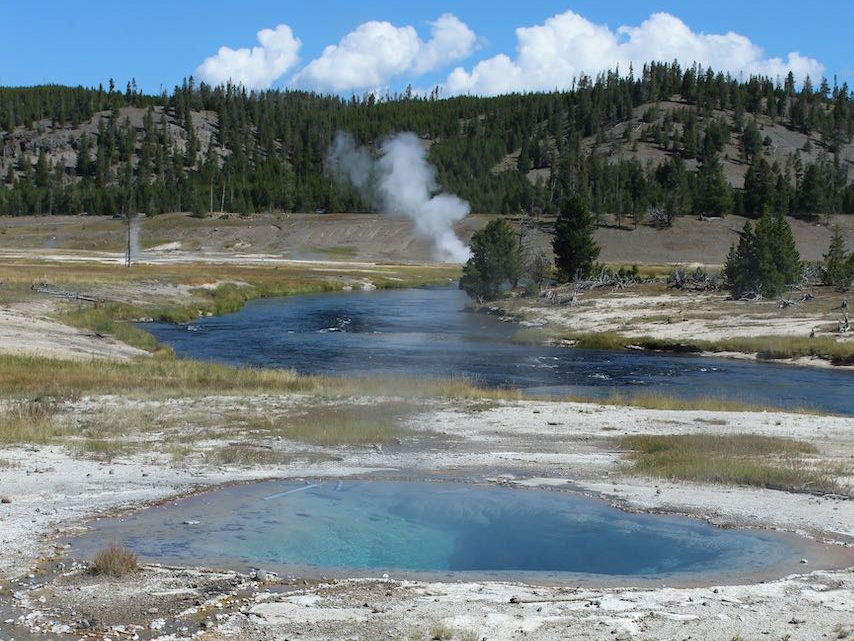
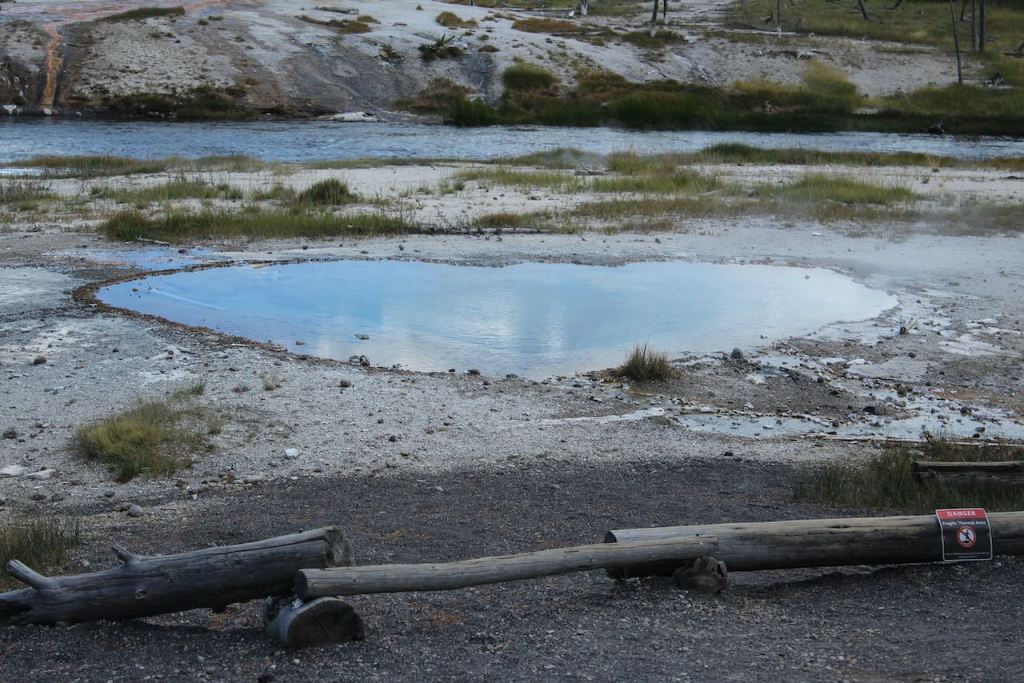
Some of the other thermal features in the Midway Geyser Basin. We thought the spring on the right looked like a heart.
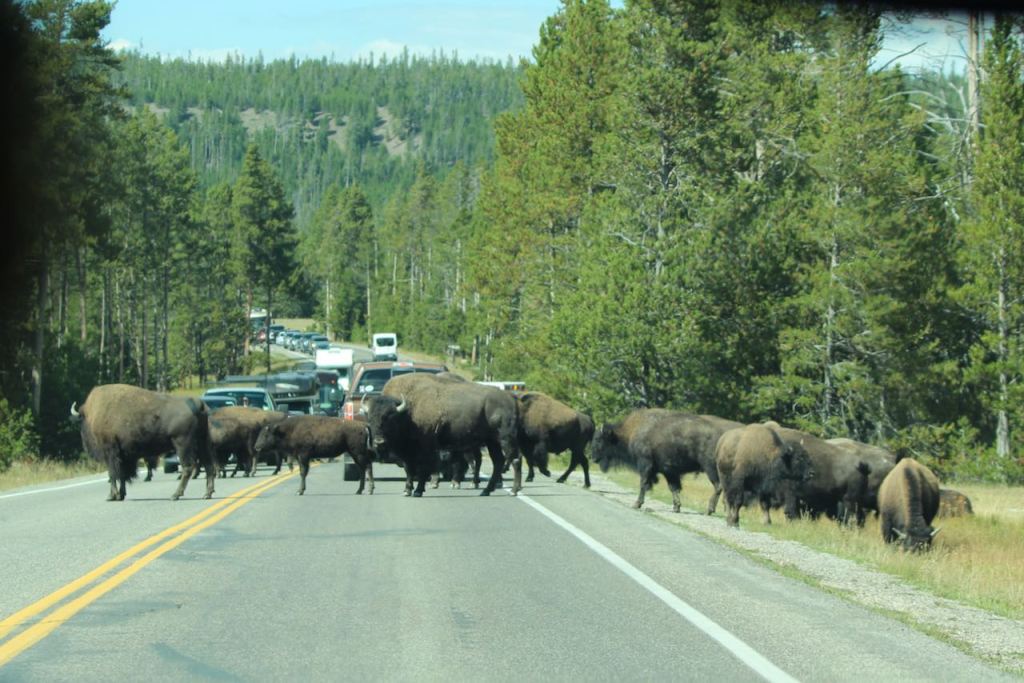
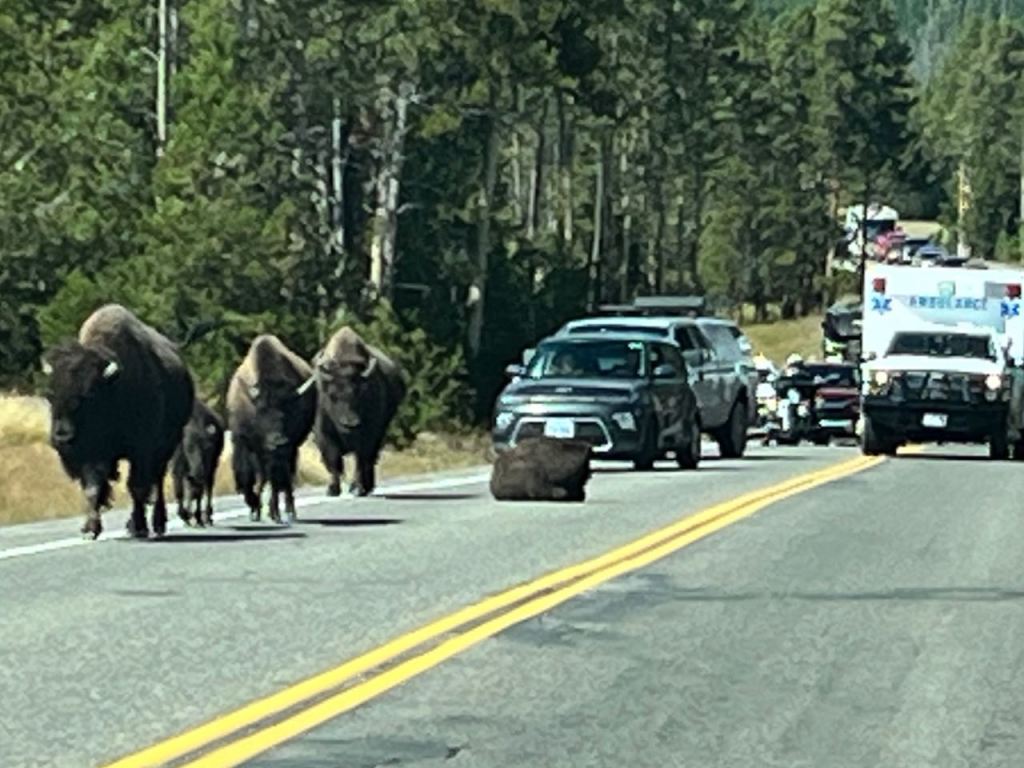
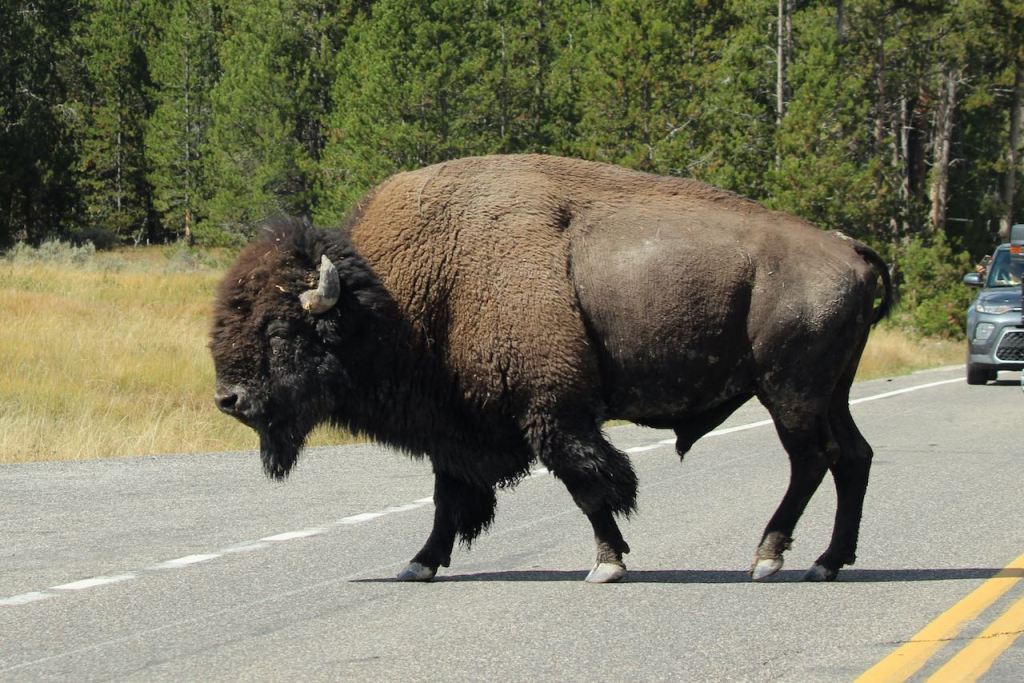
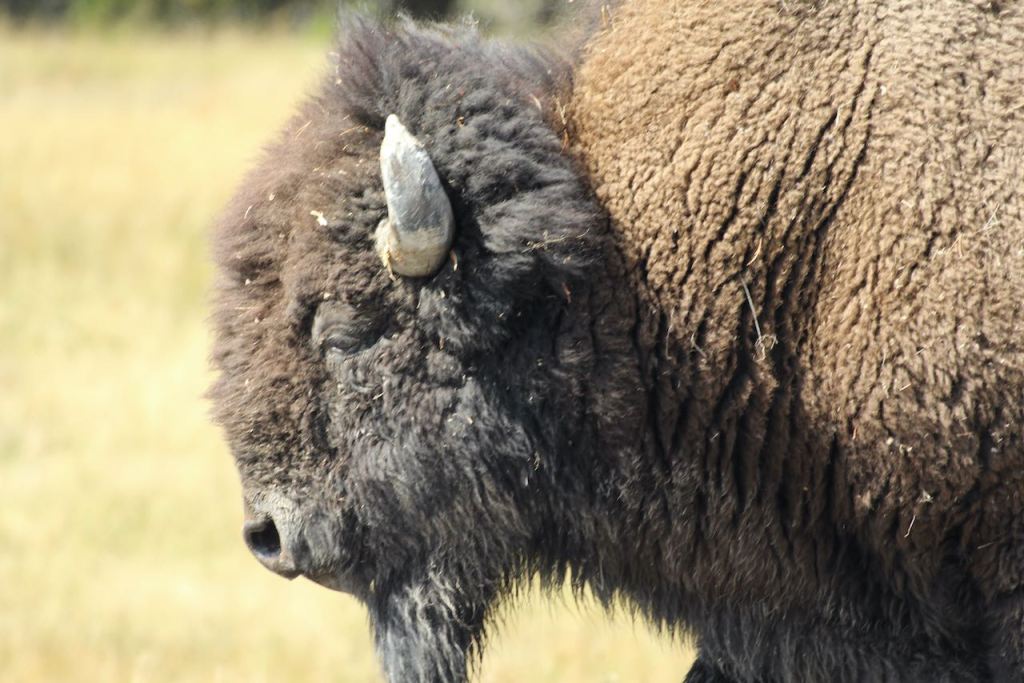
On the way to our next stop we were in another bison backup. We were lucky as each time we seemed to be at a spot we could actually see what was going on, and not caught 30 or 40 cars back. I think this herd had been hanging out in the area for awhile as there were two ambulances and a ranger directing traffic, and then the “feral ranger” came by and helped to move them along. The ranger said they had never see one lie down in the middle of the road before. Here is another video: https://www.dropbox.com/scl/fi/a4bvay48s5g32mtscicar/2023-09-11-14.41.13.mov?rlkey=ujcfmd32cffx6fmvnb1m3urjp&dl=0

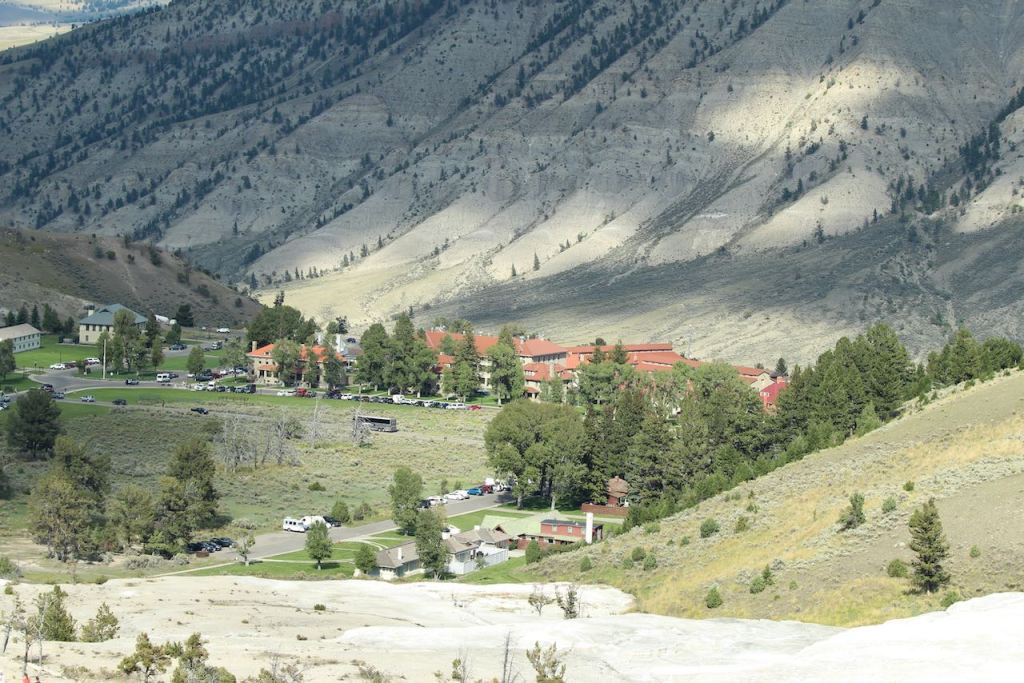
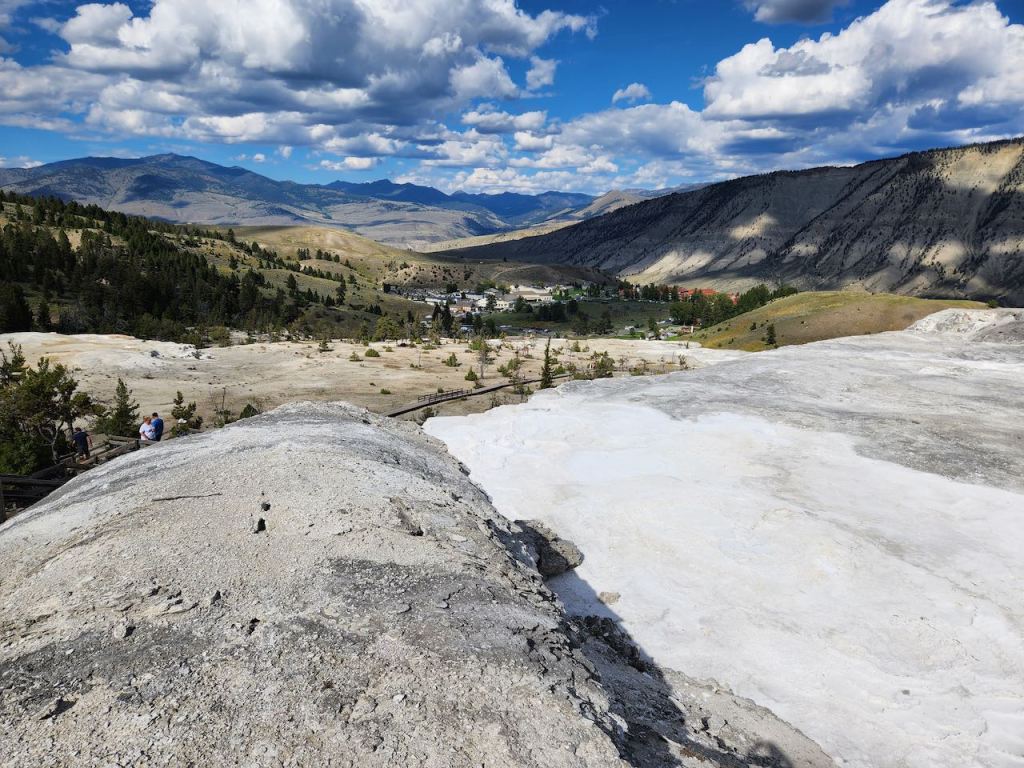

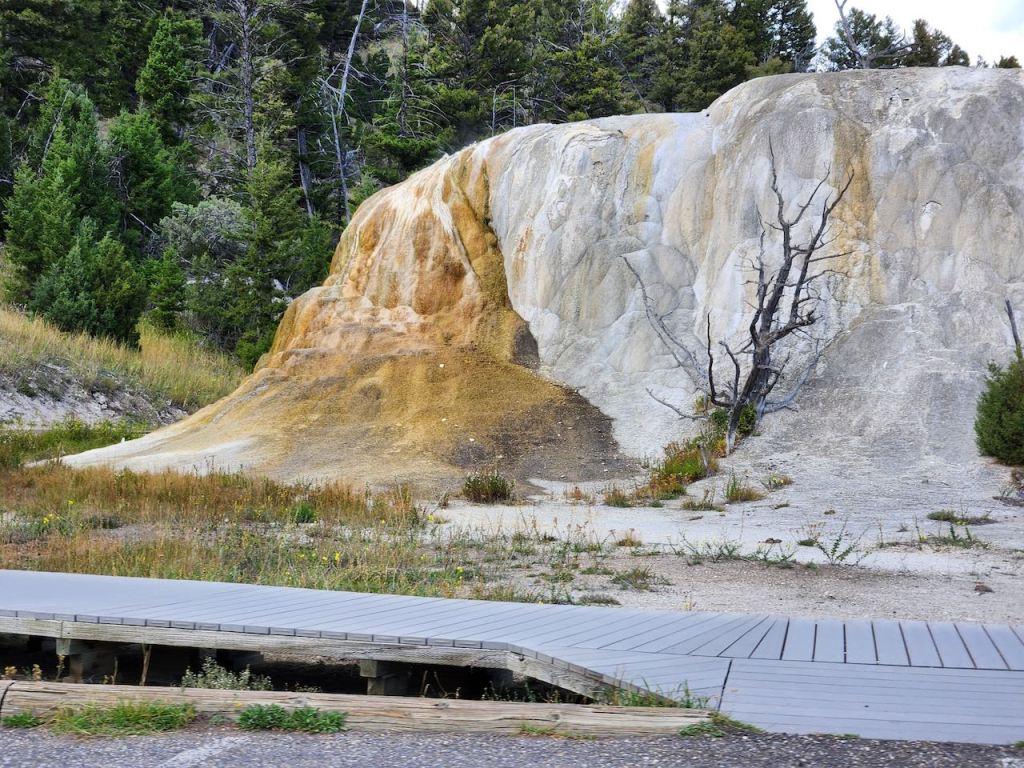
Our next stop was Mammoth Hot Springs. These photos are looking over the travertine terraces to the village. Travertine is calcium carbonate that has been deposited here from the hot springs and these are huge terraces above the town.
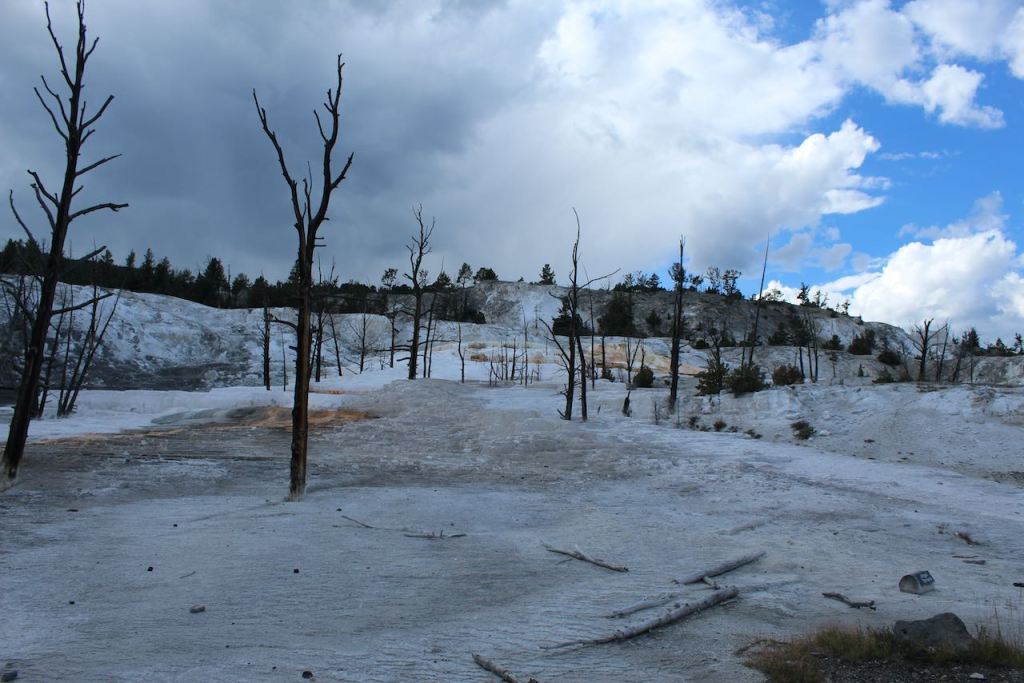
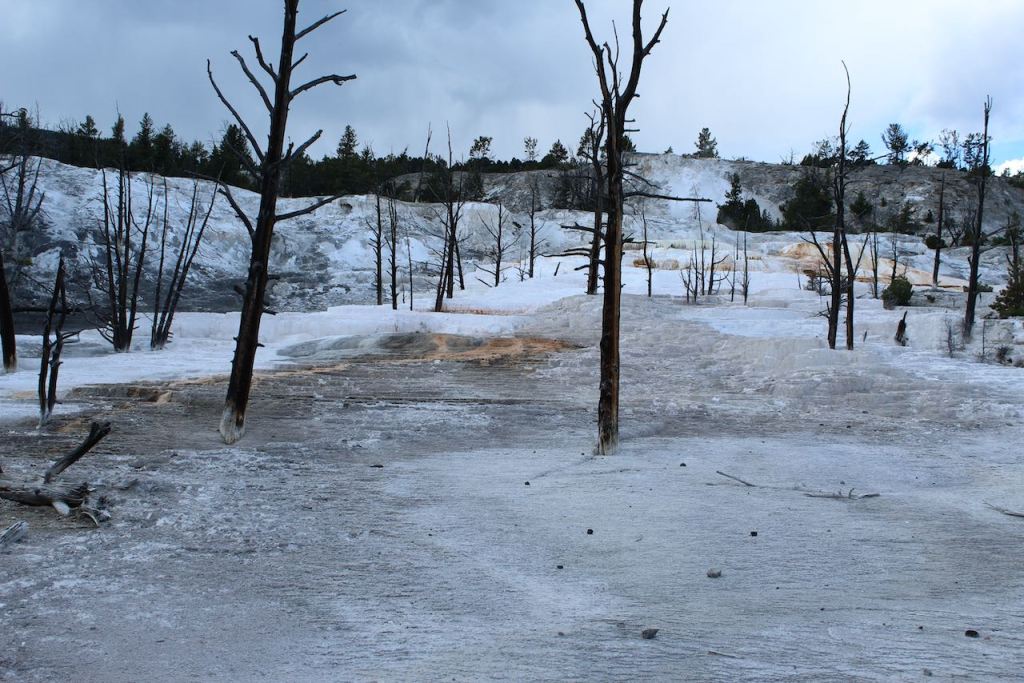
This is the area called Angel Terrace – it looked like a ski slope – if it weren’t for the water runoff.

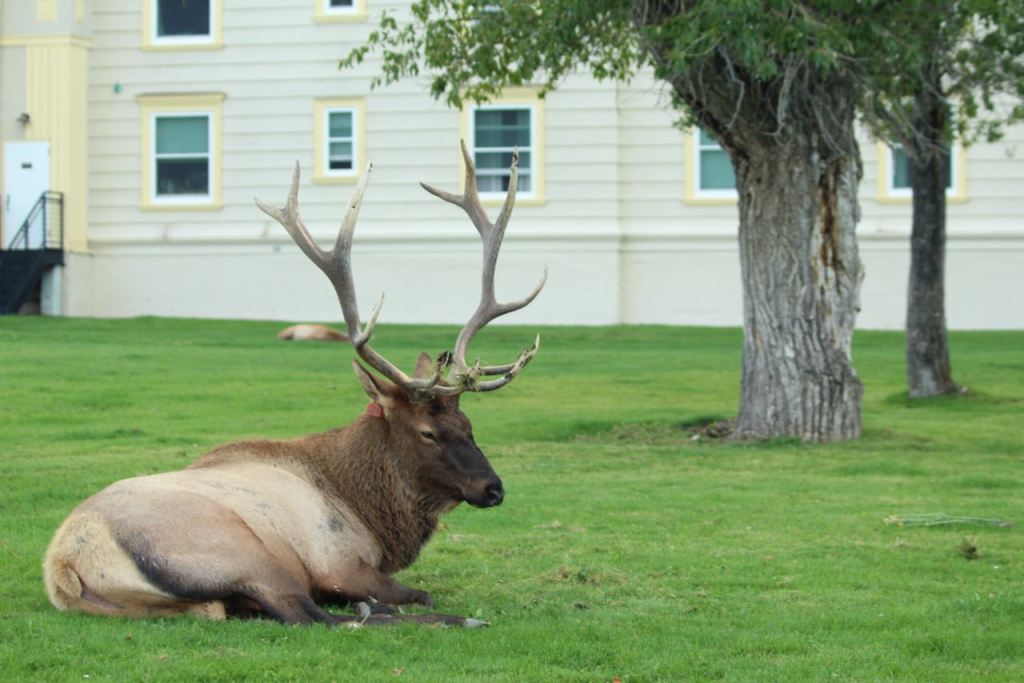

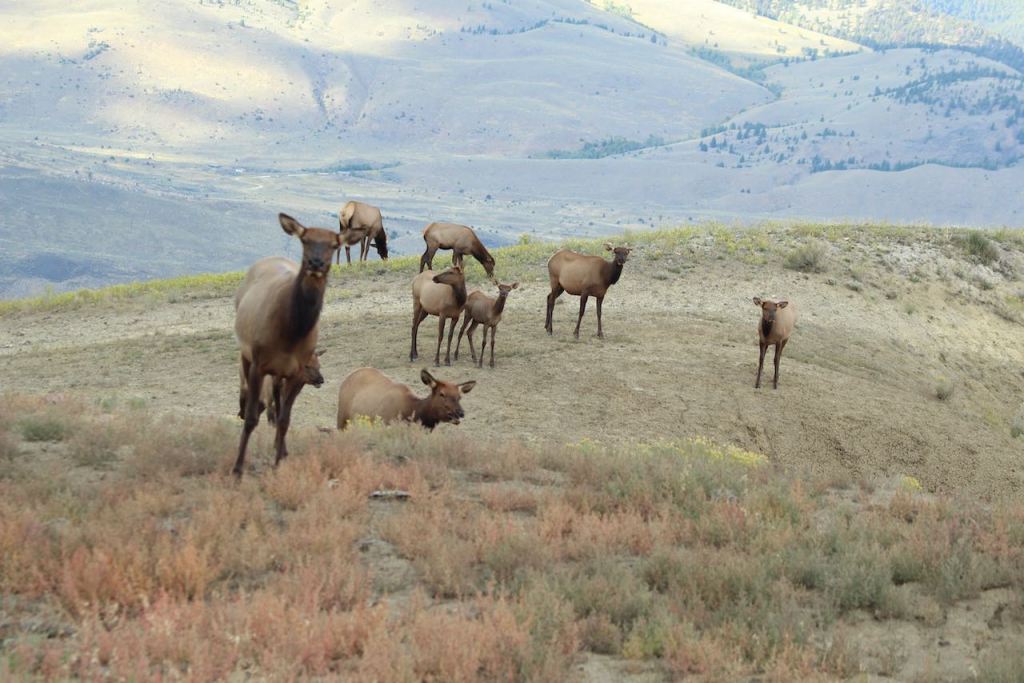
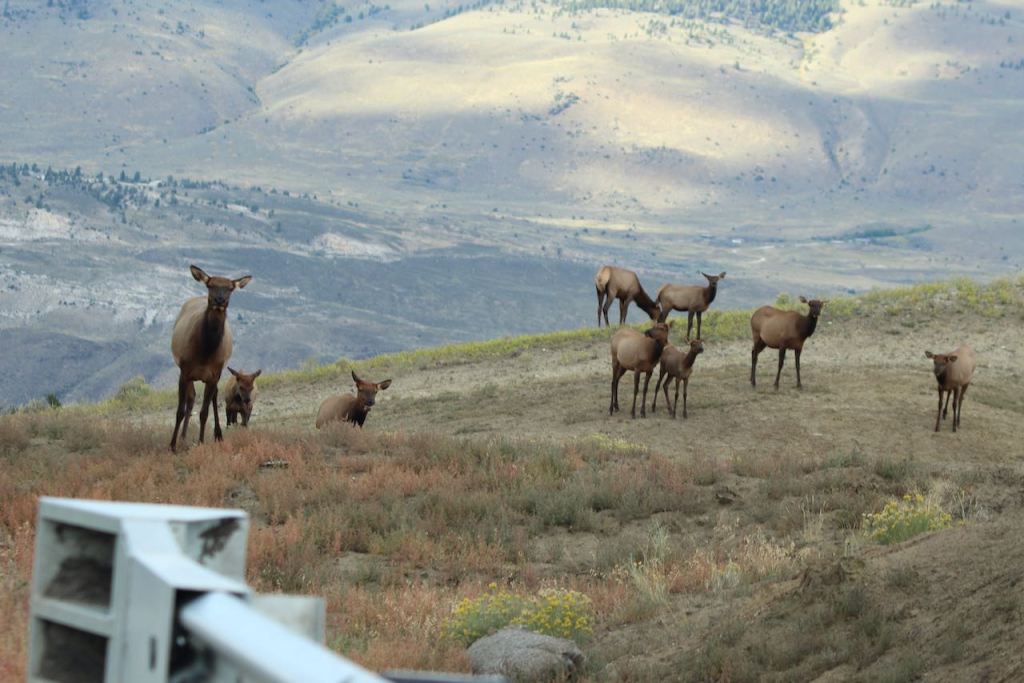
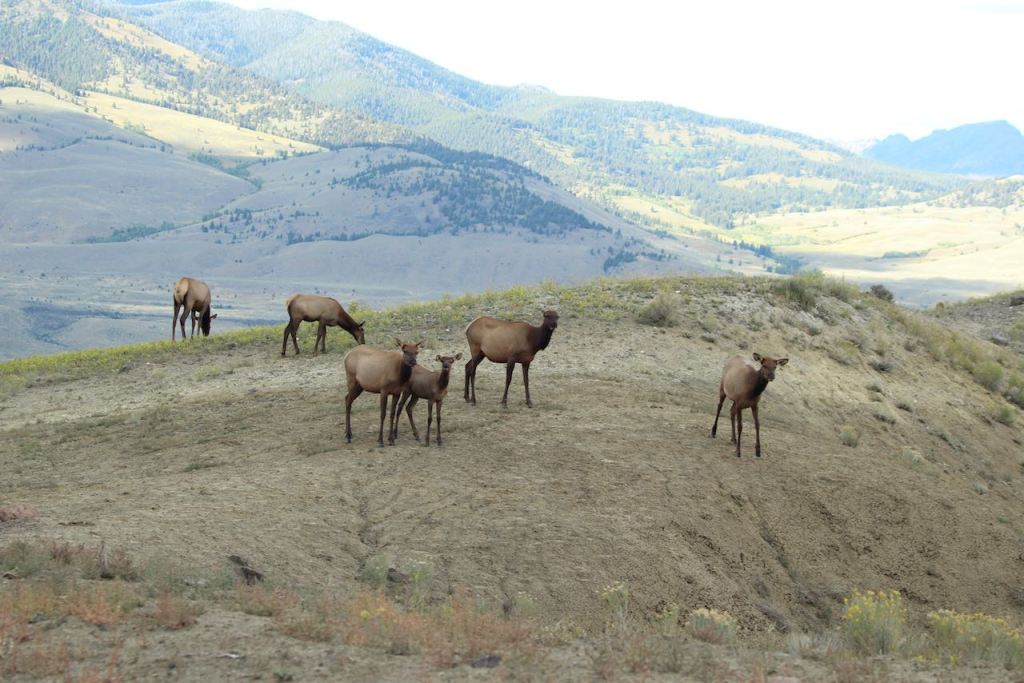
Then we decided to drive to the North entrance of the park – that is where the famous arch is – and we were happy to find our first real herd of elk hanging out along side the road.
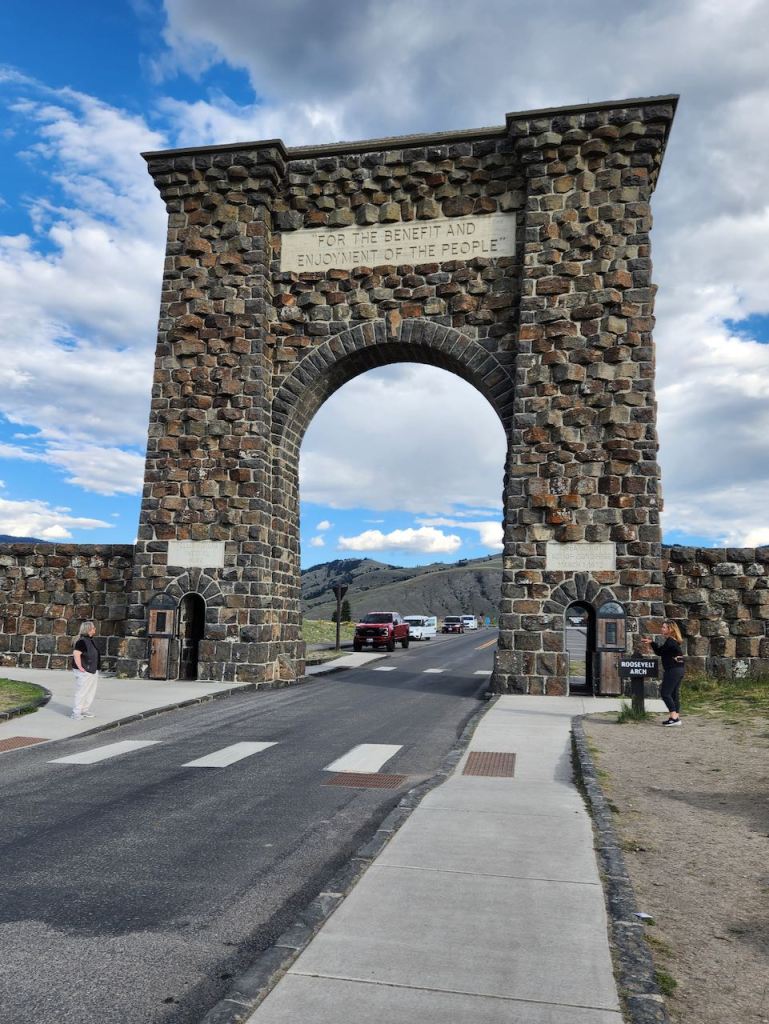
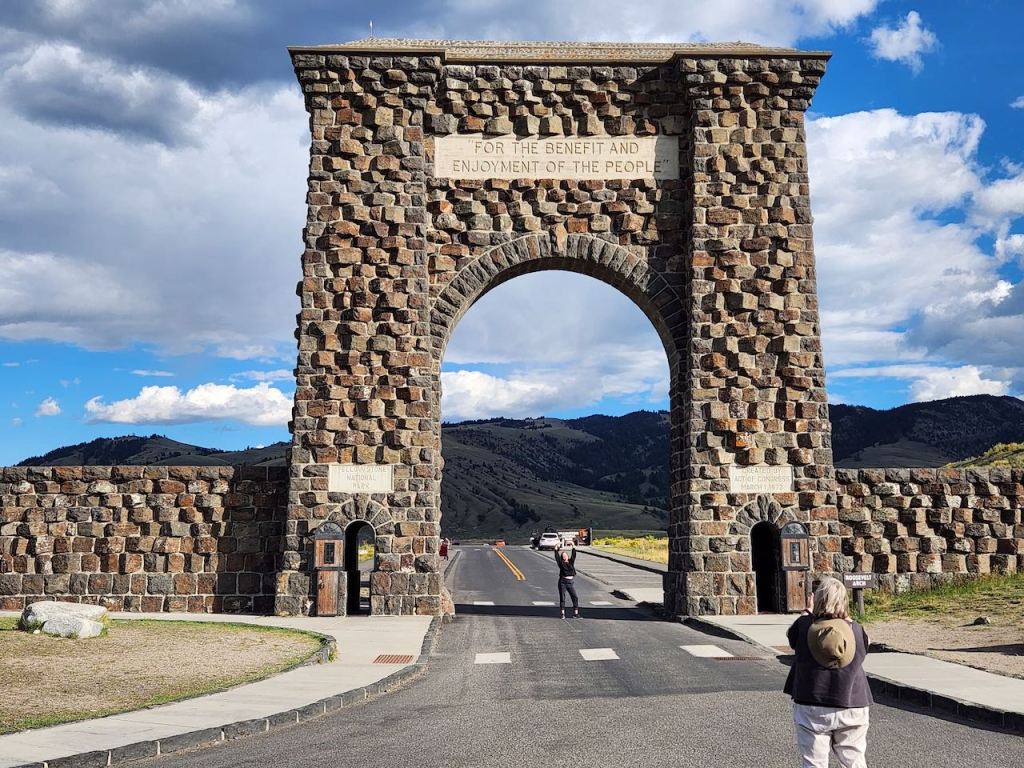
This is the Roosevelt Arch – the formal north entrance. Its cornerstone was laid down by President Theodore Roosevelt in 1903. It’s 52 feet high and is made of locally quarried basalt. It’s in the town of Gardiner and was built when the train line was extended to Gardiner. The area between here and Mammoth Springs is where the floods washed out the roads in 2022 – the access road here is still the temporary road built after the floods.
As we were driving back to the campsite we saw some cars pulled off the road and everyone looking in the same direction – a sure sign that something had been spotted. So we pulled over too and were able to see our first bear! Don’t worry, it was a long way away and let me know if you can spot it in this picture before I tell you where it is.
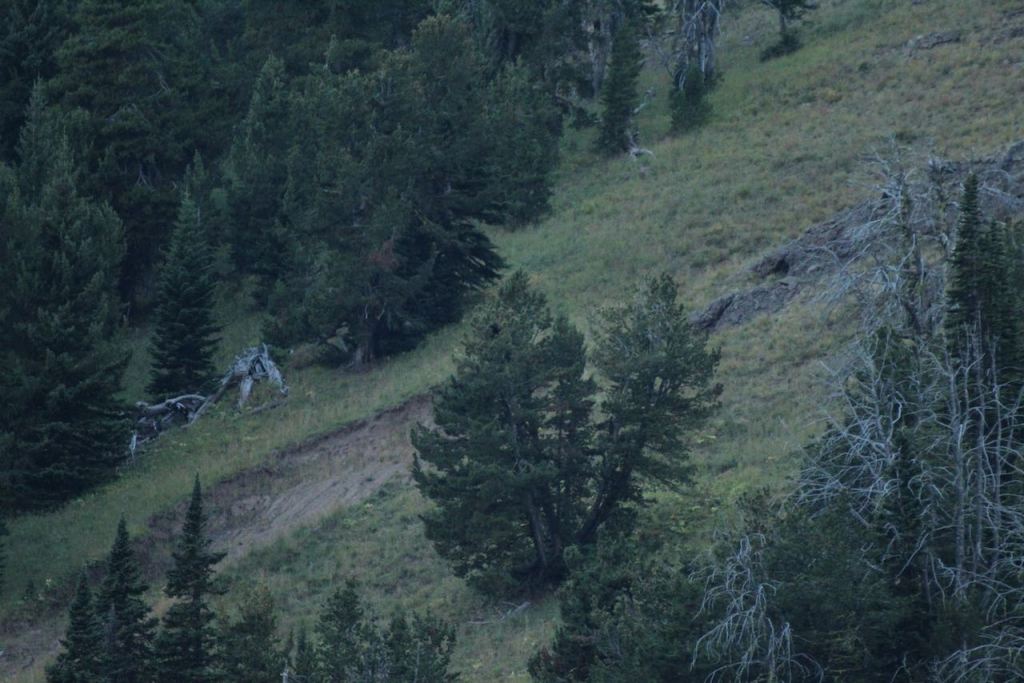
Let me give you the directions that we got. “Do you see where the pine tree intersects with that slash of dirt? Okay, now do you see that brown dot in the tree? That’s the bear. He’s up there eating the pine nuts from the pine cones.” As you can see we were in no danger. I guess the Donraven Pass is a spot to watch for bears. The person who spotted the bear had been there for hours and and seen him climb the tree so he didn’t just spot him in the tree.


The bear eventually came down from the tree, so in the left picture above you can see him at the base of the tree and in the right that picture is blown up. So here I’ll tell the story of the binoculars. We stopped at a picnic area along the river for lunch. As we were leaving the area, Trish sat down to get some stones out of her shoes. She must have left the binoculars behind on the picnic table. We didn’t realize until it was too late to go back for them. We called Trish’s sister Elizabeth, our birder resource, and she sent us an article about the best one’s to buy. We were going to have them shipped to our friends who would be joining us in a couple of weeks. But then in Gardiner there was an outfitter store that had a big Binoculars sign on it. We went in and found one of the brands that was recommended, and they had something in our price range so we bought them. When we stumbled upon the bear sighting we were glad we did.
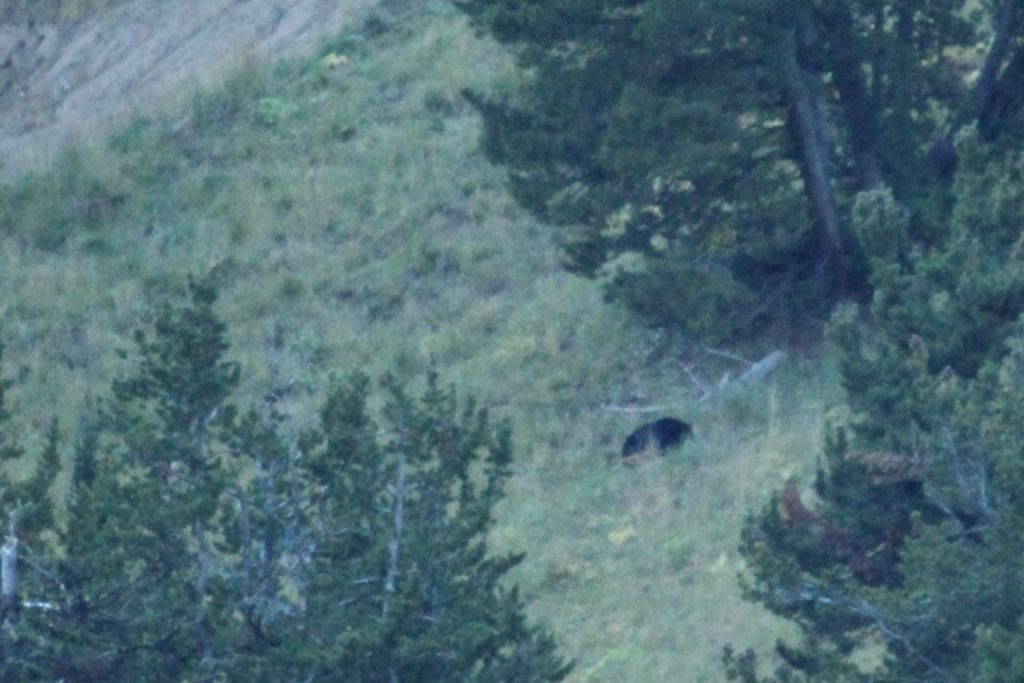
Here is one last photo of the bear. It was a great end to our last full day at Yellowstone. It was a long day as we did the full Grand Loop which is 142 miles of driving without the side trips.
On Tuesday, September 12th it was time to move on to Jackson and Grand Teton National Park, but before we left Yellowstone we left our RV in the campground parking lot and took one last ride out the East Entrance Road so that Suzy could see some of the sites.

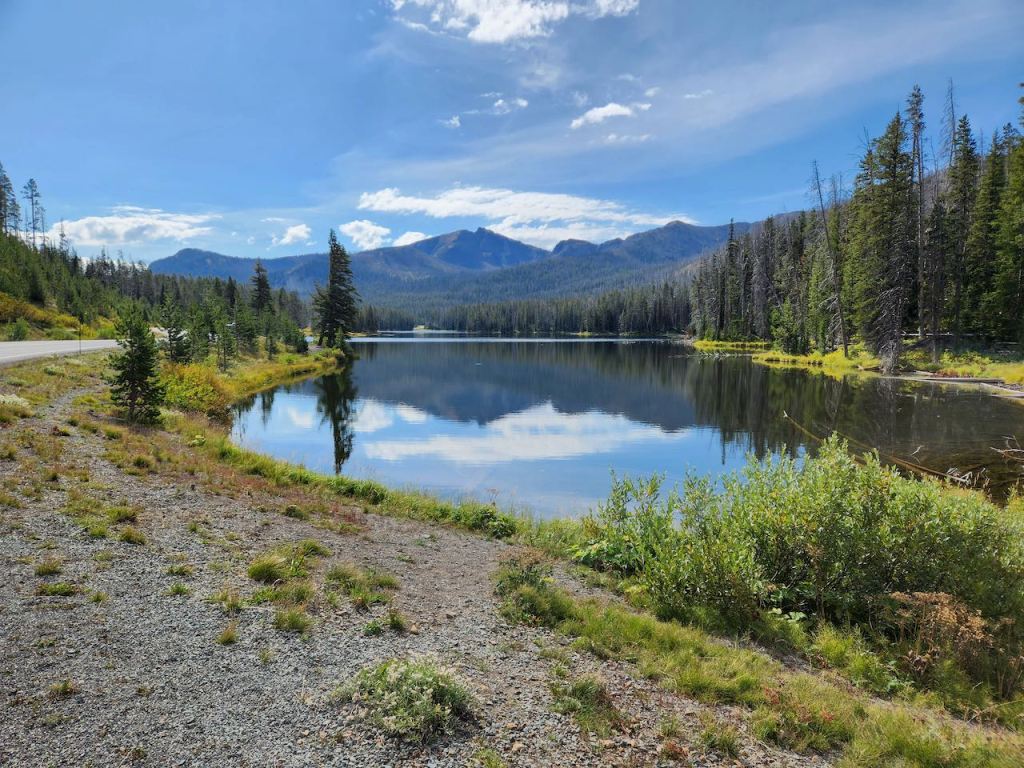
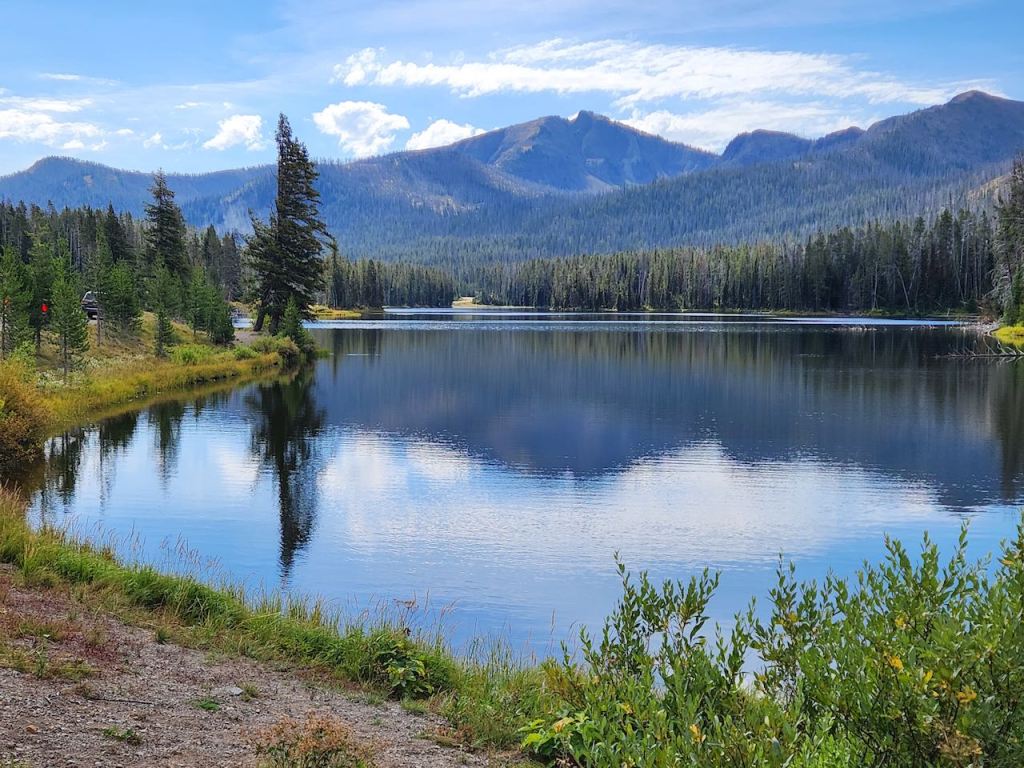
We made another stop at Sylvan Lake – the reflections were marginally better than the first time we were there.
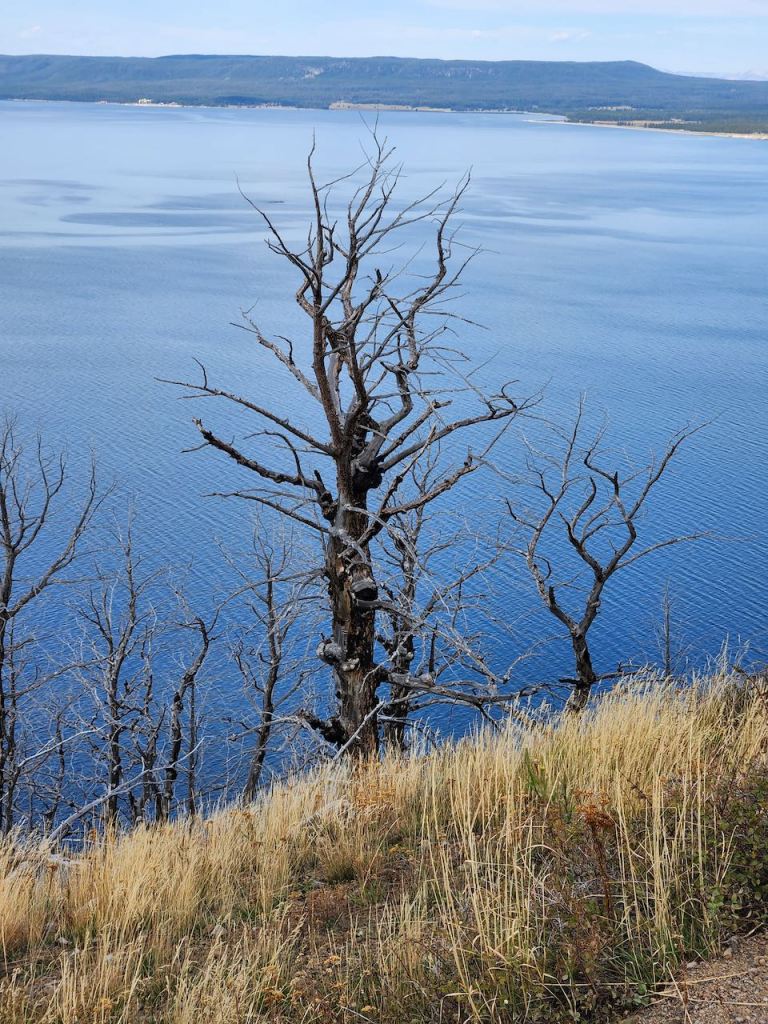

We also stopped at the Lake Butte Overview for some last views of Yellowstone Lake.

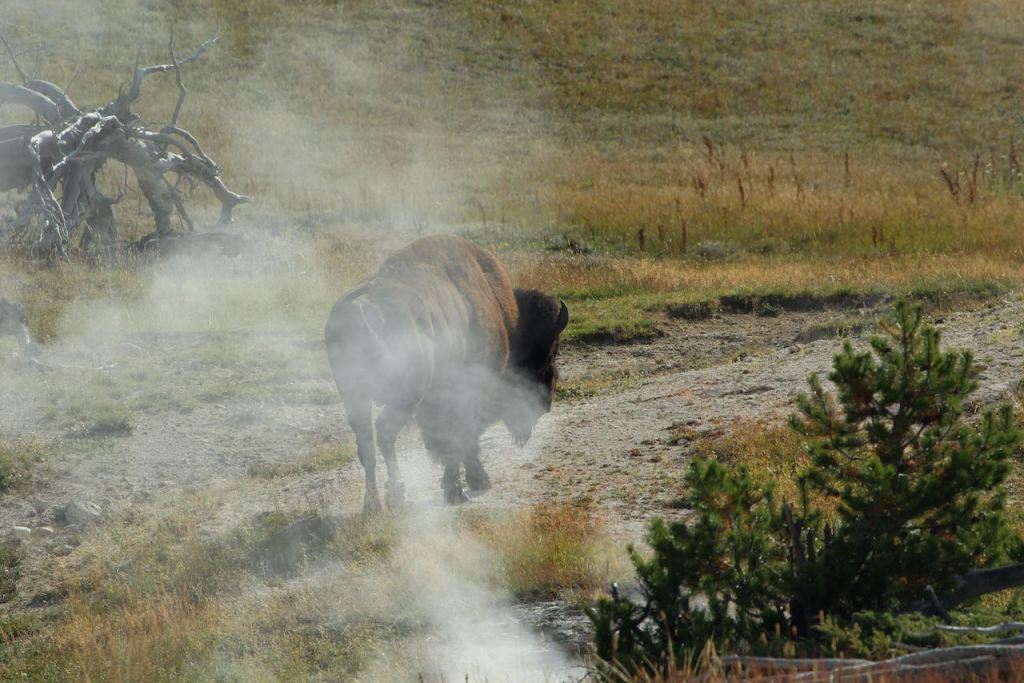
And we got some last views of some wildlife – this mule deer and a bison walking through a steam vent. Everywhere we went there were signs to stay off the thermal features, that there could be just a crust that was not strong enough for you to walk on. Not sure how the 2,000 pound bison manage it.
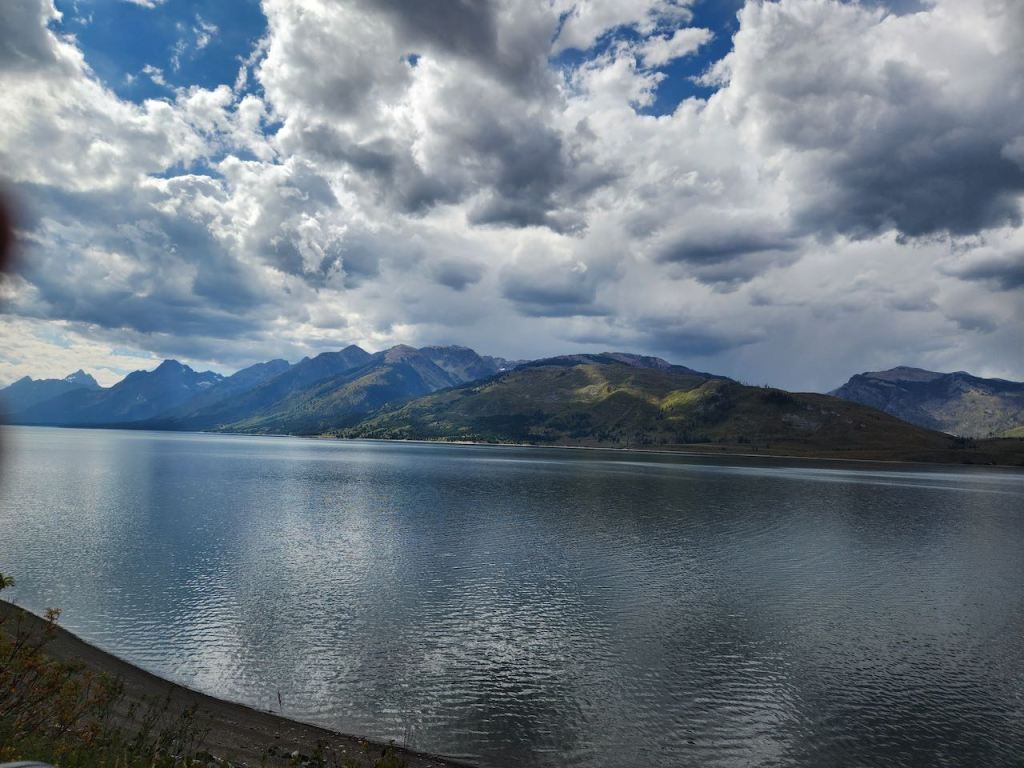
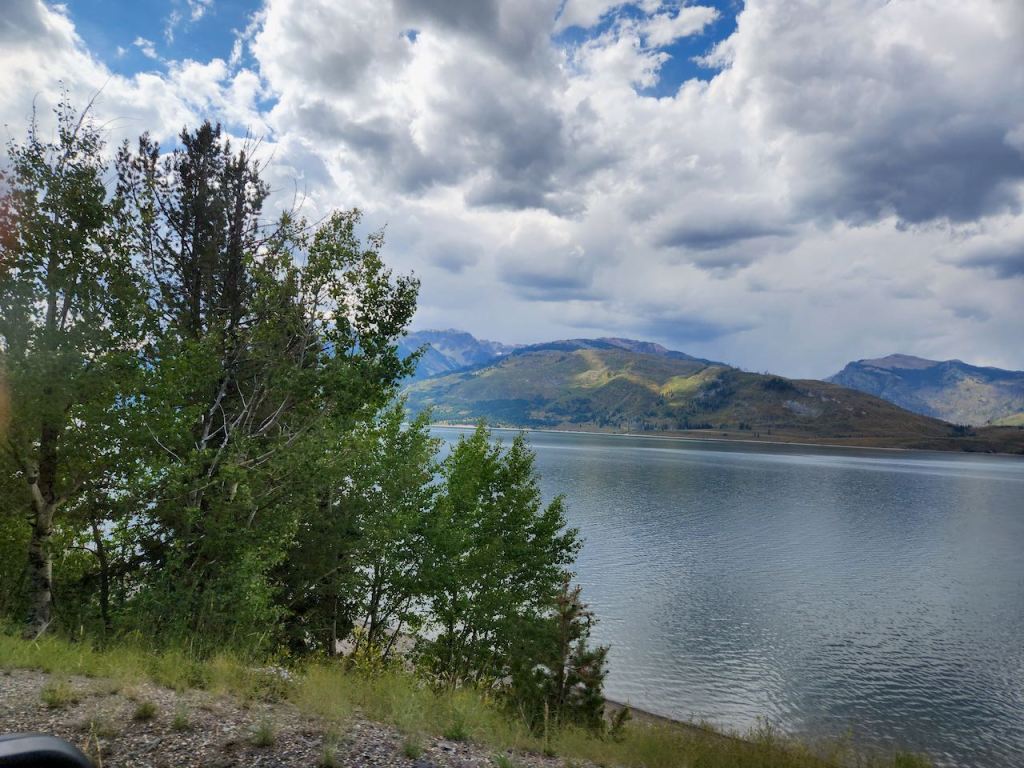
And this is Lewis Lake, which is on the South Entrance Road – one of our last views of Yellowstone. We left hoping that we make it back again as there were many places we didn’t get to, and we didn’t see any wolves. But we do have several other states to get to before that.
As I alluded, our next stop was the Grand Teton National Park.
Until then, safe travels!


 Trish & Anne RV Adventures
Leave a reply to C. Baker Cancel reply