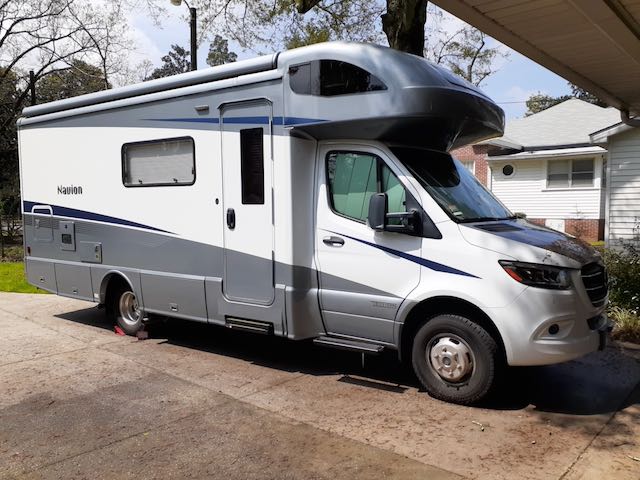
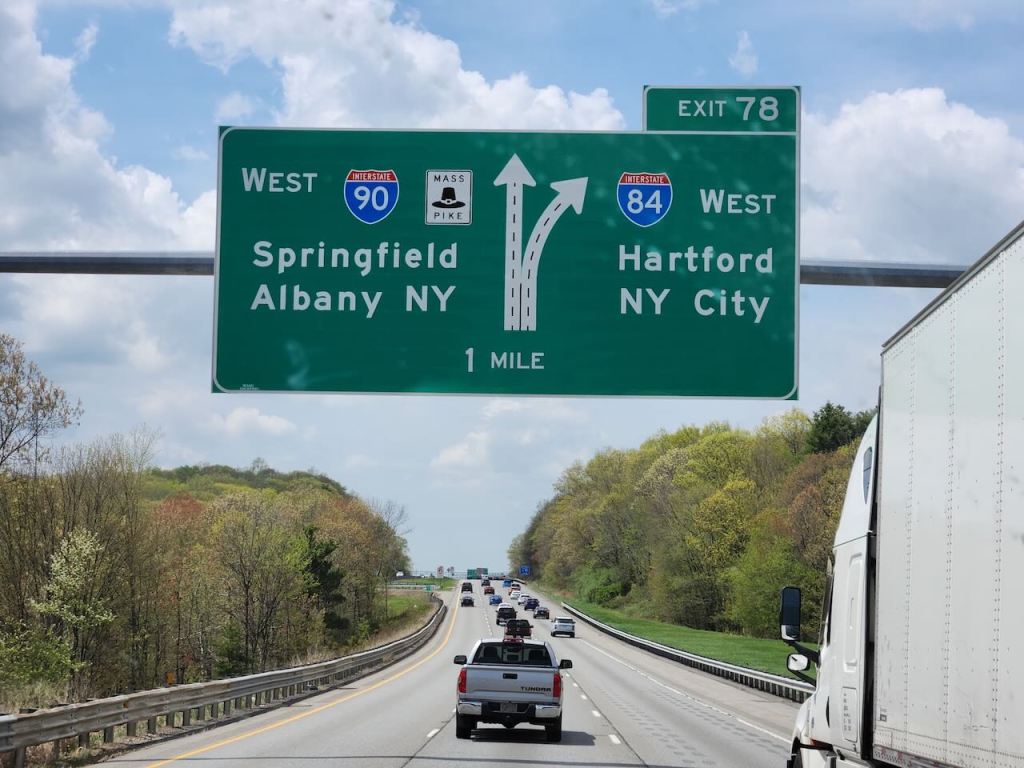
On Saturday, May 3 we set off on our next adventure. We are on a 4-week trip to the mid-Atlantic coast. But once again our first stop was my brother’s place in Gardiner, NY. To avoid traffic, we drive out the Mass Pike all the way to New York, and then head south on I-87. The day started out warm (about 75) and sunny, but we did run into some rain on the way, and the temperature dropped to 65. By the time we got off the highway in Gardiner, the sun was shining, the temps were back up and the apple trees were in bloom. But LB and Doug were not so lucky – they were out hiking, and on a ridge when the thunderstorm, with hail, blew in. It was hairy for awhile, and they got soaked – but they were fine and almost dry when the got back to the house.
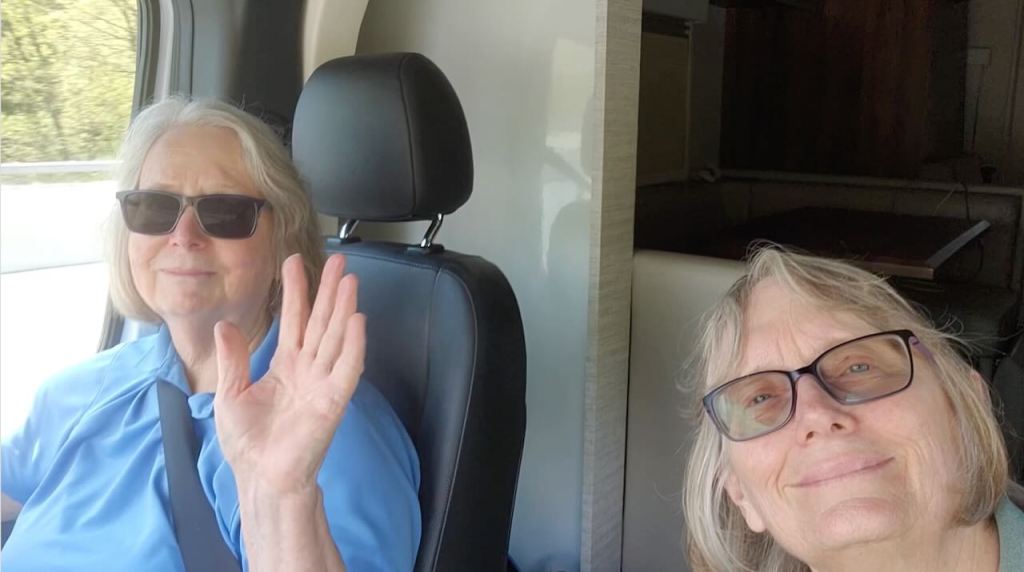


We got setup with water and electricity at the house – that’s the utility bay.. LB and Doug made us grilled chicken, pasta salad & green salad for dinner. and then they taught us how to play Catan. I had the beginner’s luck.


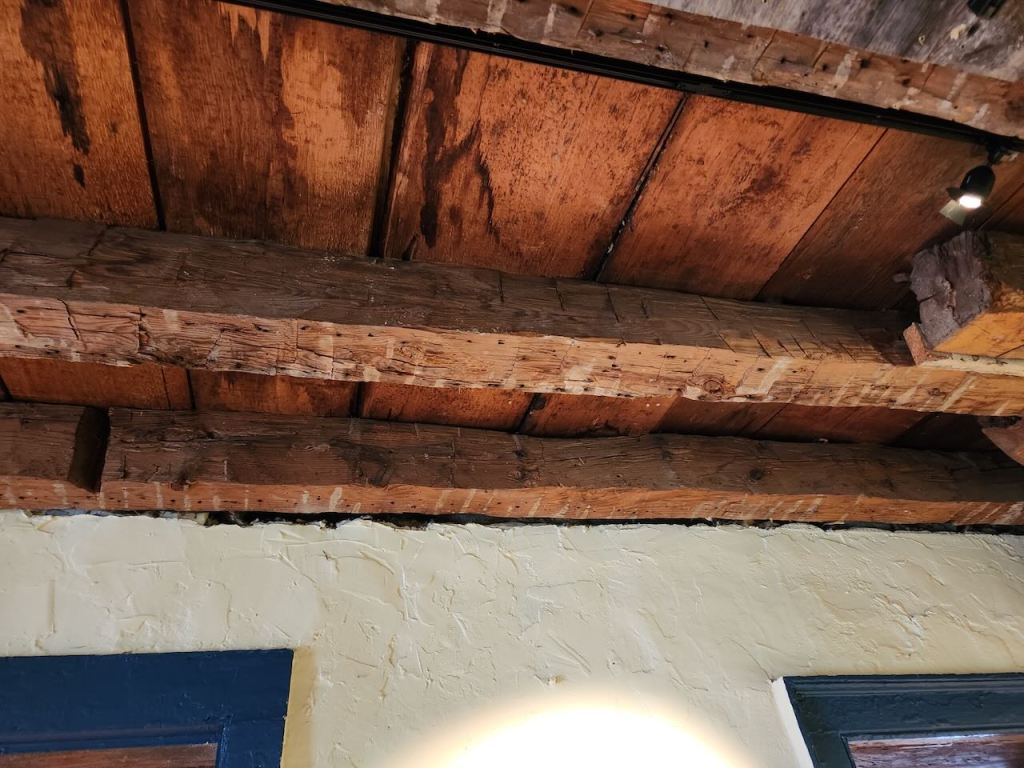
After breakfast on Sunday, we went to the D&H Canal Museum. The museum is housed in the DuPuy Tavern, which was originally built in 1797 and there are some of the original beams still holding the place up. Later it was used as the headquarters for the D&H Canal Company.
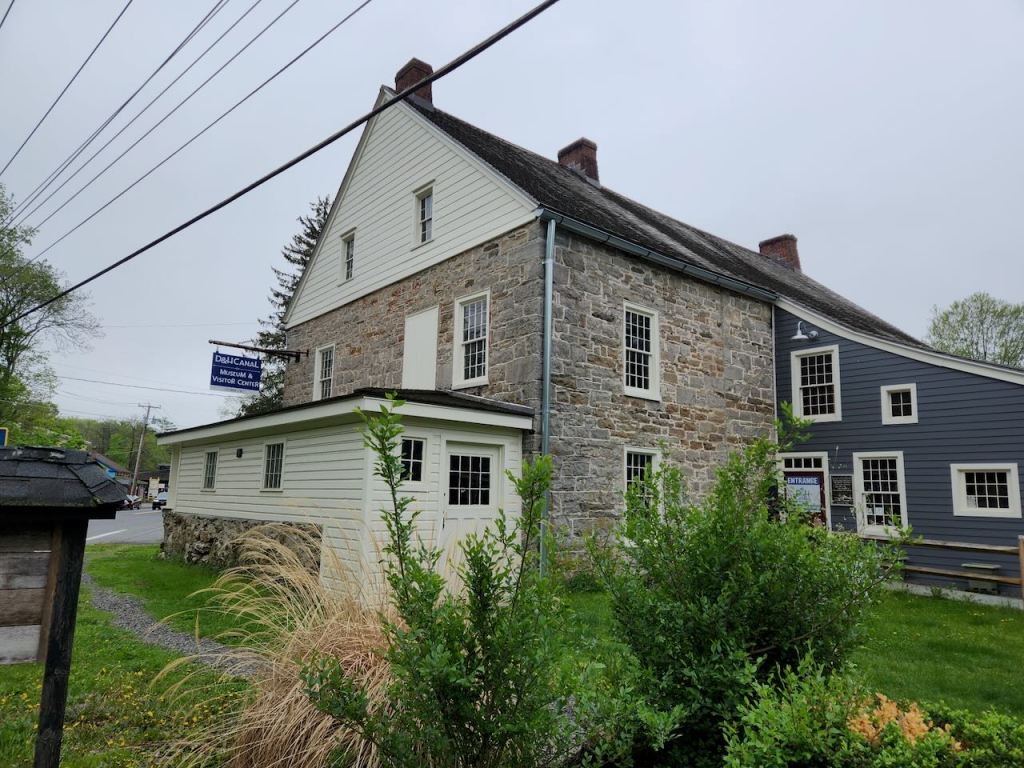
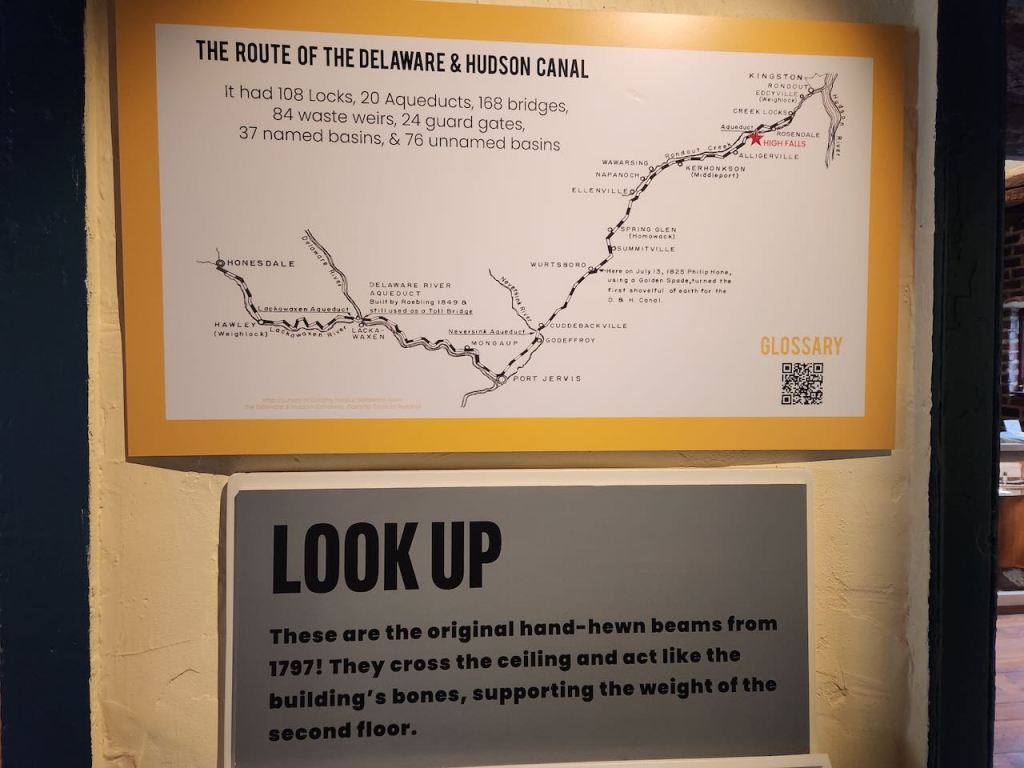
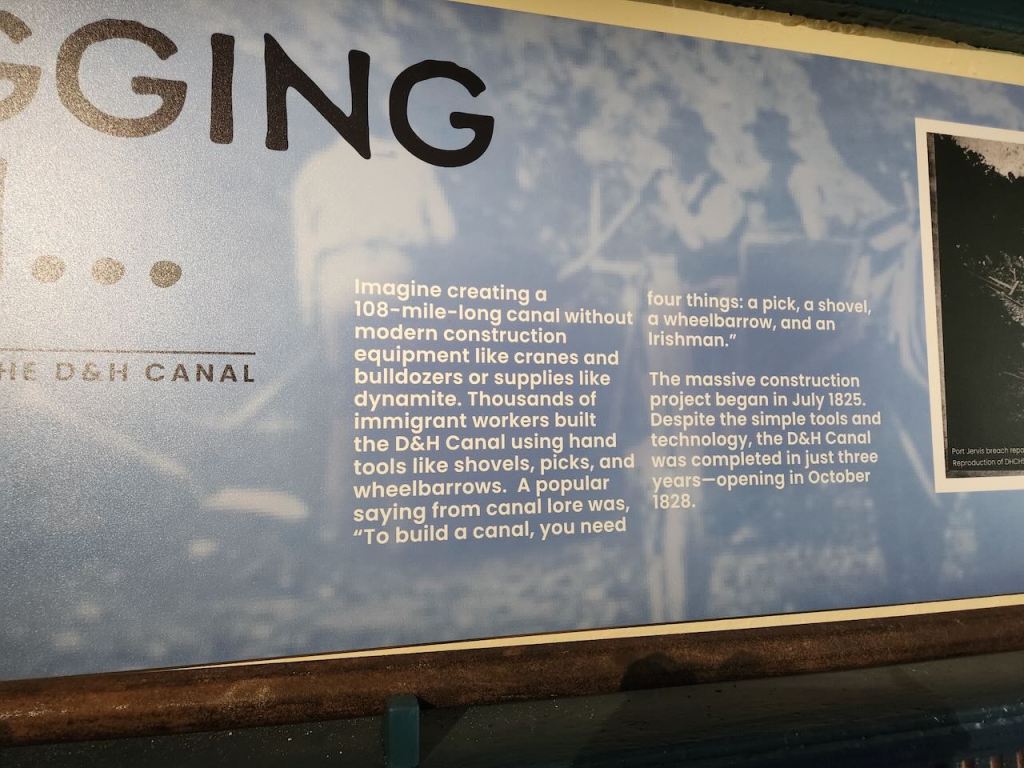
The Delaware and Hudson Canal was begun by the Werts brothers in 1825, to move the anthracite coal from their mines in northeast Pennsylvania to New York City. The over 100 mile canal took 3 years to complete – of course without any of today’s machinery. Besides the canal, they had to get over some mountains, so they also built the first gravity railroad in the US. This is where the cars are hauled up hills by animals or by a stationary engine with a long cable, and then left to go down the hill by gravity – like a roller coaster – though there are some brakes for a little control of the decent. John Roebling was the designer of the Brooklyn Bridge – but before that, he was the inventor of wire rope, which was used on the gravity railroad before it was used for suspension bridges.


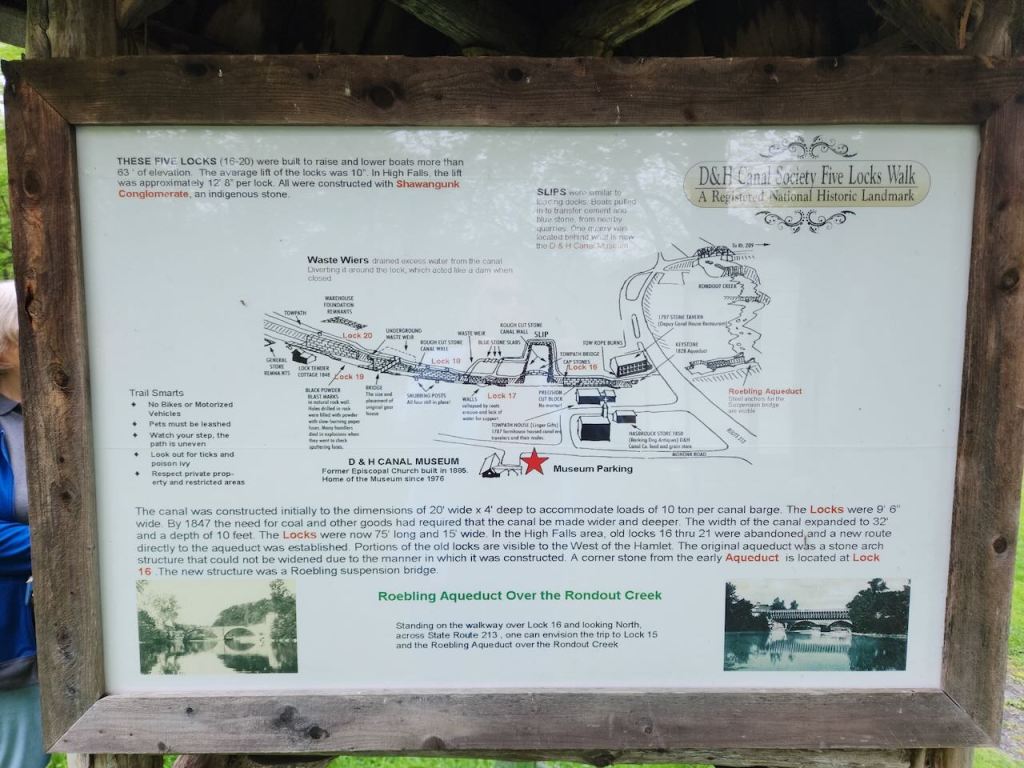
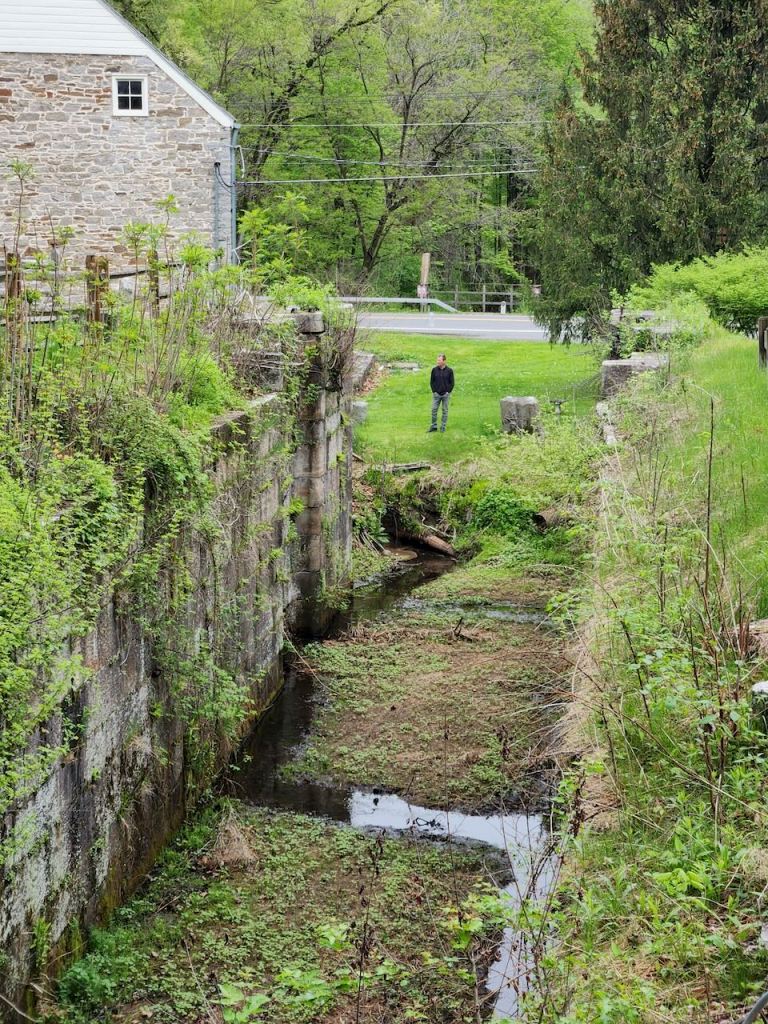
Out behind the museum, there is a trail that runs along 5 of the locks that were built for the canal – those 5 locks would raise or lower the boats more than 60 feet. Here are some photos I took along the path – those granite rocks are some of the original rope posts from along the tow path.



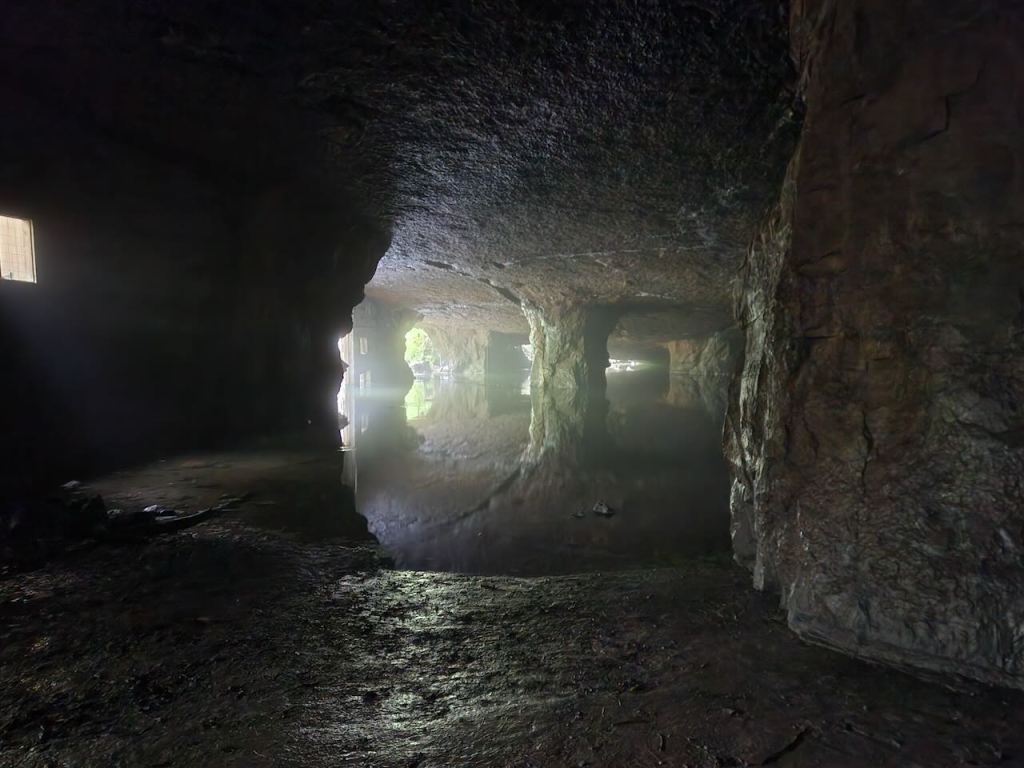
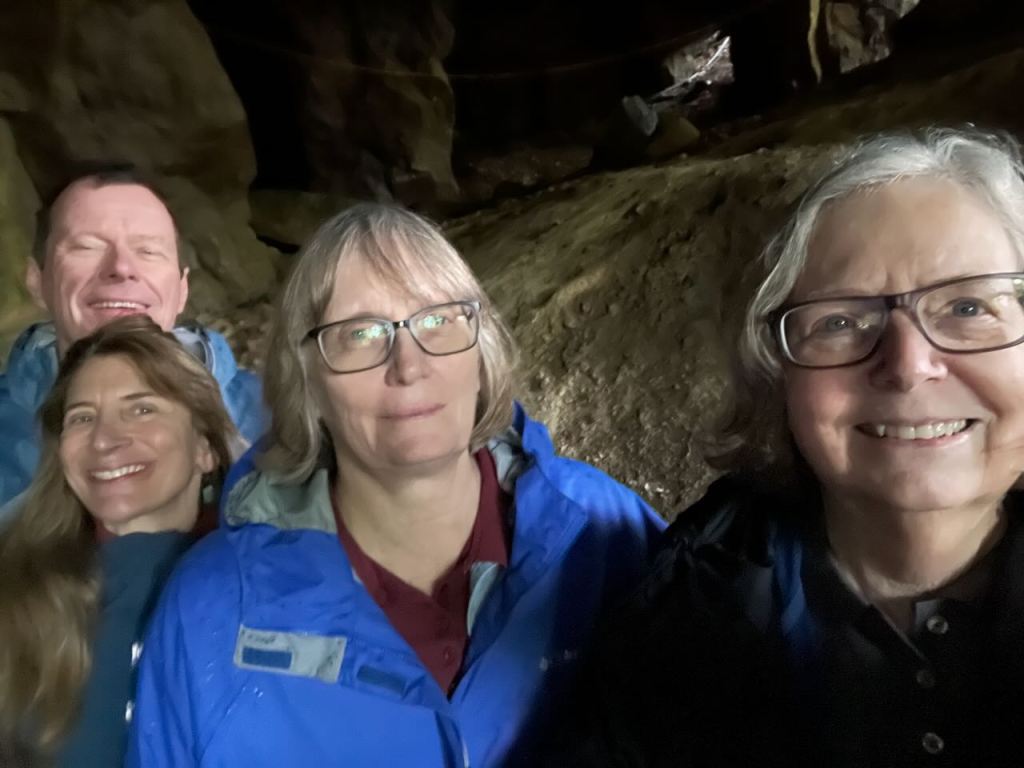
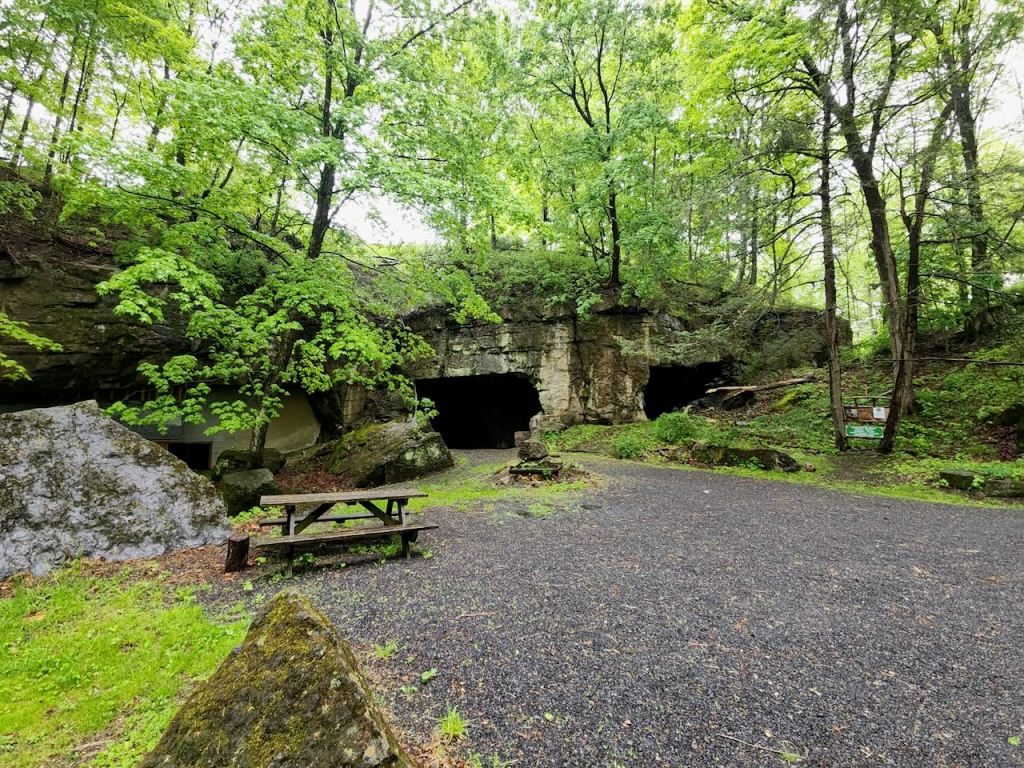
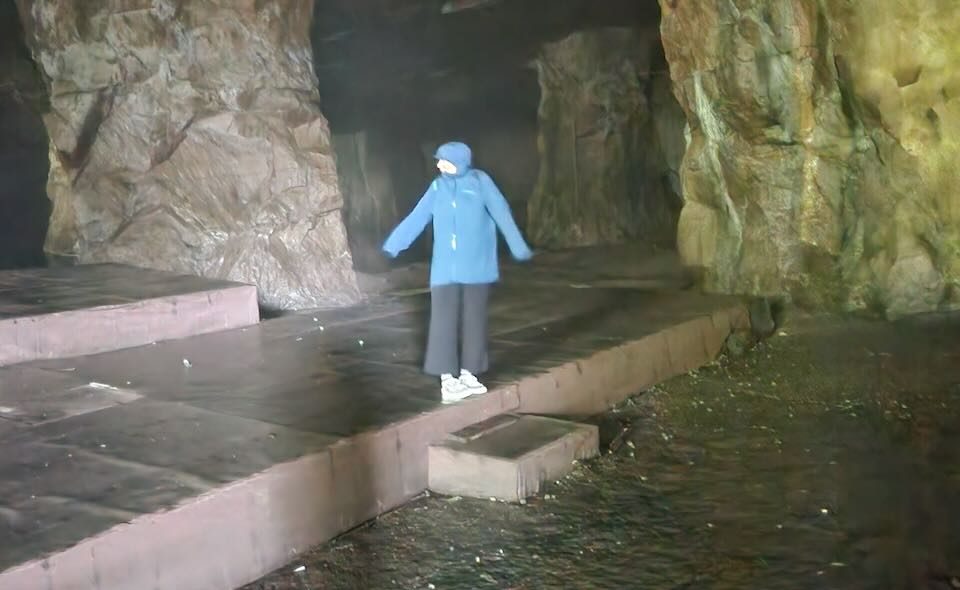
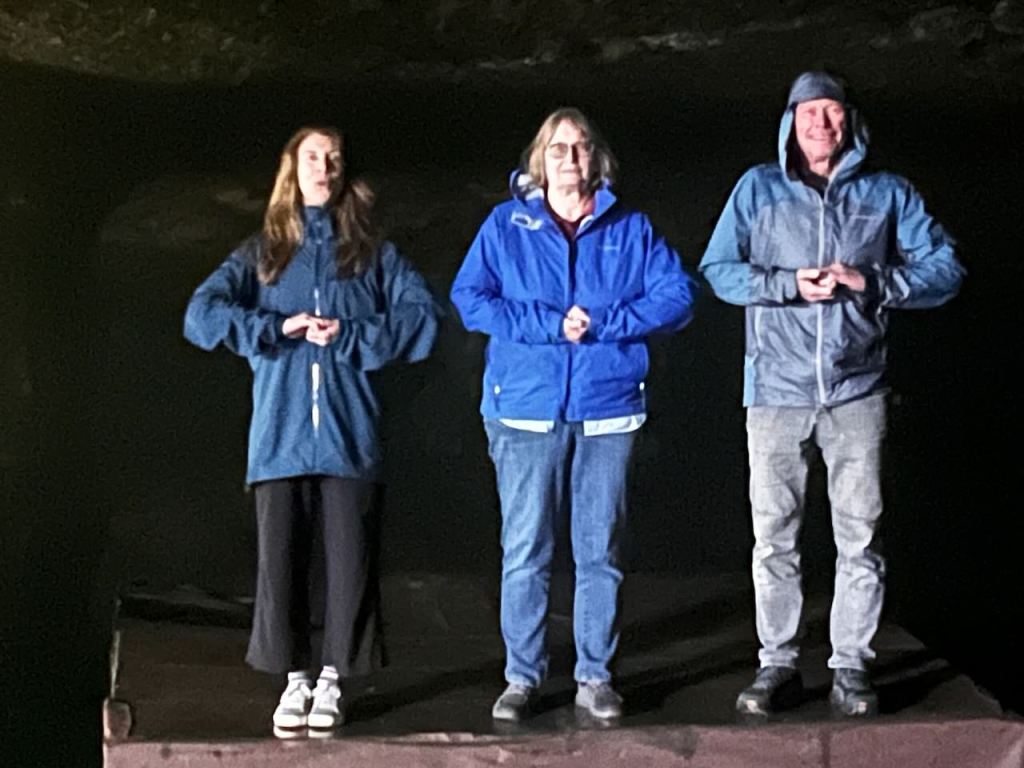
After lunch at Darlings, a cute kinda southern themed restaurant in Tillson, we went to the Widow Jane Mine. This is in Rosendale, which was the center of natural cement production in the US from 1818 to 1970. The Widow Jane “mine” is an one of the underground quarries from which the cement was extracted. It was dark in there, but our eyes did adjust a bit. The quarry is now a music venue – so the three of us played the Von Trapp’s singing in the Sound of Music.
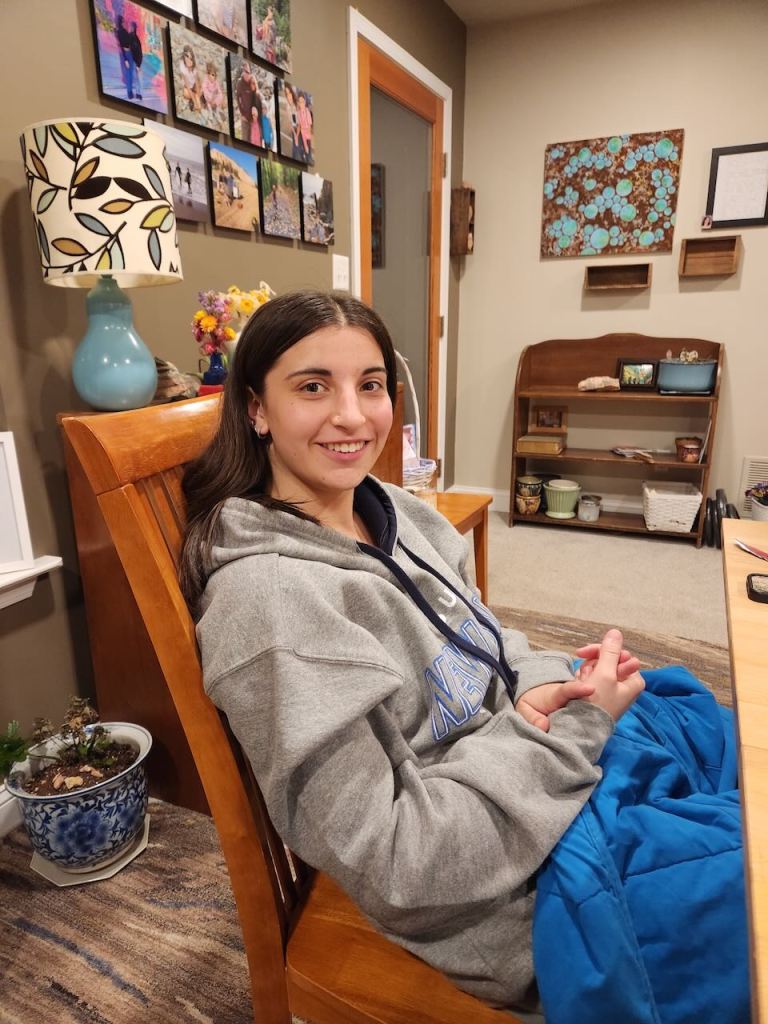
Then it was back to LB & Doug’s where we had some leftovers for dinner. Olivia was back from her father’s and took a break from studying for her AP chemistry test, to play a game of Rummikub. After that, Lizabeth made up a game that we played with some Maj Jong tiles that she had. We made up rules as we went along – it was kinda a cross between Concentration and Rummy. We laughed a lot.

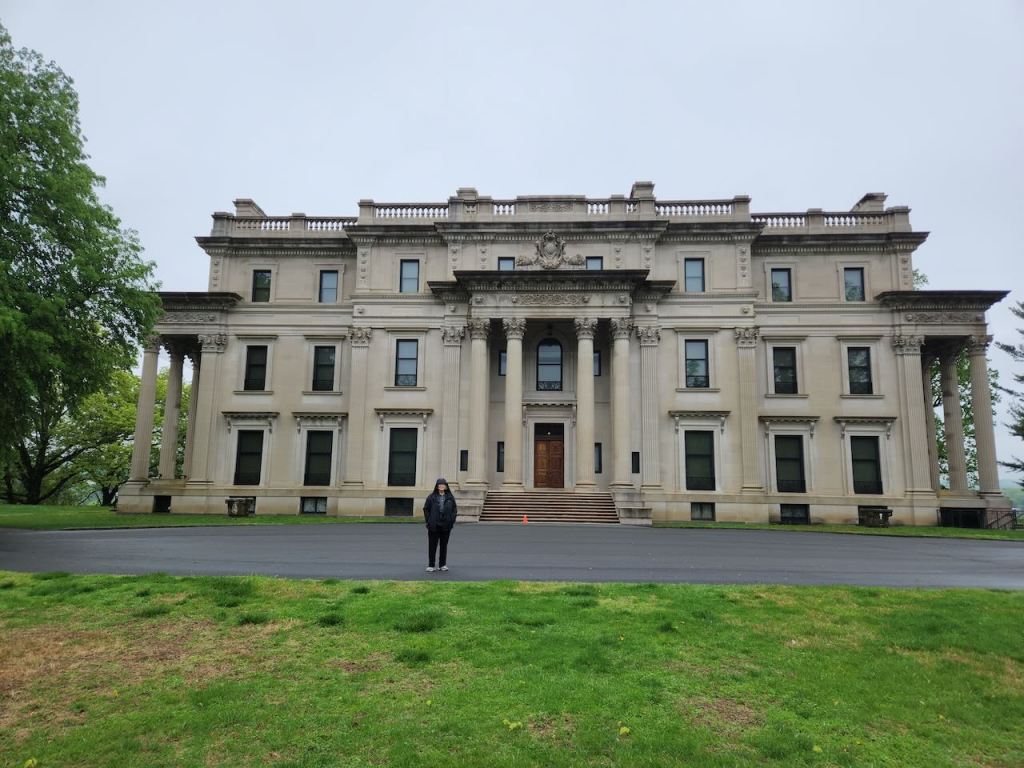
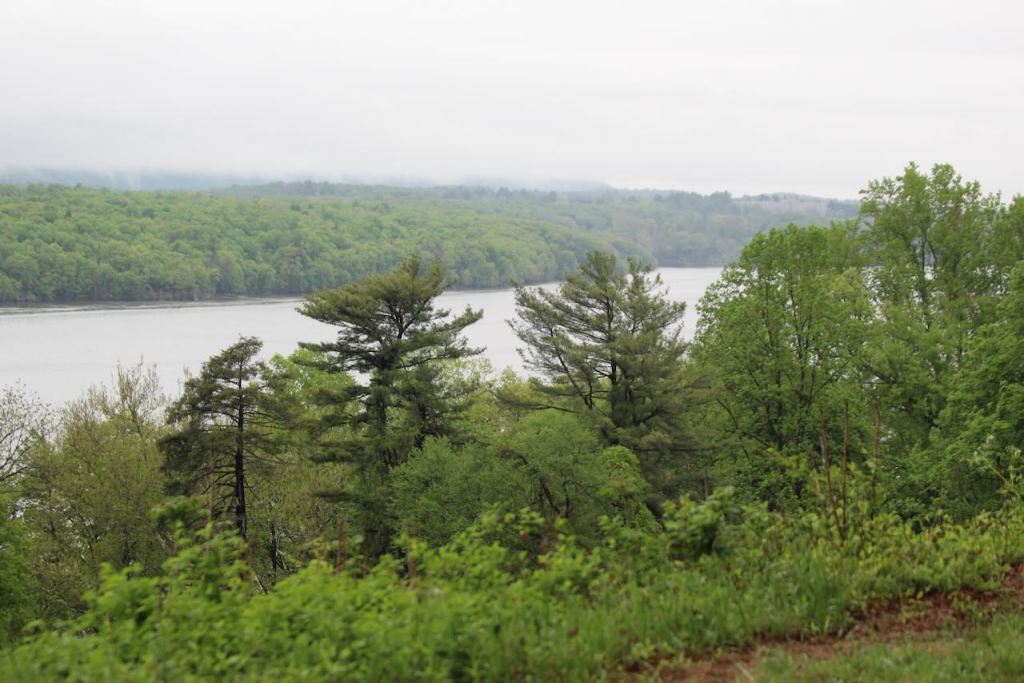
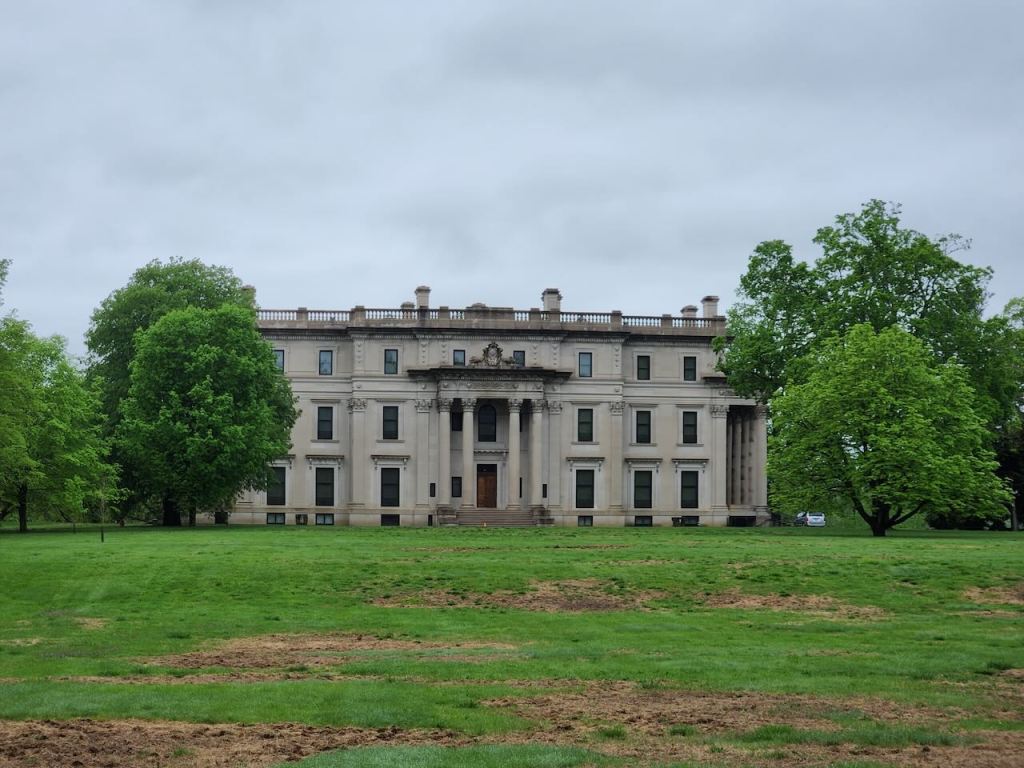
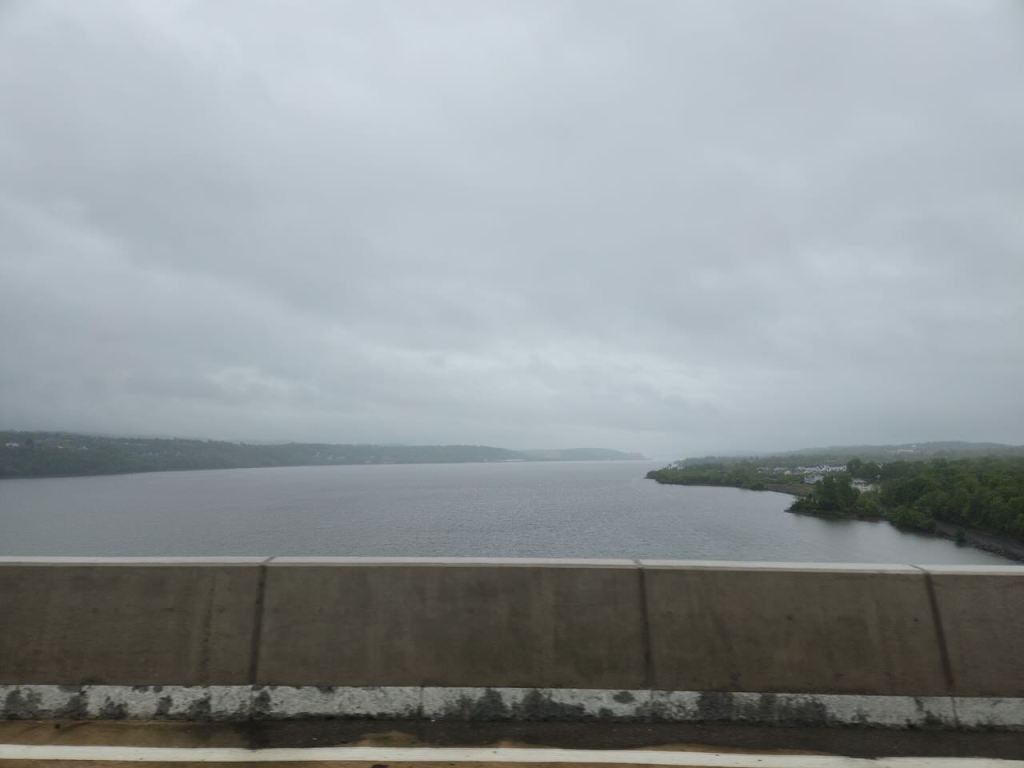
Monday morning we had tea and coffee with Doug, before unhooking and getting on our way. (We had said goodbye to LB and Olivia the night before, as we knew they would be off to their respective schools before we were ready to be moving for the day.) Then we were off to Hyde Park to visit the Vanderbilt Mansion – it is on the Hudson River and is the only Gilded Age mansion maintained by the National Park Service. (FDR, who lived down the street, was instrumental in saving the mansion when Frederick died in 1938.) It was built by Frederick Vanderbilt, who was a grandson of Cornelius. That’s a shot of the front and then one of the side entrances – which is as magnificent as many from entrances, and some views of the Hudson River.


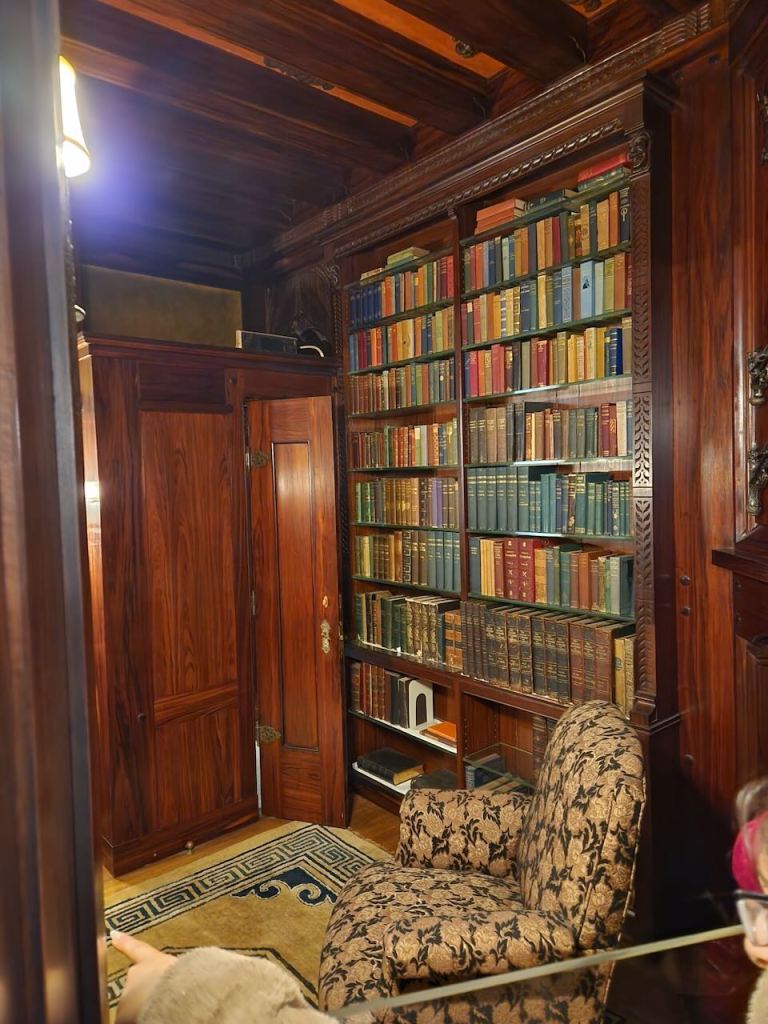
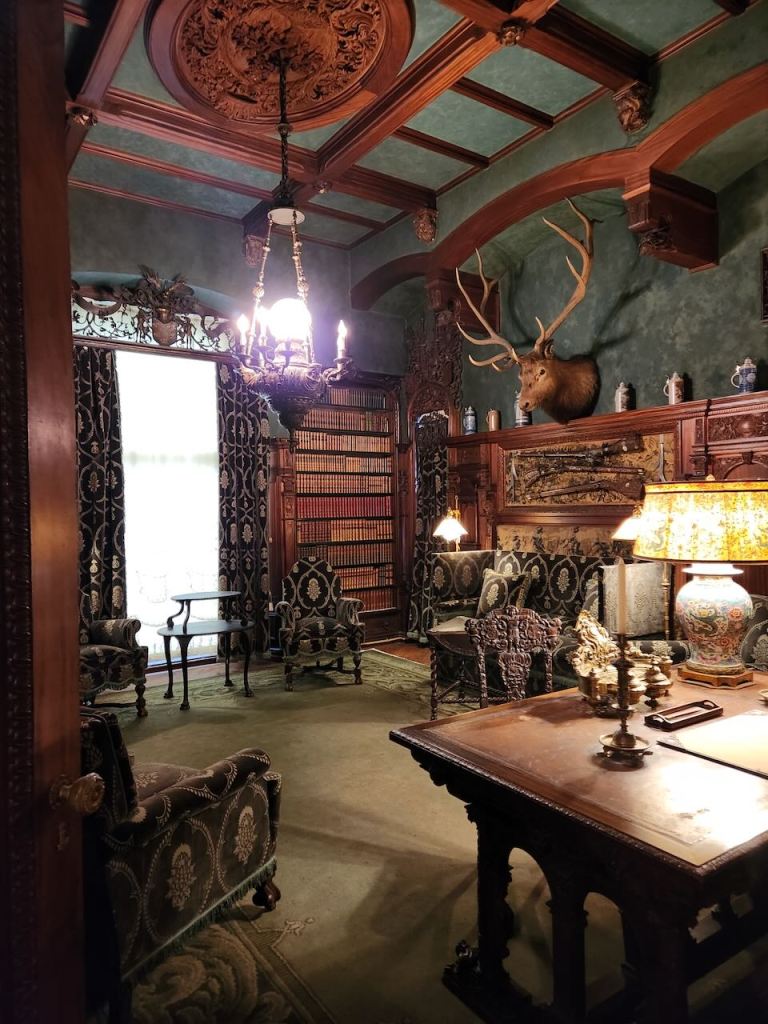
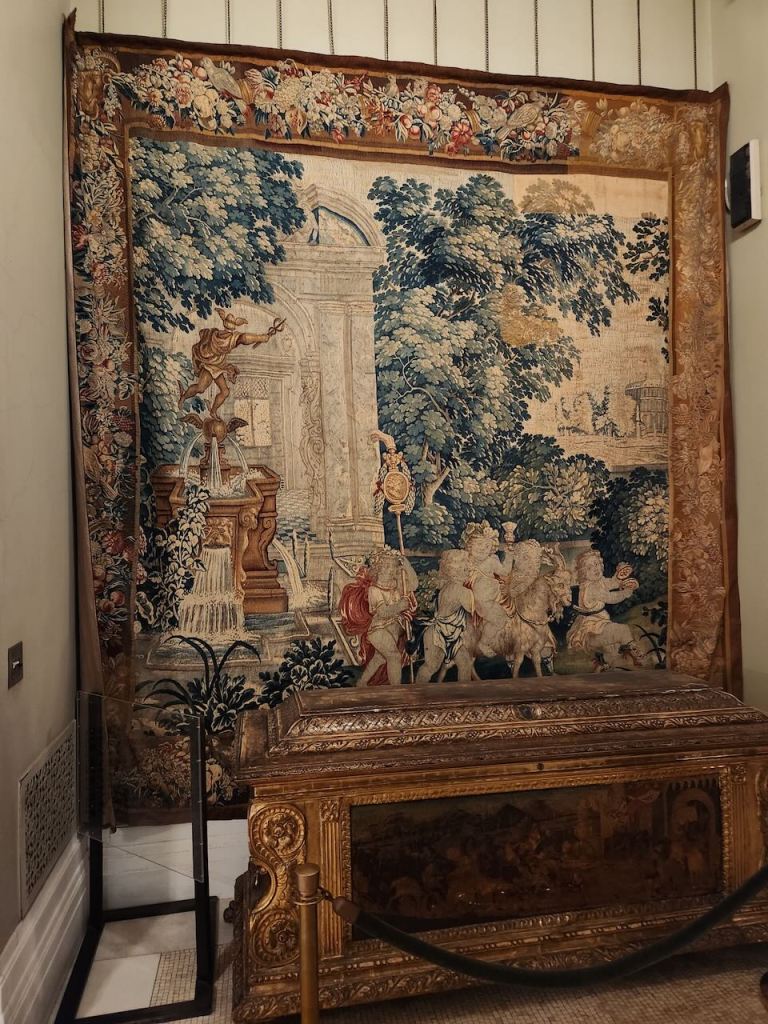
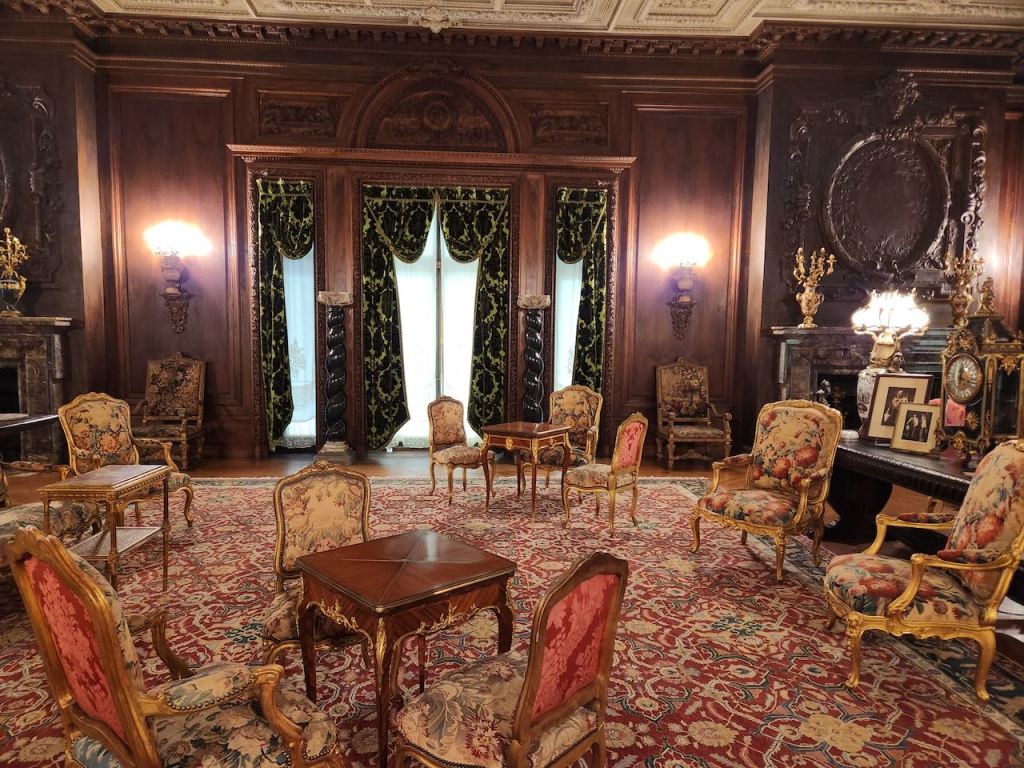
Here are some shots of the inside of the house – now you know why it’s called the Gilded Age.




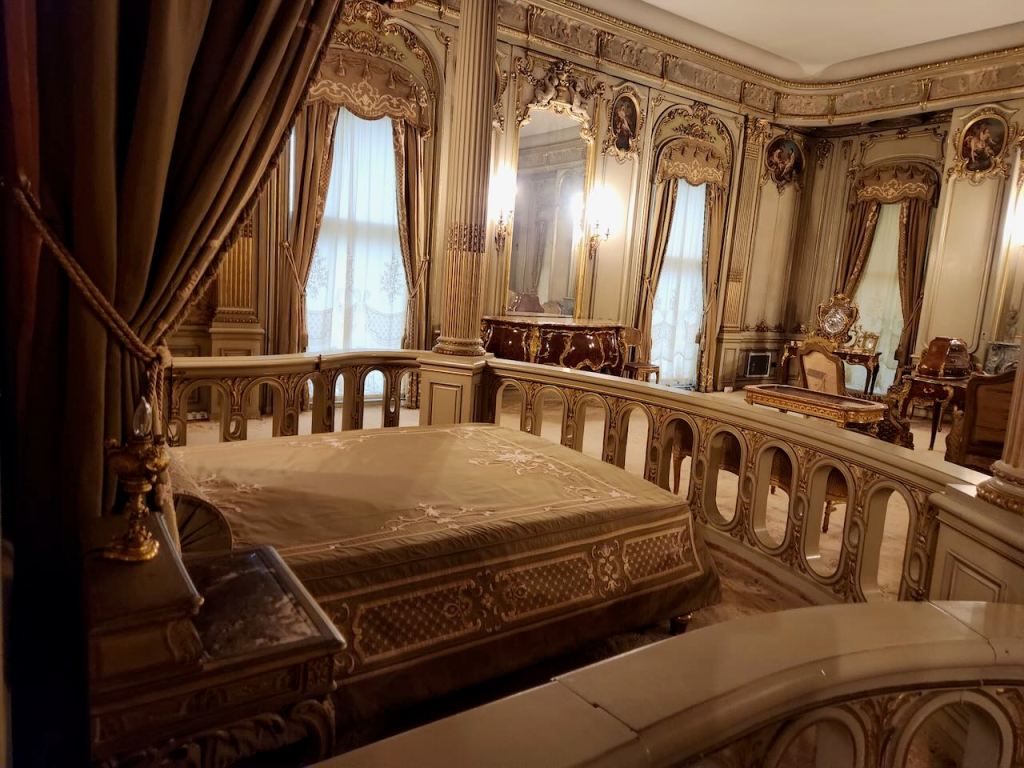
I was surprised to see that Louise’s bed was behind a gated area – supposedly that’s the way Marie Antoinette’d bedroom was designed.

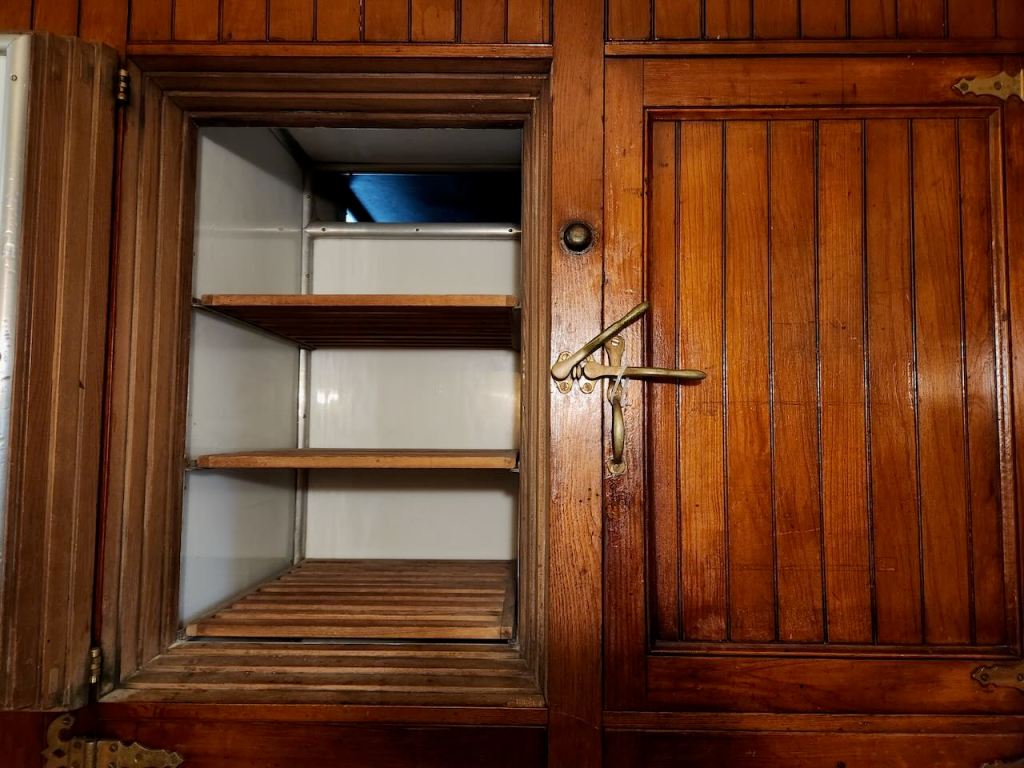
If you can’t tell, these are the servant’s stairs – we took them down to the basement where we also saw the kitchen, the servant’s dining room and the ice box.


The rain had stopped momentarily, so we walked over to the gardens. They are still under reconstruction, and some of the spring flowers had gone by – but it was still worth the walk over.


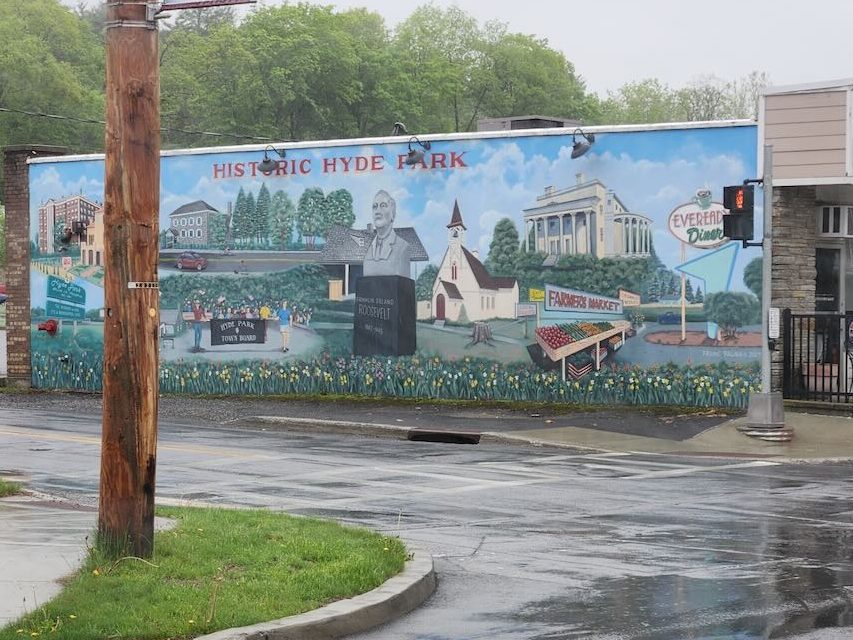
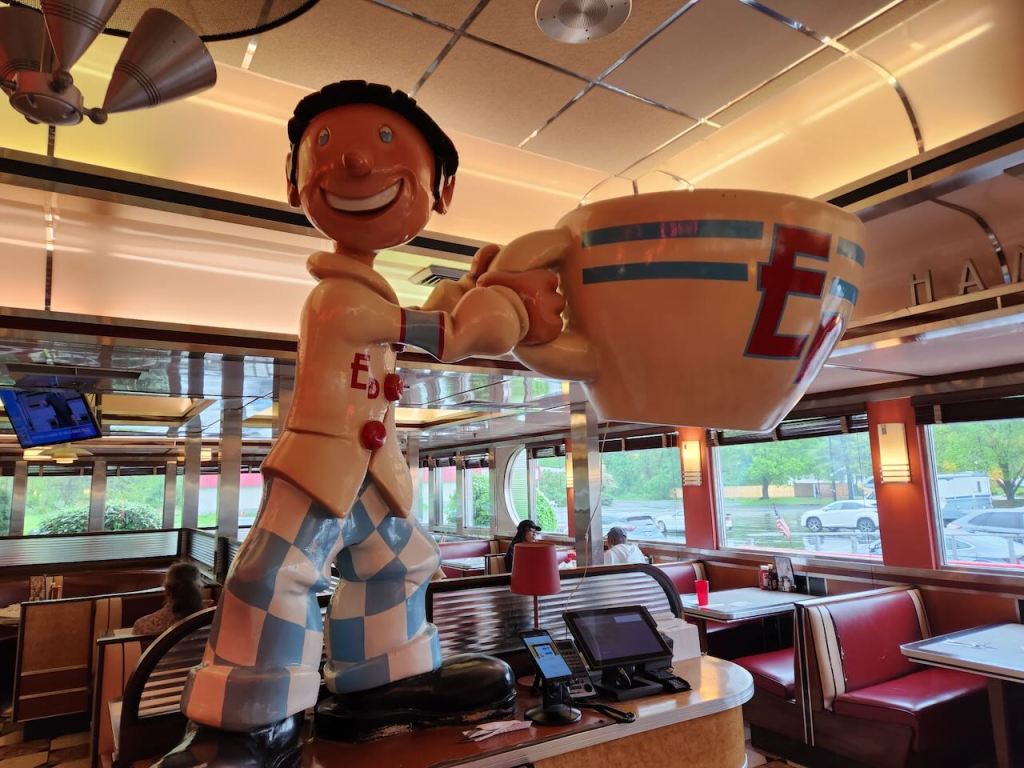
I got a final shot of the mansion on the walk back to the car, and caught this mural on our drive to the Eveready Diner, which was featured on the mural. We had breakfast for lunch and then headed back across the Hudson and south to NJ.
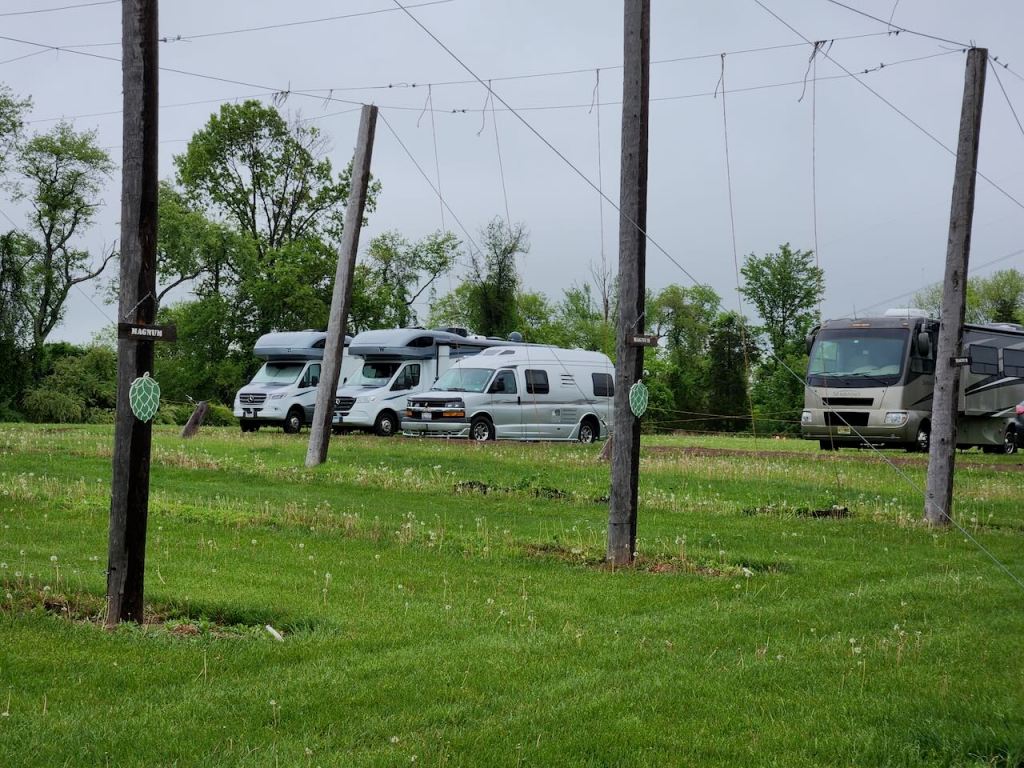
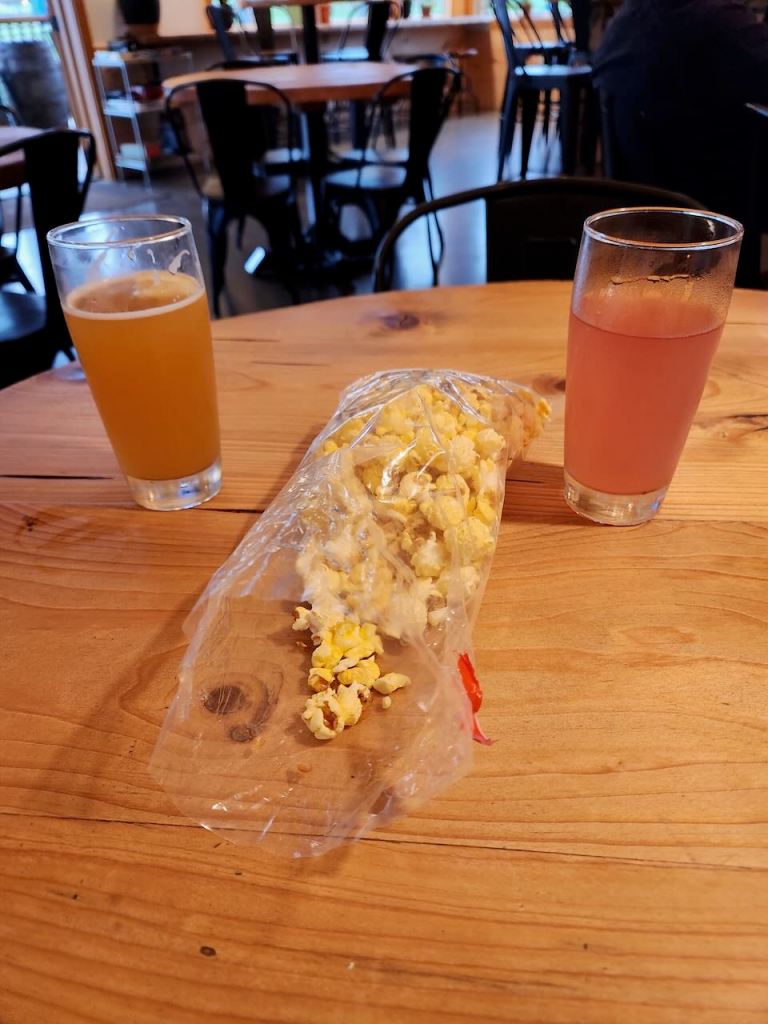
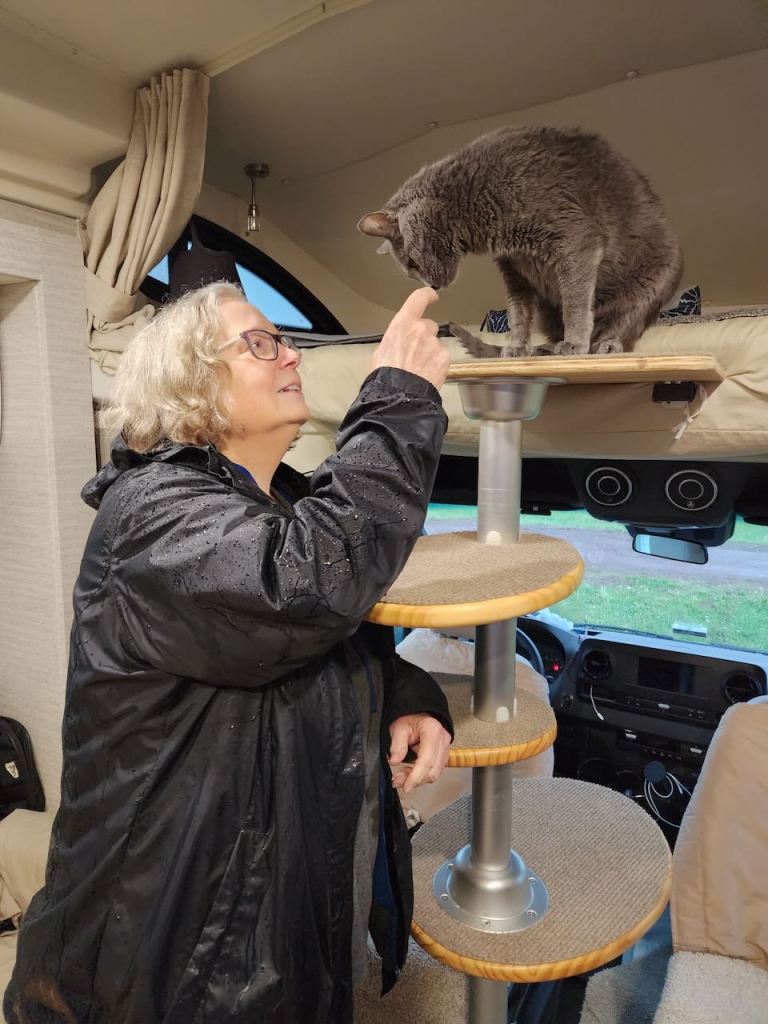
Monday night we stayed at the Readington Brewery and Hop Farm. There were quite a few more poles of hops than my brother Bruce had at his house. There were 5 other RV’s staying there that evening and when we were pulling in, we were right next to a Winnebago View painted exactly like ours. After getting settled in we went over to the brew house – Trish had a beer and I had a hard seltzer. Both were brewed on-site and were very tasty. We stuck up a conversation with the owners of the View – Bruce and Janet were on the way home to Minnesota after a trip to Key Largo. It turned out they travel with a kitty.- needless to say, we stopped by for a visit. Bruce had built Lulu a cat tree – removable for travel. Trish was able to get a cat fix as Lulu demonstrated her love of the cat tree.

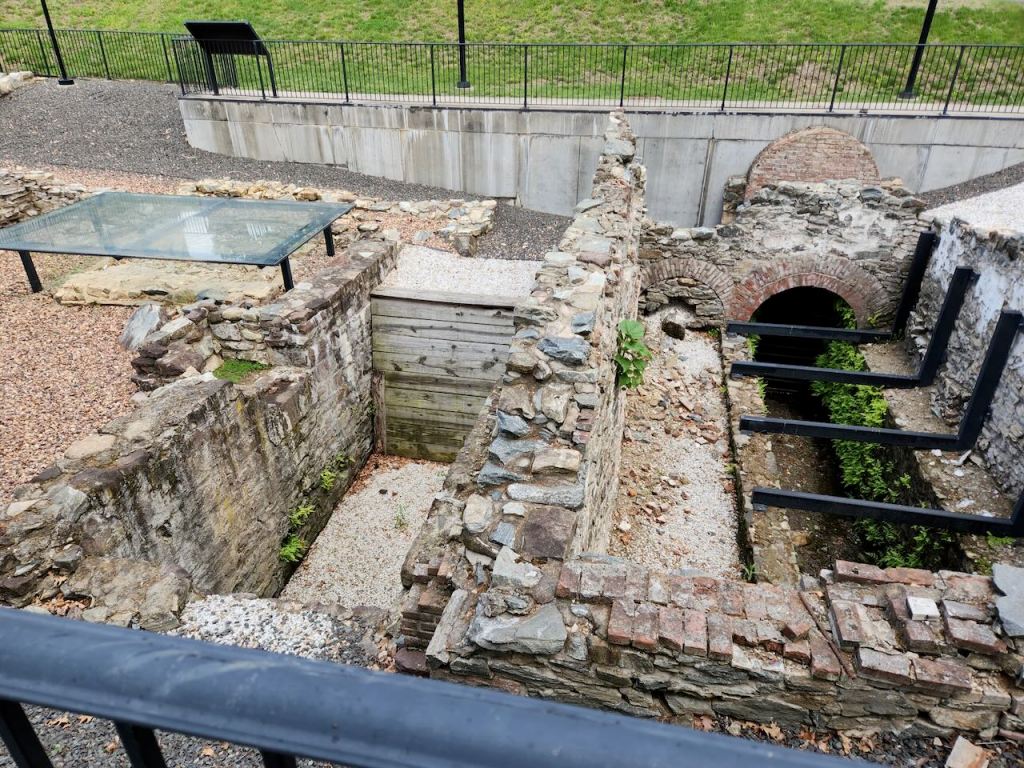
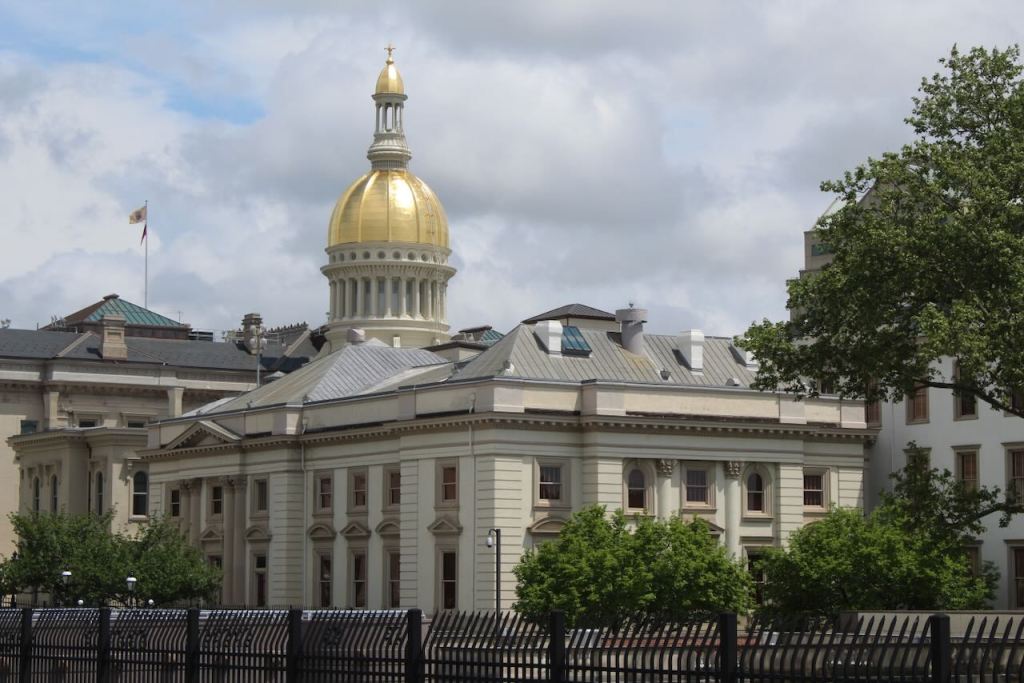
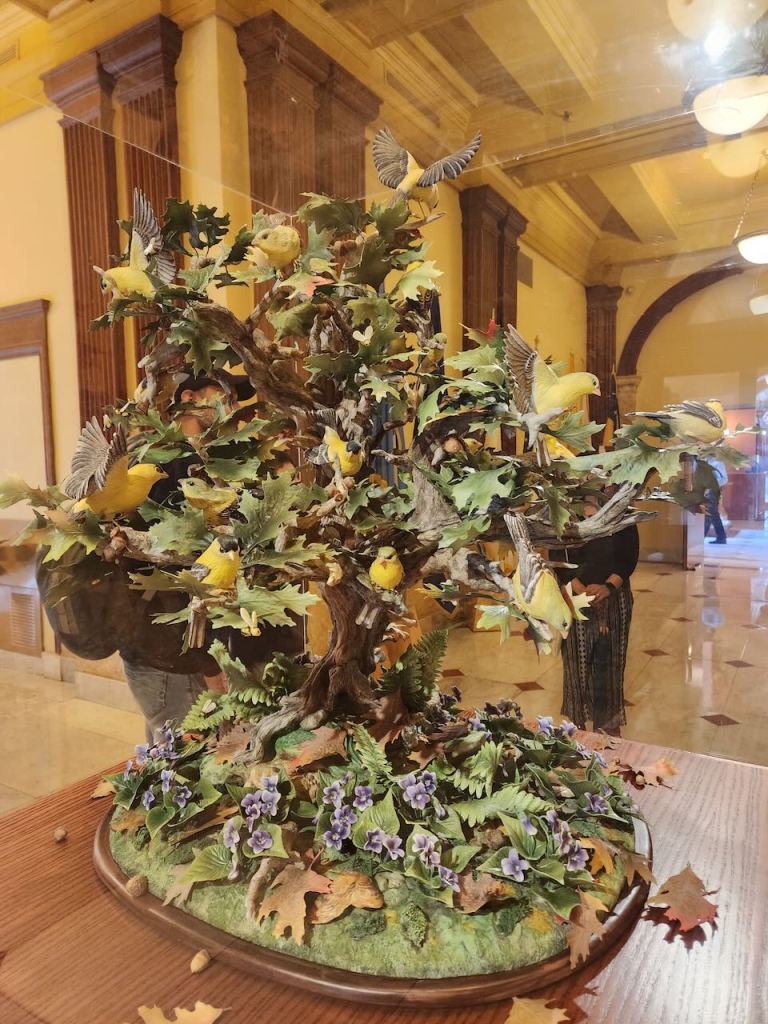
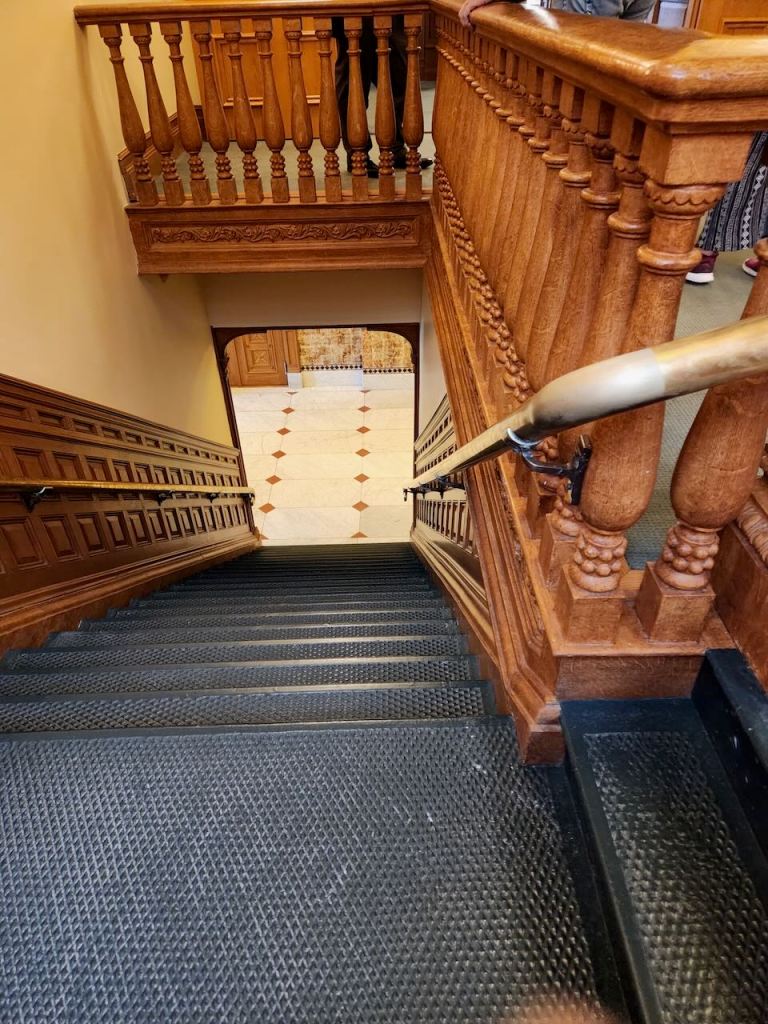
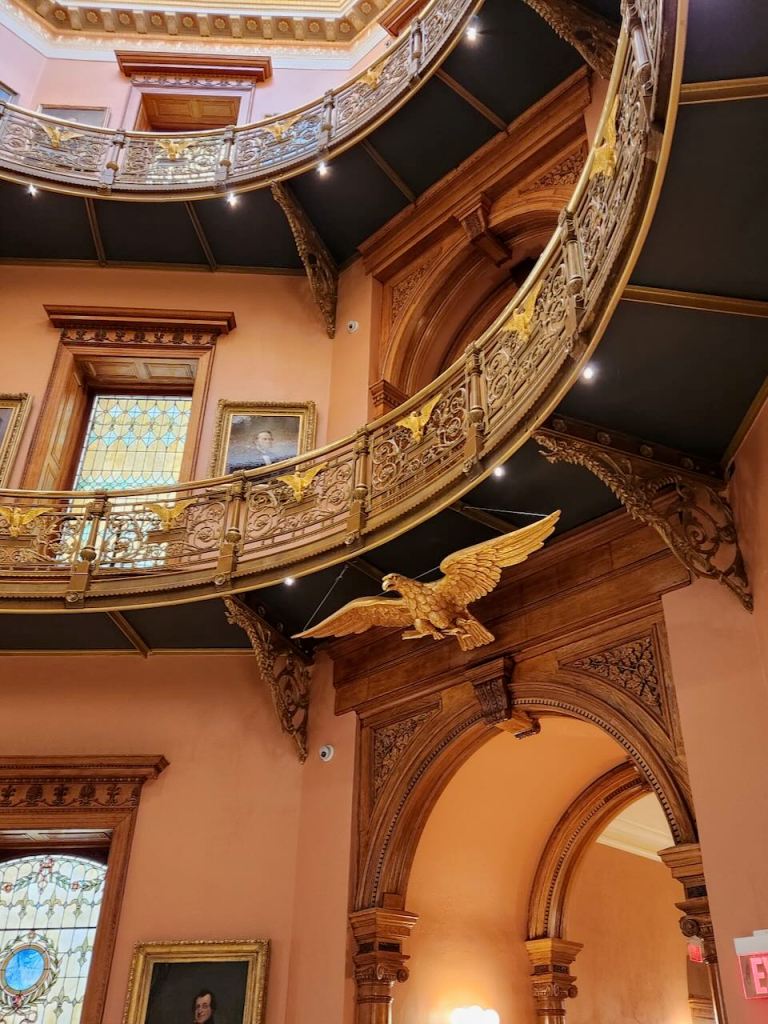
On Tuesday morning we left the brewery and went to Trenton. We had a reservation for a tour at 1 PM. I didn’t fully read the directions we received, so we ended up walking all the way around the building to find the way in – at least we got in some steps. The route took up by the remnants of a paper mill and gave us a decent view of the older portion of the statehouse, which was originally built in 1792. It is one of the oldest state houses in the US and is the only statehouse that has a view of a neighboring state – Pennsylvania is right across the Delaware River. The sculpture is called The Glory of New Jersey – it contains many of the state symbols – a northern oak tree with 21 goldfinches (for the 21 counties in NJ), violets at the base, there are 13 honeybees (for the each of the original colonies) and one lady bug – I read that is for the only female governor – Chistine Todd Whitman.. There are 3 original iron stairways in the building – this set is unique because the balusters are also made of iron – just covered to look like wood.
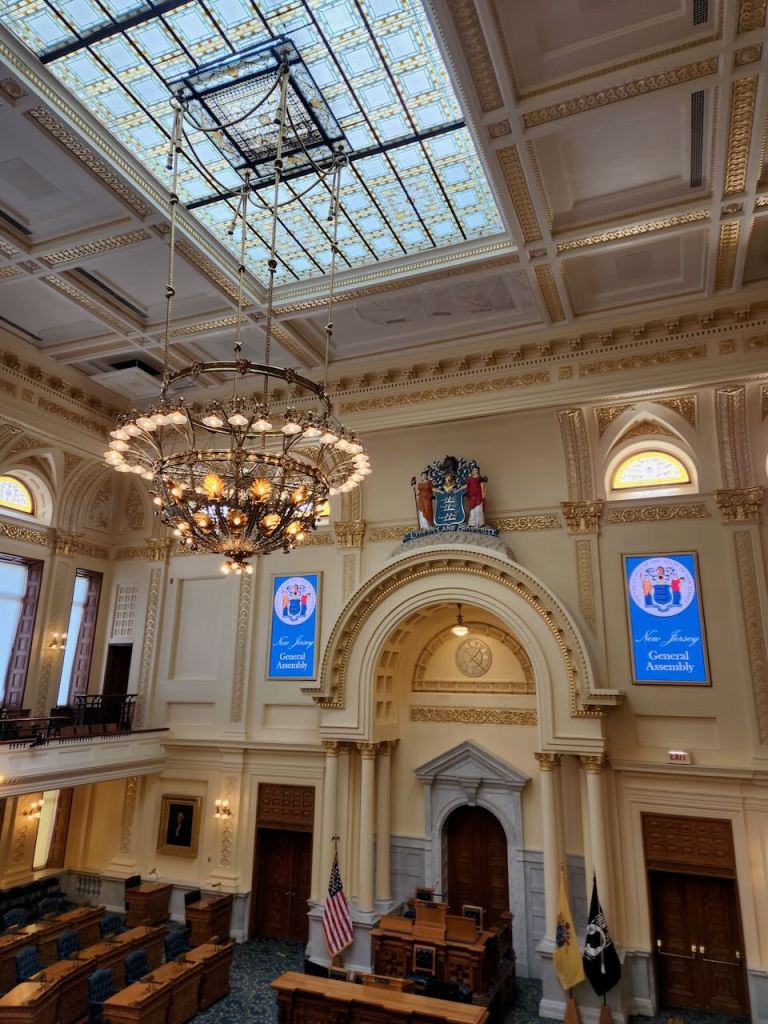
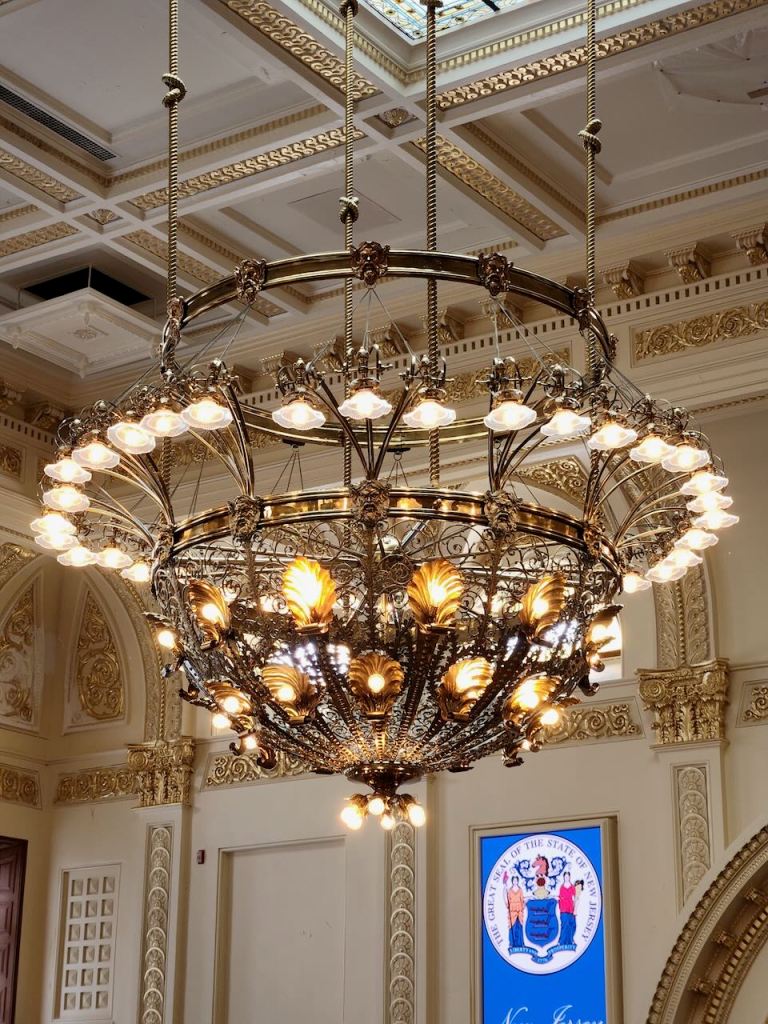
This is looking down to the General Assembly chamber – and shows off the gorgeous chandelier that was installed in 1891 by Thomas Edison to show off the use of electricity in public spaces. They also installed sconces but in case there were issues they plumbed the top half for gas lighting. And yes, that is 24 caret gold leaf everywhere.
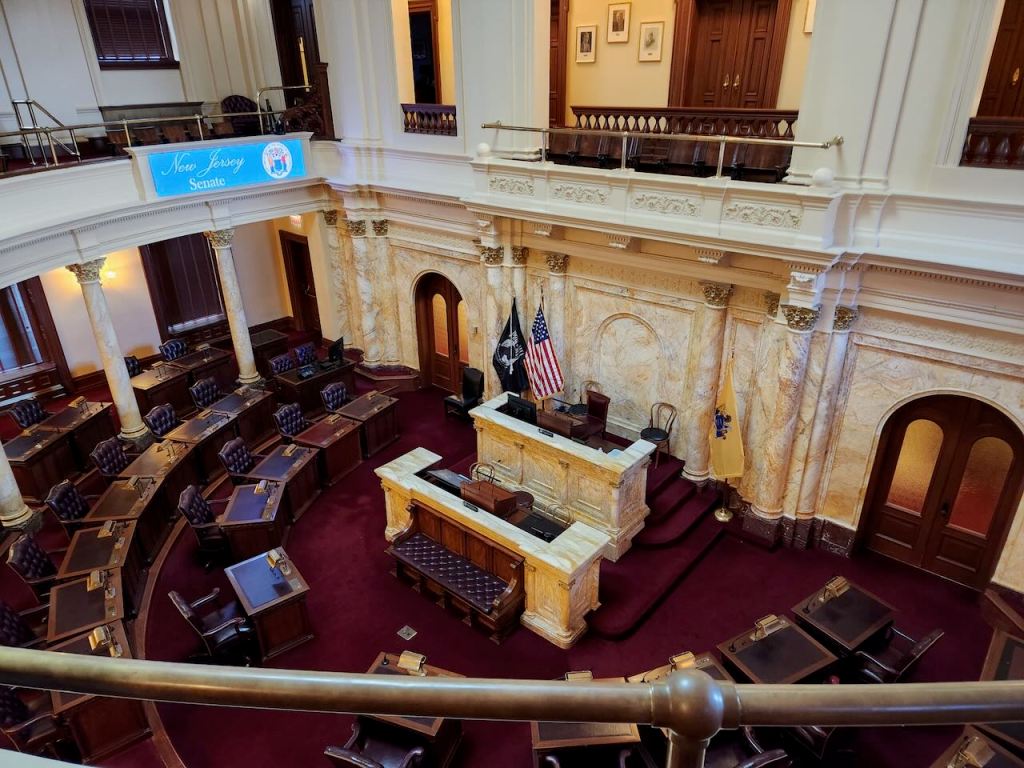
This is looking at the Senate chamber – which was less ornately decorated due to budget cuts made by the Assembly. So this chamber has this stained glass dome rather than a chandelier. And its wall and columns are made from scagliola – a type of faux marble made from plaster and pigments. It looks just like marble, but if you rap on it, it sounds hollow. And now it is more valuable than all the marble in the statehouse.
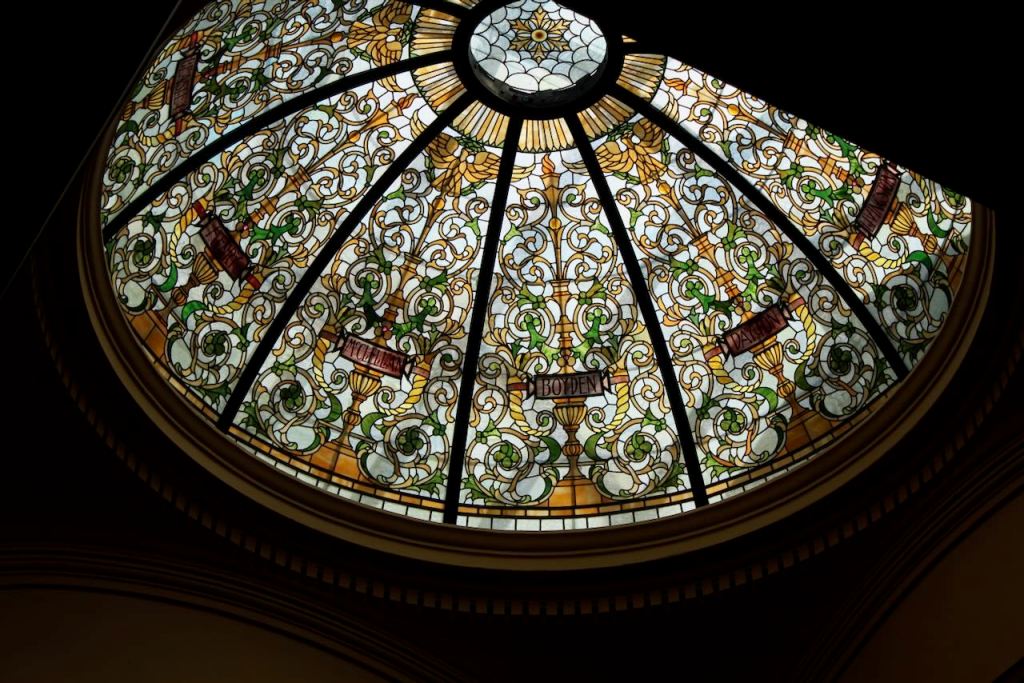
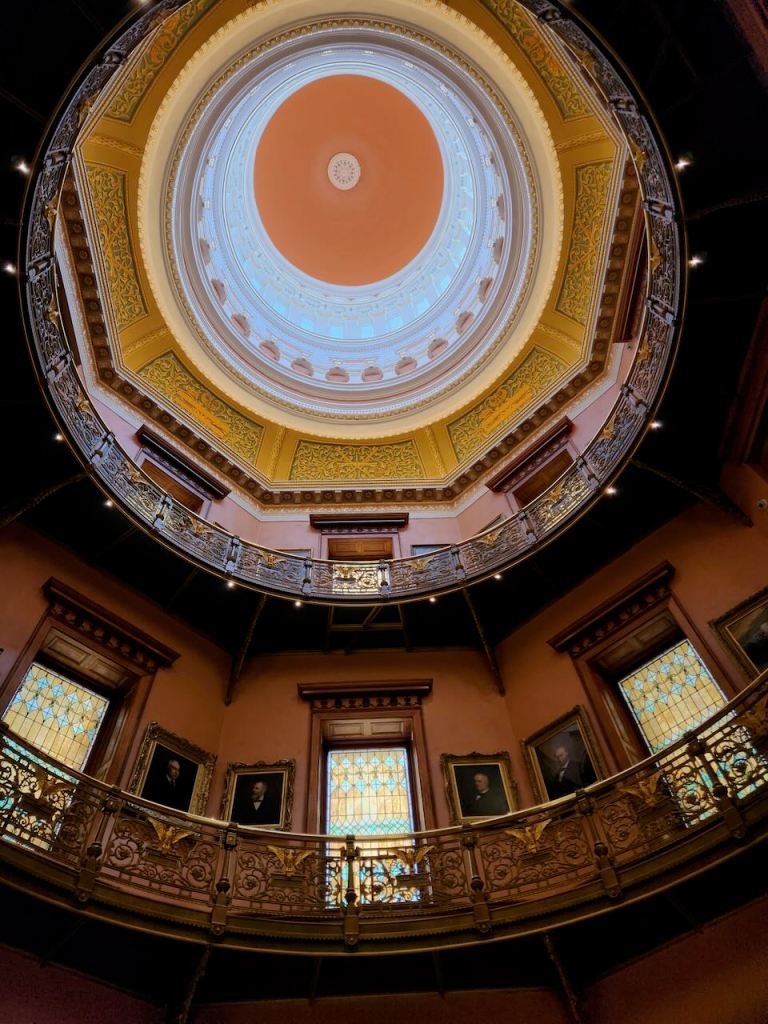
This is the state seal rug that is outside the governor’s office. And below that are some shots of the inside of the dome – which was added in 1889 after the original was destroyed by fire.

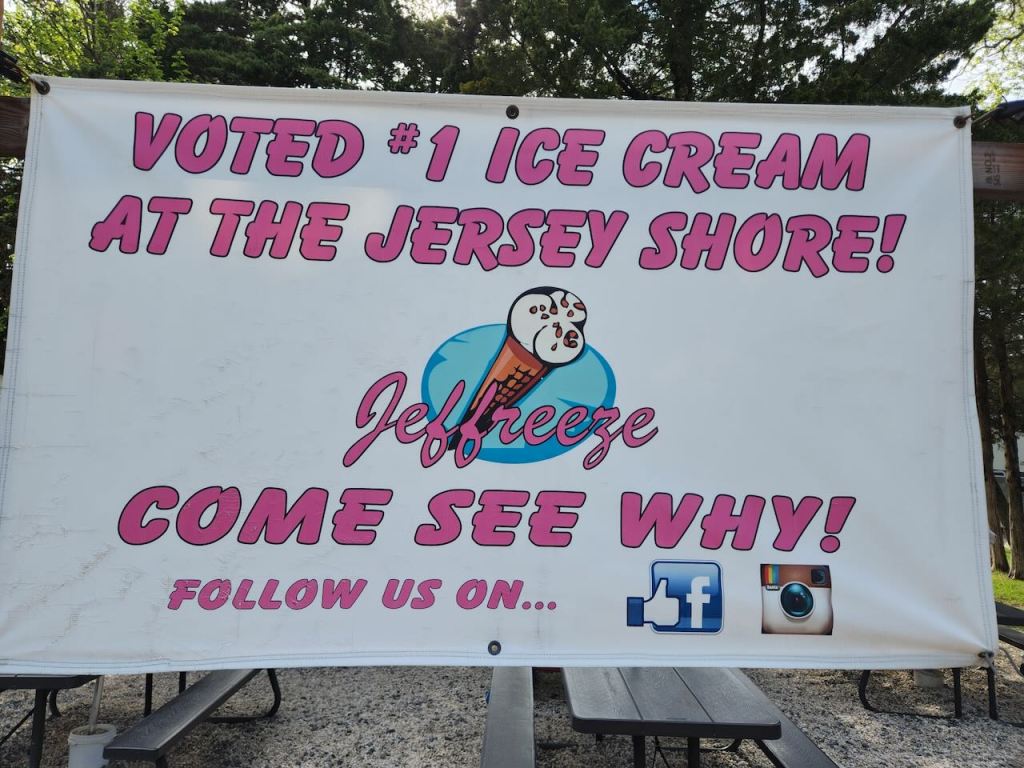
Then it was off to the Jersey shore – first stop, this ice cream shop. It was good ice cream!
More about our adventures on the Jersey shore next time!
Until then, safe travels!

 Trish & Anne RV Adventures
Leave a reply to Adele M Hardy Cancel reply